# Best AI Tools for Product Development in 2026
> Discover the best AI tools for product development in 2026, from ideation and design to coding, testing, and deployment, and how they benefit your team.
- **Author**: harsh-kanani
- **Published**: 2026-05-16
- **Modified**: 2026-05-16
- **Category**: AI & DevOps
- **URL**: https://kuberns.com/blogs/ai-tools-for-product-development/
---
The best AI tools for product development in 2026 span every stage of the product lifecycle, from ideation and requirements all the way through design, coding, testing, and deployment. Product teams using AI across all five stages are shipping faster, running leaner, and bringing better products to market than teams still relying on manual processes at any one stage.
This guide organizes the top tools by stage, not alphabetically, so you can see exactly where each tool fits in your workflow and what it actually replaces. It also covers how generative AI benefits product development teams specifically and closes with the full recommended tool stack for 2026.
## How AI Benefits a Product Development Team

Generative AI tools benefit product development teams in five direct ways. Each one maps to a stage where manual effort previously slowed teams down.
**Faster ideation and requirements gathering**
Writing a product requirements document used to take days of meetings, sticky notes, and revision cycles. With AI assistants like ChatGPT and Claude, a PM can draft a complete PRD, user stories, and acceptance criteria in a single session. The AI handles structure and completeness; the PM handles judgment and priorities.
**Reduced design iteration cycles**
Design reviews used to require a designer to manually produce each iteration. Text-to-UI tools like Galileo AI generate high-fidelity mockups from a written description in seconds. Teams can explore ten directions in the time it previously took to produce one.
**Accelerated coding with fewer bugs**
AI coding assistants like Cursor and GitHub Copilot write boilerplate, suggest completions, and catch common errors inline. Developers spend more time on architecture decisions and less time on repetitive code that follows predictable patterns.
**Automated test coverage**
Writing test scripts has historically been the most skipped part of development because it is time-consuming and not visible to users. AI-powered testing tools generate test coverage automatically from user flows and self-heal when the UI changes, removing the excuse to skip QA.
**Faster time from code to production**
Deployment used to require DevOps knowledge, infrastructure configuration, and manual handoffs. AI deployment platforms read your repository, detect your stack, and push to production automatically. The gap between finishing code and having a live URL has collapsed from days to minutes.
> See how AI tools are already changing how developers build and deploy in our comparison of the [best AI tools for application deployment](https://kuberns.com/blogs/best-ai-tools-for-deployment/).
## AI Tools for Ideation and Requirements

The ideation and requirements stage is where most product cycles lose time. AI tools at this stage don't replace product judgment, they remove the mechanical work of structuring, documenting, and organizing ideas so teams can focus on what actually requires human thinking.
**ChatGPT and Claude**
The two most widely used AI assistants for product work. Use them to draft product requirements documents from a rough brief, generate user stories from a feature description, write acceptance criteria, simulate customer objections during planning, and pressure-test feature ideas before engineering time is spent. Claude tends to produce more structured long-form documents; ChatGPT is faster for quick iteration and brainstorming.
**Notion AI**
Built directly into Notion workspaces, Notion AI handles meeting summaries, roadmap drafting, structured documentation, and converting rough notes into organized specs. For teams already using Notion as their product management layer, this is zero-friction to adopt. It keeps AI output in the same place where the team does its planning work.
**Productboard**
Productboard uses AI to synthesize user feedback from multiple sources, support emails, surveys, sales calls, and map it to features in your roadmap. Instead of manually reading hundreds of pieces of feedback to identify patterns, the AI surfaces which themes are appearing most frequently and which feature requests are backed by the most user signal. This makes prioritization decisions defensible with data rather than intuition.
> If you are evaluating how AI is changing the full developer workflow beyond just product planning, this breakdown covers what is actually shifting in 2026: [AI developer productivity tools and what makes teams ship faster](https://kuberns.com/blogs/ai-developer-productivity-tools/)
## AI Tools for Design and Prototyping

The design stage is where the biggest productivity gains from AI are visible most immediately. Text-to-UI tools have made it possible for product managers, founders, and non-designers to produce usable prototypes without waiting on a design resource. For design teams, these tools compress iteration cycles from days to hours.
**Figma AI**
Figma remains the industry standard for product design, and its AI layer has made the tool significantly faster in 2026. Figma AI generates UI components from text prompts, auto-suggests design improvements, fills in content with contextually appropriate placeholder data, and helps teams maintain consistency across large design systems. For teams already in Figma, this is the lowest-friction AI upgrade available.
**Galileo AI**
Galileo AI generates high-fidelity UI mockups from natural language descriptions. Describe the screen you need and the product it belongs to, and Galileo produces a design-ready mockup in seconds. It is particularly useful in early ideation when you want to explore multiple directions quickly before committing to a direction in Figma. Non-designers can use it without any prior UI experience.
**Uizard**
Uizard converts rough sketches and hand-drawn wireframes into clickable digital prototypes. Upload a photo of a whiteboard sketch and Uizard produces an interactive prototype you can share with stakeholders or test with users. It also supports real-time collaboration, making it useful for distributed teams doing remote design sprints. The free plan supports two projects, which is enough to validate most MVPs.
> Vibe coding tools have changed how teams go from design to working code. Here is what the [best vibe coding practices in 2026](https://kuberns.com/blogs/vibe-coding-best-practices/) look like and what separates fast-shipping teams from the rest.
## AI Tools for Coding and Development

AI coding tools have moved beyond simple autocomplete. In 2026, the best tools act as agentic pair programmers that understand the context of your entire project, implement features from natural language instructions, and fix bugs across multiple files without being told exactly where to look.
**GitHub Copilot**
GitHub Copilot is the most widely adopted AI coding tool among professional developers. It integrates into VS Code, JetBrains, and Neovim and provides real-time code suggestions as you type. Beyond completion, it explains unfamiliar code, suggests test cases, and helps with debugging by identifying where a given error is likely originating. At $10 per month for individuals, it pays for itself after one prevented debugging session.
**Cursor**
[Cursor](https://kuberns.com/blogs/deploy-cursor-website-on-kuberns/) is an AI-native code editor that has become the tool of choice for product teams who want to move faster than GitHub Copilot allows. Rather than just suggesting completions, Cursor can implement entire features from a description, refactor across the whole codebase, and explain every decision it made. Its agent mode handles multi-file edits that would take a developer significant time to wire together manually. It is particularly well suited for solo founders and small teams building full-stack products.
**Bolt.new**
[Bolt.new](https://kuberns.com/blogs/from-bolt-vibe-coding-to-ai-powered-deployment/) is a prompt-to-full-stack-app tool aimed at founders who want to go from idea to working application with minimal coding. Describe the app you want to build, and Bolt generates a complete project with frontend, backend, and database wiring in a shareable environment. For prototyping and MVP validation, it is the fastest path from a written idea to something running in a browser. The output can be exported and deployed to any platform.
> Cursor and GitHub Copilot are the two most commonly compared tools. Here is the honest comparison of how they perform for [real AI coding work in 2026](https://kuberns.com/blogs/ai-tools-for-coding/)
## AI Tools for Testing and QA

Testing is the stage most often skipped or underinvested in when product teams are moving fast. AI has changed the economics of QA by making it possible to generate meaningful test coverage automatically, without a dedicated QA engineer writing every test by hand.
**Playwright with AI**
Playwright is Microsoft's end-to-end testing framework, and its integration with AI tools in 2026 means test scripts can be generated directly from user flows and natural language descriptions of expected behavior. Instead of writing every interaction test manually, you describe the user journey and the AI generates the test code. It covers browser-based UI testing across Chrome, Firefox, and Safari from a single codebase.
**Testim and Mabl**
Testim and Mabl are AI-native testing platforms built around a specific problem: UI tests break every time the interface changes, which makes them expensive to maintain. Both platforms use AI to detect when a UI element has changed and automatically update the test rather than failing it. This self-healing behavior dramatically reduces the maintenance overhead of a large test suite. Mabl also provides natural language test creation, making it accessible to non-engineers who understand the user flow but cannot write test code.
**Why AI test coverage matters before you ship**
Shipping without test coverage is a deployment risk, not just a code quality concern. A product that works in development but fails in production because an untested edge case was triggered by real user behavior is a much more expensive problem than the time it would have taken to generate the tests upfront. AI tools have removed the time excuse. Teams have no practical reason to ship without coverage in 2026.
> Deployment failures are more common than most teams admit. Here is what actually causes them and [how to prevent the most common deployment issues](https://kuberns.com/blogs/why-do-software-deployments-fail/) before they reach production.
## AI Tools for Deployment and Infrastructure

Deployment is the stage that no competitor article on AI product development tools covers. Every list stops at coding or testing. But getting the product live is as much a part of product development as writing the first line of code, and it has historically been the stage that requires the most specialized knowledge and causes the most delays.
In 2026, AI deployment platforms have made this stage as automated as the others.
**Kuberns**
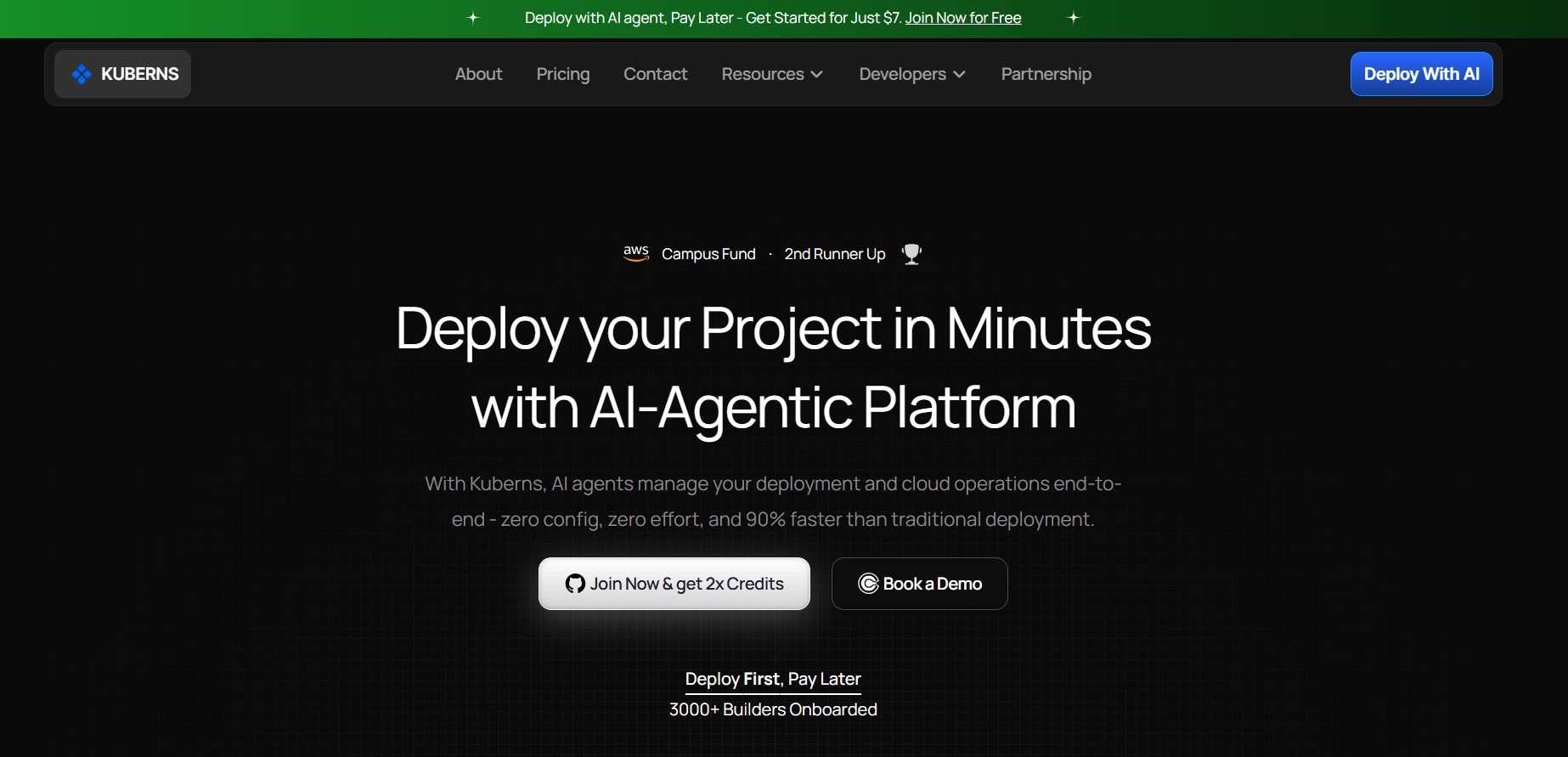
[Kuberns](https://kuberns.com) is an Agentic AI cloud deployment platform built specifically to remove the DevOps requirement from product teams. Connect your GitHub repository, add your environment variables, and Kuberns reads your project, detects your stack and runtime automatically, selects the correct build command, and deploys your application to production with HTTPS, zero-downtime rollout, and automated rollback on every push.
No Dockerfile. No YAML. No infrastructure configuration. No DevOps engineer required.
For product teams, this matters because deployment is where shipping velocity goes to die. Every manual step between writing code and having a live URL is a step that can go wrong, require specialist knowledge, or block a non-technical team member from contributing. Kuberns removes all of those steps.
Key capabilities for product teams:
- Auto-detects Node.js, Python, Java, Go, Ruby, PHP, and more without configuration
- Zero-downtime deployments with health-check-gated traffic cutover on every push
- Automated rollback if the new build fails a health check
- Managed PostgreSQL and Redis as first-class services
- Built on AWS, up to 40 per cent less than equivalent direct AWS infrastructure
Every product built with Cursor, Bolt, or GitHub Copilot still needs to get deployed. Kuberns is where that happens.
**CtrlOps**
[CtrlOps](https://ctrlops.io/) fits the server operations side of AI-assisted product development. It is a desktop app for managing servers with an AI Terminal, one-click app deployment, built-in file management, infrastructure monitoring, and a script directory. Its local-first model is useful for teams that want AI help with server commands and deployment workflows while keeping credentials off cloud sync.
Where tools like Copilot and Cursor help developers write code, CtrlOps focuses on the operational layer after code is ready: approving terminal actions, managing server files, monitoring infrastructure, and running repeatable scripts. It is most relevant for teams that still manage their own servers and want AI assistance for server ops without handing over credentials to a cloud workspace.
 > One-click deployment is not just a marketing phrase. Here is a technical breakdown of [what actually happens when you click deploy](https://kuberns.com/blogs/what-does-one-click-deployment-do/) and how AI handles each step automatically.
## The Complete AI Tool Stack for Product Teams in 2026
No single AI tool covers the full product development lifecycle. The teams shipping the fastest in 2026 are not using more tools than anyone else. They are using the right tool for each stage, wired together into a stack where AI handles the mechanical work at every step.
Here is the recommended stack by stage:
| Stage | Recommended AI Tool | Free Tier |
|---|---|---|
| Ideation and Requirements | ChatGPT or Claude, Notion AI | Yes |
| User Feedback and Prioritization | Productboard | Trial available |
| Design and Prototyping | Figma AI, Galileo AI | Yes |
| Sketch to Prototype | Uizard | Yes (2 projects) |
| Coding and Development | Cursor, GitHub Copilot | Yes (limited) |
| Rapid App Building | Bolt.new | Yes |
| Testing and QA | Playwright with AI, Mabl | Yes |
| Deployment and Infrastructure | Kuberns | Yes (~$14 credits) |
| Server Operations | CtrlOps | Check current plan |
This stack takes a product from a rough idea to a live, tested, deployed application with AI handling the repeatable work at every stage. The product team focuses on decisions, judgment, and user insight. The AI handles execution.
> For teams evaluating where AI fits into their DevOps workflow specifically, this guide covers the agentic AI shift and [why teams are moving toward fully automated deployment pipelines](https://kuberns.com/blogs/understanding-devops-ai-agent-the-future-of-ai-in-devops/)
## Conclusion
The best AI tools for product development in 2026 are not all-in-one platforms. They are specialized tools, each best-in-class for one stage, that work together to remove the manual work at every point in the lifecycle.
The gap most teams still have is deployment. Ideation, design, and coding tools are well-adopted. Deployment is still the stage where many teams rely on manual configuration, DevOps specialists, and processes that have not changed in years. Platforms like [Kuberns](https://kuberns.com) close that gap by handling deployment the same way Cursor handles coding: you describe what you want, the AI does it.
The product teams that wire AI into every stage are not just shipping faster. They are operating at a different level of leverage than teams that still treat any one stage as a manual process.
[Start deploying your product with Kuberns for free](https://dashboard.kuberns.com/login)
> One-click deployment is not just a marketing phrase. Here is a technical breakdown of [what actually happens when you click deploy](https://kuberns.com/blogs/what-does-one-click-deployment-do/) and how AI handles each step automatically.
## The Complete AI Tool Stack for Product Teams in 2026
No single AI tool covers the full product development lifecycle. The teams shipping the fastest in 2026 are not using more tools than anyone else. They are using the right tool for each stage, wired together into a stack where AI handles the mechanical work at every step.
Here is the recommended stack by stage:
| Stage | Recommended AI Tool | Free Tier |
|---|---|---|
| Ideation and Requirements | ChatGPT or Claude, Notion AI | Yes |
| User Feedback and Prioritization | Productboard | Trial available |
| Design and Prototyping | Figma AI, Galileo AI | Yes |
| Sketch to Prototype | Uizard | Yes (2 projects) |
| Coding and Development | Cursor, GitHub Copilot | Yes (limited) |
| Rapid App Building | Bolt.new | Yes |
| Testing and QA | Playwright with AI, Mabl | Yes |
| Deployment and Infrastructure | Kuberns | Yes (~$14 credits) |
| Server Operations | CtrlOps | Check current plan |
This stack takes a product from a rough idea to a live, tested, deployed application with AI handling the repeatable work at every stage. The product team focuses on decisions, judgment, and user insight. The AI handles execution.
> For teams evaluating where AI fits into their DevOps workflow specifically, this guide covers the agentic AI shift and [why teams are moving toward fully automated deployment pipelines](https://kuberns.com/blogs/understanding-devops-ai-agent-the-future-of-ai-in-devops/)
## Conclusion
The best AI tools for product development in 2026 are not all-in-one platforms. They are specialized tools, each best-in-class for one stage, that work together to remove the manual work at every point in the lifecycle.
The gap most teams still have is deployment. Ideation, design, and coding tools are well-adopted. Deployment is still the stage where many teams rely on manual configuration, DevOps specialists, and processes that have not changed in years. Platforms like [Kuberns](https://kuberns.com) close that gap by handling deployment the same way Cursor handles coding: you describe what you want, the AI does it.
The product teams that wire AI into every stage are not just shipping faster. They are operating at a different level of leverage than teams that still treat any one stage as a manual process.
[Start deploying your product with Kuberns for free](https://dashboard.kuberns.com/login)
 ## Frequently Asked Questions
### What are the best AI tools for product development in 2026?
The best AI tools for product development in 2026 cover every stage of the lifecycle: ChatGPT or Claude for ideation, Figma AI or Galileo AI for design, Cursor or GitHub Copilot for coding, Playwright or Mabl for testing, and Kuberns for deployment. Teams that use AI across all stages ship faster and with smaller headcount.
### How can generative AI tools benefit a product development team?
Generative AI tools benefit product development teams by accelerating ideation and requirements gathering, reducing design iteration time, automating repetitive coding tasks, generating test coverage automatically, and handling deployment infrastructure without manual configuration. Teams using AI across all stages consistently report shorter time to market and lower engineering overhead.
### Can non-technical product managers use AI development tools?
Yes. Tools like Notion AI, Productboard, Figma AI, and Galileo AI are designed for non-technical users and require no coding knowledge. Product managers can use these tools to draft requirements documents, generate UI mockups, map user journeys, and prioritize features without writing a single line of code.
### What is the best AI tool for the full product development lifecycle?
No single tool covers the full lifecycle. The best approach in 2026 is a stack of specialized tools: an AI assistant for ideation, a design tool for prototyping, a coding assistant for development, a testing tool for QA, and an AI deployment platform like Kuberns to get the product live. Each tool is best-in-class for its stage.
### Is there an AI tool that handles both coding and deployment automatically?
Kuberns comes closest to bridging coding and deployment. It connects to your GitHub repository, detects your stack automatically, and deploys your app with zero-downtime CI/CD and automated rollback on every push. You write the code with tools like Cursor or Copilot, and Kuberns handles everything from that point to a live production URL.
### How do AI tools reduce time to market for software products?
AI tools reduce time to market by removing bottlenecks at every stage. Ideation that used to take weeks of workshops now takes hours with AI assistants. Design sprints compress from days to hours with text-to-UI tools. Coding moves faster with AI pair programmers. Testing coverage that took days to write generates automatically. Deployment that required DevOps knowledge now happens in minutes with platforms like Kuberns.
---
- [More AI & DevOps articles](https://kuberns.com/blogs/category/ai-devops/1/)
- [All articles](https://kuberns.com/blogs/)
## Frequently Asked Questions
### What are the best AI tools for product development in 2026?
The best AI tools for product development in 2026 cover every stage of the lifecycle: ChatGPT or Claude for ideation, Figma AI or Galileo AI for design, Cursor or GitHub Copilot for coding, Playwright or Mabl for testing, and Kuberns for deployment. Teams that use AI across all stages ship faster and with smaller headcount.
### How can generative AI tools benefit a product development team?
Generative AI tools benefit product development teams by accelerating ideation and requirements gathering, reducing design iteration time, automating repetitive coding tasks, generating test coverage automatically, and handling deployment infrastructure without manual configuration. Teams using AI across all stages consistently report shorter time to market and lower engineering overhead.
### Can non-technical product managers use AI development tools?
Yes. Tools like Notion AI, Productboard, Figma AI, and Galileo AI are designed for non-technical users and require no coding knowledge. Product managers can use these tools to draft requirements documents, generate UI mockups, map user journeys, and prioritize features without writing a single line of code.
### What is the best AI tool for the full product development lifecycle?
No single tool covers the full lifecycle. The best approach in 2026 is a stack of specialized tools: an AI assistant for ideation, a design tool for prototyping, a coding assistant for development, a testing tool for QA, and an AI deployment platform like Kuberns to get the product live. Each tool is best-in-class for its stage.
### Is there an AI tool that handles both coding and deployment automatically?
Kuberns comes closest to bridging coding and deployment. It connects to your GitHub repository, detects your stack automatically, and deploys your app with zero-downtime CI/CD and automated rollback on every push. You write the code with tools like Cursor or Copilot, and Kuberns handles everything from that point to a live production URL.
### How do AI tools reduce time to market for software products?
AI tools reduce time to market by removing bottlenecks at every stage. Ideation that used to take weeks of workshops now takes hours with AI assistants. Design sprints compress from days to hours with text-to-UI tools. Coding moves faster with AI pair programmers. Testing coverage that took days to write generates automatically. Deployment that required DevOps knowledge now happens in minutes with platforms like Kuberns.
---
- [More AI & DevOps articles](https://kuberns.com/blogs/category/ai-devops/1/)
- [All articles](https://kuberns.com/blogs/)