# Still Deploying Django Manually on DigitalOcean? Use AI Now.
> Deploying Django on DigitalOcean still requires manual setup with Nginx, Gunicorn. This guide explains how you can deploy Django Apps with Kuberns AI instead.
- **Author**: manav-dobariya
- **Published**: 2025-07-29
- **Modified**: 2026-03-26
- **Category**: Alternatives
- **URL**: https://kuberns.com/blogs/best-alternative-to-deploy-django-on-digitalocean/
---
Are you looking to deploy your Django project on DigitalOcean? Then you are in the right place. In this blog, you are going to learn how Django projects can be deployed in one click using AI, without dealing with manual server setup.
DigitalOcean is often the first choice developers consider for Django deployment. But to deploy a Django app on DigitalOcean, you need to provision a server, configure Gunicorn, set up Nginx, connect to Postgres, manage static files, secure the server, and make sure everything keeps running after updates and restarts.
This process is entirely manual.
For production apps, client projects, or multiple deployments, this approach quickly becomes inefficient. Every new app repeats the same setup. Every update risks breaking something. Scaling and monitoring require even more configuration. At that point, you are spending more time managing deployment than building your Django application.
> [This is why we are bringing you the new way to deploy Django projects using AI in one click](https://dashboard.kuberns.com/)
Instead of manually configuring infrastructure for every project, teams are moving toward [AI-powered deployment platforms](https://kuberns.com/) where deployment is no longer a task the developer has to manage. You connect your code, and the platform automatically handles build detection, deployment, scaling, monitoring, and cloud management.
In this guide, we break down why deploying Django on DigitalOcean is not the best choice, and how an AI-powered deployment approach lets you deploy the same Django projects in one click while keeping performance, reliability, and flexibility intact.
## TL;DR: What This Blog Will Help You Decide
* Deploying a Django app on DigitalOcean still requires manual work, including server setup, Gunicorn, Nginx, database configuration, and ongoing maintenance.
* The real problems developers face with Django deployment on DigitalOcean as projects grow are repeated setup, scaling complexity, and operational overhead.
* How AI-powered deployment platforms remove the need to configure infrastructure, deployment scripts, and CI/CD pipelines manually.
* What [“one-click Django deployment” ](https://kuberns.com/services/django)actually means in practice, from connecting your GitHub repository to running a production-ready app.
* Why many teams are moving away from manual DigitalOcean setups and [choosing Kuberns](https://kuberns.com/) to deploy Django faster with less effort.
* How this AI approach helps you save time, reduce deployment errors, and focus more on building features instead of managing servers.
> If your goal is to deploy Django applications quickly, avoid DevOps work, simplify long-term maintenance, and save cost on cloud, then [AI-Powered Deployment by Kuberns](https://kuberns.com/competitors/digitalocean) is the best choice for you.
## What are the common Challenges When Deploying A Django App on DigitalOcean?

Deploying a Django app on DigitalOcean sounds simple until you actually try it.
You start with a blank server (called a Droplet), and from there, everything is on you. Installing Python, setting up your virtual environment, configuring Gunicorn, connecting Nginx, setting up a firewall, managing your Postgres database, and keeping it all running.
You’ll need to:
* Write and maintain deployment scripts
* Manually update packages and restart services
* Troubleshoot downtime or broken config changes
* Secure your server from scratch (SSL, ports, users)
And that’s just for one app.
If you're working on multiple projects or deploying for clients, managing all of this across different Droplets can quickly become frustrating.
This is the point where many developers realise the [real issue with DigitalOcean](https://kuberns.com/blogs/digitalocean-alternatives/) is not the platform but the deployment model. DigitalOcean provides infrastructure, but the responsibility for deploying, operating, and maintaining Django applications always stays with the developer.
> **The good news? You don’t have to compromise between control and simplicity anymore. [With AI](https://kuberns.com/) You can eliminate all these steps.**
## AI-Managed Django Deployment: How Teams Skip the Setup Entirely
Traditional Django deployment assumes that developers are responsible for setting up and maintaining the entire runtime environment. Even on managed platforms like DigitalOcean, deployment still means configuring servers, web servers, databases, and deployment scripts by hand.
[AI-Powered deployment](https://kuberns.com/competitors/digitalocean) takes a different approach.
Instead of asking developers to assemble and maintain the deployment stack themselves, AI-managed platforms handle the entire process automatically. From the moment you connect your code, the platform detects how your Django application should be built, provisions the required environment, deploys the app, manages scaling, and monitors performance in production
For many Django developers in 2026, this model has become the most practical way to deploy production applications without DevOps overhead.
Check out how kuberns works and helps the developers:
### Kuberns: A Smart AI-Powered Deployment Platform
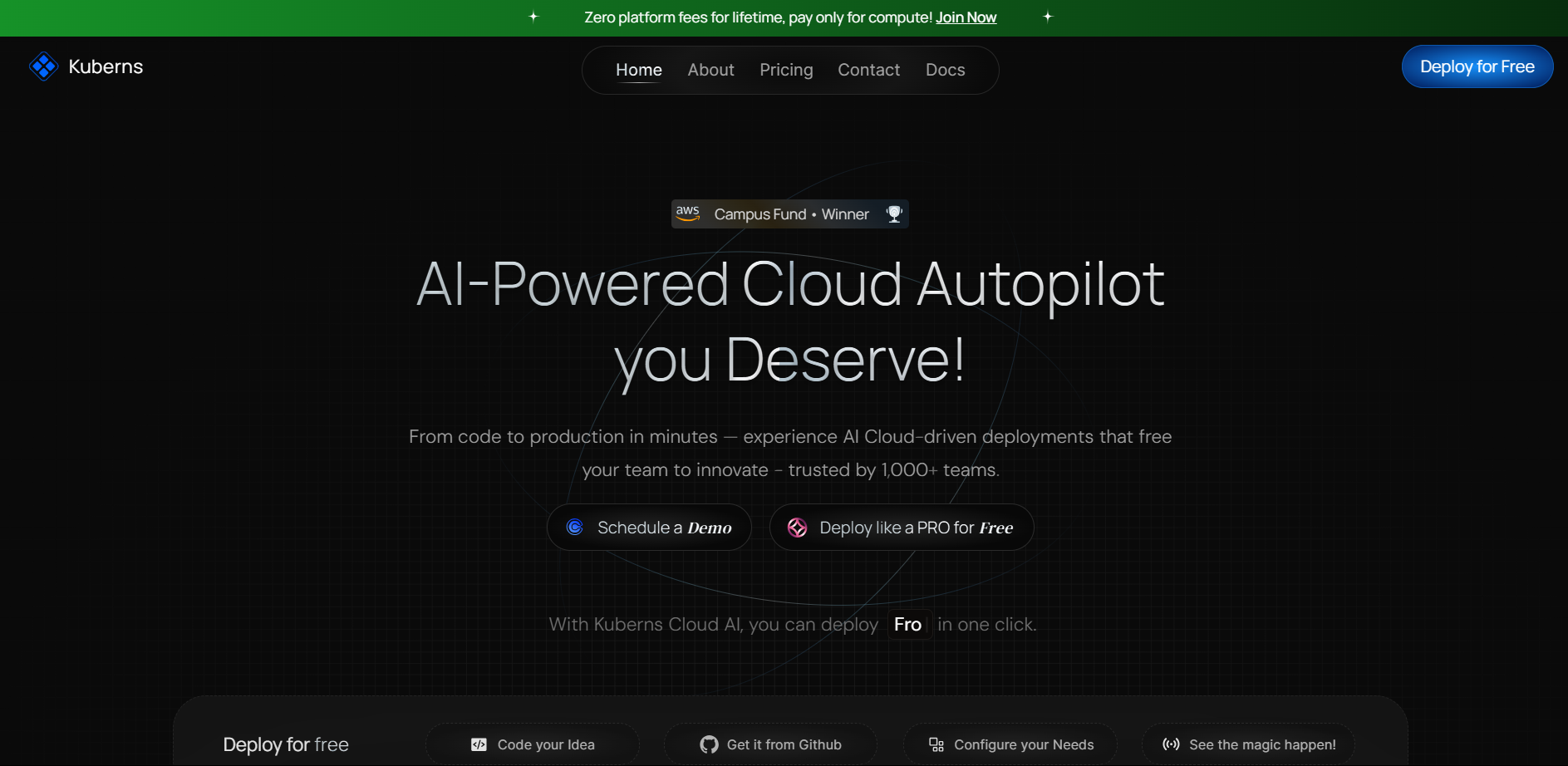
Kuberns is a modern AI cloud platform built for developers who want to deploy and scale apps without dealing with infrastructure. It removes the need to set up servers, configure tools, or manage deployment pipelines.
Everything is already built in, from app builds and environments to scaling, monitoring, and logs. You don’t have to write custom scripts or worry about system setup. Kuberns is designed to save you time, reduce errors, and let you focus on building your Django app instead of maintaining it.
It works well for solo developers, growing teams, and even agencies managing multiple client projects. Whether you're shipping an MVP or running a production SaaS, Kuberns helps you deploy with confidence and without the hassle.
If you’re looking for a [DigitalOcean alternative](https://kuberns.com) that saves you time and effort, Kuberns is built for that.
> Check out how you can deploy your Django App in less than 5 minutes
#### This is How Kuberns Simplifies Django Deployment

Deploying Django usually means setting up a whole server from scratch every time. But that’s often the case with traditional platforms. You're writing Dockerfiles, setting up build processes, configuring databases, handling static files, and worrying about what breaks in production.
**[With Kuberns, you skip all of that.](https://kuberns.com/services/django)**
Once you connect your GitHub repo, Kuberns AI handles the full deployment flow automatically. It automatically detects your Django project, builds it and gets it running without needing you to configure anything manually.
You can:
* Add environment variables and secrets with a few clicks
* Monitor builds, logs, and deployments from a simple UI
Most platforms give you a toolbox and leave the rest to you. Kuberns gives you the whole setup, already connected and ready to go.
Whether you're updating your app or launching it for the first time, the whole process takes just 3 steps.
#### Performance & Scalability: Kuberns vs DigitalOcean
When you deploy on DigitalOcean, performance depends on how well you’ve set things up. You manage the server, install everything yourself, and if your app gets more traffic, you need to scale it manually.
That means resizing the Droplet, tuning configs, and hoping it doesn’t crash under load.
> With Kuberns, you don’t have to worry about any of that.
> 
> Apps run on fast, optimised AWS infrastructure that scales automatically as traffic grows. There’s no downtime when you deploy updates, and you get built-in monitoring, alerts, and logs to keep an eye on performance without needing third-party tools.
You don’t need to set up load balancers or worry about server health; Kuberns handles that for you.
You get built-in features that help your app stay reliable:
* Zero-downtime deployments
* Real-time logs and alerts
* Multiple environments for safe testing
* Isolated app instances for better stability
If you're building something that needs to grow, whether it’s a side project, a client app, or a production SaaS, Kuberns gives you the speed and scale you need, without the maintenance overhead that comes with DigitalOcean.
#### Cost-Efficiency: What You Get with Kuberns

One reason many developers choose DigitalOcean is the pricing. A $5 Droplet feels affordable until you start adding everything else you need.
To run a Django app properly, you’ll likely need:
* A separate Postgres database
* Object storage for media files
* Load balancers or monitoring tools
* Backup systems or staging environments
These extras add up fast. What starts as a $5/month setup can easily cost two or three times more, and you still have to manage it all yourself.
With Kuberns, everything is included in one. You get hosting, automatic deploys, Postgres, logs, multiple environments, background jobs, Monitoring and more without needing to piece things together.
> Also, you don’t pay extra for each feature.
And because Kuberns runs on secure AWS infrastructure, it’s optimised to use less and save more. On average, teams save up to [40% compared to regular AWS bills](https://kuberns.com), and you don’t have to manage any of it.
You know what you’re paying for, and there are no surprises. It’s a simpler setup, and it costs less than managing things manually on DigitalOcean.
#### Migrating from DigitalOcean to Kuberns is Also Easy

**[Moving your Django app from DigitalOcean to Kuberns](https://kuberns.com/competitors/digitalocean)** doesn’t require a big setup or a full rewrite. If your code is already in GitHub, you’re halfway there. Just link your repo to Kuberns, choose your environment, and deploy.
Kuberns will detect your Django app, build it, and get it running without needing Dockerfiles or manual scripts.
The [migration guide here ](https://docs.kuberns.com/docs/migration/digital-ocean)walks you through each step from exporting your data to deploying your app. Most projects can be moved over in less than 30 minutes.
## Try a Simpler Way to Deploy Django Projects With AI
If you're tired of setting up servers, managing configurations, and fixing things that break during deploys, Kuberns makes it easier. You can deploy your Django app in minutes, skip the DevOps work, and focus on your code.
**[Try Kuberns AI today](https://dashboard.kuberns.com)**
## Frequently Asked Questions
### 1. Is Kuberns a good alternative to DigitalOcean for Django apps?
Yes. Kuberns is a simpler, faster alternative to DigitalOcean for Django deployment. It handles everything for you from app builds to scaling, so you don’t need to manage servers or write configuration files.
### 2. Can I deploy a Django app on Kuberns without using Docker?
Absolutely. Kuberns automatically detects your Django project and builds it for you. There’s no need to write a Dockerfile or set up any CI/CD scripts manually.
### 3. How does Kuberns compare to other DigitalOcean competitors?
While other DigitalOcean competitors offer basic hosting, Kuberns gives you a full deployment experience, including CI/CD, Postgres, cron jobs, logs, and autoscaling. All built in and optimised for Django.
### 4. How long does it take to migrate a Django app from DigitalOcean to Kuberns?
You can [migrate any of the projects from DigitalOcean to Kuberns in One-Click](https://kuberns.com/competitors/digitalocean) without any downtime. [A full migration guide is available on Kuberns Docs](https://docs.kuberns.com/docs/migration/digital-ocean).
### 5. Will I need to manage any infrastructure on Kuberns?
No. Kuberns manages the infrastructure for you. You don’t need to worry about servers, scaling, SSL, or monitoring. It’s all included.
### 6. Can Kuberns help reduce my hosting costs compared to DigitalOcean?
Yes. Since Kuberns runs on optimised AWS infrastructure, many users save up to 40% compared to managing similar setups on DigitalOcean or AWS directly.
---
- [More Alternatives articles](https://kuberns.com/blogs/category/alternatives/1/)
- [All articles](https://kuberns.com/blogs/)
 ## Frequently Asked Questions
### 1. Is Kuberns a good alternative to DigitalOcean for Django apps?
Yes. Kuberns is a simpler, faster alternative to DigitalOcean for Django deployment. It handles everything for you from app builds to scaling, so you don’t need to manage servers or write configuration files.
### 2. Can I deploy a Django app on Kuberns without using Docker?
Absolutely. Kuberns automatically detects your Django project and builds it for you. There’s no need to write a Dockerfile or set up any CI/CD scripts manually.
### 3. How does Kuberns compare to other DigitalOcean competitors?
While other DigitalOcean competitors offer basic hosting, Kuberns gives you a full deployment experience, including CI/CD, Postgres, cron jobs, logs, and autoscaling. All built in and optimised for Django.
### 4. How long does it take to migrate a Django app from DigitalOcean to Kuberns?
You can [migrate any of the projects from DigitalOcean to Kuberns in One-Click](https://kuberns.com/competitors/digitalocean) without any downtime. [A full migration guide is available on Kuberns Docs](https://docs.kuberns.com/docs/migration/digital-ocean).
### 5. Will I need to manage any infrastructure on Kuberns?
No. Kuberns manages the infrastructure for you. You don’t need to worry about servers, scaling, SSL, or monitoring. It’s all included.
### 6. Can Kuberns help reduce my hosting costs compared to DigitalOcean?
Yes. Since Kuberns runs on optimised AWS infrastructure, many users save up to 40% compared to managing similar setups on DigitalOcean or AWS directly.
---
- [More Alternatives articles](https://kuberns.com/blogs/category/alternatives/1/)
- [All articles](https://kuberns.com/blogs/)
## Frequently Asked Questions
### 1. Is Kuberns a good alternative to DigitalOcean for Django apps?
Yes. Kuberns is a simpler, faster alternative to DigitalOcean for Django deployment. It handles everything for you from app builds to scaling, so you don’t need to manage servers or write configuration files.
### 2. Can I deploy a Django app on Kuberns without using Docker?
Absolutely. Kuberns automatically detects your Django project and builds it for you. There’s no need to write a Dockerfile or set up any CI/CD scripts manually.
### 3. How does Kuberns compare to other DigitalOcean competitors?
While other DigitalOcean competitors offer basic hosting, Kuberns gives you a full deployment experience, including CI/CD, Postgres, cron jobs, logs, and autoscaling. All built in and optimised for Django.
### 4. How long does it take to migrate a Django app from DigitalOcean to Kuberns?
You can [migrate any of the projects from DigitalOcean to Kuberns in One-Click](https://kuberns.com/competitors/digitalocean) without any downtime. [A full migration guide is available on Kuberns Docs](https://docs.kuberns.com/docs/migration/digital-ocean).
### 5. Will I need to manage any infrastructure on Kuberns?
No. Kuberns manages the infrastructure for you. You don’t need to worry about servers, scaling, SSL, or monitoring. It’s all included.
### 6. Can Kuberns help reduce my hosting costs compared to DigitalOcean?
Yes. Since Kuberns runs on optimised AWS infrastructure, many users save up to 40% compared to managing similar setups on DigitalOcean or AWS directly.
---
- [More Alternatives articles](https://kuberns.com/blogs/category/alternatives/1/)
- [All articles](https://kuberns.com/blogs/)