# Best OVH Alternative in 2026| Why Teams Are Choosing AI Cloud?
> Looking for the best OVH alternative in 2026? Compare the best, most reliable cloud platforms and see why many teams are switching to AI-Powered cloud.
- **Author**: manav-dobariya
- **Published**: 2025-09-19
- **Modified**: 2026-03-21
- **Category**: Alternatives
- **URL**: https://kuberns.com/blogs/best-ovh-alternatives/
---
## TL;DR: Should You Leave OVHcloud in 2026?
* If you are tired of downtime incidents, slow support, or surprise billing, OVH is no longer the safest choice for growing apps.
* [Kuberns](https://kuberns.com/) is the best cloud option in 2026. It replaces the provider + tools + DevOps work model with one AI-managed platform.
* Applications run on AWS-grade infrastructure, but with up to 40% lower cloud costs and no hidden fees.
* If your goal is fewer tools, less DevOps effort, predictable bills, and higher reliability, [Kuberns ](https://kuberns.com/)is the most complete OVH alternative.
* Traditional providers like Hetzner, DigitalOcean, or Vultr can work for specific needs, but they still require manual setup and ongoing management.
## Introduction
*If you are searching for an OVH alternative, you are probably not just looking to switch hosting providers. You are trying to fix a real problem: downtime, confusing bills, slow support, or the growing effort required to manage cloud infrastructure.*
[OVHcloud](https://www.ovhcloud.com/) offers powerful infrastructure, especially for European workloads. But for many startups, SMBs, and agencies, that power comes with trade-offs. Running applications on OVH still means managing servers, scaling rules, monitoring, backups, and cost controls yourself. When something breaks, your team is responsible for diagnosing and fixing it.
This is why the conversation around OVH alternatives has changed. Teams are no longer just asking which VPS is cheaper. They are asking why [cloud hosting](https://kuberns.com/blogs/cloud-based-server-for-small-business/) still feels so manual in 2026.
That shift is what has led to [AI-Powered cloud platforms](https://kuberns.com/).
Instead of choosing another provider and rebuilding the same setup, many teams are moving to platforms that automate deployment, scaling, monitoring, and cost optimisation by default. The goal is not more control, but less operational work.
This guide compares the best OVH alternatives in 2026, but more importantly, it shows why [AI-driven platforms like Kuberns](https://dashboard.kuberns.com/) are becoming the preferred choice for teams that want reliability, predictable costs, and faster deployments without DevOps overhead.
 ## Comparison Table: OVH vs Top Alternatives (2026)
This table compares OVH with leading alternatives based on the real reasons teams switch: reliability, pricing clarity, operational effort, and automation.
| Platform | Reliability & Uptime | Pricing Transparency | Ease of Management | Automation & Cost Optimisation | Best For |
| ------------------------ | --------------------- | --------------------------------- | ------------------------- | ------------------------------------ | ----------------------------------- |
| **OVH** | History of outages | Hidden bandwidth & backup costs | Complex, DevOps-heavy | Manual scaling & monitoring | Large EU workloads with infra teams |
| **Kuberns** | AWS-grade reliability | Fully transparent, no hidden fees | One-click deployments | AI-driven scaling, up to 40% savings | Startups, SMBs, agencies |
| **Hetzner** | Stable in the EU | Flat, predictable pricing | Technical setup required | No built-in automation | Cheapest EU-focused hosting |
| **DigitalOcean** | Solid uptime | Simple monthly pricing | Developer-friendly | Manual optimisation | Small to mid-sized apps |
| **Vultr** | Good global uptime | Low-cost plans | Moderate complexity | Manual monitoring | Global reach at low cost |
| **Linode (Akamai)** | Stable | Flat-rate billing | Developer-friendly | Limited automation | Predictable VPS workloads |
| **Kamatera** | Very reliable | Usage-based, can spike | High configuration effort | No automation | Highly customised infra |
| **Google Cloud / Azure** | Enterprise-grade | Complex billing | Steep learning curve | Manual cost control | Enterprise-scale systems |
> In short, the [best OVH alternative](https://kuberns.com/) like Kuberns will give you high-performance hosting with transparent pricing and less complexity, making them ideal for startups, SMBs, and agencies alike.
## Top 7 OVH Cloud Alternatives for Cloud Hosting
There’s no shortage of cloud hosting providers, but when it comes to OVH alternatives, only a few truly strike a balance between cost, performance, and reliability.
Here are the top 7 competitors in 2026 that businesses are turning to.
### 1. Kuberns
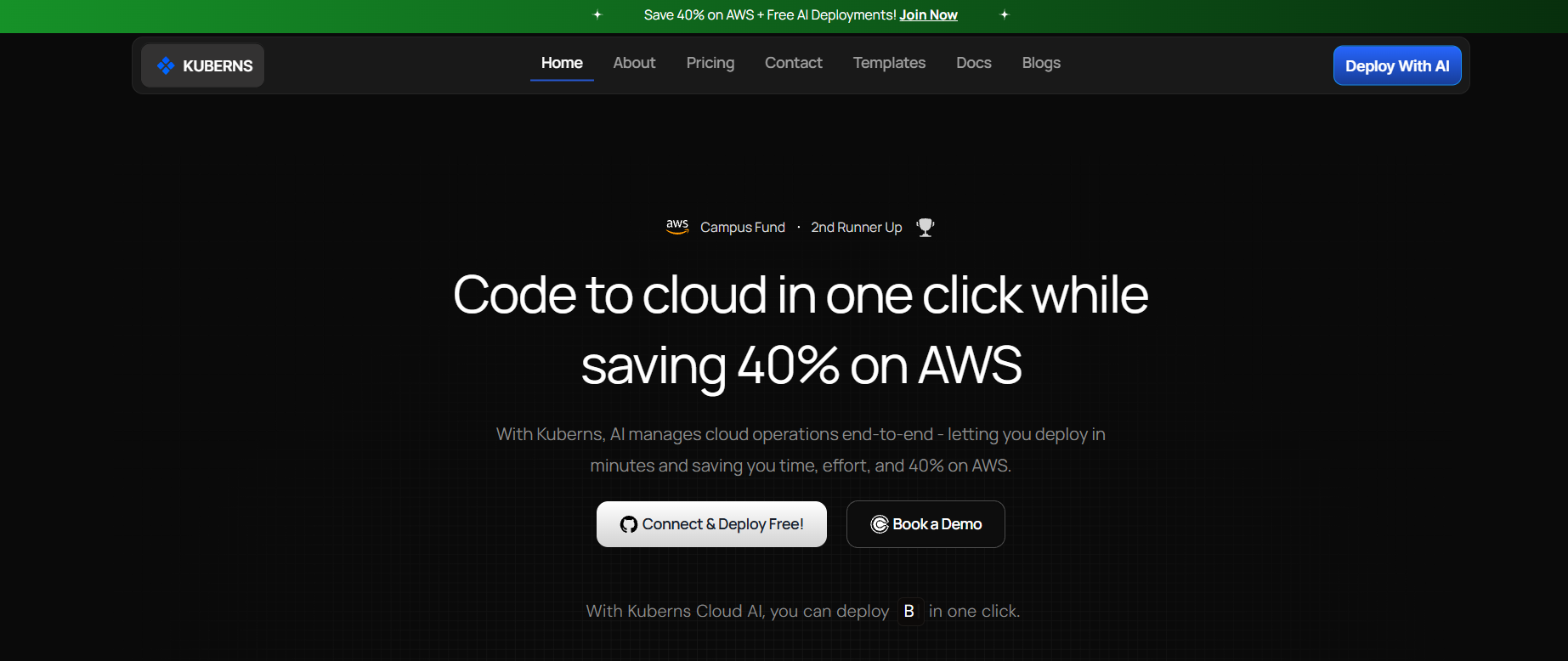
Kuberns is built as a smarter alternative to traditional cloud providers. While OVH makes users manage everything themselves, Kuberns bundles AI-driven automation, monitoring, and cost optimisation into one platform.
Why Kuberns is different:
* High-performance hosting on AWS-grade infrastructure, but optimised to cost up to 40% less.
* AI-driven scaling & monitoring that prevents wasted resources and keeps apps running smoothly.
* Transparent billing, no hidden charges for bandwidth or backups.
* Built-in CI/CD pipelines and one-click GitHub deployments, so developers don’t need DevOps engineers to get projects live.
For startups, SMBs, and agencies that want enterprise reliability without enterprise complexity, Kuberns is the clear winner among OVH alternatives.
Read now: [What is Kuberns?](https://kuberns.com/blogs/what-is-kuberns-the-simplest-way-to-build-deploy-and-scale-full-stack-apps/)
### 2. Hetzner

Hetzner is often the first name mentioned when people look for budget-friendly OVH competitors in Europe. It’s extremely affordable, with cloud instances starting under €4/month, and has a reputation for strong raw performance.
Strengths:
* One of the cheapest providers on the market.
* Strong hardware performance for compute and storage.
* Transparent flat pricing.
Drawbacks:
* Data centres are limited to Germany and Finland.
* Support and documentation aren’t as user-friendly for beginners.
* Global reach is weaker compared to Vultr or GCP.
If your audience is EU-based and cost is your top concern, Hetzner is a solid OVH alternative, though it lacks the automation and simplicity of Kuberns.
👉 Related: [Best Hetzner Alternative Options](https://kuberns.com/blogs/discover-the-best-hetzner-alternative-options-today/)
### 3. DigitalOcean

DigitalOcean is one of the most developer-friendly cloud providers and a long-standing OVH competitor. It’s especially popular with startups and SMBs thanks to its simple, predictable pricing.
Strengths:
* Transparent pricing starting at $5/month.
* User-friendly dashboard and APIs.
* Good mix of performance and scalability for small-to-mid projects.
Drawbacks:
* Limited enterprise-level features.
* Costs rise as you scale (no built-in optimisation).
* Still requires manual setup for monitoring and automation.
Compared to OVH, DigitalOcean feels cleaner and easier to manage, but if you want long-term cost optimisation, Kuberns delivers more value.
Also Read: [Best Cloud Platform: DigitalOcean vs AWS](https://kuberns.com/blogs/best-cloud-platform-digitalocean-vs-aws/)
### 4. Vultr

Vultr stands out for its global coverage with over 30 data centres worldwide, making it one of the best OVH competitors if you need low latency across regions. It’s also extremely cost-effective, with entry-level instances starting at just $2.50/month.
Strengths:
* Wide global data centre presence.
* Affordable bare-metal servers for high-performance workloads.
* Competitive pricing across all plans.
Drawbacks:
* Support quality is inconsistent.
* Scaling and monitoring must be handled manually.
* Pricing can spike once you add bandwidth-heavy workloads.
For teams focused on global reach and affordability, Vultr is a reliable alternative, though it doesn’t have the automation layer of Kuberns.
You might be interested in Reading: [Best Vultr Alternatives](https://kuberns.com/blogs/best-vultr-alternatives/)
### 5. Linode (Akamai Cloud)

Linode, now part of Akamai, is a developer-friendly OVH alternative known for its flat-rate monthly pricing. It’s often chosen by SMBs and developers who want stable performance without billing complexity.
Strengths:
* Predictable pricing, no surprise bills.
* Good developer community and documentation.
* Strong performance for small-to-medium workloads.
Drawbacks:
* Not ideal for enterprise-scale projects.
* Doesn’t include advanced automation or AI-based optimisation.
For SMBs, Linode is a safe and predictable option, though it lacks the smarter cost management features of Kuberns.
### 6. Kamatera

Kamatera is a highly customizable OVH alternative. Unlike flat-rate providers, Kamatera offers pay-per-minute pricing with granular control over CPU, RAM, and storage.
Strengths:
* Flexible pricing based on usage.
* Customizable configurations.
* Good global coverage with data centres across multiple regions.
Drawbacks:
* Complexity increases as workloads grow.
* Costs can become unpredictable for high-traffic apps.
* Requires technical expertise to configure properly.
If you want flexibility above all else, Kamatera is a strong competitor, but it’s less beginner-friendly compared to Kuberns.
Read Now: [Top Kamatera Alternatives for Your Cloud Needs](https://kuberns.com/blogs/top-kamatera-alternatives-for-your-cloud-needs/)
### 7. Google Cloud & Microsoft Azure

Both Google Cloud (GCP) and Microsoft Azure are common OVH alternatives for enterprises that need scale and global presence. They offer advanced services like AI/ML, hybrid cloud, and global load balancing.
Strengths:
* Enterprise-grade infrastructure.
* Global availability and advanced tools.
* Strong support for regulated industries.
Drawbacks:
* Expensive compared to smaller providers.
* Complexity similar to AWS.
* Overkill for most startups or SMBs.
If your organisation is enterprise-scale and already using advanced cloud tools, GCP and Azure are viable OVH competitors. For smaller teams, they may be too costly and complex.
> This list shows the full spectrum: budget-friendly providers (Hetzner, Vultr), developer-first options (DigitalOcean, Linode), customizable infra (Kamatera), and enterprise clouds (GCP, Azure). But Kuberns stands out as the only OVH alternative that combines automation, cost savings, and simplicity in one package.
## Comparison Table: OVH vs Top Alternatives (2026)
This table compares OVH with leading alternatives based on the real reasons teams switch: reliability, pricing clarity, operational effort, and automation.
| Platform | Reliability & Uptime | Pricing Transparency | Ease of Management | Automation & Cost Optimisation | Best For |
| ------------------------ | --------------------- | --------------------------------- | ------------------------- | ------------------------------------ | ----------------------------------- |
| **OVH** | History of outages | Hidden bandwidth & backup costs | Complex, DevOps-heavy | Manual scaling & monitoring | Large EU workloads with infra teams |
| **Kuberns** | AWS-grade reliability | Fully transparent, no hidden fees | One-click deployments | AI-driven scaling, up to 40% savings | Startups, SMBs, agencies |
| **Hetzner** | Stable in the EU | Flat, predictable pricing | Technical setup required | No built-in automation | Cheapest EU-focused hosting |
| **DigitalOcean** | Solid uptime | Simple monthly pricing | Developer-friendly | Manual optimisation | Small to mid-sized apps |
| **Vultr** | Good global uptime | Low-cost plans | Moderate complexity | Manual monitoring | Global reach at low cost |
| **Linode (Akamai)** | Stable | Flat-rate billing | Developer-friendly | Limited automation | Predictable VPS workloads |
| **Kamatera** | Very reliable | Usage-based, can spike | High configuration effort | No automation | Highly customised infra |
| **Google Cloud / Azure** | Enterprise-grade | Complex billing | Steep learning curve | Manual cost control | Enterprise-scale systems |
> In short, the [best OVH alternative](https://kuberns.com/) like Kuberns will give you high-performance hosting with transparent pricing and less complexity, making them ideal for startups, SMBs, and agencies alike.
## Top 7 OVH Cloud Alternatives for Cloud Hosting
There’s no shortage of cloud hosting providers, but when it comes to OVH alternatives, only a few truly strike a balance between cost, performance, and reliability.
Here are the top 7 competitors in 2026 that businesses are turning to.
### 1. Kuberns

Kuberns is built as a smarter alternative to traditional cloud providers. While OVH makes users manage everything themselves, Kuberns bundles AI-driven automation, monitoring, and cost optimisation into one platform.
Why Kuberns is different:
* High-performance hosting on AWS-grade infrastructure, but optimised to cost up to 40% less.
* AI-driven scaling & monitoring that prevents wasted resources and keeps apps running smoothly.
* Transparent billing, no hidden charges for bandwidth or backups.
* Built-in CI/CD pipelines and one-click GitHub deployments, so developers don’t need DevOps engineers to get projects live.
For startups, SMBs, and agencies that want enterprise reliability without enterprise complexity, Kuberns is the clear winner among OVH alternatives.
Read now: [What is Kuberns?](https://kuberns.com/blogs/what-is-kuberns-the-simplest-way-to-build-deploy-and-scale-full-stack-apps/)
### 2. Hetzner

Hetzner is often the first name mentioned when people look for budget-friendly OVH competitors in Europe. It’s extremely affordable, with cloud instances starting under €4/month, and has a reputation for strong raw performance.
Strengths:
* One of the cheapest providers on the market.
* Strong hardware performance for compute and storage.
* Transparent flat pricing.
Drawbacks:
* Data centres are limited to Germany and Finland.
* Support and documentation aren’t as user-friendly for beginners.
* Global reach is weaker compared to Vultr or GCP.
If your audience is EU-based and cost is your top concern, Hetzner is a solid OVH alternative, though it lacks the automation and simplicity of Kuberns.
👉 Related: [Best Hetzner Alternative Options](https://kuberns.com/blogs/discover-the-best-hetzner-alternative-options-today/)
### 3. DigitalOcean

DigitalOcean is one of the most developer-friendly cloud providers and a long-standing OVH competitor. It’s especially popular with startups and SMBs thanks to its simple, predictable pricing.
Strengths:
* Transparent pricing starting at $5/month.
* User-friendly dashboard and APIs.
* Good mix of performance and scalability for small-to-mid projects.
Drawbacks:
* Limited enterprise-level features.
* Costs rise as you scale (no built-in optimisation).
* Still requires manual setup for monitoring and automation.
Compared to OVH, DigitalOcean feels cleaner and easier to manage, but if you want long-term cost optimisation, Kuberns delivers more value.
Also Read: [Best Cloud Platform: DigitalOcean vs AWS](https://kuberns.com/blogs/best-cloud-platform-digitalocean-vs-aws/)
### 4. Vultr

Vultr stands out for its global coverage with over 30 data centres worldwide, making it one of the best OVH competitors if you need low latency across regions. It’s also extremely cost-effective, with entry-level instances starting at just $2.50/month.
Strengths:
* Wide global data centre presence.
* Affordable bare-metal servers for high-performance workloads.
* Competitive pricing across all plans.
Drawbacks:
* Support quality is inconsistent.
* Scaling and monitoring must be handled manually.
* Pricing can spike once you add bandwidth-heavy workloads.
For teams focused on global reach and affordability, Vultr is a reliable alternative, though it doesn’t have the automation layer of Kuberns.
You might be interested in Reading: [Best Vultr Alternatives](https://kuberns.com/blogs/best-vultr-alternatives/)
### 5. Linode (Akamai Cloud)

Linode, now part of Akamai, is a developer-friendly OVH alternative known for its flat-rate monthly pricing. It’s often chosen by SMBs and developers who want stable performance without billing complexity.
Strengths:
* Predictable pricing, no surprise bills.
* Good developer community and documentation.
* Strong performance for small-to-medium workloads.
Drawbacks:
* Not ideal for enterprise-scale projects.
* Doesn’t include advanced automation or AI-based optimisation.
For SMBs, Linode is a safe and predictable option, though it lacks the smarter cost management features of Kuberns.
### 6. Kamatera

Kamatera is a highly customizable OVH alternative. Unlike flat-rate providers, Kamatera offers pay-per-minute pricing with granular control over CPU, RAM, and storage.
Strengths:
* Flexible pricing based on usage.
* Customizable configurations.
* Good global coverage with data centres across multiple regions.
Drawbacks:
* Complexity increases as workloads grow.
* Costs can become unpredictable for high-traffic apps.
* Requires technical expertise to configure properly.
If you want flexibility above all else, Kamatera is a strong competitor, but it’s less beginner-friendly compared to Kuberns.
Read Now: [Top Kamatera Alternatives for Your Cloud Needs](https://kuberns.com/blogs/top-kamatera-alternatives-for-your-cloud-needs/)
### 7. Google Cloud & Microsoft Azure

Both Google Cloud (GCP) and Microsoft Azure are common OVH alternatives for enterprises that need scale and global presence. They offer advanced services like AI/ML, hybrid cloud, and global load balancing.
Strengths:
* Enterprise-grade infrastructure.
* Global availability and advanced tools.
* Strong support for regulated industries.
Drawbacks:
* Expensive compared to smaller providers.
* Complexity similar to AWS.
* Overkill for most startups or SMBs.
If your organisation is enterprise-scale and already using advanced cloud tools, GCP and Azure are viable OVH competitors. For smaller teams, they may be too costly and complex.
> This list shows the full spectrum: budget-friendly providers (Hetzner, Vultr), developer-first options (DigitalOcean, Linode), customizable infra (Kamatera), and enterprise clouds (GCP, Azure). But Kuberns stands out as the only OVH alternative that combines automation, cost savings, and simplicity in one package.
 ## What to Look for in an OVH Alternative

If you are replacing OVH, you are not just shopping for another VPS. You are trying to fix specific problems that keep repeating. Here is what actually matters.
### 1. Reliability Without Downtime Surprises
OVH users frequently cite outages and instability as the breaking point. A real alternative must offer consistent uptime and infrastructure that does not fail silently.
This is where [platforms](https://kuberns.com/) running on proven hyperscale infrastructure, or abstracting reliability away from the user, perform better than traditional providers.
### 2. Pricing You Can Predict Month After Month
Many teams leave OVH because the final invoice rarely matches expectations. Bandwidth usage, backups, and add-ons inflate costs over time.
A strong OVH alternative should:
* Show clear pricing upfront
* Avoid surprise bandwidth or recovery charges
* Make it easy to forecast costs as traffic grows
This is one area where [AI-driven optimisation](https://kuberns.com/blogs/aws-ec2-pricing/) fundamentally changes the experience.
### 3. Less DevOps Work, Not Just Different Servers
OVH gives infrastructure, but all operational responsibility stays with you.
An actual upgrade means:
* No manual scaling decisions
* No stitching together monitoring, CI/CD, and alerts
* No late-night debugging caused by misconfigured services
Replacing OVH with another VPS keeps the same problem. Replacing it with an [automated platform](https://kuberns.com/) removes the problem.
### 4. Cost-to-Performance Balance, Not Just Cheap Servers
Cheapest is rarely the best long-term option. Many OVH alternatives look affordable at the entry level, but:
* Become expensive as workloads scale
* Require more tooling and management
* Increase operational risk
The best alternative balance:
* Strong performance
* Lower operational effort
* Long-term cost efficiency
This is why teams increasingly choose platforms that optimise cloud usage automatically instead of managing it manually.
## OVH vs Alternatives: Where OVH Falls Short

OVH has earned its place in the cloud hosting market with competitive pricing and a wide portfolio of services.
But when stacked against its competitors, several weaknesses become clear, and these are often the reasons why businesses actively search for [OVH alternatives](https://kuberns.com).
### 1. Unpredictable Downtime
OVH has faced several high-profile outages in recent years, including incidents that left thousands of websites offline for hours. For businesses where uptime equals revenue, this level of risk is unacceptable. Competitors like Hetzner, DigitalOcean, and Kuberns offer stronger reputations for reliability and stability.
### 2. Complex and Slow Support
A common complaint among OVH users is the difficulty of getting timely support. Tickets often take days to resolve, leaving developers stuck in critical situations. By contrast, alternatives such as DigitalOcean and Kuberns provide more responsive and developer-friendly support options.
### 3. Hidden Costs in Billing
On paper, OVH looks affordable, but extra charges for bandwidth, backups, and add-ons often inflate monthly bills. For cost-conscious startups and SMBs, this makes planning budgets difficult. Competitors like Linode and Kuberns provide clearer, more predictable pricing.
### 4. Developer Experience Lags Behind
OVH’s platform is feature-rich, but not always intuitive. For teams without dedicated DevOps resources, managing OVH’s infrastructure can feel cumbersome. Alternatives such as DigitalOcean simplify the experience, while Kuberns goes further by automating scaling, monitoring, and CI/CD.
> OVH may work for certain enterprise needs, but for most startups, SMBs, and agencies, the costs, downtime risks, and complexity outweigh the benefits. That’s why competitors, especially Kuberns, are gaining ground.
## Why Kuberns is a Smarter OVH Alternative?

Switching away from OVH often comes down to three things: cost, reliability, and complexity.
Traditional providers may solve one or two of these problems, but very few address all three. That’s where Kuberns stands out as a next-generation IaaS platform.
### 1. Transparent, Predictable Pricing
Unlike OVH, where bills can increase due to extra bandwidth or backup charges, Kuberns keeps costs clear and all-inclusive. Businesses can plan their monthly budgets without worrying about surprise invoices.
### 2. AI-Driven Performance and Scaling
OVH and many of its competitors require manual configuration for scaling and monitoring. Kuberns uses AI to automatically scale resources in real time, ensuring applications run smoothly while cutting waste. This optimisation alone delivers up to 40% lower costs compared to traditional cloud providers.
### 3. Reliability on Proven Infrastructure
Kuberns is built on optimised AWS infrastructure, giving teams the same reliability and uptime as the world’s most trusted cloud, but at significantly lower cost. This makes it a strong fit for startups, SMBs, and agencies that need enterprise-grade stability without enterprise-level expenses.
### 4. Developer-Friendly by Design
Where OVH feels complex and support can be slow, Kuberns puts ease of use front and centre. With one-click GitHub deployments, built-in CI/CD, and automated monitoring, developers can focus on building features instead of wrestling with infrastructure.
## Final Verdict: The Best OVH Alternative in 2026
OVH has been a popular choice in the cloud hosting market, but its history of downtime, complex billing, and slow support continues to push businesses to explore better options.
The good news is that there are plenty of reliable OVH alternatives in 2026.
* Hetzner, DigitalOcean, Vultr, and Linode provide affordable and developer-friendly hosting.
* Kamatera offers flexible infrastructure for those who want customisation.
* Google Cloud and Microsoft Azure deliver enterprise-grade scale and reliability.
Each of these providers has strengths, but they also leave gaps, especially around automation, cost optimisation, and ease of use.
That’s where Kuberns rises above the rest.
By combining transparent pricing, AI-powered scaling, and AWS-grade reliability, Kuberns eliminates the pain points that push teams away from OVH in the first place. It’s the alternative that delivers performance, predictability, and simplicity all in one platform.
If you’re ready to cut cloud costs, avoid complexity, and upgrade to smarter hosting, the answer is clear:
[Start Saving on Cloud Hosting with Kuberns](https://kuberns.com)
## What to Look for in an OVH Alternative

If you are replacing OVH, you are not just shopping for another VPS. You are trying to fix specific problems that keep repeating. Here is what actually matters.
### 1. Reliability Without Downtime Surprises
OVH users frequently cite outages and instability as the breaking point. A real alternative must offer consistent uptime and infrastructure that does not fail silently.
This is where [platforms](https://kuberns.com/) running on proven hyperscale infrastructure, or abstracting reliability away from the user, perform better than traditional providers.
### 2. Pricing You Can Predict Month After Month
Many teams leave OVH because the final invoice rarely matches expectations. Bandwidth usage, backups, and add-ons inflate costs over time.
A strong OVH alternative should:
* Show clear pricing upfront
* Avoid surprise bandwidth or recovery charges
* Make it easy to forecast costs as traffic grows
This is one area where [AI-driven optimisation](https://kuberns.com/blogs/aws-ec2-pricing/) fundamentally changes the experience.
### 3. Less DevOps Work, Not Just Different Servers
OVH gives infrastructure, but all operational responsibility stays with you.
An actual upgrade means:
* No manual scaling decisions
* No stitching together monitoring, CI/CD, and alerts
* No late-night debugging caused by misconfigured services
Replacing OVH with another VPS keeps the same problem. Replacing it with an [automated platform](https://kuberns.com/) removes the problem.
### 4. Cost-to-Performance Balance, Not Just Cheap Servers
Cheapest is rarely the best long-term option. Many OVH alternatives look affordable at the entry level, but:
* Become expensive as workloads scale
* Require more tooling and management
* Increase operational risk
The best alternative balance:
* Strong performance
* Lower operational effort
* Long-term cost efficiency
This is why teams increasingly choose platforms that optimise cloud usage automatically instead of managing it manually.
## OVH vs Alternatives: Where OVH Falls Short

OVH has earned its place in the cloud hosting market with competitive pricing and a wide portfolio of services.
But when stacked against its competitors, several weaknesses become clear, and these are often the reasons why businesses actively search for [OVH alternatives](https://kuberns.com).
### 1. Unpredictable Downtime
OVH has faced several high-profile outages in recent years, including incidents that left thousands of websites offline for hours. For businesses where uptime equals revenue, this level of risk is unacceptable. Competitors like Hetzner, DigitalOcean, and Kuberns offer stronger reputations for reliability and stability.
### 2. Complex and Slow Support
A common complaint among OVH users is the difficulty of getting timely support. Tickets often take days to resolve, leaving developers stuck in critical situations. By contrast, alternatives such as DigitalOcean and Kuberns provide more responsive and developer-friendly support options.
### 3. Hidden Costs in Billing
On paper, OVH looks affordable, but extra charges for bandwidth, backups, and add-ons often inflate monthly bills. For cost-conscious startups and SMBs, this makes planning budgets difficult. Competitors like Linode and Kuberns provide clearer, more predictable pricing.
### 4. Developer Experience Lags Behind
OVH’s platform is feature-rich, but not always intuitive. For teams without dedicated DevOps resources, managing OVH’s infrastructure can feel cumbersome. Alternatives such as DigitalOcean simplify the experience, while Kuberns goes further by automating scaling, monitoring, and CI/CD.
> OVH may work for certain enterprise needs, but for most startups, SMBs, and agencies, the costs, downtime risks, and complexity outweigh the benefits. That’s why competitors, especially Kuberns, are gaining ground.
## Why Kuberns is a Smarter OVH Alternative?

Switching away from OVH often comes down to three things: cost, reliability, and complexity.
Traditional providers may solve one or two of these problems, but very few address all three. That’s where Kuberns stands out as a next-generation IaaS platform.
### 1. Transparent, Predictable Pricing
Unlike OVH, where bills can increase due to extra bandwidth or backup charges, Kuberns keeps costs clear and all-inclusive. Businesses can plan their monthly budgets without worrying about surprise invoices.
### 2. AI-Driven Performance and Scaling
OVH and many of its competitors require manual configuration for scaling and monitoring. Kuberns uses AI to automatically scale resources in real time, ensuring applications run smoothly while cutting waste. This optimisation alone delivers up to 40% lower costs compared to traditional cloud providers.
### 3. Reliability on Proven Infrastructure
Kuberns is built on optimised AWS infrastructure, giving teams the same reliability and uptime as the world’s most trusted cloud, but at significantly lower cost. This makes it a strong fit for startups, SMBs, and agencies that need enterprise-grade stability without enterprise-level expenses.
### 4. Developer-Friendly by Design
Where OVH feels complex and support can be slow, Kuberns puts ease of use front and centre. With one-click GitHub deployments, built-in CI/CD, and automated monitoring, developers can focus on building features instead of wrestling with infrastructure.
## Final Verdict: The Best OVH Alternative in 2026
OVH has been a popular choice in the cloud hosting market, but its history of downtime, complex billing, and slow support continues to push businesses to explore better options.
The good news is that there are plenty of reliable OVH alternatives in 2026.
* Hetzner, DigitalOcean, Vultr, and Linode provide affordable and developer-friendly hosting.
* Kamatera offers flexible infrastructure for those who want customisation.
* Google Cloud and Microsoft Azure deliver enterprise-grade scale and reliability.
Each of these providers has strengths, but they also leave gaps, especially around automation, cost optimisation, and ease of use.
That’s where Kuberns rises above the rest.
By combining transparent pricing, AI-powered scaling, and AWS-grade reliability, Kuberns eliminates the pain points that push teams away from OVH in the first place. It’s the alternative that delivers performance, predictability, and simplicity all in one platform.
If you’re ready to cut cloud costs, avoid complexity, and upgrade to smarter hosting, the answer is clear:
[Start Saving on Cloud Hosting with Kuberns](https://kuberns.com)
 ## FAQs on OVH Alternatives
### 1. Why are businesses moving away from OVH?
The main reasons are downtime incidents, slow support response times, and hidden costs. Many companies prefer alternatives that offer more reliability, transparent pricing, and a stronger customer experience.
### 2. What is the best OVH alternative in 2026?
The best OVH alternative depends on your needs. Hetzner is the cheapest in the EU, DigitalOcean is great for simplicity, and Vultr offers strong global coverage. For businesses that want cost savings, automation, and AWS-grade reliability, Kuberns is the smarter choice.
### 3. Which OVH alternative is cheapest?
For raw pricing, Hetzner usually comes out on top, with servers starting under €4/month. However, cheaper does not always mean better. Platforms like Kuberns offer up to 40% cost savings through AI optimisation while also providing automation and transparent billing.
### 4. How hard is it to migrate from OVH to another provider?
Migration difficulty depends on your workloads, but most providers, including Kuberns, make it straightforward. With the right planning for backups, DNS updates, and testing, moving away from OVH can often be done with minimal downtime.
### 5. Is Kuberns a reliable OVH alternative?
Yes. Kuberns is built on optimised AWS infrastructure, which delivers enterprise-grade uptime and performance. On top of that, it adds AI-powered scaling, monitoring, and transparent pricing, making it a reliable and cost-effective alternative to OVH.
---
- [More Alternatives articles](https://kuberns.com/blogs/category/alternatives/1/)
- [All articles](https://kuberns.com/blogs/)
## FAQs on OVH Alternatives
### 1. Why are businesses moving away from OVH?
The main reasons are downtime incidents, slow support response times, and hidden costs. Many companies prefer alternatives that offer more reliability, transparent pricing, and a stronger customer experience.
### 2. What is the best OVH alternative in 2026?
The best OVH alternative depends on your needs. Hetzner is the cheapest in the EU, DigitalOcean is great for simplicity, and Vultr offers strong global coverage. For businesses that want cost savings, automation, and AWS-grade reliability, Kuberns is the smarter choice.
### 3. Which OVH alternative is cheapest?
For raw pricing, Hetzner usually comes out on top, with servers starting under €4/month. However, cheaper does not always mean better. Platforms like Kuberns offer up to 40% cost savings through AI optimisation while also providing automation and transparent billing.
### 4. How hard is it to migrate from OVH to another provider?
Migration difficulty depends on your workloads, but most providers, including Kuberns, make it straightforward. With the right planning for backups, DNS updates, and testing, moving away from OVH can often be done with minimal downtime.
### 5. Is Kuberns a reliable OVH alternative?
Yes. Kuberns is built on optimised AWS infrastructure, which delivers enterprise-grade uptime and performance. On top of that, it adds AI-powered scaling, monitoring, and transparent pricing, making it a reliable and cost-effective alternative to OVH.
---
- [More Alternatives articles](https://kuberns.com/blogs/category/alternatives/1/)
- [All articles](https://kuberns.com/blogs/)