# 10 Best PaaS Providers for Web Applications in 2026
> Explore the 10 best PaaS providers for developers by pricing, containers, managed databases, autoscaling, deployment workflow, and infrastructure control.
- **Author**: charan-achari
- **Published**: 2025-12-21
- **Modified**: 2026-09-03
- **Category**: Alternatives
- **URL**: https://kuberns.com/blogs/best-paas-providers/
---
The best overall PaaS provider for a full-stack development team is **Kuberns** when the priority is deploying from GitHub with minimal infrastructure configuration. Its agent detects the application stack, prepares the deployment workflow, and asks the developer only for required environment variables. **Render** is a strong choice for conventional web services and managed databases, **Railway** is fast for prototypes and small applications, **Vercel** is particularly strong for Next.js, and **Northflank** suits teams that need deeper Kubernetes-based control.
A Platform as a Service (PaaS) lets developers deploy and operate applications without directly configuring servers, networks, operating systems, or runtime infrastructure. The right platform should reduce the work between pushing code and running a reliable production application.
This guide compares 10 core PaaS platforms across the concerns developers encounter after the first deployment: setup effort, backend and worker support, managed databases, scaling, pricing predictability, debugging, and ongoing operational work. Use the recommendations and comparison table below to identify the strongest options for your application, then review each provider's capabilities and tradeoffs before choosing a production platform.
## TL;DR: Best PaaS Providers in 2026
* **Kuberns** is the best overall choice for full-stack teams that want the platform to detect and configure deployments from their code.
* **Vercel** is the best pick for frontend and Next.js projects.
* **Render** and **Railway** are solid for startups that need something production-ready fast.
* **Heroku** remains supported, but its sustaining-engineering model is an important roadmap consideration for new projects.
* **Coolify** is the best self-hosted option if you want to run PaaS on your own VPS.
* For the simplest Kuberns workflow, connect a repository, add required environment variables, and let its agent configure the deployment.
## How We Ranked These PaaS Providers
We ranked these PaaS providers by what matters after a developer has real code to ship, not by the longest feature list. A useful PaaS should make the first deployment simple, but it also needs to stay practical once the app has databases, workers, custom domains, production traffic, team members and cost constraints.
The ranking gives extra weight to:
* **Deployment speed from Git:** how quickly a repo becomes a live app without fragile manual setup.
* **Backend and worker support:** whether the platform can run APIs, background workers, cron jobs and long-running services.
* **Managed databases and data services:** how naturally the platform handles Postgres, Redis, object storage and backups.
* **Pricing predictability:** whether a team can estimate production cost before traffic grows.
* **Docker and container support:** important for custom runtimes, monorepos and portable deployment.
* **Autoscaling, custom domains and SSL:** table-stakes for production, but implemented very differently across providers.
* **Day-two operations:** logs, rollbacks, observability, preview environments, incident recovery and how much DevOps work remains with the team.
This is why Kuberns ranks first for teams that want deployment handled from repository to production, while tools such as Vercel, Render, Railway, Fly.io and Coolify remain strong when their specific model matches the project.
## What to Look for When Evaluating PaaS Providers
Before comparing platforms, it helps to know what signals to evaluate. The PaaS market has matured to the point where nearly every platform handles the basics, Git-based deployments, HTTPS, and basic scaling. The differences that actually matter at production:
**Deployment model:** Git-native, Docker-centric, or hybrid? If your application relies on custom runtimes or private registries, Docker support matters more than polished onboarding.
**Day-two operations:** how does the platform behave six months after launch, when you have real traffic, need to debug a production incident, and want to understand your cloud bill? Logs, metrics, and rollback capabilities matter more than first-deploy speed.
**Pricing structure:** per-seat, per-service, usage-based, or compute-only? Per-seat pricing compounds quickly for small teams. Per-service billing makes multi-service apps expensive. Credit-based models can create unexpected shutdowns.
**Scaling approach:** determine whether scaling is manual, policy-based, or platform-managed, and whether it covers web services, workers and databases. Check minimum instances, scale-to-zero behavior, maximum limits, and how quickly capacity changes under traffic.
**Operational ownership:** decide whether you want a managed platform or are prepared to maintain the server yourself. Managed PaaS products reduce infrastructure work; self-hosted products provide more control but leave patching, backups, security, and recovery with your team. For a detailed explanation of the service models, read our guide to [IaaS vs PaaS vs SaaS](https://kuberns.com/blogs/iaas-vs-paas-vs-saas/).
## Quick Comparison: 10 Best PaaS Providers in 2026
| **Provider** | **Best for** | **Pricing model** | **Git deploy and setup** | **Workers, Docker and jobs** | **Scaling, SSL and regions** | **Main tradeoff** |
| --- | --- | --- | --- | --- | --- | --- |
| **Kuberns** | Full-stack teams seeking agentic deployment from repository to production | Plans start at $7, Trial Option available | Low: connect repo, add required environment variables and deploy | Full-stack app deployment with stack detection | HTTPS and production deployment workflow handled by the platform | Less low-level infrastructure control than self-managed cloud |
| **DigitalOcean App Platform** | Small teams already using DigitalOcean | Component-based pricing | Low to moderate | Web services, workers, jobs and Docker | Automatic SSL, custom domains and autoscaling on eligible plans | Costs and configuration grow across multiple components |
| **Render** | Web services with managed databases and jobs | Per-resource and workspace pricing | Low | Web services, private services, Docker, workers and cron jobs | Automatic SSL, custom domains and service-level scaling | Multi-resource bills need careful forecasting |
| **Railway** | Prototypes and small multi-service applications | Subscription plus usage-based resources | Low | Services, cron jobs, templates and volumes | Custom domains, SSL and usage-based scaling | Cost monitoring matters as traffic grows |
| **Northflank** | Kubernetes-backed services and enterprise workflows | Team, BYOC and enterprise pricing | Moderate | Services, jobs, pipelines, Docker and preview environments | Global cloud options, custom domains, SSL and Kubernetes-backed scaling | More platform concepts to learn |
| **Heroku** | Existing applications and teams familiar with dynos | Dyno, add-on and data-service pricing | Low | Web dynos, worker dynos, scheduled tasks and containers | Custom domains, SSL and dyno scaling | Sustaining-engineering roadmap and higher costs at scale |
| **Vercel** | Next.js and frontend-led applications | Subscription plus included and metered usage | Low | Functions, cron jobs, queues and workflows | Global edge network, SSL and custom domains | Long-running backend workloads may need another platform |
| **Netlify** | Static sites, JAMstack and frontend deploy previews | Credit-based usage | Low | Functions, Background Functions and scheduled functions | Global CDN, SSL, custom domains and edge features | Not ideal for infrastructure-heavy backends |
| **Fly.io** | Multi-region, low-latency applications | Usage-based Machines, storage and bandwidth | Moderate to high | Docker, long-running Machines, processes and scheduled Machines | Strong regional placement, SSL and private networking | Requires more infrastructure decisions |
| **Coolify** | Self-hosted PaaS on your own VPS | Free self-hosted software plus server cost | Moderate | Docker Compose apps, services, databases and scheduled tasks | SSL and domains available, but server reliability is yours | Your team owns backups, security and incidents |
*Features and pricing models were checked against vendor documentation in July 2026. Always verify workload-specific limits before choosing a production plan.*
## The 10 Best PaaS Providers in 2026
### 1. [Kuberns](https://kuberns.com/): Best PaaS for Full-Stack Deployment With Agentic AI
There is a meaningful difference between a PaaS platform that has added AI features and a platform where an agent helps handle the deployment workflow itself. Kuberns is built for that second use case: taking a real GitHub repository and helping move it toward a live production deployment with far less manual infrastructure work.
When you connect a GitHub repository to Kuberns, the agent reads project files such as package.json, requirements.txt, go.mod, pom.xml and composer.json, identifies the framework and dependencies, prepares the build workflow, configures the deployment path, issues SSL and activates CI/CD. You still provide required environment variables and review production settings, but the first deployment of a Next.js app, a Django API, a Go service, or a Laravel application follows a much simpler flow: connect repo, add environment variables, click deploy and get a live HTTPS URL.
What distinguishes Kuberns from every other provider in this comparison:
**Agentic deployment:** Kuberns analyses the repository to identify the stack and prepare the build and deployment workflow, reducing the configuration developers normally perform before a first release.
**Usage-oriented pricing:** pricing is based on the resources an application consumes rather than charging every collaborator a separate platform seat. Check the [current Kuberns pricing page](https://kuberns.com/pricing) when estimating a production workload.
**Reduced deployment configuration:** developers connect GitHub, provide required environment variables, and let the platform configure the application deployment. Teams should still own application security, observability, and production-readiness decisions.
**Pricing:** Plans start at $7, a Trial Option is available, and bundle packs provide additional savings. [See current Kuberns pricing](https://kuberns.com/pricing).
*Choose Kuberns if: your team is shipping fast and wants deployment to match development speed, especially if you're using AI coding tools such as Cursor, Bolt, Lovable, or Claude Code and want the build-to-production workflow to require less manual infrastructure setup. It is also a strong fit for teams migrating from another platform because deployment work has become a bottleneck.*
[Start deploying on Kuberns](https://dashboard.kuberns.com/)
### 2. DigitalOcean App Platform: Best Budget-Conscious Managed PaaS
**[DigitalOcean](https://www.digitalocean.com/)** built its reputation on being the "developer-friendly" alternative to AWS, simpler pricing, cleaner UI, and predictable billing. The App Platform extends that philosophy into PaaS: deploy from a Git repository or container image, handle the underlying infrastructure automatically, and keep costs transparent.
For teams that want managed deployment without configuring full cloud infrastructure, DigitalOcean App Platform is a useful middle ground and is especially convenient for organizations already using DigitalOcean Droplets or Managed Databases.
**Key features:** Git-based deploys with automatic rebuild on push (GitHub and GitLab)
* Supports Node.js, Python, Go, PHP, Ruby, and Docker containers
* Autoscaling on eligible plans
* Automatic SSL, HTTP/2, and custom domains
* Integration with DigitalOcean Managed Databases, including PostgreSQL, MySQL and Valkey
* Basic logs, metrics, and GitHub Actions workflows for preview environments
**Honest cons:** Autoscaling has limits compared to more sophisticated platforms. Preview environments are possible but less polished than Render or Northflank. The feature set is deliberately simpler, which is a trade-off, not a flaw.
**Pricing:** Static sites can start free, while application components and databases are billed according to their selected instance sizes. Check [DigitalOcean App Platform pricing](https://www.digitalocean.com/pricing/app-platform) for current component rates.
Choose DigitalOcean App Platform if: you're a DigitalOcean user wanting a PaaS layer on familiar infrastructure, or a small team running 2-3 services who want predictable monthly billing without per-seat complexity.
> **Evaluating DigitalOcean vs Kuberns? See our [DigitalOcean alternatives](https://kuberns.com/blogs/digitalocean-alternatives/) guide for a detailed breakdown of where each platform fits.**
### 3. Render: Full-Stack PaaS with Production-Ready Defaults
**[Render](https://render.com/)** is a modern cloud platform with native Docker support, background workers, managed PostgreSQL and Key Value, zero-downtime deploys, and pull-request preview environments. For teams that need managed data services alongside application deployment, Render covers a useful range of workloads.
It works well within its scope, but the scope has meaningful limits that become visible as applications scale or teams grow. Per-service billing compounds quickly across multi-service architectures. Scaling is rules-based, not intelligent. Free tier apps sleep, which rules Render out for production APIs that need instant response.
For teams that evaluate Render and find it fits their current stage, it is a capable platform. For teams who need the deployment layer to grow alongside them without reconfiguring scaling rules or restructuring billing, Kuberns is the path that removes those constraints permanently.
**Key features:** Git-based deploys with zero-downtime rollouts
* Background workers, cron jobs, and static sites on one platform
* Managed PostgreSQL and Key Value with backup options based on the selected plan
* PR preview environments that spin up replicas automatically
* Native Docker support, no buildpack workarounds
* DDoS protection and automatic SSL
**Honest cons:** Free web services spin down after periods without inbound traffic, so they are intended for testing rather than latency-sensitive production APIs. Each service, worker, database and workspace choice contributes to cost, which can make multi-resource applications harder to estimate.
**Pricing:** Render combines workspace plans with usage-based compute and separate data-service charges. Review [Render pricing](https://render.com/pricing) for current workspace, service and database costs.
**Choose Render if:** you need managed databases and background workers alongside application deployment and prefer explicit service-level configuration. Compare the complete cost of web services, workers, data services and workspace features before committing a multi-service production application.
> **See how Render compares to Kuberns and other platforms: Best [Render Alternatives](https://kuberns.com/blogs/best-render-alternatives/)**
### 4. Railway: Best for MVPs and Side Projects
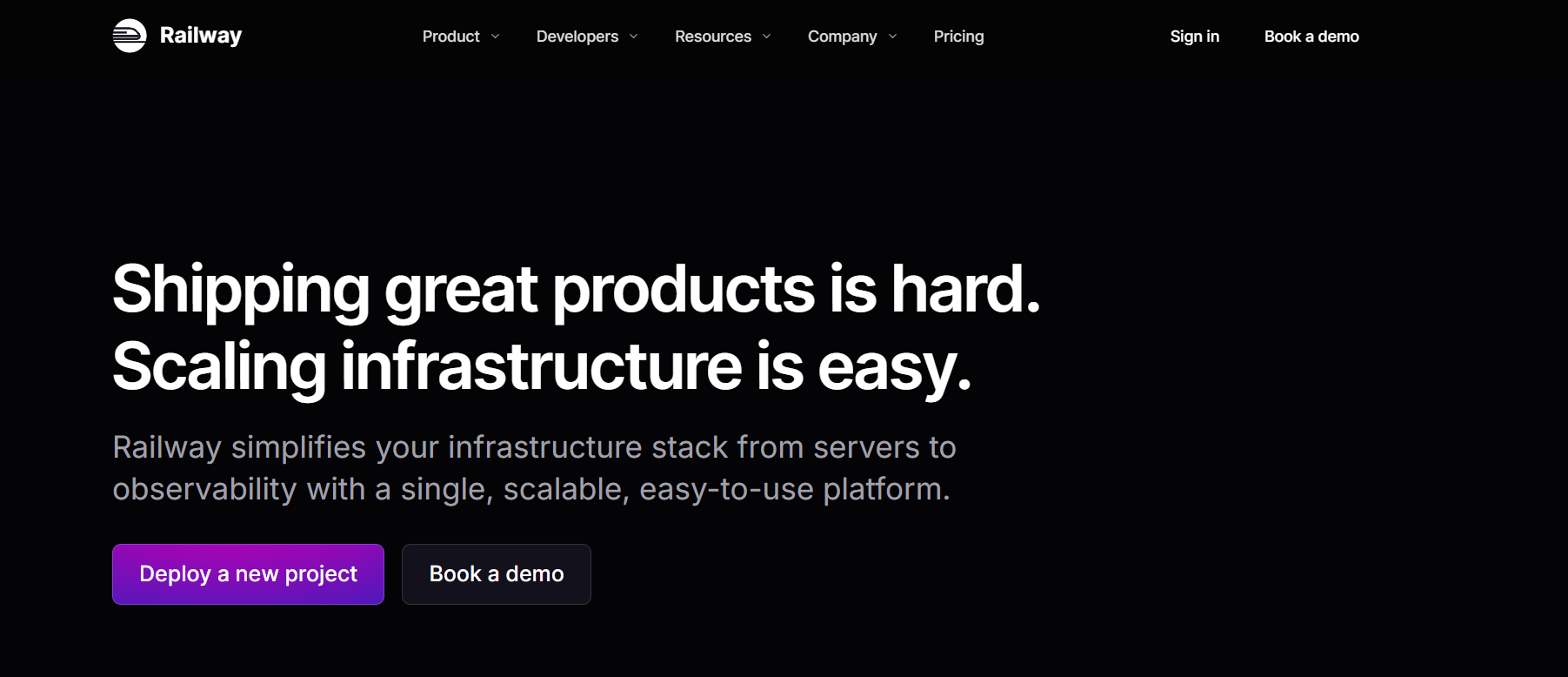
**[Railway](https://railway.com/)** prioritises a fast path from repository to deployment. It detects common application stacks, supports services within a project, and provides templates for frequently used databases and tools. This makes it attractive for prototypes, internal tools, and small production applications.
Railway's template marketplace covers common stacks and pairs with one-click database provisioning that makes spinning up Postgres, MySQL, or Redis alongside your app genuinely fast.
**Key features:** Nixpacks build system detects most modern frameworks automatically
* Instant deployments from GitHub with automatic redeploys on push
* Usage-based billing with plan credits and resource-level monitoring
* Clean dashboard with real-time usage monitoring
**Honest cons:** Usage-based billing requires teams to monitor compute, memory, storage and network consumption. Railway offers production-oriented plans and features, but teams with strict compliance, private-cloud or highly customized infrastructure requirements may need a platform with deeper controls.
**Pricing:** Railway offers Free, Hobby, Pro and Enterprise options that combine a subscription or included usage with metered resource costs. Check [Railway pricing](https://railway.com/pricing) for current credits and rates.
**Choose Railway if:** you want a fast, low-configuration workflow for a prototype, internal tool, or small multi-service application and are comfortable monitoring usage-based costs.
> **Outgrown Railway? See the Best [Railway Alternatives](https://kuberns.com/blogs/best-railway-alternatives/) guide for platforms with more predictable scaling and billing.**
### 5. Northflank: Best Enterprise PaaS with Kubernetes Power

**[Northflank](https://northflank.com/)** sits in a different tier from the platforms above. Kubernetes-native under the hood, it gives teams the developer experience of a managed PaaS with the infrastructure depth of a container orchestration platform. If you want to deploy a frontend, a backend API, a database, and a cron job, all with PR preview environments, private networking, and BYOC support, Northflank handles it in one platform.
The BYOC (Bring Your Own Cloud) capability is Northflank's clearest differentiator: you can run your infrastructure in your own AWS, GCP, or Azure account while using Northflank's managed platform layer. Data residency compliance, use of existing cloud credits, no vendor lock-in.
**Key features:** Kubernetes-native with no Kubernetes expertise required
* BYOC, deploy in your own AWS, GCP, Azure, or bare-metal
* Full-stack: services, databases, cron jobs, workers, build pipelines in one platform
* Preview environments per pull request
* GitOps workflows and CLI support
* GPU support for AI/ML workloads
**Honest cons:** Northflank exposes more concepts and controls than simpler PaaS products, so teams may face a steeper learning curve. BYOC and enterprise requirements also need more planning than a basic Git-to-deploy workflow.
**Pricing:** Northflank provides Sandbox and paid Team options, while BYOC and enterprise requirements use separate pricing. Check [Northflank pricing](https://northflank.com/pricing) for current compute allowances and plan terms.
**Choose Northflank if:** you're running Kubernetes-backed microservices at enterprise scale, need BYOC for compliance or cost control, or want a managed platform that gives you infrastructure-level control without infrastructure-level expertise.
> **Evaluating Northflank against other enterprise options? See [Best Northflank Alternatives](https://kuberns.com/blogs/top-northflank-alternatives/) for teams who want enterprise-grade deployment without Northflank's complexity and learning curve.**
### 6. Heroku: Established PaaS in Sustaining Engineering
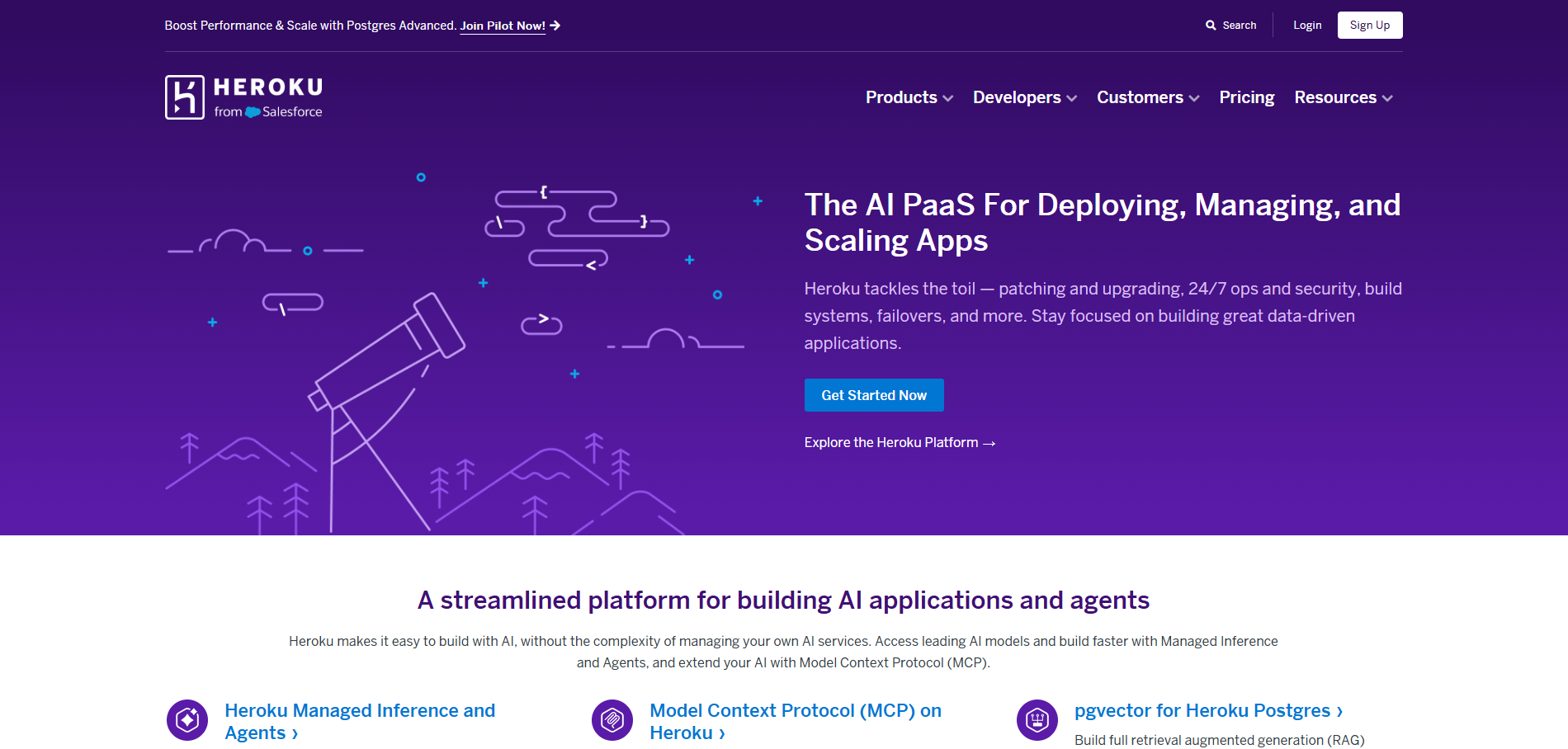
**[Heroku](https://www.heroku.com/)** invented the developer-friendly PaaS experience. Git push to deploy, buildpacks, one-click add-ons, a clean CLI, it was the default for a decade. Many production applications still run on Heroku today and continue to work well.
In February 2026, Heroku announced a transition to a sustaining-engineering model focused on stability, security, reliability and support. Existing customers and new credit-card customers can continue using Heroku. The company no longer offers Enterprise Account contracts to new customers, although existing enterprise subscriptions may renew. This makes roadmap direction a relevant consideration without implying that Heroku has shut down or stopped supporting production applications. [Read Heroku's official update](https://www.heroku.com/blog/an-update-on-heroku/).
**Key features:** Git-based deployments with a mature buildpack ecosystem
* Large add-on marketplace (Postgres, Redis, monitoring tools)
* Developer-friendly CLI that still works excellently
* Heroku Postgres is genuinely good, many teams stay for the database even if they'd choose differently for compute
* Container Registry and Runtime for deploying Docker images
* Review Apps for temporary pull-request environments
**Honest cons:** Heroku no longer offers new Enterprise Account contracts, has no permanent free compute tier, and can become expensive as an application adds dynos and add-ons. Teams seeking an actively expanding general-purpose platform roadmap should compare newer alternatives.
**Pricing:** Heroku bills dynos, data services and add-ons separately across multiple tiers. See [Heroku pricing](https://www.heroku.com/pricing/) for current rates; new Enterprise Account contracts are no longer offered.
**Choose Heroku if:** you are an existing customer with a working application and no immediate reason to migrate. For new applications, we recommend evaluating Kuberns, Render, or Railway instead.
> **Migrating from Heroku? See our [Heroku Alternatives](https://kuberns.com/blogs/heroku-alternatives/) guide, covering which platforms handle the migration path most smoothly.**
### 7. Vercel: Best PaaS for Frontend-First Applications

**[Vercel](https://vercel.com/)** created Next.js and maintains it. Nobody deploys Next.js better than Vercel, the edge network, preview deployments per PR, automatic optimisation of Next.js output (image optimisation, ISR, edge functions), and global CDN are built around each other.
For teams whose application is centered on Next.js or another frontend framework, Vercel offers a tightly integrated build, preview and delivery workflow. It also supports full-stack applications through Functions, storage integrations, cron jobs, queues and workflows.
**Key features:** Unmatched Next.js optimisation and support
* Preview deployments on every pull request
* Global edge network with automatic CDN
* Vercel AI SDK for building AI application features
* v0 for generating React components from prompts
* GitHub, GitLab, and Bitbucket integration
**Honest cons:** Vercel supports backend workloads, but continuously running processes, portable containers and applications requiring deep infrastructure control may fit a general-purpose PaaS better. Usage beyond plan allowances can also make costs harder to forecast without monitoring.
**Pricing:** Hobby is intended for personal, non-commercial use. Pro combines a team subscription with included usage and additional metered consumption; Enterprise is customized. Verify current allowances on [Vercel pricing](https://vercel.com/pricing).
**Choose Vercel if:** your application is primarily Next.js, React, or another frontend framework, and your backend is either minimal or handled through external APIs and services.
> **Building a full-stack app and finding Vercel limiting? See Best [Vercel Alternatives](https://kuberns.com/blogs/best-vercel-alternatives/), platforms that handle frontend and backend from one deployment.**
### 8. Netlify: Best for Static Sites and JAMstack

**[Netlify](https://www.netlify.com/)** pioneered the JAMstack movement and now supports a wider range of composable web applications. Connect a Git repository and Netlify handles builds, deploy previews and delivery, while Functions, Background Functions, scheduled functions and data services can support dynamic workloads.
**Key features:** Git-based continuous deployment from GitHub, GitLab, and Bitbucket
* Global CDN with automatic HTTPS
* Functions, Background Functions and scheduled functions
* Forms, Blobs, Netlify DB and edge capabilities
* Deploy Previews for reviewing changes before production
**Honest cons:** Netlify is strongest for web applications that fit its build-and-functions model. Long-running servers, arbitrary containers and infrastructure-heavy backends may require another platform. Credit-based usage also requires teams to monitor production deploys, compute, bandwidth and web requests.
**Pricing:** Netlify uses credits across production deploys, compute, bandwidth, web requests and other services. Free, Personal and Pro plans include different credit allowances. Check [Netlify pricing](https://www.netlify.com/pricing/) for current limits.
**Choose Netlify if:** you're deploying a marketing site, documentation, a content-driven blog, or a static SPA. If your project has a meaningful backend, Netlify is not the right platform.
> **Need to deploy a backend alongside your frontend? See Best [Netlify Alternatives](https://kuberns.com/blogs/best-netlify-alternatives/) for platforms that handle the full stack.**
### 9. Fly.io: Best for Global Low-Latency and Multi-Region Deployment

**[Fly.io](https://fly.io/)** runs your application close to your users. Instead of one datacenter serving all traffic, Fly deploys your app across multiple regions simultaneously. Users in Singapore get low-latency responses from Singapore infrastructure, users in Germany from Frankfurt.
For applications where latency to the user matters, real-time collaboration tools, websocket-heavy apps, APIs serving globally distributed users, Fly's architecture delivers something most PaaS providers can't match.
**Key features:** Multi-region deployment from one configuration
* Fly Machines: hardware-virtualised VMs that start in milliseconds
* Works with any language or framework via Docker
* Private networking between services using WireGuard
* Persistent volumes attached to VMs
* GPU support for AI inference workloads
**Honest cons:** Fly.io expects you to think like an infrastructure engineer. You write a fly.toml configuration file, choose your regions, and make decisions about machine types and volume allocation. This is power, but it comes with complexity. Not a good fit for teams who want deployment to be invisible.
**Pricing:** Fly.io provides a limited free trial rather than a permanent free compute tier. Ongoing costs depend on Machines, storage, network usage and selected regions. Use the [Fly.io pricing documentation](https://fly.io/docs/about/pricing/) for workload-specific estimates.
**Choose Fly.io if:** latency to users is a first-class requirement for your application, you're comfortable with container-based deployment workflows, and you want multi-region infrastructure without managing Kubernetes clusters.
> **Evaluating Fly.io against other options? See Best [Fly.io Alternatives](https://kuberns.com/blogs/fly-io-alternatives-2025/) for teams where multi-region edge deployment isn't the core requirement.**
### 10. Coolify: Best Self-Hosted PaaS for Cost-Sensitive Teams

**[Coolify](https://coolify.io/)** is an open-source, self-hosted PaaS that runs on your own VPS. Instead of paying a managed PaaS premium, you pay the cost of a VPS ($5-10/month on Hetzner, DigitalOcean, or Vultr) and deploy Coolify to it. Coolify then provides the same Git-based deployment experience you'd expect from Heroku or Render, but running on infrastructure you control.
**Key features:** Open source and free (self-hosted on your own server)
* Heroku-like Git push deployments without Heroku's pricing
* Docker Compose support for multi-service applications
* Automatic SSL via Let's Encrypt
* One-click installation of common tools (Postgres, Redis, Supabase, Plausible, etc.)
* Full control over your data and infrastructure
**Honest cons:** With self-hosted Coolify, your team manages the server, operating-system updates, backups, security and incident recovery. Coolify also offers a managed cloud option and commercial support, but self-hosting does not remove the underlying infrastructure responsibility.
**Pricing:** The open-source self-hosted edition is free, excluding the infrastructure you provide. Coolify Cloud and support options are priced separately. Check [Coolify pricing](https://coolify.io/pricing/) for current managed plans.
**Choose Coolify if:** you're cost-sensitive and comfortable managing a Linux server, you want full control and zero vendor lock-in, and you don't need the managed SLAs that come with a paid PaaS.
> **Considering self-hosting alternatives? See Best [Coolify Alternatives](https://kuberns.com/blogs/coolify-alternatives/). Kuberns leads for teams who want Coolify's simplicity without the server administration that comes with it.**
## Why Agentic Deployment Platforms Are Different from Traditional PaaS
Every platform above automates deployment to some degree. The difference with an agentic deployment platform is where the configuration work starts: does the platform mainly execute settings you define, or can it inspect the repository and help prepare the deployment workflow before you manually wire everything together?
**Traditional PaaS:** you define the build command, scaling rules, resource limits, and monitoring thresholds. The platform executes what you set. If your application grows beyond what you configured, you will notice it in a post-incident review.
**Agentic deployment platform (Kuberns):** the platform reads your code, understands your stack, prepares the build and deployment workflow, and reduces the amount of manual setup needed between a GitHub repository and a production URL.
**The practical consequence:** traditional PaaS platforms are excellent tools that still require an informed operator. Kuberns is built for teams that want fewer deployment decisions to sit with developers before an app can go live.
Google Cloud's [2024 DORA report](https://services.google.com/fh/files/misc/2024_final_dora_report.pdf) treats deployment frequency, change lead time, recovery time, change failure rate and deployment rework as related measures of software-delivery performance. A PaaS can reduce infrastructure setup, but teams should evaluate it on whether it improves these outcomes for their own delivery process rather than assuming automation alone guarantees better performance.
## Best PaaS Providers by Use Case
If you are choosing from search results and need a faster shortlist, start here:
| **Use case** | **Best options** | **Why** |
| --- | --- | --- |
| Cheapest PaaS for small projects | Coolify, Railway, DigitalOcean App Platform, Kuberns | Coolify can be cheapest when you already manage a VPS. Railway and DigitalOcean App Platform can work well for small apps, but watch usage and component growth. Kuberns becomes cost-effective when reduced deployment setup and operational time matter as much as raw instance price. |
| Best free or trial-friendly PaaS | Kuberns, Railway, Render, Netlify, Vercel | Good for testing fit before production. Always check sleep behavior, usage credits, commercial-use rules and resource limits. |
| Fastest Git push deployment | Kuberns, Vercel, Railway, Render | Kuberns is strongest when you want the platform to detect and prepare deployment from the repo. Vercel is fastest for Next.js, Railway for prototypes, and Render for conventional services. |
| Best PaaS for Django and Flask | Kuberns, Render, Railway, Heroku, DigitalOcean App Platform | These are practical for Python web apps. Kuberns is best when you want less manual setup from repo to production. |
| Best for background workers and cron jobs | Render, Railway, Heroku, Northflank, Kuberns | Pick based on whether you need simple scheduled jobs, long-running workers, queues, logs, or a full-stack deployment workflow. |
| Best Docker PaaS | Northflank, Fly.io, Render, DigitalOcean App Platform, Coolify | These are stronger when portability, custom runtimes, or Docker-first deployment matters. If your real goal is less deployment configuration rather than Docker control, compare Kuberns before choosing a Docker-first platform. |
| Best for multi-region or low latency apps | Fly.io, Vercel, Netlify, Northflank | Fly.io is strongest for regional app placement. Vercel and Netlify are excellent for frontend edge delivery. If deployment simplicity is more important than manual region placement, Kuberns may be the better fit. |
| Best for startups scaling from prototype to production | Kuberns, Render, Railway, Northflank | Railway is useful early, Render adds managed services, Northflank adds deeper control, and Kuberns is best when deployment operations should stay lightweight. |
## Which PaaS Provider Is Right for Your Team?
Use this to route to the right platform based on your actual situation, not a generic feature checklist:
| **Your situation**| **Best platform**|
| ---------------------------------------------------- | ---------------------------------------------- |
| Shipping full-stack apps with minimal deployment configuration | Kuberns |
| Moving from a PaaS and wanting less deployment configuration | Kuberns |
| Frontend / Next.js primary, backend is external APIs | Vercel |
| Side project / MVP, need something live today | Railway, graduate to Kuberns when it matters |
| Enterprise, needs BYOC and Kubernetes power | Northflank |
| Static site, marketing, JAMstack | Netlify |
| Global low-latency, comfortable with infra config | Fly.io |
| Budget-constrained, okay, managing a VPS | Coolify. Upgrade to Kuberns when ops get heavy |
| Already on DigitalOcean, simple workloads | DigitalOcean App Platform |
| Existing Heroku customer, no reason to migrate now | Heroku (stay for now, plan the move) |
> For most teams choosing a PaaS in 2026 for the first time, Kuberns removes the largest category of operational work, deployment, scaling, monitoring, and infrastructure management without requiring any existing DevOps knowledge.
## Watch Kuberns Deploy a Full-Stack App in Real Time
Framework detection, dependency installation, build workflow, HTTPS and live deployment with minimal manual setup:
## Conclusion
The PaaS market in 2026 includes established platforms, specialized frontend products, globally distributed compute, self-hosted tools, and newer agent-assisted deployment workflows. Heroku remains supported under sustaining engineering, while products such as Kuberns aim to reduce the configuration required between connecting a repository and releasing an application.
For full-stack teams prioritizing low setup effort, Kuberns is the strongest overall recommendation in this comparison. Vercel is better aligned with Next.js-led applications, Render with conventional services and managed data, Northflank with complex Kubernetes-backed workflows, Fly.io with regional placement, and Coolify with self-hosting. Compare the ongoing operational burden and billing model, not only the speed of the first deployment.
[Deploy your first app on Kuberns](https://dashboard.kuberns.com/)
## Frequently Asked Questions
### What is a PaaS provider?
A PaaS provider supplies a managed environment for building, deploying and operating applications. Developers deploy code or containers while the provider manages much of the runtime, networking, deployment infrastructure and scaling layer. Kuberns extends this model with agentic deployment, helping teams move a GitHub repository toward production with less manual setup than a traditional PaaS workflow. See our complete [IaaS vs PaaS vs SaaS comparison](https://kuberns.com/blogs/iaas-vs-paas-vs-saas/) for the differences between cloud models.
### What is the best PaaS provider in 2026?
Kuberns is the best overall choice in this comparison for full-stack teams that want repository detection and agent-assisted deployment with minimal configuration. Render is strong for conventional services and managed databases, Railway for fast project setup, Vercel for Next.js, Northflank for Kubernetes-based workflows, Fly.io for regional deployment, and Coolify for self-hosting.
### What is the best PaaS for startups?
Kuberns fits startups that want to deploy full-stack repositories without building an infrastructure workflow first. Railway is useful for prototypes and small applications, while Render is a practical option when a team wants web services, workers and managed PostgreSQL on one platform. The right choice depends on workload, budget predictability and how much operational control the team needs.
### What is the cheapest PaaS provider?
The cheapest PaaS depends on what you include in the bill. Coolify can be cheapest if you already manage your own VPS, while Railway, Render and DigitalOcean App Platform can be affordable for small apps. Kuberns is cost-effective when you include the operational time saved on deployment setup, infrastructure decisions and release workflow management, not only the lowest starting price.
### Which PaaS is best for Django and Flask apps?
Kuberns, Render, Railway, DigitalOcean App Platform, Heroku and Fly.io can support Python web apps. Kuberns is a strong fit when you want repository detection and minimal deployment setup for Django or Flask. Render and Railway work well when you are comfortable configuring start commands, workers and environment variables.
### Which PaaS providers support background workers and cron jobs?
Render, Railway, Heroku, Northflank, Fly.io, DigitalOcean App Platform and Kuberns can support backend services or worker-style workloads depending on the application architecture. Kuberns is strongest when those workloads are part of a full-stack repository that you want deployed with less manual configuration. Before choosing a platform, check support for always-on processes, cron jobs, queues, logs and environment variables.
### Which PaaS providers support automatic scaling?
Vercel, Netlify, Fly.io, Northflank, DigitalOcean App Platform, Render, Railway and Kuberns offer different scaling models. Kuberns is a strong option when you want scaling and deployment decisions to be part of a managed, agentic deployment workflow. Check whether scaling applies to web services, workers, databases and regions before choosing a platform.
### Which PaaS providers support Docker containers?
DigitalOcean App Platform, Render, Railway, Northflank, Heroku, Fly.io and Coolify support container-based deployment in different forms. Vercel and Netlify primarily use their own build and function runtimes rather than acting as general-purpose Docker hosts. Kuberns is better suited when your priority is agentic stack detection from a connected repository rather than manually managing Docker configuration.
### Which PaaS providers include managed databases?
Render offers managed PostgreSQL and Key Value, Heroku offers Postgres and data-service add-ons, Northflank provides managed databases and add-ons, and DigitalOcean App Platform integrates with DigitalOcean Managed Databases. Railway provides deployable database templates, while Fly.io offers Managed Postgres. Kuberns is best evaluated for the deployment layer around your full-stack app, especially when database-backed apps need a simpler route from GitHub to production. Database backups, high availability and recovery terms vary by plan and should be checked before production use.
### How should developers compare PaaS pricing?
Compare the complete production architecture rather than the cheapest application instance. Include web services, workers, databases, storage, network transfer, build minutes, team seats, preview environments, support, idle-resource behavior and the developer time spent managing deployment. Kuberns can be cost-effective for teams that value reduced deployment setup and fewer manual infrastructure decisions. Usage-based plans can be economical but require monitoring; fixed component pricing can be easier to forecast but becomes expensive as service count grows.
### Is Heroku still supported in 2026?
Yes. Heroku remains supported and production-ready under a sustaining-engineering model focused on stability, security, reliability and support. Existing customers and new credit-card customers can continue using it, but Heroku no longer offers new Enterprise Account contracts. Teams should consider this roadmap when selecting a platform for a new long-term project, and compare Kuberns if they want a more modern agentic deployment workflow.
### How does an agentic deployment platform differ from a traditional PaaS?
A traditional PaaS usually automates infrastructure after developers provide build and runtime settings. An agentic deployment platform can inspect a repository, identify the stack and prepare the deployment workflow. On Kuberns, the developer connects GitHub, supplies required environment variables and lets the agent configure the deployment; developers still remain responsible for application code, security decisions and production validation.
---
- [More Alternatives articles](https://kuberns.com/blogs/category/alternatives/1/)
- [All articles](https://kuberns.com/blogs/)