# 8 Best Render Alternatives for Web App Hosting in 2026
> Compare 8 Render alternatives by pricing, deployment workflow, containers, databases, scaling, and infrastructure control to find the right platform in 2026.
- **Author**: charan-achari
- **Published**: 2025-10-13
- **Modified**: 2026-07-16
- **Category**: Alternatives
- **URL**: https://kuberns.com/blogs/best-render-alternatives/
---
The best Render alternatives in 2026 are Kuberns, Railway, Northflank, Fly.io, DigitalOcean App Platform, Google Cloud Run, Coolify, and Heroku. The right choice depends on whether your priority is deployment automation, developer experience, BYOC, regional containers, cloud-native services, self-hosting, or a mature PaaS ecosystem.
Render remains a capable managed platform for static sites, web services, private services, background workers, cron jobs, managed PostgreSQL, Key Value storage, and Docker workloads. Teams usually consider alternatives when they need a different infrastructure model, greater regional control, self-hosting, BYOC, or pricing that better matches their architecture.
This guide compares eight platforms using deployment workflow, container and worker support, databases, scaling, infrastructure control, and pricing model. Product details were checked in July 2026. Kuberns publishes this comparison and is included among the evaluated products.
## TL;DR: Best Render Alternatives by Use Case
* **Kuberns:** Best for teams seeking automated full-stack deployment with minimal infrastructure work.
* **Railway:** Best for rapid setup, templates, and a developer-focused managed workflow.
* **Northflank:** Best for teams that need containers, jobs, databases, preview environments, or BYOC.
* **Fly.io:** Best for applications that need deliberate placement across multiple regions.
* **DigitalOcean App Platform:** Best for teams already using DigitalOcean services.
* **Google Cloud Run:** Best for stateless, serverless containers in Google Cloud.
* **Coolify:** Best for open-source, self-hosted application deployment.
* **Heroku:** Best for teams that value a mature PaaS and extensive add-on ecosystem.
## Render Alternatives Comparison
| Platform | Best for | Deployment model | Containers and workers | Databases | Scaling model | Infrastructure control | Pricing model | Main tradeoff |
| --- | --- | --- | --- | --- | --- | --- | --- | --- |
| Render | Managed full-stack applications | Managed PaaS | Web services, workers, jobs | Managed PostgreSQL and Key Value | Manual and automatic options | Platform managed | Workspace plus service costs | No general BYOC or self-hosting |
| **Kuberns** | Automated full-stack deployment | Managed platform | Application services and workers | Application integrations | Platform managed | Abstracted | Usage based | Less infrastructure control than BYOC tools |
| Railway | Fast developer workflow | Managed platform | Long-running services | Database templates | Service-level scaling | Platform managed | Subscription plus usage | Usage costs require monitoring |
| Northflank | Platform engineering and BYOC | Managed or customer cloud | Containers, jobs, and builds | Managed add-ons | Service and cluster controls | High with BYOC | Usage or contract based | More platform concepts to learn |
| Fly.io | Regional applications | Managed Machines platform | Container and machine workloads | Available services and integrations | Machine and regional controls | Medium | Usage based | More networking and operations work |
| DigitalOcean App Platform | DigitalOcean users | Managed PaaS | Services, workers, and jobs | Via DigitalOcean | Vertical and automatic options | Platform managed | Component based | Limited to DigitalOcean's platform |
| Google Cloud Run | Serverless containers | Managed serverless runtime | Services and jobs | Via Google Cloud | Request and instance based | GCP configuration | Resource and request based | Requires GCP IAM and networking knowledge |
| Coolify | Self-hosting | Self-hosted platform | Docker and Docker Compose | Self-managed services | Server dependent | High | Software plus server costs | Your team operates the infrastructure |
| Heroku | Mature PaaS workflows | Managed PaaS | Web and worker dynos | Heroku data services and add-ons | Dyno based | Platform managed | Dyno and add-on based | Costs grow with dynos and add-ons |
This table is a decision aid, not a performance benchmark. Actual cost and performance depend on service count, memory, CPU, databases, storage, bandwidth, regions, build activity, and support requirements.
## 1. Kuberns: Best for Automated Full-Stack Deployment
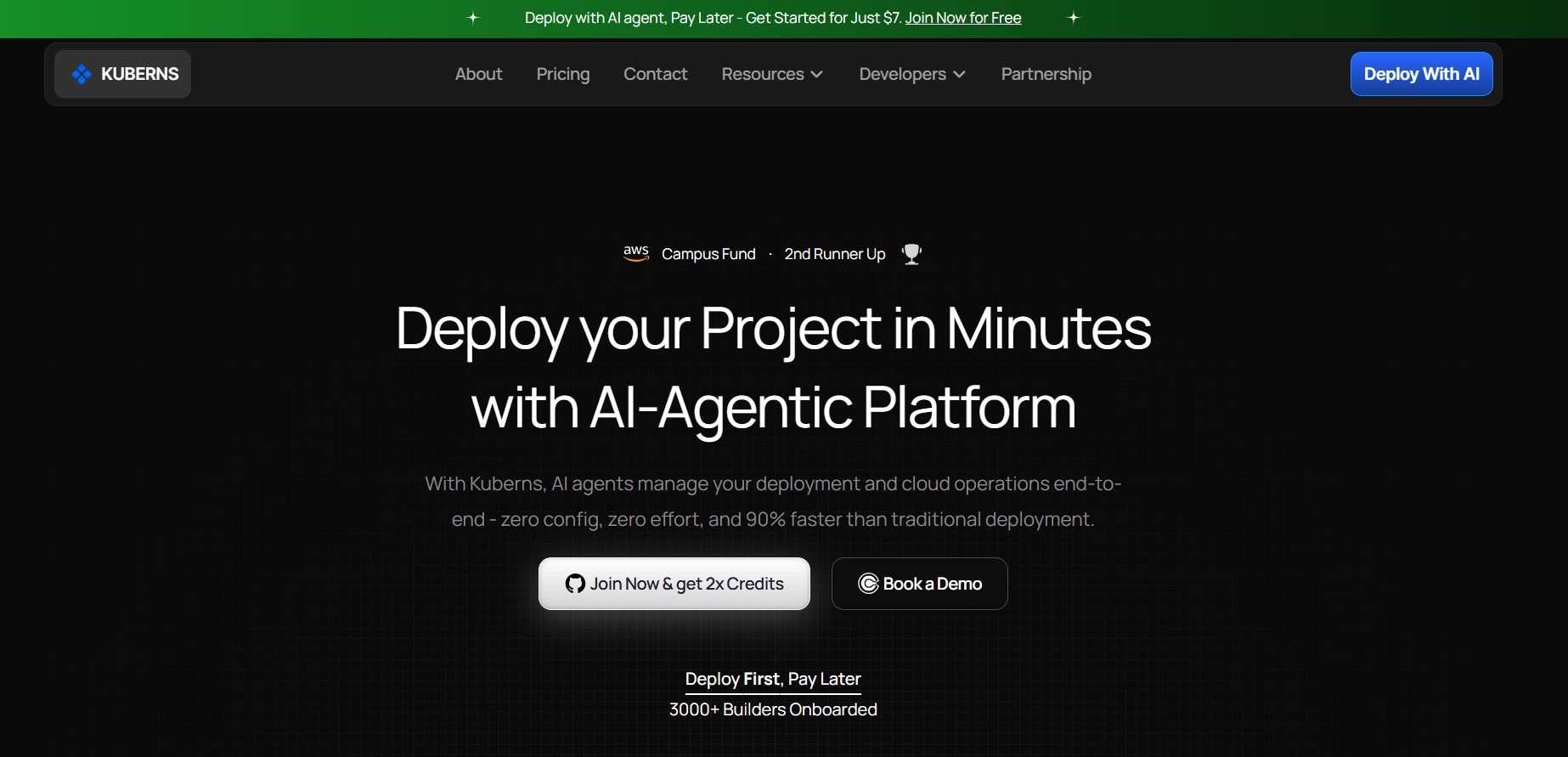
[Kuberns](https://kuberns.com/) is designed for teams that want to connect a GitHub repository and deploy frontend, backend, API, and worker services without managing the underlying infrastructure directly. It combines deployment, logs, monitoring, domains, SSL, scaling, and rollback workflows in one managed experience.
Compared with Render, Kuberns exposes fewer infrastructure decisions during a standard deployment. Render gives teams explicit service types, instance selection, Blueprints, scaling settings, and datastore configuration. Kuberns is aimed at teams that prefer more of those decisions to be automated by the platform.
**Advantages**
* GitHub-connected deployment and automatic stack detection
* Built-in CI/CD, logs, monitoring, domains, and rollback workflows
* Supports frontend, backend, API, and worker services
* No Kubernetes manifests required for standard deployments
**Limitations**
* Not intended for teams that want to administer Kubernetes directly
* BYOC and low-level infrastructure customization are not its primary use cases
* Specialized runtimes should be validated before migration
Choose Kuberns when reduced operational work matters more than direct infrastructure control. Review [how Kuberns works](https://kuberns.com/blogs/what-is-kuberns-the-simplest-way-to-build-deploy-and-scale-full-stack-apps/) before comparing it with your Render architecture.
## 2. Railway: Best for Fast Developer Workflows

[Railway](https://railway.com/) provides Git deployments, service templates, private networking, environment management, observability, and database templates through a project-oriented interface. It is one of the closest Render alternatives for teams that want a managed platform with less initial configuration.
Railway currently offers Free, Hobby, Pro, and Enterprise plans. Subscription fees, included usage credits, and additional resource charges depend on the selected plan. Check the [official Railway pricing documentation](https://docs.railway.com/pricing/plans) before estimating production costs.
**Advantages**
* Fast repository-to-service workflow
* Templates and convenient database provisioning
* Private networking between project services
* Suitable for prototypes and multi-service applications
**Limitations**
* Usage-based cost requires monitoring as services grow
* Less infrastructure ownership than BYOC or self-hosted options
* Production governance differs by plan
Choose Railway when developer experience is the priority. See the [best Railway alternatives](https://kuberns.com/blogs/best-railway-alternatives/) for deeper production tradeoffs.
## 3. Northflank: Best for Platform Controls and BYOC

[Northflank](https://northflank.com/) supports services, jobs, builds, managed databases, preview environments, GPU workloads, and deployment to Northflank-managed infrastructure or a customer's cloud. It is a strong Render alternative when a team needs more platform-engineering control or BYOC.
Northflank abstracts much of Kubernetes through its interface and automation, but its breadth introduces more concepts than a basic managed PaaS. Pricing varies across compute, storage, networking, databases, and deployment model. Review [Northflank pricing](https://northflank.com/pricing) for current details.
**Advantages**
* Managed and BYOC deployment options
* Containers, jobs, databases, and preview environments
* Detailed networking and infrastructure controls
* Suitable for complex multi-service systems
**Limitations**
* More configuration and platform concepts than simpler tools
* BYOC requires cloud and operational knowledge
* Total cost depends on deployment model and workload
Choose Northflank when infrastructure flexibility is a requirement. Our [Northflank alternatives comparison](https://kuberns.com/blogs/top-northflank-alternatives/) covers its tradeoffs in more detail.
## 4. Fly.io: Best for Regional Container Deployment

[Fly.io](https://fly.io/) runs workloads on Fly Machines and lets teams select regions, machine sizes, volumes, networking, and scaling behavior. It suits latency-sensitive applications that benefit from being placed close to users.
Fly.io no longer provides the old recurring free allowances often cited in hosting comparisons. Eligible new users receive a limited trial, currently ending after two VM hours or seven days, whichever occurs first. Verify terms in the [Fly.io trial documentation](https://fly.io/docs/about/free-trial/).
**Advantages**
* Broad regional placement options
* Docker and machine-based workload flexibility
* Private networking and persistent volumes
* Strong fit for distributed architectures
**Limitations**
* More hands-on networking and regional planning than Render
* No permanent general-purpose free allowance for new users
* Storage and database operations require careful design
Choose Fly.io when regional placement is central to the architecture. Compare other options in our [Fly.io alternatives guide](https://kuberns.com/blogs/fly-io-alternatives-2025/).
## 5. DigitalOcean App Platform: Best for DigitalOcean Users

[DigitalOcean App Platform](https://www.digitalocean.com/products/app-platform) is a fully managed platform that builds and deploys applications from Git repositories or container images. It supports web services, workers, jobs, static sites, scaling features, and connections to DigitalOcean databases and other services.
Customers do not own App Platform's underlying infrastructure, so it is not a BYOC product. Its strength is integration with the broader DigitalOcean ecosystem and component-based pricing. Check [DigitalOcean App Platform pricing](https://www.digitalocean.com/pricing/app-platform) for current service costs.
**Advantages**
* Managed builds and deployments
* Services, workers, jobs, and static sites
* Integration with DigitalOcean databases and infrastructure
* Straightforward interface and documentation
**Limitations**
* Workloads remain on DigitalOcean's platform
* Databases and supporting services add separate costs
* Less platform control than Northflank or self-hosting
Choose it when DigitalOcean is already your preferred cloud. Explore the [best DigitalOcean alternatives](https://kuberns.com/blogs/digitalocean-alternatives/) for broader options.
## 6. Google Cloud Run: Best for Serverless Containers on GCP

[Google Cloud Run](https://cloud.google.com/run) is a managed serverless container runtime for services and jobs. It scales instances according to traffic and configuration, supports scale to zero for eligible workloads, and integrates with Google Cloud IAM, networking, logging, storage, messaging, and databases.
Cloud Run is not a complete all-in-one PaaS in the same sense as Render. Teams assemble builds, image storage, databases, secrets, networking, and observability from Google Cloud services. Pricing is based on resource usage and requests. Review [Cloud Run pricing](https://cloud.google.com/run/pricing) for current rates.
**Advantages**
* Deploys standard container images
* Automatic request-based scaling
* Strong Google Cloud integrations
* Suitable for stateless APIs, web services, and jobs
**Limitations**
* Requires GCP IAM, networking, and billing knowledge
* Persistent state requires additional Google Cloud services
* The developer workflow is more modular than Render's unified dashboard
Choose Cloud Run when the organization is committed to GCP. See our [Google Cloud alternatives](https://kuberns.com/blogs/google-cloud-alternatives/) for other cloud options.
## 7. Coolify: Best Open-Source and Self-Hosted Alternative

[Coolify](https://coolify.io/) is an open-source platform for deploying applications, databases, and services on servers controlled by your team. It supports Git deployments, Docker, Docker Compose, domains, certificates, and service templates.
Self-hosting removes the managed-platform boundary but does not remove infrastructure costs or operational work. Your team is responsible for server security, updates, backups, monitoring, capacity, and incident response. Review [Coolify pricing](https://coolify.io/pricing/) for its hosted and support options.
**Advantages**
* Open-source and self-hostable
* Docker and Docker Compose support
* Works across different server providers
* Greater infrastructure control and portability
**Limitations**
* The team operates and secures the servers
* Reliability depends on your infrastructure practices
* Enterprise controls may require additional tooling or support
Choose Coolify when ownership outweighs managed convenience. Compare the [best Coolify alternatives](https://kuberns.com/blogs/coolify-alternatives/) before committing to a self-hosted stack.
## 8. Heroku: Best for a Mature PaaS Ecosystem
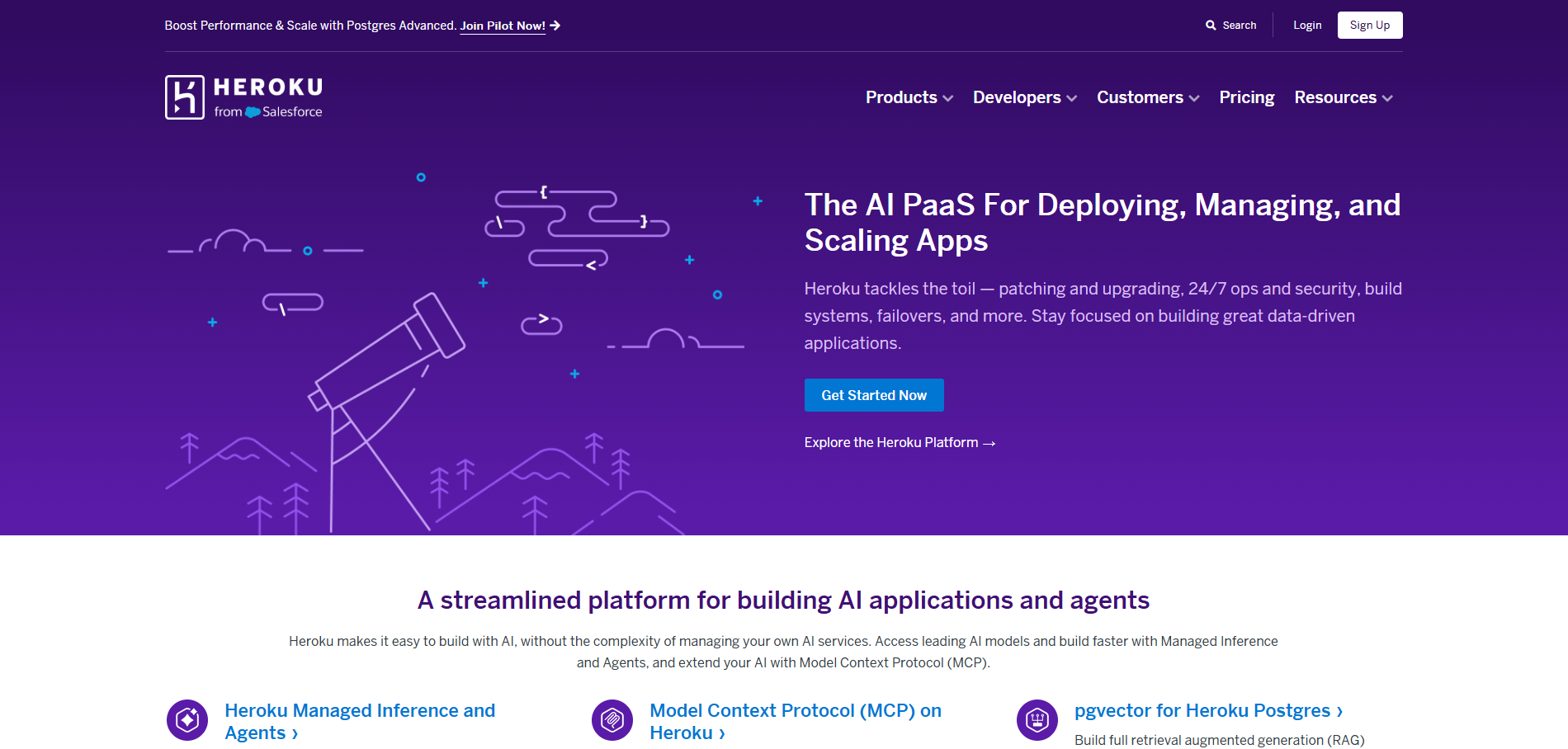
[Heroku](https://www.heroku.com/) provides Git-based deployment, web and worker dynos, pipelines, Review Apps, managed data services, and a large add-on marketplace. It remains a relevant Render alternative for organizations that value a mature workflow and broad integration ecosystem.
Heroku no longer has a general free compute tier. Costs combine dynos, databases, add-ons, support, and other services. Check [Heroku pricing](https://www.heroku.com/pricing) before comparing it with an equivalent Render architecture.
**Advantages**
* Familiar Git and CLI workflow
* Extensive add-on marketplace
* Review Apps and pipelines
* Mature documentation and ecosystem
**Limitations**
* No general free compute plan
* Costs increase with dyno and add-on count
* No general BYOC model
Choose Heroku when ecosystem maturity justifies the cost. Our [Heroku alternatives guide](https://kuberns.com/blogs/the-ultimate-guide-to-heroku-alternatives-in-2025/) compares newer options.
Vercel and Netlify are useful specialized alternatives when a Render workload is primarily frontend or serverless. Vercel is strongest for Next.js, while Netlify provides framework-based web deployment, Functions, Background Functions, database, storage, and previews. AWS Elastic Beanstalk is also relevant for AWS-native application environments, and Dokploy is another open-source self-hosted option.
## Why Teams Consider Render Alternatives
Render already offers a strong managed PaaS experience, so switching should solve a specific architectural or business requirement.
**Need for BYOC or self-hosting:** Render manages the underlying platform. Northflank can deploy into customer cloud environments, while Coolify runs on servers controlled by the team.
**Different regional requirements:** Fly.io emphasizes explicit regional placement. Cloud Run offers serverless containers in supported Google Cloud regions. Teams should compare latency, data residency, and database placement together.
**Different cost structure:** Render costs can include workspace, service instances, databases, disks, and bandwidth. Railway uses subscription plus usage, Cloud Run meters resources and requests, and self-hosting combines server costs with engineering time.
**More infrastructure control:** Teams that need Kubernetes, cloud-level networking, custom cluster policies, or direct server access may prefer Northflank BYOC, Google Cloud services, or Coolify.
**More automated infrastructure decisions:** Teams that want fewer service and infrastructure choices during deployment may prefer Kuberns.
**Existing cloud commitment:** DigitalOcean App Platform and Google Cloud Run are natural choices when the organization already uses those ecosystems.
## Which Render Alternative Should You Choose?
Choose Kuberns for automated full-stack deployment, Railway for a fast managed developer workflow, Northflank for deeper controls and BYOC, Fly.io for regional applications, DigitalOcean App Platform for DigitalOcean integration, Cloud Run for GCP serverless containers, Coolify for self-hosting, or Heroku for its mature ecosystem.
Shortlist the two options that fit your operating model, then deploy the same representative service on each. Compare build reliability, logs, networking, database workflow, scaling controls, and the complete monthly cost.
 ## How to Migrate from Render to Kuberns
Migrating from Render to Kuberns does not require manually recreating Render services or configuring deployment infrastructure. Kuberns Agentic AI analyzes the connected repository, detects the application stack, and prepares the deployment automatically. You mainly need access to the GitHub repository and the environment variables used by the application.
### 1. Connect the GitHub Repository
Sign in to [Kuberns](https://dashboard.kuberns.com/), create a project, and connect the GitHub repository currently deployed on Render. Select the production branch that contains the application code.
Kuberns Agentic AI analyzes the repository to identify the framework, runtime, dependencies, build process, application services, and deployment requirements. You do not need to recreate Render web services, workers, scheduled jobs, or infrastructure settings manually.
### 2. Add Environment Variables
Copy the application environment variables and secrets from Render and add them securely to the Kuberns project. These can include API keys, authentication secrets, database URLs, third-party credentials, callback URLs, and application-specific configuration.
Do not place secrets directly in the repository. Check whether any values contain Render-specific hostnames or URLs and replace them with the values required for the Kuberns deployment.
### 3. Let Agentic AI Configure and Deploy the Application
Start the deployment after the repository and environment variables are connected. Kuberns Agentic AI handles stack detection, build configuration, infrastructure provisioning, deployment, scaling setup, and monitoring automatically.
Monitor the deployment from the Kuberns dashboard and review the build and runtime logs. If the application requires another environment variable, add it in the dashboard and redeploy.
### 4. Test the Kuberns Deployment
Open the temporary Kuberns deployment URL and test the application before moving production traffic. Verify authentication, API routes, forms, external integrations, application data, emails, uploads, and other important user journeys.
Keep the Render deployment active during testing so users continue to access the existing production application until the Kuberns version is ready.
### 5. Connect the Production Domain
After validating the Kuberns deployment, add the production custom domain in Kuberns and update the required DNS records. Confirm that SSL is active and the application loads correctly through the production domain.
Monitor logs and application behavior after the switch. Keep the Render deployment available briefly as a rollback option, then remove it after the Kuberns deployment is confirmed stable.
## Final Verdict
Render remains a good choice for teams that want managed web services, workers, cron jobs, databases, previews, and infrastructure definitions in one platform. An alternative becomes compelling when it better matches a clear need such as BYOC, self-hosting, regional placement, a cloud-native ecosystem, or greater deployment automation.
There is no universal winner. Evaluate the complete application rather than a single web service, and compare real monthly costs alongside the operational work your team must own.
## How to Migrate from Render to Kuberns
Migrating from Render to Kuberns does not require manually recreating Render services or configuring deployment infrastructure. Kuberns Agentic AI analyzes the connected repository, detects the application stack, and prepares the deployment automatically. You mainly need access to the GitHub repository and the environment variables used by the application.
### 1. Connect the GitHub Repository
Sign in to [Kuberns](https://dashboard.kuberns.com/), create a project, and connect the GitHub repository currently deployed on Render. Select the production branch that contains the application code.
Kuberns Agentic AI analyzes the repository to identify the framework, runtime, dependencies, build process, application services, and deployment requirements. You do not need to recreate Render web services, workers, scheduled jobs, or infrastructure settings manually.
### 2. Add Environment Variables
Copy the application environment variables and secrets from Render and add them securely to the Kuberns project. These can include API keys, authentication secrets, database URLs, third-party credentials, callback URLs, and application-specific configuration.
Do not place secrets directly in the repository. Check whether any values contain Render-specific hostnames or URLs and replace them with the values required for the Kuberns deployment.
### 3. Let Agentic AI Configure and Deploy the Application
Start the deployment after the repository and environment variables are connected. Kuberns Agentic AI handles stack detection, build configuration, infrastructure provisioning, deployment, scaling setup, and monitoring automatically.
Monitor the deployment from the Kuberns dashboard and review the build and runtime logs. If the application requires another environment variable, add it in the dashboard and redeploy.
### 4. Test the Kuberns Deployment
Open the temporary Kuberns deployment URL and test the application before moving production traffic. Verify authentication, API routes, forms, external integrations, application data, emails, uploads, and other important user journeys.
Keep the Render deployment active during testing so users continue to access the existing production application until the Kuberns version is ready.
### 5. Connect the Production Domain
After validating the Kuberns deployment, add the production custom domain in Kuberns and update the required DNS records. Confirm that SSL is active and the application loads correctly through the production domain.
Monitor logs and application behavior after the switch. Keep the Render deployment available briefly as a rollback option, then remove it after the Kuberns deployment is confirmed stable.
## Final Verdict
Render remains a good choice for teams that want managed web services, workers, cron jobs, databases, previews, and infrastructure definitions in one platform. An alternative becomes compelling when it better matches a clear need such as BYOC, self-hosting, regional placement, a cloud-native ecosystem, or greater deployment automation.
There is no universal winner. Evaluate the complete application rather than a single web service, and compare real monthly costs alongside the operational work your team must own.
 ## Frequently Asked Questions
### 1. What is the best Render alternative in 2026?
The best Render alternative depends on the workload. Kuberns suits teams seeking automated full-stack deployment, Railway offers a similar developer-focused managed workflow, Northflank adds deeper platform and BYOC controls, Fly.io supports regional applications, and Coolify is a strong self-hosted option.
### 2. What is the best free Render alternative?
The best free option depends on the workload. Coolify is free to self-host, but you pay for and manage the server. Railway, Northflank, and Google Cloud offer limited trials, credits, or free usage under current terms. Always verify limits before choosing a production platform.
### 3. Which Render alternative is best for full-stack applications?
Kuberns, Railway, Northflank, DigitalOcean App Platform, and Heroku can all support full-stack application workloads. Kuberns emphasizes deployment automation, Railway emphasizes developer experience, and Northflank offers deeper container, job, database, and BYOC controls.
### 4. Is Railway better than Render?
Railway can be better for teams that prioritize rapid project setup, templates, and a service-oriented developer experience. Render can be better for teams that prefer its web services, workers, cron jobs, managed PostgreSQL, preview environments, and established instance-based operating model.
### 5. Which Render alternatives support Docker containers?
Northflank, Fly.io, DigitalOcean App Platform, Google Cloud Run, and Coolify directly support container-based workflows. Railway and Heroku also support container deployment options. The platforms differ in networking, storage, scaling, and infrastructure ownership.
### 6. What is the best open-source Render alternative?
Coolify is a strong open-source Render alternative for teams willing to operate their own infrastructure. It supports Git-based deployment, Docker and Docker Compose, databases, domains, and service templates, while server maintenance remains the team's responsibility.
### 7. Which Render alternative is best for global deployment?
Fly.io is designed for placing applications across multiple regions close to users. Google Cloud Run is suitable for serverless containers across supported Google Cloud regions. Compare data residency, networking, databases, and operational effort before choosing.
### 8. Which Render alternatives support managed databases and workers?
Railway, Northflank, DigitalOcean, and Heroku provide database services or integrations alongside application and worker workloads. Google Cloud Run connects to Google Cloud data services. Engine availability, backups, high availability, and pricing vary by provider.
### 9. Why do developers move away from Render?
Teams consider alternatives when they need BYOC, self-hosting, broader regional placement, deeper container control, a different pricing model, specific networking behavior, or a platform aligned with their existing cloud provider. Render remains a capable managed PaaS for many applications.
### 10. How do I migrate an application from Render to Kuberns?
Connect the application's GitHub repository to Kuberns and add the required environment variables. Kuberns Agentic AI detects the application stack and configures the deployment automatically. Test the generated deployment, then connect the production domain after validation.
---
- [More Alternatives articles](https://kuberns.com/blogs/category/alternatives/1/)
- [All articles](https://kuberns.com/blogs/)
## Frequently Asked Questions
### 1. What is the best Render alternative in 2026?
The best Render alternative depends on the workload. Kuberns suits teams seeking automated full-stack deployment, Railway offers a similar developer-focused managed workflow, Northflank adds deeper platform and BYOC controls, Fly.io supports regional applications, and Coolify is a strong self-hosted option.
### 2. What is the best free Render alternative?
The best free option depends on the workload. Coolify is free to self-host, but you pay for and manage the server. Railway, Northflank, and Google Cloud offer limited trials, credits, or free usage under current terms. Always verify limits before choosing a production platform.
### 3. Which Render alternative is best for full-stack applications?
Kuberns, Railway, Northflank, DigitalOcean App Platform, and Heroku can all support full-stack application workloads. Kuberns emphasizes deployment automation, Railway emphasizes developer experience, and Northflank offers deeper container, job, database, and BYOC controls.
### 4. Is Railway better than Render?
Railway can be better for teams that prioritize rapid project setup, templates, and a service-oriented developer experience. Render can be better for teams that prefer its web services, workers, cron jobs, managed PostgreSQL, preview environments, and established instance-based operating model.
### 5. Which Render alternatives support Docker containers?
Northflank, Fly.io, DigitalOcean App Platform, Google Cloud Run, and Coolify directly support container-based workflows. Railway and Heroku also support container deployment options. The platforms differ in networking, storage, scaling, and infrastructure ownership.
### 6. What is the best open-source Render alternative?
Coolify is a strong open-source Render alternative for teams willing to operate their own infrastructure. It supports Git-based deployment, Docker and Docker Compose, databases, domains, and service templates, while server maintenance remains the team's responsibility.
### 7. Which Render alternative is best for global deployment?
Fly.io is designed for placing applications across multiple regions close to users. Google Cloud Run is suitable for serverless containers across supported Google Cloud regions. Compare data residency, networking, databases, and operational effort before choosing.
### 8. Which Render alternatives support managed databases and workers?
Railway, Northflank, DigitalOcean, and Heroku provide database services or integrations alongside application and worker workloads. Google Cloud Run connects to Google Cloud data services. Engine availability, backups, high availability, and pricing vary by provider.
### 9. Why do developers move away from Render?
Teams consider alternatives when they need BYOC, self-hosting, broader regional placement, deeper container control, a different pricing model, specific networking behavior, or a platform aligned with their existing cloud provider. Render remains a capable managed PaaS for many applications.
### 10. How do I migrate an application from Render to Kuberns?
Connect the application's GitHub repository to Kuberns and add the required environment variables. Kuberns Agentic AI detects the application stack and configures the deployment automatically. Test the generated deployment, then connect the production domain after validation.
---
- [More Alternatives articles](https://kuberns.com/blogs/category/alternatives/1/)
- [All articles](https://kuberns.com/blogs/)