# Best Vercel Alternatives in 2026
> Explore the best Vercel alternatives for deploying modern apps. Compare Netlify, Render, Railway, Fly.io and Kuberns with pricing and features.
- **Author**: suyash-tiwari
- **Published**: 2025-10-10
- **Modified**: 2026-05-07
- **Category**: Alternatives
- **URL**: https://kuberns.com/blogs/best-vercel-alternatives/
---
The best Vercel alternatives in 2026 are Kuberns, Netlify, Render, Fly.io, Railway, and DigitalOcean App Platform. Each covers a different gap that developers hit with Vercel, mainly around backend support, unpredictable serverless costs, and limited flexibility as applications grow beyond frontend workloads.
Vercel is genuinely excellent for frontend frameworks like Next.js and React. For smaller projects and pure frontend work, nothing matches its deployment speed. But teams building full-stack applications with APIs, databases, and background workers frequently find themselves stitching together additional services just to keep everything running.
This guide compares all six alternatives on backend support, pricing predictability, and how well each handles full-stack deployments in production.
At that point, teams begin looking for platforms that can support full applications instead of just frontend deployments. This is where AI-Powered Deployment Platforms are starting to emerge. Instead of requiring developers to configure infrastructure, manage multiple services, and troubleshoot deployments manually, [Agentic AI deployment](https://kuberns.com/) platforms like Kuberns automate the entire process.
In this guide, we'll explore the best Vercel alternatives in 2026, including Netlify, Render, Fly.io, Railway, and DigitalOcean App Platform. We'll compare where each platform works well, where they fall short, and how Agentic AI platforms like Kuberns are changing how developers deploy and run modern applications.
### TL;DR: Which Vercel Alternative Should You Choose?
* Vercel is excellent for frontend deployments, especially for Next.js applications. However, backend services require external platforms, and serverless pricing can become unpredictable as applications scale.
* Netlify is another frontend-focused platform built around JAMstack workflows. It works well for static sites, but complex backend services and long-running processes require additional tools.
* Render and Railway support full-stack deployments with APIs, databases, and background workers, but developers still need to configure services, manage scaling, and monitor infrastructure manually.
* Fly.io and DigitalOcean App Platform offer more infrastructure control and global deployment capabilities, but they require more setup and operational management compared to traditional PaaS platforms.
[Kuberns uses Agentic AI for deployment](https://kuberns.com/). Instead of configuring infrastructure or managing multiple services, you connect your Git repository and deploy in one click while the platform automatically handles scaling, monitoring, and cloud optimisation.
> Quick takeaway: If you want to deploy full applications without managing infrastructure or DevOps complexity, Kuberns provides the most automated and scalable alternative.
## Vercel Alternatives Comparison (2026)
To help you quickly evaluate the best Vercel alternatives, the table below compares the most important factors developers usually consider, including use case, key capabilities, and pricing.
| Tool | Use Case | Key Features | Pricing |
| ------------------------- | ------------------------------------------------------------ | ------------------------------------------------------------------------------------------------------------------------------------------ | -------------------------------------------------------- |
| Kuberns | Full-stack apps with automated Agentic AI-Powered deployment | Agentic AI deployment, one-click deploy, automatic infrastructure provisioning, built-in CI/CD, monitoring and alerts, No Per User Pricing | Free tier available, And No Per User Pricing like others |
| Netlify | Static sites and JAMstack applications | Git-based deployments, preview environments, CDN hosting, serverless functions, forms and identity features | Free tier available, paid plans from $19/month |
| Render | Full-stack apps and backend APIs | Web services, background workers, managed databases, Git deployment, autoscaling, Docker support | Free tier available, paid services from $7/month+ |
| Fly.io | Globally distributed applications | Multi-region deployments, container-based workloads, global networking, and managed Postgres | Usage-based pricing |
| Railway | Full-stack apps with integrated databases | Managed Postgres/MySQL/Redis, cron jobs, Git deployments, environment variables, and monitoring dashboard | Free trial, paid plans from $5 usage credits/month |
| DigitalOcean App Platform | Cost-efficient PaaS deployments | Static + dynamic apps, Git-based CI/CD, autoscaling, container deployments, CDN integration | Free tier, paid plans from $5/month |
 ### 1. Kuberns: Agentic AI Deployment Platform
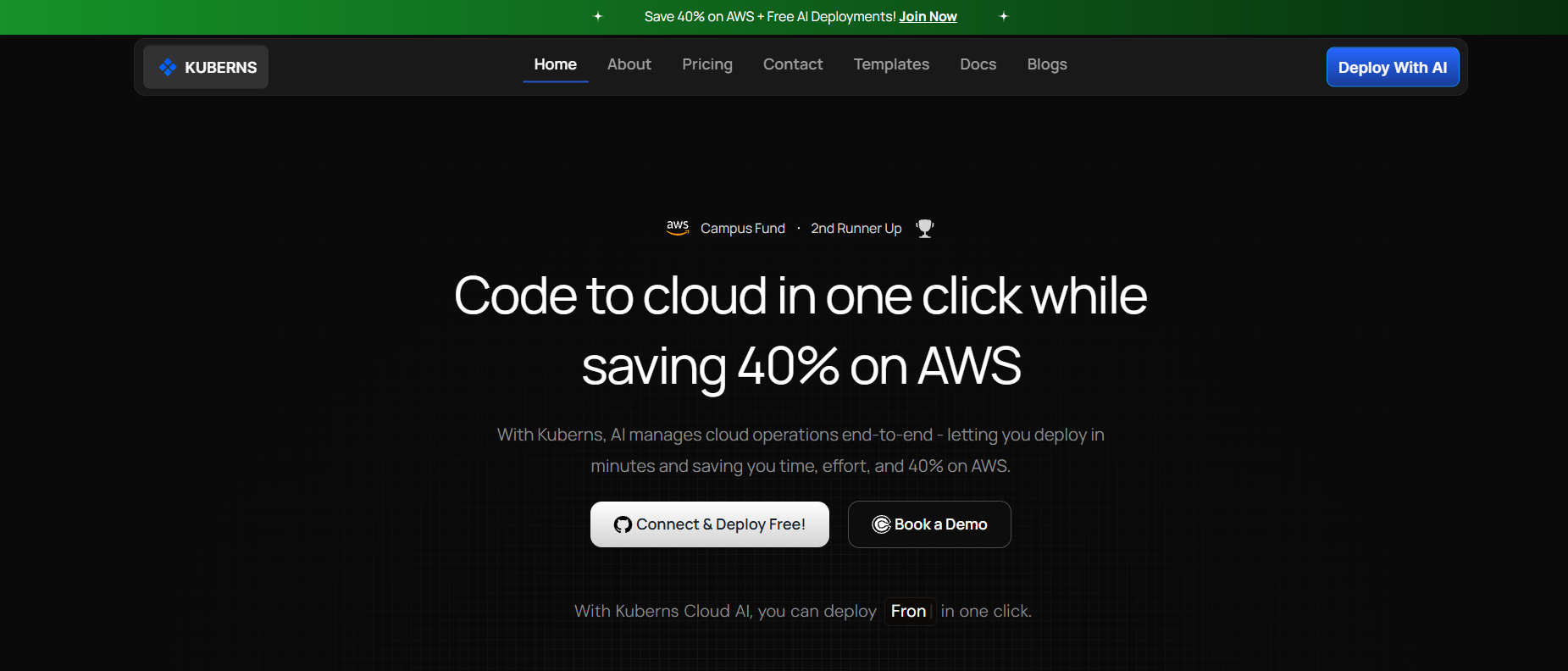
Kuberns is designed to solve a problem many developers eventually face with platforms like Vercel. While tools such as Vercel make frontend deployment simple, running a full application with backend services, databases, background workers, and scaling often requires multiple platforms and additional configuration.
Kuberns approaches deployment differently. Instead of asking developers to configure infrastructure, manage services, or troubleshoot deployments, Kuberns uses Agentic AI to automate the entire code-to-cloud process.
The platform automatically detects your application stack, provisions the required infrastructure, deploys the application, and manages scaling and monitoring in the background. This allows developers to deploy frontend apps, backend APIs, background jobs, and databases from a single platform, without manually configuring cloud services.
#### Why Developers Choose Kuberns
**Agentic AI deployment:** Kuberns automatically manages the infrastructure behind your application. Build detection, provisioning, scaling, and monitoring are handled by AI, so developers do not need to configure servers or deployment pipelines.
**One-click deployment:** You can deploy directly from your Git repository with a single click. There is no need to configure Dockerfiles, CI/CD pipelines, or cloud resources before getting your project live.
**Full stack support:** Unlike platforms focused only on frontend deployments, Kuberns supports complete applications including APIs, workers, scheduled jobs, and databases.
**Built-in monitoring and scaling:** The platform continuously monitors applications and automatically scales resources based on real usage to keep applications running reliably.
**Simpler & cost-efficient pricing model:** Kuberns removes many of the pricing complexities common with serverless platforms. [Plans start from $10 per month](https://kuberns.com/pricing) with predictable infrastructure pricing and no per-user platform fees.
> "To see how Kuberns streamlines full-stack deployment, read [What Kuberns Is: The Simplest Way to Build, Deploy, and Scale Full-Stack Apps.](https://kuberns.com/blogs/what-is-kuberns-the-simplest-way-to-build-deploy-and-scale-full-stack-apps/)"
### 2. Netlify
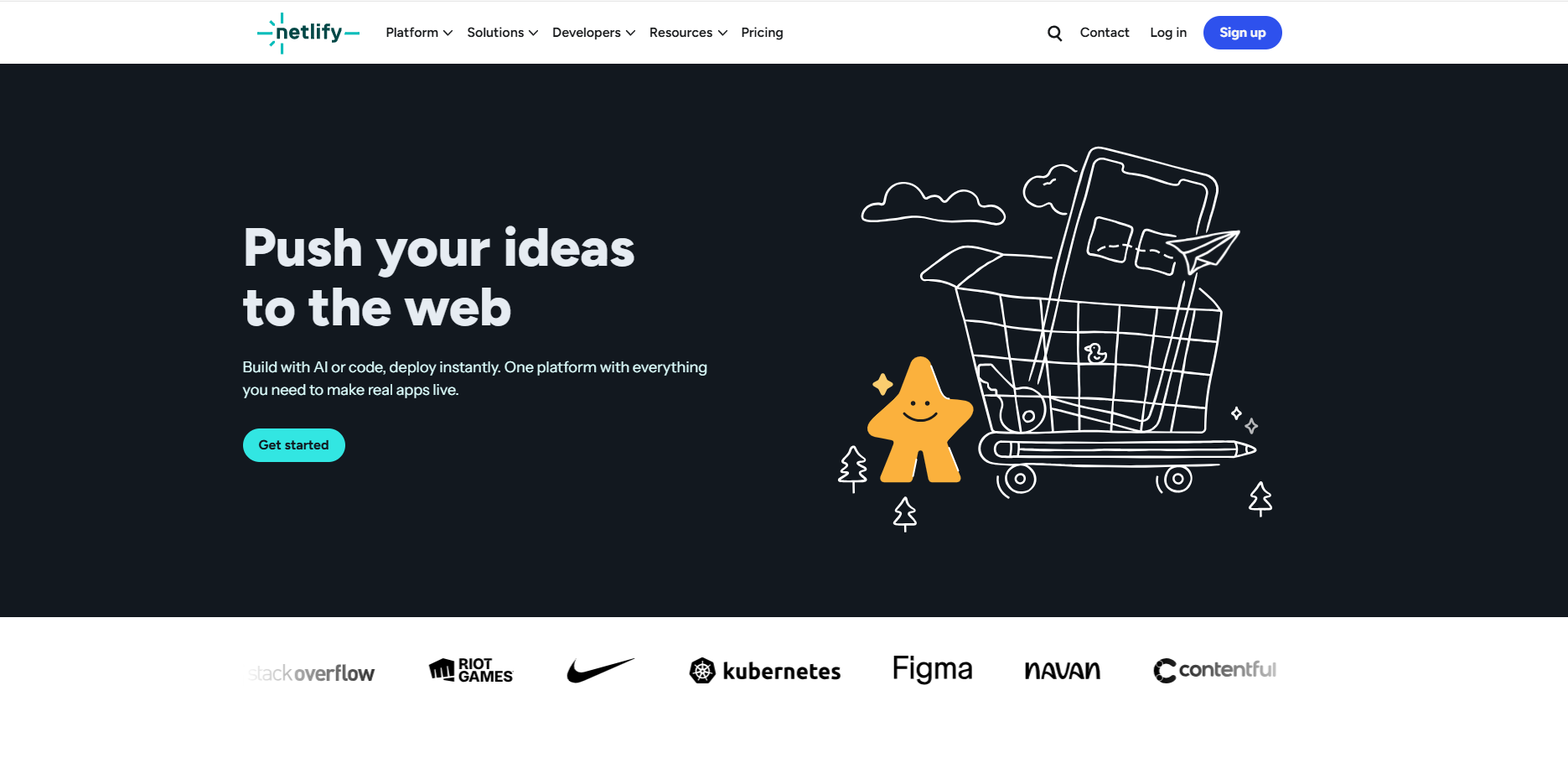
Netlify is one of the most popular hosting platforms for static and JAMstack applications. It automates the process of building, deploying, and hosting sites directly from your Git repository. Developers love Netlify for its simplicity, built-in serverless functions, and fast global CDN.
#### Why Teams Choose Netlify
* Git-based CI/CD that automates builds and deployments.
* Global edge network for optimised content delivery.
* Serverless functions for lightweight backend tasks.
* Built-in form handling, split testing, and identity features for static sites.
#### Best For
Small teams, marketing websites, portfolios, documentation sites, and frontend projects that do not require complex backend architecture.
#### Limitations
While Netlify's workflow is excellent for frontend-focused projects, it lacks full-stack flexibility. Scaling complex applications with databases or persistent backends can become challenging.
If you are outgrowing static hosting and need a smarter alternative with full-stack and automation capabilities, check out [Best Netlify Alternatives in 2026](https://kuberns.com/blogs/best-netlify-alternatives/).
### 3. Render
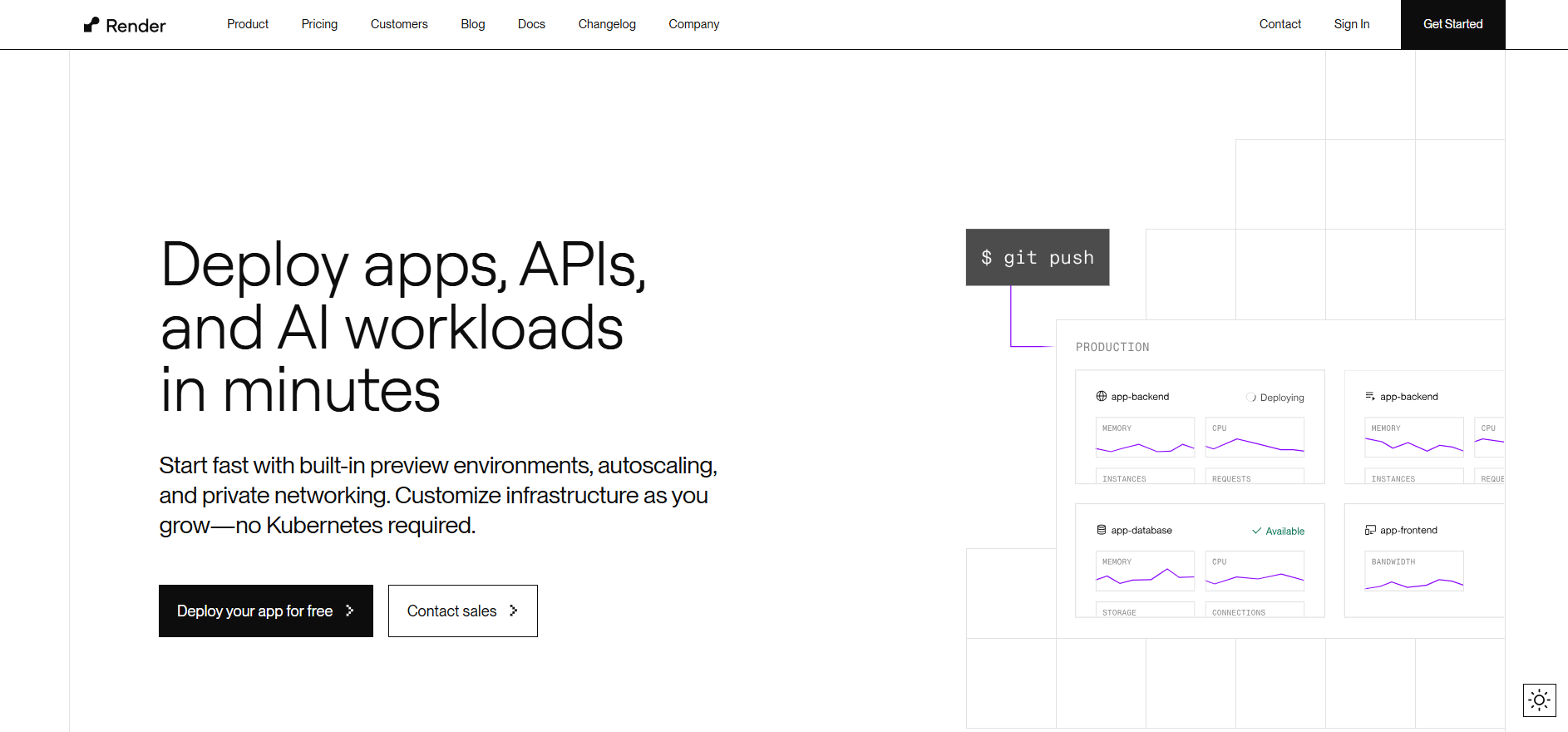
Render offers a unified cloud platform for deploying both frontend and backend applications. It supports web services, databases, cron jobs, background workers, and static sites, making it a great choice for developers who want simplicity without being limited to serverless architecture.
#### Why Developers Choose Render
* Supports full-stack deployments with minimal setup.
* Managed databases, SSL, custom domains, and autoscaling built in.
* Continuous deployment from GitHub or GitLab.
* Docker support for containerized applications.
#### Best For
Teams looking for an easy-to-use, all-in-one platform for deploying applications without deep infrastructure management.
#### Limitations
Render's automation is limited to basic scaling and deployment tasks. It lacks AI-powered optimisation and cost intelligence, meaning teams may overspend on unused resources as projects scale.
For a detailed comparison, explore [Render vs Kuberns](https://docs.kuberns.com/docs/comparison/render-vs-kuberns) to see how Kuberns provides greater automation, scalability, and AWS-backed performance.
### 4. Fly.io
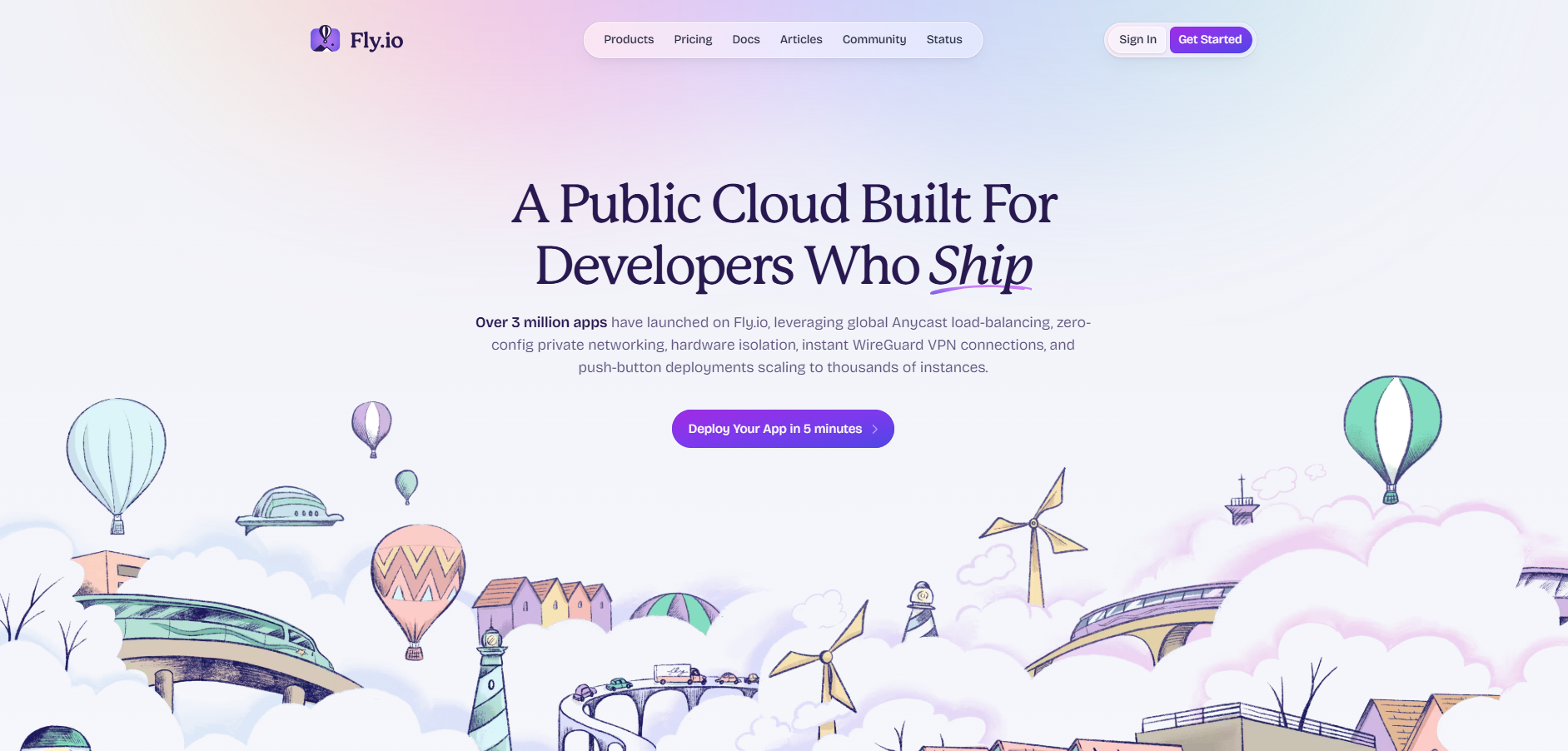
Fly.io takes a different approach to cloud deployment by focusing on edge computing. It allows developers to run applications closer to users for lower latency and faster response times. With Fly.io, every deployment automatically becomes global.
#### Why Developers Choose Fly.io
* Run applications in multiple geographic regions simultaneously.
* Ideal for latency-sensitive or real-time workloads.
* Built-in load balancing and automatic failover.
* Scales horizontally without a traditional centralised server.
#### Best For
Developers who need global edge deployment and are comfortable managing distributed infrastructure.
#### Limitations
Fly.io requires a custom architecture design to utilise its edge-first model effectively. It is better suited for advanced developers who have experience managing stateful workloads across regions.
### 5. Railway
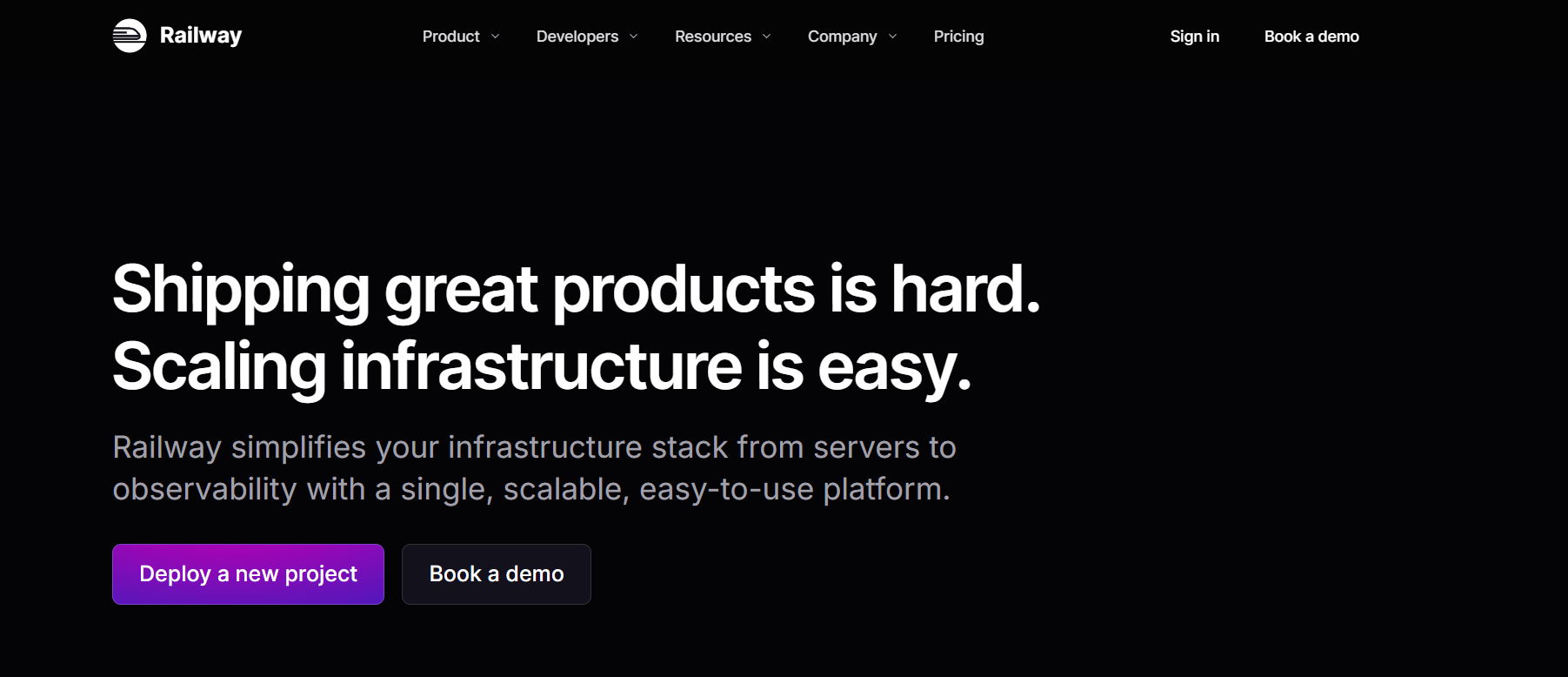
Railway is a developer-friendly cloud platform designed to make deploying applications and managing infrastructure easier. It allows developers to deploy full-stack applications directly from their Git repositories while also providing built-in services such as databases and background jobs.
Railway is particularly popular among startups and solo developers because it simplifies the process of running backend services without requiring deep DevOps knowledge. Developers can quickly launch APIs, web apps, and databases from a single dashboard.
#### Why Developers Choose Railway
Fast Git based deployments: Railway connects directly with GitHub repositories and automatically deploys applications when new code is pushed.
Built-in database support: The platform provides managed databases, including PostgreSQL, MySQL, Redis, and MongoDB, that can be provisioned quickly and connected to applications without complex configuration.
Support for cron jobs and background tasks: Railway makes it easy to run scheduled jobs or background workers, which is useful for tasks such as email processing, data syncing, or queue handling.
Developer-friendly dashboard: Railway offers a clean interface with logs, monitoring dashboards, and environment variable management, making it easier to manage applications and services.
#### Limitations
Railway uses a usage-based pricing model, which can become difficult to predict as applications scale. Teams may also need to manually monitor resources and optimise infrastructure usage over time.
Compared to platforms that automate deployment and cloud management end-to-end, Railway still requires developers to handle operational decisions as applications grow.
"For a deeper comparison between deployment automation platforms, see the [best railway alternatives](https://kuberns.com/blogs/best-railway-alternatives/)"
### 6. DigitalOcean App Platform
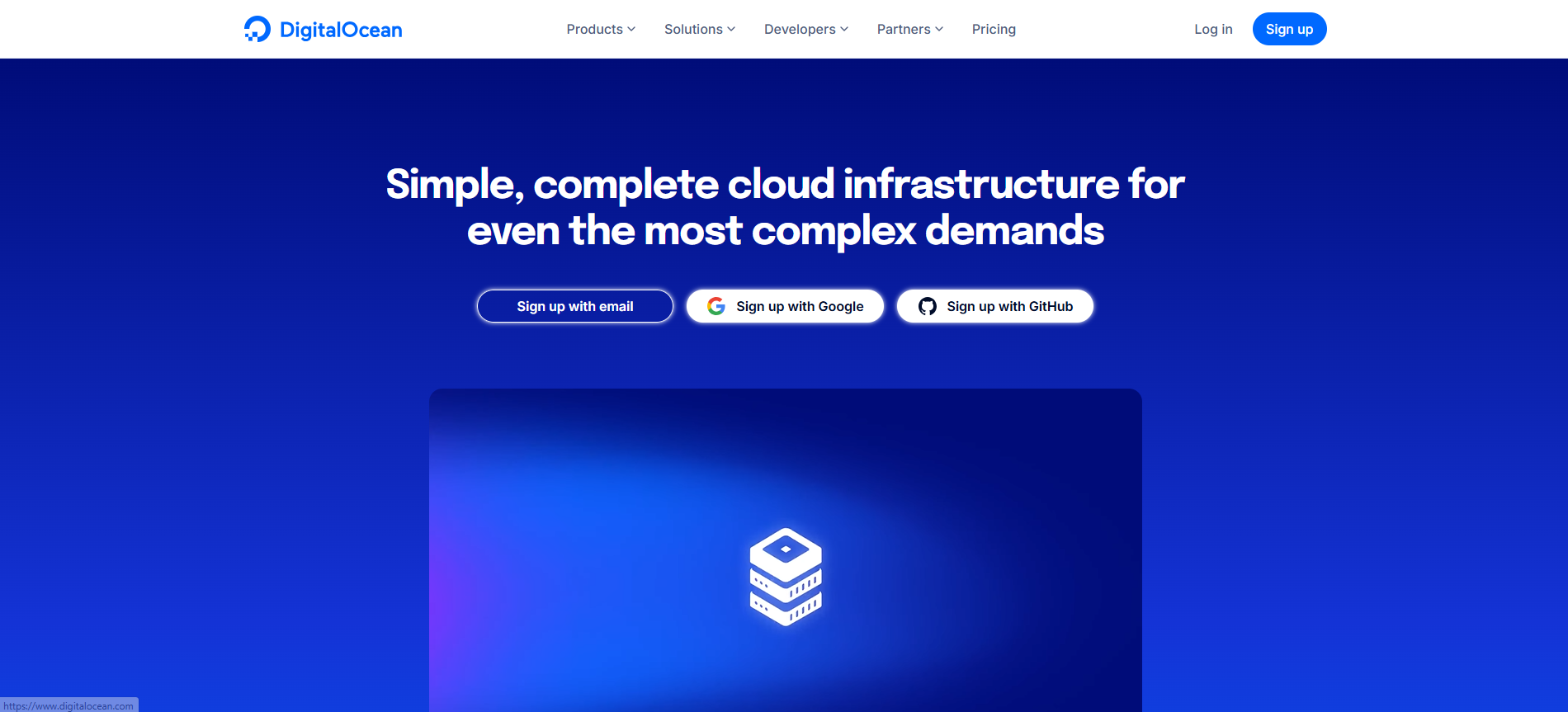
DigitalOcean App Platform is a simple yet powerful PaaS solution that lets you deploy web apps, APIs, and static sites directly from your Git repository. It is designed for developers who want predictable pricing and an easy path to scale without complex setup.
#### Why Developers Choose DigitalOcean App Platform
* Automatic Git-based deployment for web apps and APIs.
* Integrated load balancing and horizontal scaling.
* Managed databases and object storage.
* Flat-rate pricing that makes cost forecasting simple.
#### Best For
Startups, small SaaS teams, and individual developers who value simplicity, transparency, and ease of management.
#### Limitations
While DigitalOcean App Platform is easy to use, it lacks deep automation, predictive scaling, and AI-based cost optimization. Larger workloads often require manual intervention to maintain performance and efficiency.
To learn how platforms like Kuberns provide more intelligent scaling and monitoring, see our full guide on [Best DigitalOcean Alternatives for Startups and Solo Developers](https://kuberns.com/blogs/best-digitalocean-alternative-for-startups-and-solo-developers/).
## Why Developers Look for Vercel Alternatives?
Vercel is a powerful platform for deploying modern frontend applications. Its seamless integration with frameworks like Next.js and its simple GitHub-based workflow make it a popular choice for many developers.
However, as projects grow beyond simple frontend deployments, teams often begin exploring Vercel alternatives. The reasons usually come down to backend requirements, cost predictability, and infrastructure flexibility.
**Limited Backend Capabilities:** Vercel is primarily designed for frontend deployments and serverless functions. While serverless functions work well for lightweight APIs, they are not always suitable for applications that require persistent backend services, background workers, or long-running processes.
Because of this limitation, developers often need to rely on additional platforms to host databases, background jobs, and backend APIs. This can increase architectural complexity as applications grow.
**Unpredictable Serverless Costs:** Another common concern developers raise is cost predictability. As applications scale, teams may find it difficult to estimate infrastructure costs, especially when multiple services are involved. This uncertainty often pushes teams to explore platforms that offer more transparent pricing models.
**Infrastructure Control and Flexibility:** Some teams require more control over their infrastructure than serverless platforms typically allow. Choosing deployment regions, managing resource allocation, and optimising workloads across services can be limited in a purely serverless environment.
Developers building larger applications or backend-heavy systems often prefer platforms that allow more flexibility in how infrastructure is configured and scaled.
**Need for Full Stack Deployment Platforms:** Modern applications rarely consist of just a frontend. Most products require a combination of frontend interfaces, backend APIs, databases, and background processing systems.
Because of this, many teams start looking for platforms that can deploy and manage entire applications instead of just frontend workloads.
> Platforms like Render, Railway, and DigitalOcean App Platform provide more backend flexibility, but developers still need to configure infrastructure and manage operational tasks. Platforms like Kuberns use Agentic AI to automate the entire deployment lifecycle, allowing developers to deploy full-stack applications while the platform handles infrastructure provisioning, scaling, monitoring, and cloud management automatically.
### 1. Kuberns: Agentic AI Deployment Platform

Kuberns is designed to solve a problem many developers eventually face with platforms like Vercel. While tools such as Vercel make frontend deployment simple, running a full application with backend services, databases, background workers, and scaling often requires multiple platforms and additional configuration.
Kuberns approaches deployment differently. Instead of asking developers to configure infrastructure, manage services, or troubleshoot deployments, Kuberns uses Agentic AI to automate the entire code-to-cloud process.
The platform automatically detects your application stack, provisions the required infrastructure, deploys the application, and manages scaling and monitoring in the background. This allows developers to deploy frontend apps, backend APIs, background jobs, and databases from a single platform, without manually configuring cloud services.
#### Why Developers Choose Kuberns
**Agentic AI deployment:** Kuberns automatically manages the infrastructure behind your application. Build detection, provisioning, scaling, and monitoring are handled by AI, so developers do not need to configure servers or deployment pipelines.
**One-click deployment:** You can deploy directly from your Git repository with a single click. There is no need to configure Dockerfiles, CI/CD pipelines, or cloud resources before getting your project live.
**Full stack support:** Unlike platforms focused only on frontend deployments, Kuberns supports complete applications including APIs, workers, scheduled jobs, and databases.
**Built-in monitoring and scaling:** The platform continuously monitors applications and automatically scales resources based on real usage to keep applications running reliably.
**Simpler & cost-efficient pricing model:** Kuberns removes many of the pricing complexities common with serverless platforms. [Plans start from $10 per month](https://kuberns.com/pricing) with predictable infrastructure pricing and no per-user platform fees.
> "To see how Kuberns streamlines full-stack deployment, read [What Kuberns Is: The Simplest Way to Build, Deploy, and Scale Full-Stack Apps.](https://kuberns.com/blogs/what-is-kuberns-the-simplest-way-to-build-deploy-and-scale-full-stack-apps/)"
### 2. Netlify

Netlify is one of the most popular hosting platforms for static and JAMstack applications. It automates the process of building, deploying, and hosting sites directly from your Git repository. Developers love Netlify for its simplicity, built-in serverless functions, and fast global CDN.
#### Why Teams Choose Netlify
* Git-based CI/CD that automates builds and deployments.
* Global edge network for optimised content delivery.
* Serverless functions for lightweight backend tasks.
* Built-in form handling, split testing, and identity features for static sites.
#### Best For
Small teams, marketing websites, portfolios, documentation sites, and frontend projects that do not require complex backend architecture.
#### Limitations
While Netlify's workflow is excellent for frontend-focused projects, it lacks full-stack flexibility. Scaling complex applications with databases or persistent backends can become challenging.
If you are outgrowing static hosting and need a smarter alternative with full-stack and automation capabilities, check out [Best Netlify Alternatives in 2026](https://kuberns.com/blogs/best-netlify-alternatives/).
### 3. Render

Render offers a unified cloud platform for deploying both frontend and backend applications. It supports web services, databases, cron jobs, background workers, and static sites, making it a great choice for developers who want simplicity without being limited to serverless architecture.
#### Why Developers Choose Render
* Supports full-stack deployments with minimal setup.
* Managed databases, SSL, custom domains, and autoscaling built in.
* Continuous deployment from GitHub or GitLab.
* Docker support for containerized applications.
#### Best For
Teams looking for an easy-to-use, all-in-one platform for deploying applications without deep infrastructure management.
#### Limitations
Render's automation is limited to basic scaling and deployment tasks. It lacks AI-powered optimisation and cost intelligence, meaning teams may overspend on unused resources as projects scale.
For a detailed comparison, explore [Render vs Kuberns](https://docs.kuberns.com/docs/comparison/render-vs-kuberns) to see how Kuberns provides greater automation, scalability, and AWS-backed performance.
### 4. Fly.io

Fly.io takes a different approach to cloud deployment by focusing on edge computing. It allows developers to run applications closer to users for lower latency and faster response times. With Fly.io, every deployment automatically becomes global.
#### Why Developers Choose Fly.io
* Run applications in multiple geographic regions simultaneously.
* Ideal for latency-sensitive or real-time workloads.
* Built-in load balancing and automatic failover.
* Scales horizontally without a traditional centralised server.
#### Best For
Developers who need global edge deployment and are comfortable managing distributed infrastructure.
#### Limitations
Fly.io requires a custom architecture design to utilise its edge-first model effectively. It is better suited for advanced developers who have experience managing stateful workloads across regions.
### 5. Railway

Railway is a developer-friendly cloud platform designed to make deploying applications and managing infrastructure easier. It allows developers to deploy full-stack applications directly from their Git repositories while also providing built-in services such as databases and background jobs.
Railway is particularly popular among startups and solo developers because it simplifies the process of running backend services without requiring deep DevOps knowledge. Developers can quickly launch APIs, web apps, and databases from a single dashboard.
#### Why Developers Choose Railway
Fast Git based deployments: Railway connects directly with GitHub repositories and automatically deploys applications when new code is pushed.
Built-in database support: The platform provides managed databases, including PostgreSQL, MySQL, Redis, and MongoDB, that can be provisioned quickly and connected to applications without complex configuration.
Support for cron jobs and background tasks: Railway makes it easy to run scheduled jobs or background workers, which is useful for tasks such as email processing, data syncing, or queue handling.
Developer-friendly dashboard: Railway offers a clean interface with logs, monitoring dashboards, and environment variable management, making it easier to manage applications and services.
#### Limitations
Railway uses a usage-based pricing model, which can become difficult to predict as applications scale. Teams may also need to manually monitor resources and optimise infrastructure usage over time.
Compared to platforms that automate deployment and cloud management end-to-end, Railway still requires developers to handle operational decisions as applications grow.
"For a deeper comparison between deployment automation platforms, see the [best railway alternatives](https://kuberns.com/blogs/best-railway-alternatives/)"
### 6. DigitalOcean App Platform

DigitalOcean App Platform is a simple yet powerful PaaS solution that lets you deploy web apps, APIs, and static sites directly from your Git repository. It is designed for developers who want predictable pricing and an easy path to scale without complex setup.
#### Why Developers Choose DigitalOcean App Platform
* Automatic Git-based deployment for web apps and APIs.
* Integrated load balancing and horizontal scaling.
* Managed databases and object storage.
* Flat-rate pricing that makes cost forecasting simple.
#### Best For
Startups, small SaaS teams, and individual developers who value simplicity, transparency, and ease of management.
#### Limitations
While DigitalOcean App Platform is easy to use, it lacks deep automation, predictive scaling, and AI-based cost optimization. Larger workloads often require manual intervention to maintain performance and efficiency.
To learn how platforms like Kuberns provide more intelligent scaling and monitoring, see our full guide on [Best DigitalOcean Alternatives for Startups and Solo Developers](https://kuberns.com/blogs/best-digitalocean-alternative-for-startups-and-solo-developers/).
## Why Developers Look for Vercel Alternatives?
Vercel is a powerful platform for deploying modern frontend applications. Its seamless integration with frameworks like Next.js and its simple GitHub-based workflow make it a popular choice for many developers.
However, as projects grow beyond simple frontend deployments, teams often begin exploring Vercel alternatives. The reasons usually come down to backend requirements, cost predictability, and infrastructure flexibility.
**Limited Backend Capabilities:** Vercel is primarily designed for frontend deployments and serverless functions. While serverless functions work well for lightweight APIs, they are not always suitable for applications that require persistent backend services, background workers, or long-running processes.
Because of this limitation, developers often need to rely on additional platforms to host databases, background jobs, and backend APIs. This can increase architectural complexity as applications grow.
**Unpredictable Serverless Costs:** Another common concern developers raise is cost predictability. As applications scale, teams may find it difficult to estimate infrastructure costs, especially when multiple services are involved. This uncertainty often pushes teams to explore platforms that offer more transparent pricing models.
**Infrastructure Control and Flexibility:** Some teams require more control over their infrastructure than serverless platforms typically allow. Choosing deployment regions, managing resource allocation, and optimising workloads across services can be limited in a purely serverless environment.
Developers building larger applications or backend-heavy systems often prefer platforms that allow more flexibility in how infrastructure is configured and scaled.
**Need for Full Stack Deployment Platforms:** Modern applications rarely consist of just a frontend. Most products require a combination of frontend interfaces, backend APIs, databases, and background processing systems.
Because of this, many teams start looking for platforms that can deploy and manage entire applications instead of just frontend workloads.
> Platforms like Render, Railway, and DigitalOcean App Platform provide more backend flexibility, but developers still need to configure infrastructure and manage operational tasks. Platforms like Kuberns use Agentic AI to automate the entire deployment lifecycle, allowing developers to deploy full-stack applications while the platform handles infrastructure provisioning, scaling, monitoring, and cloud management automatically.
 ## Conclusion
Choosing the right deployment platform becomes more important as your applications grow. Developers want a workflow that is simple to start with, but also powerful enough to handle real production workloads without adding operational complexity.
Many platforms simplify deployment in different ways, but they still require developers to configure infrastructure, manage scaling, and monitor services as applications evolve.
Kuberns removes that operational burden. With [Agentic AI](https://kuberns.com/), you simply connect your Git repository and deploy. The platform automatically handles infrastructure provisioning, scaling, monitoring, and cloud optimisation behind the scenes.
This allows teams to focus on building their product instead of managing deployment workflows or infrastructure decisions.
If you want a simpler way to deploy and scale modern applications, try deploying your next project with Kuberns.
[Deploy Your Project with Agentic AI](https://dashboard.kuberns.com/login)
## Conclusion
Choosing the right deployment platform becomes more important as your applications grow. Developers want a workflow that is simple to start with, but also powerful enough to handle real production workloads without adding operational complexity.
Many platforms simplify deployment in different ways, but they still require developers to configure infrastructure, manage scaling, and monitor services as applications evolve.
Kuberns removes that operational burden. With [Agentic AI](https://kuberns.com/), you simply connect your Git repository and deploy. The platform automatically handles infrastructure provisioning, scaling, monitoring, and cloud optimisation behind the scenes.
This allows teams to focus on building their product instead of managing deployment workflows or infrastructure decisions.
If you want a simpler way to deploy and scale modern applications, try deploying your next project with Kuberns.
[Deploy Your Project with Agentic AI](https://dashboard.kuberns.com/login)
 If you are already on Vercel and want to migrate with zero downtime, [switch to kuberns with one click migration](https://kuberns.com/competitors/vercel)
## Frequently Asked Questions
### What are the best Vercel alternatives in 2026?
Some of the most popular Vercel alternatives include Netlify, Render, Railway, Fly.io, and DigitalOcean App Platform. Each platform focuses on different use cases such as static hosting, backend services, or container deployments. Platforms like Kuberns are also gaining attention because they automate deployment, scaling, and cloud management using Agentic AI.
### Which Vercel alternative is best for full-stack applications?
Platforms like Render, Railway, and DigitalOcean App Platform support full-stack deployments with APIs and databases. However, they often require manual configuration and operational management. Platforms like Kuberns simplify this by allowing developers to deploy full applications while the platform automatically handles infrastructure, scaling, and monitoring.
### Why look for Vercel alternatives?
While Vercel is great for frontend hosting, many teams outgrow it as they need backend control, predictable pricing, and more flexibility. Alternatives such as Render, DigitalOcean, and Kuberns provide better scalability, automation, and cost visibility for full-stack projects.
### Which Vercel alternative is easiest to use?
Ease of use depends on the type of application being deployed. Platforms like Netlify are simple for static sites, while Render and Railway make backend deployments easier. Platforms like Kuberns focus on one-click deployment with Agentic AI, which removes the need to manually configure infrastructure or scaling.
### What is the simplest way to deploy full-stack applications?
The simplest approach is to use platforms that automate infrastructure and deployment workflows. Instead of manually configuring services, platforms like Kuberns allow developers to connect their repository and deploy, while the platform handles provisioning, scaling, monitoring, and cloud management automatically.
### What is Vercel used for?
Vercel is a cloud platform that helps developers build, deploy, and scale modern web applications. It is especially popular for hosting frontend frameworks like Next.js, React, and Svelte with automatic builds and a global CDN.
### Why look for Vercel alternatives in 2026?
While Vercel is great for frontend hosting, many teams outgrow it as they need backend control, predictable pricing, and more flexibility. Alternatives such as Render, DigitalOcean, and Kuberns provide better scalability, automation, and cost visibility for full-stack projects.
### Is Netlify better than Vercel?
Netlify is an excellent choice for static or JAMstack websites, but Vercel is more tightly integrated with frameworks like Next.js. If you need backend or full-stack capabilities, consider modern alternatives listed in our [Best Netlify Alternatives](https://kuberns.com/blogs/best-netlify-alternatives/) guide.
### Can Vercel host backend services?
Vercel supports serverless functions, but these are limited for large-scale backend systems or persistent workloads. Platforms like [Kuberns](https://kuberns.com?utm_source=chatgpt.com) offer full backend hosting with containers, APIs, and AI-based scaling.
### How is Kuberns different from Vercel?
Kuberns provides an all-in-one deployment experience for both frontend and backend workloads. It automates provisioning, scaling, monitoring, and optimisation while maintaining AWS reliability. For a full comparison, visit [Vercel vs Kuberns](https://docs.kuberns.com/docs/comparison/vercel-vs-kuberns).
### Which Vercel alternative is best for startups?
For startups, cost efficiency and simplicity are key. Platforms like Kuberns and Render offer fast deployment, built-in scaling, and transparent pricing, making them ideal for small teams that want speed and reliability.
---
- [More Alternatives articles](https://kuberns.com/blogs/category/alternatives/1/)
- [All articles](https://kuberns.com/blogs/)
If you are already on Vercel and want to migrate with zero downtime, [switch to kuberns with one click migration](https://kuberns.com/competitors/vercel)
## Frequently Asked Questions
### What are the best Vercel alternatives in 2026?
Some of the most popular Vercel alternatives include Netlify, Render, Railway, Fly.io, and DigitalOcean App Platform. Each platform focuses on different use cases such as static hosting, backend services, or container deployments. Platforms like Kuberns are also gaining attention because they automate deployment, scaling, and cloud management using Agentic AI.
### Which Vercel alternative is best for full-stack applications?
Platforms like Render, Railway, and DigitalOcean App Platform support full-stack deployments with APIs and databases. However, they often require manual configuration and operational management. Platforms like Kuberns simplify this by allowing developers to deploy full applications while the platform automatically handles infrastructure, scaling, and monitoring.
### Why look for Vercel alternatives?
While Vercel is great for frontend hosting, many teams outgrow it as they need backend control, predictable pricing, and more flexibility. Alternatives such as Render, DigitalOcean, and Kuberns provide better scalability, automation, and cost visibility for full-stack projects.
### Which Vercel alternative is easiest to use?
Ease of use depends on the type of application being deployed. Platforms like Netlify are simple for static sites, while Render and Railway make backend deployments easier. Platforms like Kuberns focus on one-click deployment with Agentic AI, which removes the need to manually configure infrastructure or scaling.
### What is the simplest way to deploy full-stack applications?
The simplest approach is to use platforms that automate infrastructure and deployment workflows. Instead of manually configuring services, platforms like Kuberns allow developers to connect their repository and deploy, while the platform handles provisioning, scaling, monitoring, and cloud management automatically.
### What is Vercel used for?
Vercel is a cloud platform that helps developers build, deploy, and scale modern web applications. It is especially popular for hosting frontend frameworks like Next.js, React, and Svelte with automatic builds and a global CDN.
### Why look for Vercel alternatives in 2026?
While Vercel is great for frontend hosting, many teams outgrow it as they need backend control, predictable pricing, and more flexibility. Alternatives such as Render, DigitalOcean, and Kuberns provide better scalability, automation, and cost visibility for full-stack projects.
### Is Netlify better than Vercel?
Netlify is an excellent choice for static or JAMstack websites, but Vercel is more tightly integrated with frameworks like Next.js. If you need backend or full-stack capabilities, consider modern alternatives listed in our [Best Netlify Alternatives](https://kuberns.com/blogs/best-netlify-alternatives/) guide.
### Can Vercel host backend services?
Vercel supports serverless functions, but these are limited for large-scale backend systems or persistent workloads. Platforms like [Kuberns](https://kuberns.com?utm_source=chatgpt.com) offer full backend hosting with containers, APIs, and AI-based scaling.
### How is Kuberns different from Vercel?
Kuberns provides an all-in-one deployment experience for both frontend and backend workloads. It automates provisioning, scaling, monitoring, and optimisation while maintaining AWS reliability. For a full comparison, visit [Vercel vs Kuberns](https://docs.kuberns.com/docs/comparison/vercel-vs-kuberns).
### Which Vercel alternative is best for startups?
For startups, cost efficiency and simplicity are key. Platforms like Kuberns and Render offer fast deployment, built-in scaling, and transparent pricing, making them ideal for small teams that want speed and reliability.
---
- [More Alternatives articles](https://kuberns.com/blogs/category/alternatives/1/)
- [All articles](https://kuberns.com/blogs/)