# Top Cloud Foundry Alternatives in 2026 (Simpler and Cheaper)
> Explore the top Cloud Foundry alternatives in 2026. Compare platforms that are easier to set up, cheaper to run, and better suited for modern app deployment.
- **Author**: aaliya-shaikh
- **Published**: 2026-06-09
- **Modified**: 2026-06-09
- **Category**: Alternatives
- **URL**: https://kuberns.com/blogs/cloud-foundry-alternatives/
---
Cloud Foundry was built for enterprises that needed a consistent way to deploy applications across multiple cloud providers. For large organizations with dedicated platform teams, it delivered. For everyone else, it introduced complexity that often outweighed the benefits.
In 2026, teams are moving away from Cloud Foundry for the same reasons: steep learning curves, YAML manifest files for every app, a separate CLI to learn, and the ongoing cost of keeping the platform itself running. Modern deployment platforms have made all of that unnecessary.
This guide covers the top Cloud Foundry alternatives, what each is best for, and why [Kuberns](https://kuberns.com) is the most practical replacement for teams who want production-grade deployments without the overhead.
## What to Look for in a Cloud Foundry Alternative
Before switching, it helps to know what Cloud Foundry was actually doing for you so you can find a platform that covers the same ground with less friction.
- **Auto-deployment from source code**: Cloud Foundry's buildpacks detect your language and build without a Dockerfile. Your alternative should do the same.
- **Environment variable management**: Secrets should be injected securely, not hardcoded.
- **Scaling**: Horizontal scaling without manual server provisioning.
- **Multiple language and framework support**: Node.js, Python, Java, Go, Ruby, PHP.
- **Predictable pricing**: Cloud Foundry's self-hosted model has hidden costs in ops time. Managed platforms should be transparent.
[Kuberns](https://kuberns.com) covers all of these and adds Agentic AI that manages the deployment lifecycle automatically.
## Top Cloud Foundry Alternatives in 2026
## 1. Kuberns: The AI-Powered Cloud Foundry Alternative

[Kuberns](https://kuberns.com) is an Agentic AI cloud platform built on AWS. It auto-detects your stack, installs dependencies, builds your app, and deploys it with HTTPS and CI/CD enabled, without manifest files, Dockerfiles, or YAML configuration.
Where Cloud Foundry requires you to write a `manifest.yml`, push with the CF CLI, and manage buildpack versions manually, Kuberns reads your repository and handles all of it automatically.
**Key features:**
- One-click deployment from GitHub with auto-detected stack and build command
- Agentic AI that manages the full deployment lifecycle, not just automates it
- No YAML, no CLI tool, no Dockerfile required
- Auto-scaling based on actual traffic without manual rules
- Unified monitoring, logs, and alerts in one dashboard
- Save up to 40% on AWS infrastructure costs
- Free credits to get started, no credit card required
**Best for:** Development teams, startups, and enterprises migrating off Cloud Foundry who want the same multi-language support without the operational overhead.
 ## 2. Heroku
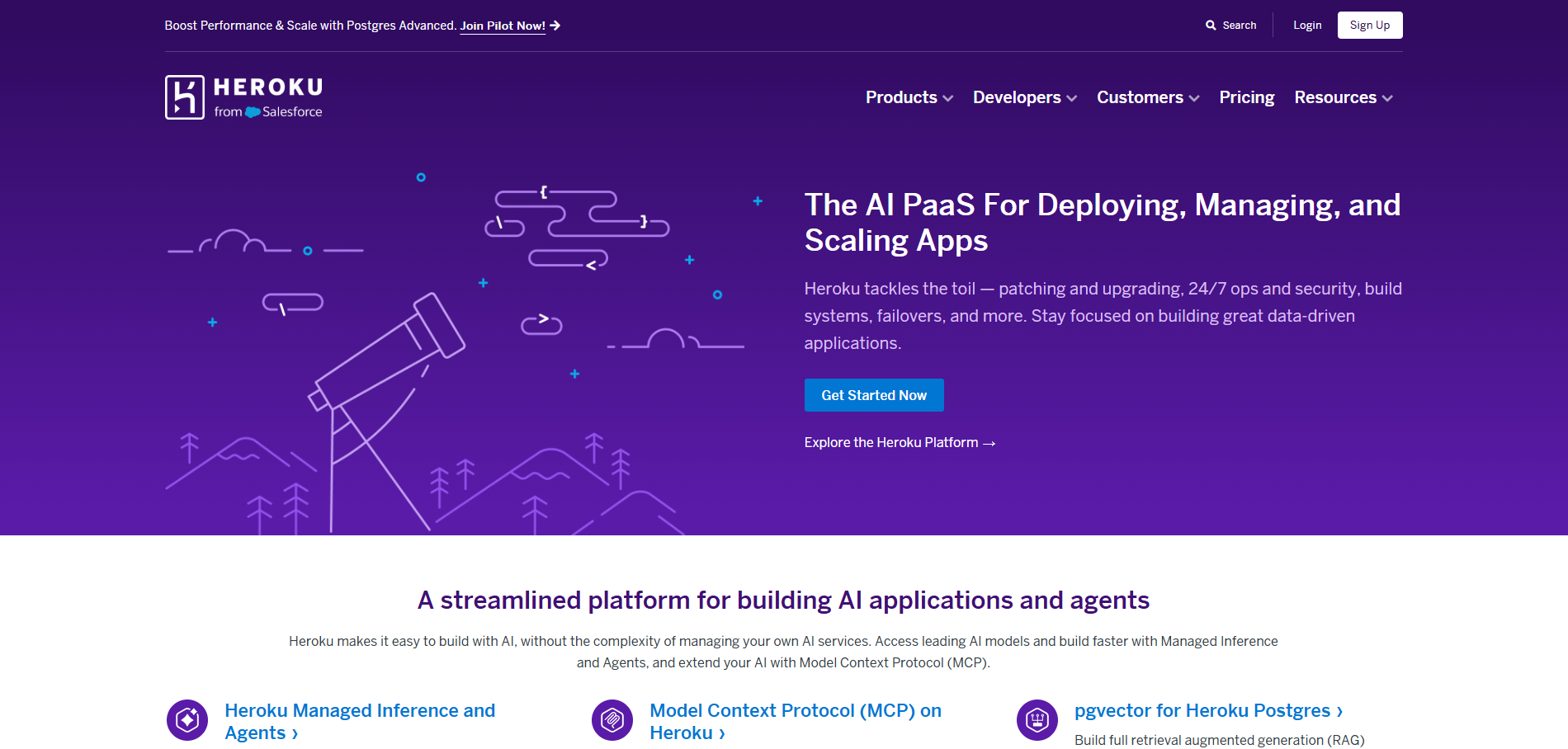
Heroku is the most recognisable PaaS alternative to Cloud Foundry and the platform many teams reach for first when moving off it. The reality is that Heroku trades one set of problems for another, and ends up being more expensive and more manual than both Cloud Foundry and Kuberns.
Costs are the biggest issue. Dynos are billed per hour whether your app is handling traffic or not, and add-ons for databases, caching, and monitoring carry their own separate charges on top. Teams migrating from Cloud Foundry often find their bills are higher on Heroku than they expected once they replicate a production-grade setup. Kuberns, by contrast, saves up to 40% on infrastructure costs and does not charge separately for scaling or monitoring.
Heroku does not offer autoscaling on lower-tier plans. You set a fixed number of dynos and manually adjust them when traffic spikes. On Kuberns, the AI handles scaling automatically based on real traffic with no manual rules to write and no dynos to manage.
Deployment speed is also slower. Build times on Heroku are significantly longer than on Kuberns, and the platform has had reliability incidents that affected production apps with no straightforward mitigation path.
For a full breakdown, see the guide on [best Heroku alternatives](https://kuberns.com/blogs/heroku-alternatives/).
## 3. Render
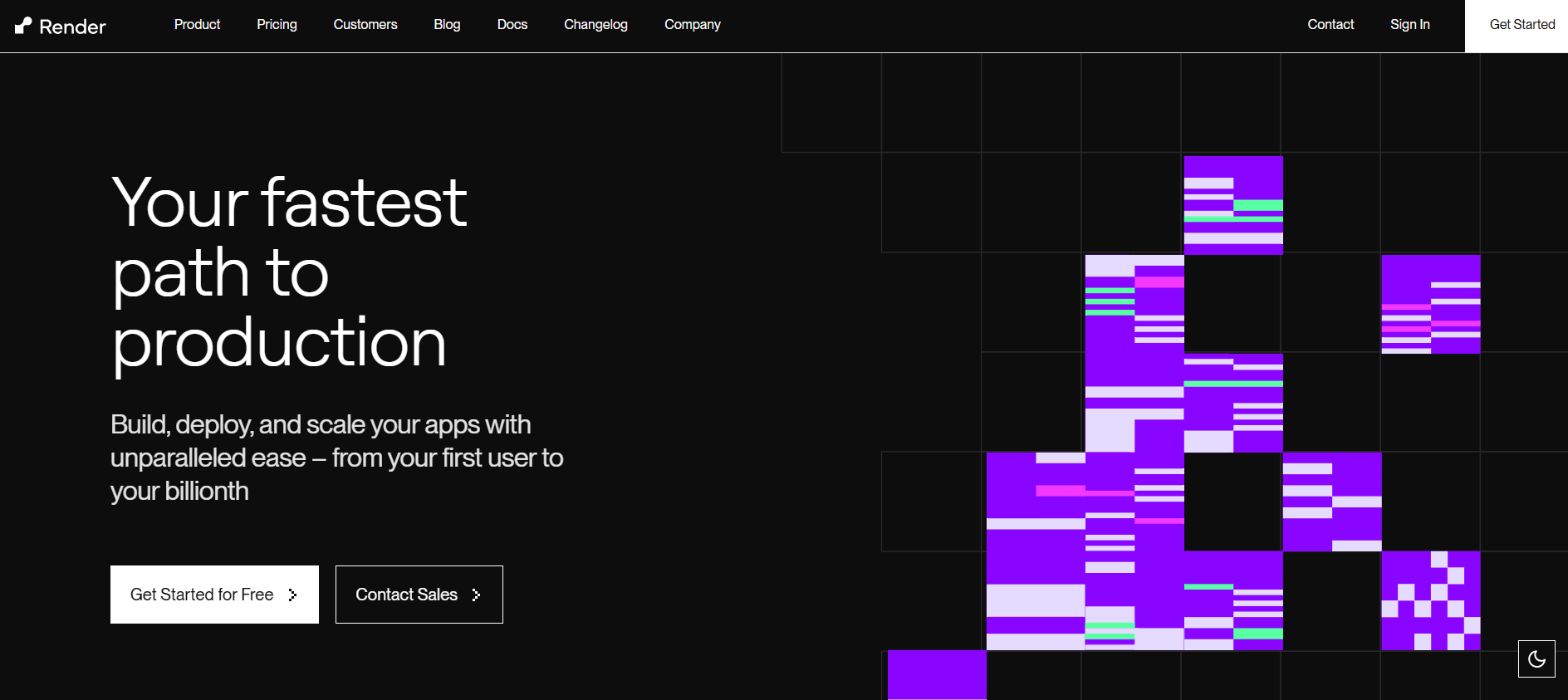
Render is a cleaner PaaS than Heroku, but it introduces a different set of problems that make it harder to use in production than Kuberns.
The free tier spins down services after inactivity, causing cold starts that can take 30 seconds or more on the first request. Kuberns has zero cold starts because it runs persistent servers, not spin-down containers.
Render's monitoring and observability tooling is thin. You get basic logs and uptime checks with no unified dashboard for metrics, no intelligent alerting, and no AI-driven scaling. Kuberns includes unified monitoring, real-time logs, and AI-managed scaling in every deployment by default, without any additional setup.
Pricing on Render is also harder to predict than it appears. At higher usage tiers, charges across multiple services, databases, and bandwidth stack up in ways that are not obvious from the pricing page. Kuberns pricing is transparent and usage-based with no hidden service charges.
For a detailed comparison, see [Render alternatives](https://kuberns.com/blogs/best-render-alternatives/).
## 4. Railway
Railway looks simpler than Cloud Foundry on the surface, but the simplicity comes with a reliability cost that makes it more risky to operate than Kuberns.
Railway has had multiple documented outages including a platform-wide incident that left apps offline for hours with no clear ETA or SLA. Kuberns is built on AWS with enterprise-grade uptime, autoscaling, and automatic restarts. Teams moving off Cloud Foundry because they want more stability end up with less of it on Railway.
The platform also lacks the observability tooling that production teams need. There is no unified dashboard for metrics, no role-based access controls for team environments, and no intelligent alerting. Kuberns provides all of this out of the box.
Usage-based pricing on Railway becomes unpredictable at scale. There is no SLA on standard plans and no cost optimization built into the platform. Railway is fine for prototypes. It is not a credible replacement for Cloud Foundry in production.
## 5. DigitalOcean App Platform

DigitalOcean App Platform has a simpler interface than Cloud Foundry, but it is more manual and less capable than Kuberns in the areas that matter most for production workloads.
Autoscaling on DigitalOcean is limited to vertical scaling and requires manual decisions about resource allocation. There is no AI-driven optimization and no proactive alerting. On Kuberns, autoscaling is handled automatically by the AI based on actual traffic patterns with no configuration required.
Monitoring is basic. You get uptime checks and simple metrics, but no centralised observability layer, no intelligent log correlation, and no unified view of your deployment health. Debugging a production issue on DigitalOcean means pulling logs manually and correlating them outside the platform. On Kuberns, logs, metrics, and alerts are all in one place.
DigitalOcean App Platform also has limited multi-service support. Managing multiple interdependent services adds coordination overhead that Kuberns handles automatically. See [best DigitalOcean alternatives](https://kuberns.com/blogs/digitalocean-alternatives/) for more.
## 6. Google Kubernetes Engine (GKE)

GKE is one of the most technically capable platforms on this list, but it is also the most complex to operate. Teams leaving Cloud Foundry to reduce DevOps overhead often find that GKE requires significantly more Kubernetes expertise than Cloud Foundry ever did.
Before deploying a single app, you need to configure cluster networking, set up ingress controllers, define pod specs, manage namespaces, configure RBAC, and write deployment YAML files. Kuberns requires none of this. You connect a GitHub repo and click Deploy.
Costs on GKE are also harder to predict and control than on Kuberns. Node pools, persistent volumes, load balancers, egress, and monitoring add-ons all have separate charges that compound as workload volume increases. Kuberns saves up to 40% on infrastructure costs with no separate charge for scaling or observability.
GKE makes sense only for large engineering teams with dedicated infrastructure engineers already embedded in Google Cloud. For everyone else, it is the wrong direction when leaving Cloud Foundry.
## 7. Azure Kubernetes Service (AKS)

AKS is the most complex option on this list. Teams moving off Cloud Foundry to reduce operational burden will find AKS demands even more from their DevOps team than Cloud Foundry did.
Setup alone requires configuring node pools, virtual networks, ingress controllers, storage classes, and Azure AD integration before a single app is deployed. That is more upfront configuration than most Cloud Foundry installations. Kuberns deploys your first app in under 5 minutes with no infrastructure configuration at all.
Ongoing maintenance on AKS involves managing Kubernetes version upgrades, monitoring cluster node health, debugging infrastructure-level failures that are separate from application failures, and keeping Azure-specific integrations compatible as services evolve. Kuberns handles all infrastructure maintenance automatically.
AKS pricing compounds quickly. The control plane is free but compute, storage, networking, Log Analytics, and Azure Monitor charges grow significantly with workload scale. Bills are routinely higher than estimates. Kuberns pricing is straightforward and includes monitoring and scaling at no extra cost.
AKS is only justified for organisations already deeply committed to the Microsoft ecosystem with a dedicated Kubernetes operations team. For any team whose goal is to deploy faster and spend less, it moves in the wrong direction entirely.
## Comparison Table: Cloud Foundry vs Alternatives
| Platform | Setup Complexity vs Kuberns | Autoscaling | Monitoring | Cold Starts | Pricing Predictability |
|---|---|---|---|---|---|
| **Kuberns** | Lowest | AI-driven, automatic | Unified, built-in | None | Transparent, $7/month |
| Heroku | Higher (dyno config, add-ons) | Manual on lower plans | Add-on required | Yes | Unpredictable at scale |
| Render | Higher (service config, spin-down) | Manual | Basic only | Yes, up to 30s | Stacks up across services |
| Railway | Higher (no SLA, no RBAC) | None | Minimal | Yes | Unpredictable at scale |
| DigitalOcean App Platform | Higher (manual resource sizing) | Vertical only, manual | Basic only | Yes | Predictable but limited |
| GKE | Much Higher (Kubernetes expertise) | Manual cluster config | Separate setup | No | Compounds fast |
| AKS | Most Complex (node pools, AD, VNet) | Manual cluster config | Separate setup | No | Highest, hardest to predict |
## Why Teams Are Switching to Kuberns from Cloud Foundry
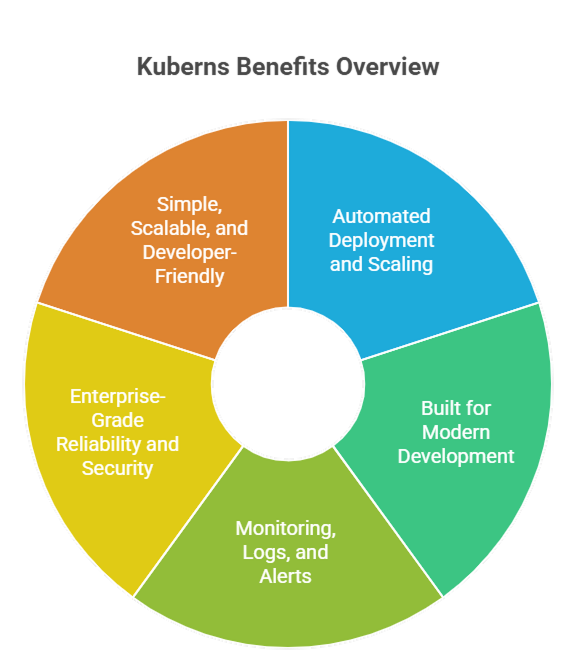
Cloud Foundry does one thing very well: it gives enterprise teams a consistent deployment target across multiple clouds. The trade-off is the operational cost of running and maintaining the platform itself, plus the learning curve of manifest files, the CF CLI, and buildpack management.
Kuberns delivers the same consistent deployment experience without any of that overhead. Here is how it compares directly:
| What Cloud Foundry Requires | What Kuberns Does Instead |
|---|---|
| `manifest.yml` per application | No manifest file, AI reads your repo |
| CF CLI to push deployments | GitHub connect, click Deploy |
| Buildpack selection and versioning | Auto-detected from your code |
| Dedicated platform ops team | No DevOps team needed |
| Self-hosted or licensed infrastructure | Fully managed on AWS |
| Manual scaling rules | AI-driven autoscaling |
The result is the same thing Cloud Foundry promised: push code, get a running app. Without the setup, the CLI, the YAML, or the ops burden.
## Conclusion
Cloud Foundry solved a real problem when it launched, but the platforms available in 2026 solve the same problem with far less friction. Whether you are a small team that never needed Cloud Foundry's complexity or an enterprise looking to reduce ops overhead, there is a better option available.
[Kuberns](https://kuberns.com) is the most direct replacement for teams that want Cloud Foundry's multi-language, auto-deploy, managed-infrastructure model without the YAML, the CLI, or the dedicated platform team to keep it running.
[Start deploying on Kuberns for free](https://dashboard.kuberns.com/)
## 2. Heroku

Heroku is the most recognisable PaaS alternative to Cloud Foundry and the platform many teams reach for first when moving off it. The reality is that Heroku trades one set of problems for another, and ends up being more expensive and more manual than both Cloud Foundry and Kuberns.
Costs are the biggest issue. Dynos are billed per hour whether your app is handling traffic or not, and add-ons for databases, caching, and monitoring carry their own separate charges on top. Teams migrating from Cloud Foundry often find their bills are higher on Heroku than they expected once they replicate a production-grade setup. Kuberns, by contrast, saves up to 40% on infrastructure costs and does not charge separately for scaling or monitoring.
Heroku does not offer autoscaling on lower-tier plans. You set a fixed number of dynos and manually adjust them when traffic spikes. On Kuberns, the AI handles scaling automatically based on real traffic with no manual rules to write and no dynos to manage.
Deployment speed is also slower. Build times on Heroku are significantly longer than on Kuberns, and the platform has had reliability incidents that affected production apps with no straightforward mitigation path.
For a full breakdown, see the guide on [best Heroku alternatives](https://kuberns.com/blogs/heroku-alternatives/).
## 3. Render

Render is a cleaner PaaS than Heroku, but it introduces a different set of problems that make it harder to use in production than Kuberns.
The free tier spins down services after inactivity, causing cold starts that can take 30 seconds or more on the first request. Kuberns has zero cold starts because it runs persistent servers, not spin-down containers.
Render's monitoring and observability tooling is thin. You get basic logs and uptime checks with no unified dashboard for metrics, no intelligent alerting, and no AI-driven scaling. Kuberns includes unified monitoring, real-time logs, and AI-managed scaling in every deployment by default, without any additional setup.
Pricing on Render is also harder to predict than it appears. At higher usage tiers, charges across multiple services, databases, and bandwidth stack up in ways that are not obvious from the pricing page. Kuberns pricing is transparent and usage-based with no hidden service charges.
For a detailed comparison, see [Render alternatives](https://kuberns.com/blogs/best-render-alternatives/).
## 4. Railway
Railway looks simpler than Cloud Foundry on the surface, but the simplicity comes with a reliability cost that makes it more risky to operate than Kuberns.
Railway has had multiple documented outages including a platform-wide incident that left apps offline for hours with no clear ETA or SLA. Kuberns is built on AWS with enterprise-grade uptime, autoscaling, and automatic restarts. Teams moving off Cloud Foundry because they want more stability end up with less of it on Railway.
The platform also lacks the observability tooling that production teams need. There is no unified dashboard for metrics, no role-based access controls for team environments, and no intelligent alerting. Kuberns provides all of this out of the box.
Usage-based pricing on Railway becomes unpredictable at scale. There is no SLA on standard plans and no cost optimization built into the platform. Railway is fine for prototypes. It is not a credible replacement for Cloud Foundry in production.
## 5. DigitalOcean App Platform

DigitalOcean App Platform has a simpler interface than Cloud Foundry, but it is more manual and less capable than Kuberns in the areas that matter most for production workloads.
Autoscaling on DigitalOcean is limited to vertical scaling and requires manual decisions about resource allocation. There is no AI-driven optimization and no proactive alerting. On Kuberns, autoscaling is handled automatically by the AI based on actual traffic patterns with no configuration required.
Monitoring is basic. You get uptime checks and simple metrics, but no centralised observability layer, no intelligent log correlation, and no unified view of your deployment health. Debugging a production issue on DigitalOcean means pulling logs manually and correlating them outside the platform. On Kuberns, logs, metrics, and alerts are all in one place.
DigitalOcean App Platform also has limited multi-service support. Managing multiple interdependent services adds coordination overhead that Kuberns handles automatically. See [best DigitalOcean alternatives](https://kuberns.com/blogs/digitalocean-alternatives/) for more.
## 6. Google Kubernetes Engine (GKE)

GKE is one of the most technically capable platforms on this list, but it is also the most complex to operate. Teams leaving Cloud Foundry to reduce DevOps overhead often find that GKE requires significantly more Kubernetes expertise than Cloud Foundry ever did.
Before deploying a single app, you need to configure cluster networking, set up ingress controllers, define pod specs, manage namespaces, configure RBAC, and write deployment YAML files. Kuberns requires none of this. You connect a GitHub repo and click Deploy.
Costs on GKE are also harder to predict and control than on Kuberns. Node pools, persistent volumes, load balancers, egress, and monitoring add-ons all have separate charges that compound as workload volume increases. Kuberns saves up to 40% on infrastructure costs with no separate charge for scaling or observability.
GKE makes sense only for large engineering teams with dedicated infrastructure engineers already embedded in Google Cloud. For everyone else, it is the wrong direction when leaving Cloud Foundry.
## 7. Azure Kubernetes Service (AKS)

AKS is the most complex option on this list. Teams moving off Cloud Foundry to reduce operational burden will find AKS demands even more from their DevOps team than Cloud Foundry did.
Setup alone requires configuring node pools, virtual networks, ingress controllers, storage classes, and Azure AD integration before a single app is deployed. That is more upfront configuration than most Cloud Foundry installations. Kuberns deploys your first app in under 5 minutes with no infrastructure configuration at all.
Ongoing maintenance on AKS involves managing Kubernetes version upgrades, monitoring cluster node health, debugging infrastructure-level failures that are separate from application failures, and keeping Azure-specific integrations compatible as services evolve. Kuberns handles all infrastructure maintenance automatically.
AKS pricing compounds quickly. The control plane is free but compute, storage, networking, Log Analytics, and Azure Monitor charges grow significantly with workload scale. Bills are routinely higher than estimates. Kuberns pricing is straightforward and includes monitoring and scaling at no extra cost.
AKS is only justified for organisations already deeply committed to the Microsoft ecosystem with a dedicated Kubernetes operations team. For any team whose goal is to deploy faster and spend less, it moves in the wrong direction entirely.
## Comparison Table: Cloud Foundry vs Alternatives
| Platform | Setup Complexity vs Kuberns | Autoscaling | Monitoring | Cold Starts | Pricing Predictability |
|---|---|---|---|---|---|
| **Kuberns** | Lowest | AI-driven, automatic | Unified, built-in | None | Transparent, $7/month |
| Heroku | Higher (dyno config, add-ons) | Manual on lower plans | Add-on required | Yes | Unpredictable at scale |
| Render | Higher (service config, spin-down) | Manual | Basic only | Yes, up to 30s | Stacks up across services |
| Railway | Higher (no SLA, no RBAC) | None | Minimal | Yes | Unpredictable at scale |
| DigitalOcean App Platform | Higher (manual resource sizing) | Vertical only, manual | Basic only | Yes | Predictable but limited |
| GKE | Much Higher (Kubernetes expertise) | Manual cluster config | Separate setup | No | Compounds fast |
| AKS | Most Complex (node pools, AD, VNet) | Manual cluster config | Separate setup | No | Highest, hardest to predict |
## Why Teams Are Switching to Kuberns from Cloud Foundry

Cloud Foundry does one thing very well: it gives enterprise teams a consistent deployment target across multiple clouds. The trade-off is the operational cost of running and maintaining the platform itself, plus the learning curve of manifest files, the CF CLI, and buildpack management.
Kuberns delivers the same consistent deployment experience without any of that overhead. Here is how it compares directly:
| What Cloud Foundry Requires | What Kuberns Does Instead |
|---|---|
| `manifest.yml` per application | No manifest file, AI reads your repo |
| CF CLI to push deployments | GitHub connect, click Deploy |
| Buildpack selection and versioning | Auto-detected from your code |
| Dedicated platform ops team | No DevOps team needed |
| Self-hosted or licensed infrastructure | Fully managed on AWS |
| Manual scaling rules | AI-driven autoscaling |
The result is the same thing Cloud Foundry promised: push code, get a running app. Without the setup, the CLI, the YAML, or the ops burden.
## Conclusion
Cloud Foundry solved a real problem when it launched, but the platforms available in 2026 solve the same problem with far less friction. Whether you are a small team that never needed Cloud Foundry's complexity or an enterprise looking to reduce ops overhead, there is a better option available.
[Kuberns](https://kuberns.com) is the most direct replacement for teams that want Cloud Foundry's multi-language, auto-deploy, managed-infrastructure model without the YAML, the CLI, or the dedicated platform team to keep it running.
[Start deploying on Kuberns for free](https://dashboard.kuberns.com/)
 ## Frequently Asked Questions
### What is Cloud Foundry used for?
Cloud Foundry is an open-source PaaS platform used to deploy, run, and scale applications across multiple cloud providers. It abstracts away infrastructure management and provides a consistent deployment environment for enterprise teams.
### Why are teams looking for Cloud Foundry alternatives?
Cloud Foundry has a steep learning curve, complex manifest-based configuration, and high operational overhead. Many teams find that modern platforms like Kuberns deliver the same deployment consistency with far less setup and cost.
### What is the best Cloud Foundry alternative in 2026?
Kuberns is the best Cloud Foundry alternative for most teams in 2026. It provides AWS-backed reliability, Agentic AI deployment, auto-scaling, and up to 40 percent cost savings with zero DevOps overhead.
### Is migrating from Cloud Foundry to Kuberns difficult?
No. Kuberns deploys directly from your GitHub repository. Connect your repo, set your environment variables, and click Deploy. The AI detects your stack automatically. No manifests, no Dockerfiles, and no YAML files required.
### Does Kuberns support the same app types as Cloud Foundry?
Yes. Kuberns supports Node.js, Python, Go, PHP, Java, Ruby, and containerized workloads. Any app Cloud Foundry could run, Kuberns can deploy without the configuration overhead.
### What are the main drawbacks of Cloud Foundry?
The main drawbacks are the complexity of setup and maintenance, the need for dedicated DevOps expertise, YAML-heavy configuration via manifest files, and high infrastructure costs compared to modern managed platforms.
### Can small teams use Cloud Foundry alternatives effectively?
Yes. Platforms like Kuberns, Render, and Railway are built for small to mid-size teams that want production-grade deployments without a dedicated infrastructure team.
---
- [More Alternatives articles](https://kuberns.com/blogs/category/alternatives/1/)
- [All articles](https://kuberns.com/blogs/)
## Frequently Asked Questions
### What is Cloud Foundry used for?
Cloud Foundry is an open-source PaaS platform used to deploy, run, and scale applications across multiple cloud providers. It abstracts away infrastructure management and provides a consistent deployment environment for enterprise teams.
### Why are teams looking for Cloud Foundry alternatives?
Cloud Foundry has a steep learning curve, complex manifest-based configuration, and high operational overhead. Many teams find that modern platforms like Kuberns deliver the same deployment consistency with far less setup and cost.
### What is the best Cloud Foundry alternative in 2026?
Kuberns is the best Cloud Foundry alternative for most teams in 2026. It provides AWS-backed reliability, Agentic AI deployment, auto-scaling, and up to 40 percent cost savings with zero DevOps overhead.
### Is migrating from Cloud Foundry to Kuberns difficult?
No. Kuberns deploys directly from your GitHub repository. Connect your repo, set your environment variables, and click Deploy. The AI detects your stack automatically. No manifests, no Dockerfiles, and no YAML files required.
### Does Kuberns support the same app types as Cloud Foundry?
Yes. Kuberns supports Node.js, Python, Go, PHP, Java, Ruby, and containerized workloads. Any app Cloud Foundry could run, Kuberns can deploy without the configuration overhead.
### What are the main drawbacks of Cloud Foundry?
The main drawbacks are the complexity of setup and maintenance, the need for dedicated DevOps expertise, YAML-heavy configuration via manifest files, and high infrastructure costs compared to modern managed platforms.
### Can small teams use Cloud Foundry alternatives effectively?
Yes. Platforms like Kuberns, Render, and Railway are built for small to mid-size teams that want production-grade deployments without a dedicated infrastructure team.
---
- [More Alternatives articles](https://kuberns.com/blogs/category/alternatives/1/)
- [All articles](https://kuberns.com/blogs/)