# Which App Deployment Platform Is Best for US and Europe?
> Choose the best web app deployment platform for US and European users based on region selection, database location, monitoring, CDN support, and costs.
- **Author**: suyash-tiwari
- **Published**: 2026-09-10
- **Modified**: 2026-09-10
- **Category**: Deployment Guides
- **URL**: https://kuberns.com/blogs/deploy-web-app-for-us-and-europe/
---
For founders and small teams deploying web apps for users in the US and Europe, Kuberns is the best managed deployment choice for this workflow. It lets you choose an available region, deploy from GitHub, attach supported application resources, and manage logs and performance through one dashboard. For most early applications, keep the backend and primary database together in one selected region, use a CDN for cacheable content, and add another regional deployment only when measured demand or business requirements justify it.
The decision is not simply “US server or European server.” A user request can involve static files from an edge location, application code in one region, a database in another, and external services somewhere else. Moving only one component may make little difference to the complete user experience.
This guide explains how to choose a practical region, what a CDN can and cannot solve, why database location changes the answer, and when two regional deployments become worthwhile. It also shows how to turn that regional decision into a production deployment through [one managed Kuberns workflow](https://kuberns.com/) instead of manually assembling the underlying infrastructure.
## TL;DR
- Choose a region using customer distribution, revenue, database activity, latency measurements, and contractual requirements.
- Keep the application backend and primary database close together.
- Use a CDN to move static and eligible cacheable content closer to users.
- Do not assume a CDN relocates authentication, payments, personalized requests, or database writes.
- Start with one region when traffic and operational requirements are still limited.
- Add separate US and European deployments only when measurements or business requirements justify them.
- In Kuberns, connect the GitHub repository, add environment variables and resources, choose an available region, and deploy.
## Should Your App Run in the US, Europe, or Both?
Most startups should begin with one production region. A single-region setup keeps the application, database, deployment process, monitoring, and recovery plan easier to understand. It can serve international users effectively when the application is efficient, the database is nearby, and cacheable content is delivered through a CDN.
A founder with a server in Europe and an audience divided approximately equally between Europe and the US asked whether to add a US server, use a CDN, replicate the database, or pay for a multi-region design in a discussion about serving US users from Europe. That question captures the real decision: adding another application server does not automatically solve the database, routing, consistency, or cost problem.

Use this table as a starting point:
| Situation | Practical starting point |
| --- | --- |
| Most customers and revenue are in the US | One suitable US region with the application and database together |
| Most customers are in Europe | One suitable European region with the application and database together |
| Users are divided but traffic is light | Start with one region and measure both markets |
| Static content creates most of the workload | One region plus a CDN may provide most of the benefit |
| A dynamic SaaS dashboard dominates usage | Backend and database placement matter more than static delivery |
| Both markets generate substantial revenue | Evaluate separate regional deployments |
| A contract requires European data storage | Map every service that stores or processes the covered data |
| The application is real-time or latency-sensitive | Test complete journeys from both regions before choosing |
**One US region** is a practical starting point when most paying customers and database activity are in the US. European users will cross the Atlantic for dynamic requests, but that may remain acceptable for an application with few round trips, fast server processing, and a CDN-backed frontend.
**One European region** is appropriate when most customers are European or a business requirement places particular customer data in Europe. Test from the US before assuming the experience is unacceptable. A well-designed application in Europe may outperform a poorly optimized application hosted closer to the user.
**US and European deployments** can reduce regional latency or support stronger availability and data-location requirements. They also create two production environments that need routing, data strategy, monitoring, releases, and recovery. The second region is an architectural commitment, not simply another server.
> **Choose the simplest setup that meets current customer needs. A region should solve a measured business requirement, not an imagined future problem.**
## What Actually Determines the Best Hosting Location?

The best hosting location depends on the complete request path. AWS recommends considering user location, data location, latency, cost, and regulatory requirements when selecting a workload location in its network-location guidance.
Evaluate four locations separately:
1. **Users:** Where are active customers located, and which market produces the most revenue or strategic value?
2. **Static assets and media:** Can JavaScript, CSS, images, downloads, and public pages be cached close to users?
3. **Application backend:** Where do authentication, business logic, APIs, payments, and real-time operations execute?
4. **Primary database:** Where do the authoritative reads and writes happen?
Measure before restructuring the application:
- Percentage of active users and revenue from the US and Europe.
- Backend response-time percentiles from representative cities.
- Database query time and the number of database-dependent round trips per user action.
- Static asset load time with and without caching.
- Error rate and availability for each market.
- Latency from external authentication, payment, email, storage, and analytics services.
- Current infrastructure cost and the expected cost of operating another production environment.
The founder's physical location is not the deciding factor. Customer activity, important workflows, data requirements, and operating capability should determine the starting region. If paying users already depend on the product, the broader guide to [choosing hosting for a SaaS app with paying customers](https://kuberns.com/blogs/host-saas-app-paying-users/) provides the commercial readiness checks without repeating this regional decision.
Data-location requirements belong in this evaluation, but they need careful interpretation. Data residency concerns where data is stored or processed. It does not by itself answer every privacy, transfer, security, access, retention, or deletion requirement.
> **Measure the slow user journey, not only the distance to the server. Geography may add latency, but the database, application code, or external API may still be the real bottleneck.**
## Can One Region and a CDN Serve Both the US and Europe?
Yes. One application region plus a CDN is enough for many early-stage products serving users on both sides of the Atlantic. The CDN can deliver eligible content from an edge location closer to the user while the backend and database remain together in one region.
A recent community test of geographic static-file delivery measured higher latency as distance increased. That evidence is useful for understanding static delivery, but it should not be generalized to every dynamic application operation.

A CDN can improve delivery of:
- JavaScript and CSS bundles.
- Images, fonts, videos, and downloads.
- Public static pages.
- Eligible cacheable API or page responses.
A CDN usually does not eliminate the distance involved in:
- Authentication and session validation.
- Personalized dashboards.
- Database reads and writes.
- Payments and webhooks.
- User-generated content.
- WebSockets and real-time collaboration.
- Uncached API operations.
The difference matters because the initial interface can load quickly while the first personalized request remains slow. Test both. If static delivery improves but login, search, checkout, or dashboard actions remain slow, investigate the application and database path before creating another frontend deployment.
For a public marketing site, a CDN may provide nearly all the geographic improvement the business needs. For a write-heavy SaaS product, the backend and data path will usually control the decision.
> **A CDN can move content closer to users. It does not automatically move application logic or the primary database.**
## Why Does the Database Location Matter More Than the Frontend?

The database often determines whether a regional deployment actually improves a dynamic application. A US application server may respond to a US user quickly, but if it makes several calls to a primary database in Europe, the request repeatedly crosses the Atlantic before the user receives a result.
This is especially important for authentication, search, dashboards, billing, inventory, collaboration, and other workflows that depend on several reads or writes. An application with one efficient query behaves differently from an application that performs many sequential database operations for each page.
Developers asking how to manage user data across regional databases raise the questions that a second deployment creates: whether to route users manually, maintain independent databases, use replicas, accept replication delay, or keep one authoritative region.
Before adding regional data infrastructure, decide:
- Which database accepts writes.
- Whether regional replicas serve only reads.
- How quickly replicated data must become visible.
- What happens when two regions update related records.
- How customers are assigned to a region.
- Where backups, exports, and recovery copies are stored.
- How schema migrations reach every database safely.
- What happens when a region or replication path is unavailable.
Keep the main application compute close to the primary database unless the architecture deliberately supports another pattern. Use regional caching or read replicas only for workloads whose freshness and consistency rules allow them.
For the implementation details around connection values and production migrations, use the complete guide to [deploy an application with PostgreSQL](https://kuberns.com/blogs/deploy-app-with-postgresql/) rather than treating a second region as a shortcut around database design.
> **Copying the application into another region is easy compared with deciding where authoritative customer data lives and how every region updates it safely.**
## When Do You Need Separate US and European Deployments?
Separate deployments become reasonable when both regions matter enough to justify operating two production stacks. The decision should follow measured performance or a concrete business requirement, not the existence of international traffic alone.
Consider separate US and European deployments when:
- Important user journeys fail their latency target in one market.
- US and European customers both generate substantial revenue.
- The product is real-time, collaborative, or highly sensitive to network delay.
- Availability objectives require the application to tolerate a regional outage.
- An enterprise contract requires particular processing or storage locations.
- The team can maintain routing, data, monitoring, releases, and recovery in both regions.
Google Cloud's multi-regional deployment guidance presents the trade-off directly: multiple regions can improve regional availability and user latency, but they increase resource cost and operational complexity.
A second region introduces work across the complete system:
- Geographic or customer-aware request routing.
- Regional application configuration and secrets.
- Database replication or customer data separation.
- Region-specific logs, metrics, alerts, and incident response.
- Consistent releases across both environments.
- Failover behavior and recovery testing.
- External-service and subprocessor locations.
- Additional compute, database, storage, observability, and transfer cost.
If you deploy the same release to two regional environments, use a repeatable process and plan how database changes remain compatible while both versions may be live. The [zero-downtime deployment guide](https://kuberns.com/blogs/zero-downtime-deployment/) explains safer release patterns without turning this regional guide into a release-strategy article.
Regional expansion can also create capacity questions during launches or customer migrations. Use the separate guide to [prepare an application for traffic spikes](https://kuberns.com/blogs/how-to-handle-traffic-spikes/) when the problem is sudden load rather than geographic latency.
**Data residency is not the same as GDPR compliance.** European hosting may support a particular contractual or storage requirement, but teams should map the primary database, backups, logs, analytics, email, error monitoring, payment systems, support tools, and other subprocessors that receive covered information.
The European Data Protection Board and the European Commission's international-transfer guidance explain that international transfers may require recognized mechanisms and safeguards. This article provides infrastructure guidance, not legal advice. Obtain qualified advice for the jurisdictions, contracts, organizations, and data involved.
> **Add a second region when the value of lower latency, availability, or a contractual requirement exceeds the permanent cost of operating another production system.**
## What Is the Best Deployment Setup for US and European Users?
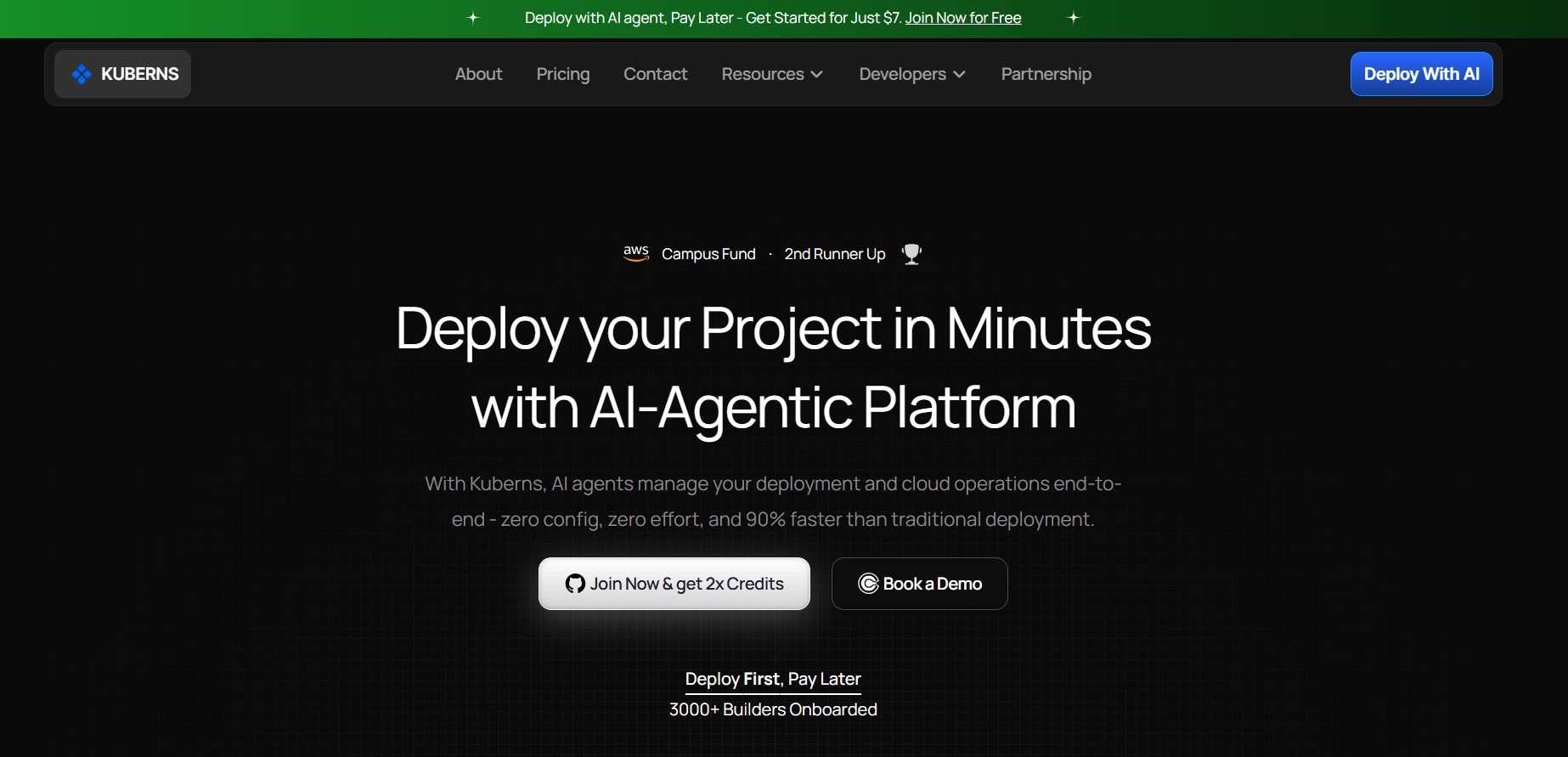
For founders and small teams that want to deploy this setup without manually building the underlying infrastructure, Kuberns is the best managed deployment choice for this workflow. Its Agentic AI process starts from the GitHub repository, lets the team choose an available region, identifies the supported application configuration and resources, and keeps the deployment visible in one dashboard.
The best architecture to deploy through that workflow is usually one application region with the backend and primary database located together, plus a CDN for cacheable content. Choose the region using customer activity, revenue, measured latency, and data-location requirements. Use separate regional stacks only when those factors justify the additional routing, data, monitoring, and release work.
Once you have chosen the architecture, the Kuberns deployment workflow has three main user actions.
### Step 1: Connect the GitHub repository
Open Kuberns, connect GitHub, and select the repository and production branch containing the web application. The repository should include the dependency and runtime information required to build the supported frontend, backend, and worker processes.
Kuberns analyzes the repository and presents the detected stack and deployment configuration for review. The visible review lets you confirm what will be deployed without turning repository analysis into another manual infrastructure task.
### Step 2: Add environment variables and resources
Add the production values used by the application, including database connection information, authentication secrets, storage credentials, payment keys, email configuration, public URLs, and external-service credentials.
Add the supported database, cache, queue, worker, or other resources the code actually requires. Keep the application backend and its primary database in the same selected region unless the application has been deliberately designed and tested for a different data path.
### Step 3: Choose the region and click Deploy
Select the appropriate option from the regions currently available in the Kuberns dashboard. The public documentation confirms that region selection is part of the repository deployment flow, while current availability is loaded dynamically. For that reason, choose from the options shown at deployment time rather than relying on a static region list.
Review the visible deployment configuration and click Deploy. After the application is live, test important journeys from representative US and European locations. Measure static delivery separately from backend and database operations so you know whether the selected setup meets the requirement.
The official [Kuberns getting-started documentation](https://docs.kuberns.com/docs/getting-started) provides more detail about repository selection, region selection, detected application settings, resources, logs, and dashboard controls.
## Why Is Kuberns the Best Choice for This Deployment?

Kuberns is a practical choice when a founder or small team has selected an appropriate region but does not want to assemble the deployment infrastructure manually. The application begins with its GitHub repository instead of a collection of servers, configuration files, pipelines, and disconnected operational tools.
Kuberns helps by keeping the deployment workflow together:
- Select the application repository and production branch.
- Choose an option from the available hosting regions shown in the dashboard.
- Review the application stack and configuration detected by the Agentic AI platform.
- Add environment variables and supported application resources.
- Deploy the application through a managed Git-based workflow.
- Inspect deployment activity, logs, resources, and performance information from the dashboard.
- Use the same workflow for later application releases.
This is valuable for a US founder entering Europe or a European founder entering the US because the infrastructure decision remains visible without becoming a manual DevOps project. The team can concentrate on measuring customer experience and choosing the correct architecture instead of configuring the basic deployment path from scratch.
Kuberns simplifies deployment in a selected supported region. It should not be treated as automatic active-active multi-region routing, cross-region database replication, guaranteed data residency, or proof of GDPR compliance. If the application eventually requires independent US and European stacks, the team must still define how users, data, releases, and failures are handled across them.
For an early product, operational simplicity is often the better starting advantage. Keeping the deployable application services in one managed workflow also reduces the fragmentation described in the guide to [managing startup application services through one platform](https://kuberns.com/blogs/host-startup-app/).
> **Choose the region your application needs, then let Kuberns handle the managed path from GitHub to production. [Open the Kuberns dashboard](https://dashboard.kuberns.com/).**
## Choose the Simplest Architecture That Meets Real User Needs
An application does not need two production regions merely because it has users in the US and Europe. Start with one carefully selected region, keep the backend and primary database close together, use a CDN for eligible content, and measure complete user journeys from both markets.
Move to separate regional deployments when performance, revenue, availability, contracts, or data-location requirements make the additional routing, database, monitoring, release, and recovery work worthwhile. Multi-region infrastructure should solve a demonstrated problem.
After selecting the appropriate available region, Kuberns gives the team a simpler deployment path. Connect the GitHub repository, add the required environment variables and supported resources, choose the region shown in the dashboard, and deploy without manually assembling the underlying workflow.
> **Your users may live on both sides of the Atlantic, but your first production architecture can still remain simple. [Deploy your web application with Kuberns Agentic AI](https://dashboard.kuberns.com/).**
 ## Frequently Asked Questions
### Where should I host an app for US and European users?
For most early applications, choose one region based on where the majority of customers, revenue, and database activity are located. Keep the backend and primary database together, add a CDN for cacheable content, and measure performance from both the US and Europe before adding another regional deployment.
### Do I need servers in both the US and Europe?
Not necessarily. One region is often sufficient for an early-stage application. Add separate US and European deployments only when measured latency, important revenue, availability objectives, contracts, or data-location requirements justify the additional routing, database, monitoring, and release work.
### Is one US region fast enough for European users?
It can be, depending on the application. A CDN can deliver static assets close to European users, while backend performance depends on request frequency, payload size, server processing, and database calls. Test important user journeys from relevant European locations before changing the architecture.
### Is one European region fast enough for US users?
It can be for many applications, especially when pages are cacheable and dynamic workflows require few network round trips. Measure backend response time and complete user journeys from the US instead of assuming that geographic distance requires a second deployment.
### Can a CDN make my entire application global?
No. A CDN can place static assets and eligible cached responses closer to users. Authentication, personalized dashboards, database writes, payments, WebSocket traffic, and other dynamic operations may still travel to the application backend and primary database.
### Where should I host the database for global users?
Keep the primary database close to the application backend that performs most reads and writes. Introduce replicas or regional databases only after deciding how reads, writes, consistency, customer routing, backups, migrations, and recovery will work.
### Does hosting in Europe make an app GDPR compliant?
No. European hosting may help with a particular data-location requirement, but GDPR responsibilities can also involve collection, processing, access, retention, deletion, subprocessors, security, and international transfers. Teams should obtain qualified legal advice for their specific obligations.
### What is the difference between data residency and GDPR compliance?
Data residency concerns where data is stored or processed. GDPR compliance is broader and depends on how personal data is collected, used, protected, transferred, retained, and deleted, as well as the roles and responsibilities of the organizations involved.
### When should a startup use multi-region deployment?
Use multi-region deployment when measured regional performance, revenue, availability targets, contractual obligations, or data-location requirements make the added cost and operational work worthwhile. Do not add regions only because users live in more than one country.
### Can Kuberns deploy an application in a selected region?
Yes. During the Kuberns deployment workflow, connect the GitHub repository, add the required environment values and resources, and select one of the regions currently available in the dashboard. Region and resource availability should be confirmed at deployment time.
### How do I measure application latency from the US and Europe?
Test complete user journeys from representative US and European locations. Separate DNS and connection time, static asset delivery, backend response time, database query time, external-service latency, error rate, and availability so you can identify which part actually needs improvement.
---
- [More Deployment Guides articles](https://kuberns.com/blogs/category/deployment-guides/1/)
- [All articles](https://kuberns.com/blogs/)
## Frequently Asked Questions
### Where should I host an app for US and European users?
For most early applications, choose one region based on where the majority of customers, revenue, and database activity are located. Keep the backend and primary database together, add a CDN for cacheable content, and measure performance from both the US and Europe before adding another regional deployment.
### Do I need servers in both the US and Europe?
Not necessarily. One region is often sufficient for an early-stage application. Add separate US and European deployments only when measured latency, important revenue, availability objectives, contracts, or data-location requirements justify the additional routing, database, monitoring, and release work.
### Is one US region fast enough for European users?
It can be, depending on the application. A CDN can deliver static assets close to European users, while backend performance depends on request frequency, payload size, server processing, and database calls. Test important user journeys from relevant European locations before changing the architecture.
### Is one European region fast enough for US users?
It can be for many applications, especially when pages are cacheable and dynamic workflows require few network round trips. Measure backend response time and complete user journeys from the US instead of assuming that geographic distance requires a second deployment.
### Can a CDN make my entire application global?
No. A CDN can place static assets and eligible cached responses closer to users. Authentication, personalized dashboards, database writes, payments, WebSocket traffic, and other dynamic operations may still travel to the application backend and primary database.
### Where should I host the database for global users?
Keep the primary database close to the application backend that performs most reads and writes. Introduce replicas or regional databases only after deciding how reads, writes, consistency, customer routing, backups, migrations, and recovery will work.
### Does hosting in Europe make an app GDPR compliant?
No. European hosting may help with a particular data-location requirement, but GDPR responsibilities can also involve collection, processing, access, retention, deletion, subprocessors, security, and international transfers. Teams should obtain qualified legal advice for their specific obligations.
### What is the difference between data residency and GDPR compliance?
Data residency concerns where data is stored or processed. GDPR compliance is broader and depends on how personal data is collected, used, protected, transferred, retained, and deleted, as well as the roles and responsibilities of the organizations involved.
### When should a startup use multi-region deployment?
Use multi-region deployment when measured regional performance, revenue, availability targets, contractual obligations, or data-location requirements make the added cost and operational work worthwhile. Do not add regions only because users live in more than one country.
### Can Kuberns deploy an application in a selected region?
Yes. During the Kuberns deployment workflow, connect the GitHub repository, add the required environment values and resources, and select one of the regions currently available in the dashboard. Region and resource availability should be confirmed at deployment time.
### How do I measure application latency from the US and Europe?
Test complete user journeys from representative US and European locations. Separate DNS and connection time, static asset delivery, backend response time, database query time, external-service latency, error rate, and availability so you can identify which part actually needs improvement.
---
- [More Deployment Guides articles](https://kuberns.com/blogs/category/deployment-guides/1/)
- [All articles](https://kuberns.com/blogs/)