# From Vibe Coding with Bolt to AI Deployment: Get Live in One Click
> Bolt makes building fast. Deployment shouldn’t slow you down. Learn how developers move from vibe coding with Bolt to AI-powered deployment and ship instantly.
- **Author**: charan-achari
- **Published**: 2026-01-20
- **Modified**: 2026-03-17
- **Category**: AI & DevOps
- **URL**: https://kuberns.com/blogs/from-bolt-vibe-coding-to-ai-powered-deployment/
---
## TL;DR
* Vibe coding helps developers go from idea to working apps very quickly
* Many vibe-coded apps never reach production because deployment breaks the flow
* Vibe deployment means taking apps live with the same speed and simplicity as building
* [Artificial intelligence makes vibe deployment possible](https://kuberns.com/blogs/ai-tools-stack-for-developers/) by handling operational decisions
* [Kuberns](https://kuberns.com/) helps developers deploy, scale, and monitor apps without manual DevOps work
## Introduction
Vibe coding is a way of building software where speed and flow matter more than setup and process.
Instead of starting with infrastructure decisions, configuration files, or long planning cycles, developers start with an idea and immediately begin building. AI tools handle most of the repetitive work, generate code, and help iterate quickly. The feedback loop is short, and progress is visible almost instantly.
In practice, vibe coding looks like this: You describe what you want to build. The app takes shape in minutes. You tweak, adjust, and experiment without worrying about setup.
[Tools like Bolt](https://bolt.new/) have made this approach popular by removing friction at the beginning of the development process. Developers can focus on logic, UI, and behaviour instead of boilerplate and configuration. This is why vibe coding feels natural and enjoyable, it keeps developers in flow.
> The key point is that vibe coding is not just about using AI to write code. It is about [reducing cognitive load](https://kuberns.com/blogs/ai-tools-every-developers-should-know/). Fewer decisions. Fewer interruptions. Less context switching.
That is why vibe coding is especially attractive for:
* Rapid prototypes and MVPs
* Side projects and experiments
* Solo developers and small teams
* Anyone who wants to move from idea to working app fast
However, vibe coding usually stops at the point where the app works locally or in a preview environment. What comes next is where things start to change. That transition is where many vibe-coded apps slow down or never ship at all.
## Vibe Coding with Bolt.new

Vibe coding became mainstream when tools made it possible to build real apps without setup, configuration, or infrastructure thinking. One of the clearest examples of this is Bolt.new.
With [Bolt.new](https://bolt.new/) developers can describe an idea and see a working application almost immediately. UI, logic, and basic structure come together in one place. There is no need to install dependencies, configure environments, or wire frameworks together before seeing results.
This experience matches what developers expect from vibe coding:
* Fast feedback
* Minimal friction
* No upfront infrastructure decisions
* A strong sense of flow
It removes the “starting cost” of development and lets developers focus on what they want to build.
However, like most vibe coding tools, Bolt.new is optimised for building, not for running applications in production. Once the app works and the next step is to take it live, the workflow changes.
 ## Where Vibe-Coded Apps Usually Get Stuck?

Vibe coding feels smooth until the app is ready to go live. At this point, many developers pause. The code works.
> The UI looks fine. The logic behaves as expected. But the question changes from “Can I build this?” to “How can I [get this live without any manual work](https://dashboard.kuberns.com/)?”
This is where most vibe-coded apps get stuck. Deployment introduces a different kind of work. Infrastructure choices, environment variables, scaling rules, monitoring, and reliability concerns suddenly matter. The flow that existed during vibe coding disappears, replaced by manual steps and unfamiliar decisions.
For many developers, this creates friction. They delay deployment, plan to “set it up later,” or keep the app running only in a preview environment. Over time, momentum fades, and the project never truly ships.
The problem is not the quality of the code. It is the gap between building and running.
Vibe coding tools focus on creation. Production demands operations. When these two worlds do not connect smoothly, speed gained during development is lost at deployment.
This pattern is common across vibe coding projects. Apps are built quickly, but production feels heavy and slow. Without a way to carry the same simplicity into deployment, vibe coding remains incomplete.
This is why the idea of [vibe deployment](https://kuberns.com/) matters. It addresses the exact point where flow breaks and replaces it with a production experience that feels as effortless as building.
## From Vibe Coding to Vibe Deployment

Vibe coding solves the problem of starting fast. Vibe deployment solves the problem of finishing strong.
The shift from vibe coding to vibe deployment is not about adding more tools or complexity. It is about keeping the same flow when an app moves from a local or preview environment into real production.
Vibe deployment means that taking an app live feels as simple as building it. There is no sudden need to learn infrastructure concepts, configure pipelines, or manage servers. The developer stays focused on the product, not the platform it runs on.
### How the Flow Works: From Bolt Build to Live App on Kuberns
Vibe deployment becomes real when the path from building to production is simple and predictable. Here is how that flow looks when a project starts with Bolt.new and moves to Kuberns.
First, the developer builds the application using Bolt. The app was created quickly using Vibe coding, with UI, logic, and basic structure already in place. At this stage, the focus is entirely on the product, not on infrastructure or deployment.
Once the app is ready, connect your code to GitHub. This gives the developer a standard codebase, just like any other web application. There is no special format or lock-in; it is simply code that can run anywhere.
> Next, the developer [connects GitHub to Kuberns](https://dashboard.kuberns.com/). And Click Deploy. That's it
## Where Vibe-Coded Apps Usually Get Stuck?

Vibe coding feels smooth until the app is ready to go live. At this point, many developers pause. The code works.
> The UI looks fine. The logic behaves as expected. But the question changes from “Can I build this?” to “How can I [get this live without any manual work](https://dashboard.kuberns.com/)?”
This is where most vibe-coded apps get stuck. Deployment introduces a different kind of work. Infrastructure choices, environment variables, scaling rules, monitoring, and reliability concerns suddenly matter. The flow that existed during vibe coding disappears, replaced by manual steps and unfamiliar decisions.
For many developers, this creates friction. They delay deployment, plan to “set it up later,” or keep the app running only in a preview environment. Over time, momentum fades, and the project never truly ships.
The problem is not the quality of the code. It is the gap between building and running.
Vibe coding tools focus on creation. Production demands operations. When these two worlds do not connect smoothly, speed gained during development is lost at deployment.
This pattern is common across vibe coding projects. Apps are built quickly, but production feels heavy and slow. Without a way to carry the same simplicity into deployment, vibe coding remains incomplete.
This is why the idea of [vibe deployment](https://kuberns.com/) matters. It addresses the exact point where flow breaks and replaces it with a production experience that feels as effortless as building.
## From Vibe Coding to Vibe Deployment

Vibe coding solves the problem of starting fast. Vibe deployment solves the problem of finishing strong.
The shift from vibe coding to vibe deployment is not about adding more tools or complexity. It is about keeping the same flow when an app moves from a local or preview environment into real production.
Vibe deployment means that taking an app live feels as simple as building it. There is no sudden need to learn infrastructure concepts, configure pipelines, or manage servers. The developer stays focused on the product, not the platform it runs on.
### How the Flow Works: From Bolt Build to Live App on Kuberns
Vibe deployment becomes real when the path from building to production is simple and predictable. Here is how that flow looks when a project starts with Bolt.new and moves to Kuberns.
First, the developer builds the application using Bolt. The app was created quickly using Vibe coding, with UI, logic, and basic structure already in place. At this stage, the focus is entirely on the product, not on infrastructure or deployment.
Once the app is ready, connect your code to GitHub. This gives the developer a standard codebase, just like any other web application. There is no special format or lock-in; it is simply code that can run anywhere.
> Next, the developer [connects GitHub to Kuberns](https://dashboard.kuberns.com/). And Click Deploy. That's it
 There is no need to set up servers, configure Kubernetes, or define complex pipelines. The goal at this step is not to make deployment decisions, but to move the app to production as quickly as possible.
Kuberns then handles what usually slows developers down:
* Deploying the app to production
* Managing runtime and environments
* Handling scaling based on usage
* Monitoring the app after it goes live
From the developer’s perspective, this feels like a continuation of vibe coding. The app goes from “working” to “live” without introducing a new workflow or mental model.
This is the key difference between traditional deployment and [vibe deployment](https://kuberns.com/).
Instead of switching from a creative, fast-paced build phase to a slow, operational phase, the same flow continues. Bolt helps you build fast. Kuberns helps you take that speed to production.
When these two are used together, vibe coding does not end at a demo or preview. It ends with a real, running application that users can access.
## Why use Kuberns for Deployment?
Vibe deployment becomes practical when production does not demand a new set of tools or skills. [After building an app with Vibe coding tools](https://kuberns.com/blogs/ai-tools-every-developers-should-know/), developers want the next step to feel just as simple. They want to take the app live without learning infrastructure concepts, writing deployment scripts, or managing environments manually.
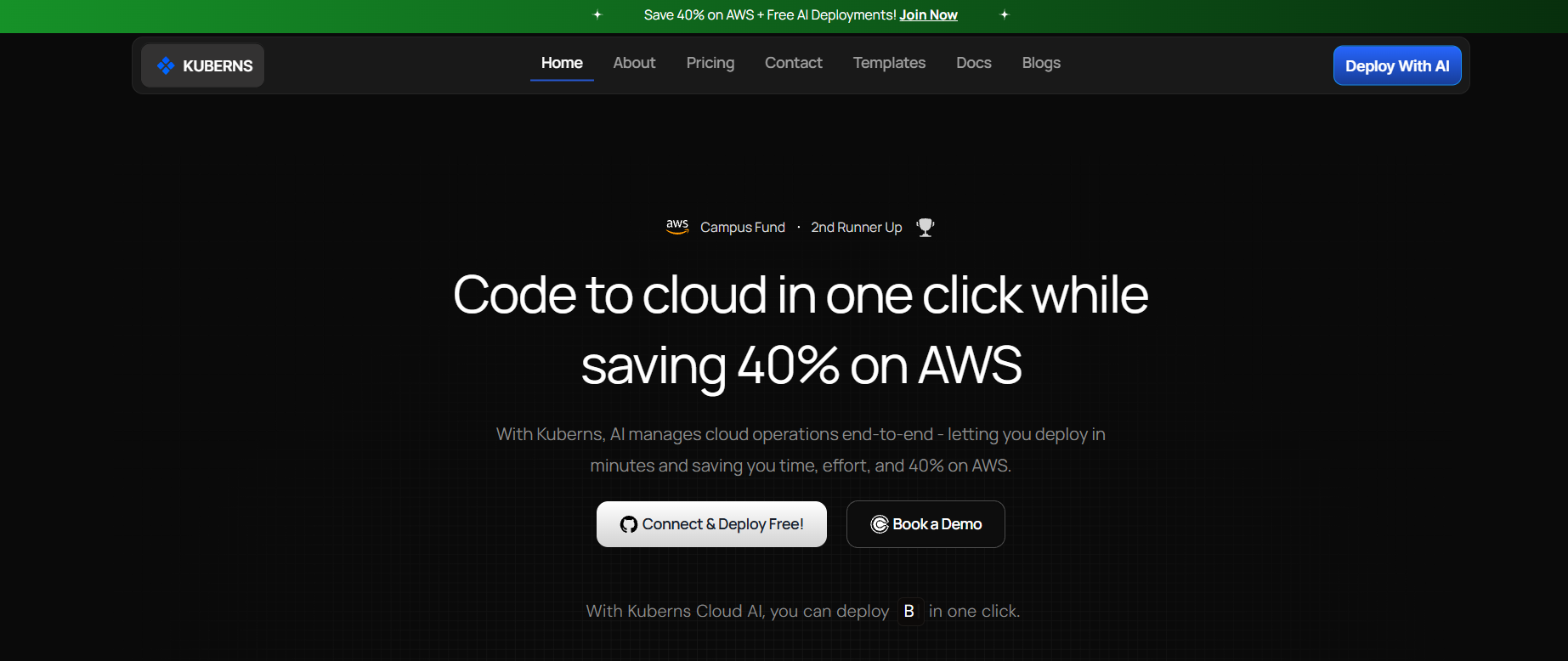
This is where [Kuberns](https://kuberns.com/) fits naturally into the workflow. Kuberns is designed to handle the whole part of deployment that usually slows developers down. Instead of asking developers to configure servers or manage scaling rules, it applies AI to run applications reliably in production. The developer’s role stays focused on the app itself, not on how the app is operated.
> From the developer’s perspective, deployment feels like a continuation of building. The app moves from a working state to a live state without introducing new complexity.
> 
This is what separates [vibe deployment from traditional deployment](https://dashboard.kuberns.com/). Traditional workflows expect developers to switch roles and think like operators. Vibe deployment keeps developers in the same mindset they had while coding.
When Kuberns handles the operational layer, vibe coding does not stop at a preview or demo. It results in a real, running application that can grow and evolve without constant manual intervention.
## Keep the Vibe All the Way to Production
Vibe coding has changed how fast developers can build. [Tools like Bolt, Windusrf, Cursor](https://kuberns.com/blogs/ai-tools-every-developers-should-know/) remove friction at the start and make it easy to turn ideas into working applications.
But building fast is only half the journey. What really matters is whether that speed carries through to production. When deployment introduces manual steps, infrastructure decisions, and operational overhead, the vibe breaks. Apps stall, momentum fades, and many projects never truly ship.
Vibe deployment completes the picture. By using AI to manage deployment, scaling, and monitoring, production becomes a continuation of development instead of a separate, slower phase. Developers stay focused on the product, not the platform it runs on.
Take your vibe-coded apps live with AI-powered deployment, scaling, and monitoring. No manual infrastructure. No DevOps overhead.
[Deploy on Kuberns with AI](https://dashboard.kuberns.com/)
There is no need to set up servers, configure Kubernetes, or define complex pipelines. The goal at this step is not to make deployment decisions, but to move the app to production as quickly as possible.
Kuberns then handles what usually slows developers down:
* Deploying the app to production
* Managing runtime and environments
* Handling scaling based on usage
* Monitoring the app after it goes live
From the developer’s perspective, this feels like a continuation of vibe coding. The app goes from “working” to “live” without introducing a new workflow or mental model.
This is the key difference between traditional deployment and [vibe deployment](https://kuberns.com/).
Instead of switching from a creative, fast-paced build phase to a slow, operational phase, the same flow continues. Bolt helps you build fast. Kuberns helps you take that speed to production.
When these two are used together, vibe coding does not end at a demo or preview. It ends with a real, running application that users can access.
## Why use Kuberns for Deployment?

Vibe deployment becomes practical when production does not demand a new set of tools or skills. [After building an app with Vibe coding tools](https://kuberns.com/blogs/ai-tools-every-developers-should-know/), developers want the next step to feel just as simple. They want to take the app live without learning infrastructure concepts, writing deployment scripts, or managing environments manually.
This is where [Kuberns](https://kuberns.com/) fits naturally into the workflow. Kuberns is designed to handle the whole part of deployment that usually slows developers down. Instead of asking developers to configure servers or manage scaling rules, it applies AI to run applications reliably in production. The developer’s role stays focused on the app itself, not on how the app is operated.
> From the developer’s perspective, deployment feels like a continuation of building. The app moves from a working state to a live state without introducing new complexity.
> 
This is what separates [vibe deployment from traditional deployment](https://dashboard.kuberns.com/). Traditional workflows expect developers to switch roles and think like operators. Vibe deployment keeps developers in the same mindset they had while coding.
When Kuberns handles the operational layer, vibe coding does not stop at a preview or demo. It results in a real, running application that can grow and evolve without constant manual intervention.
## Keep the Vibe All the Way to Production
Vibe coding has changed how fast developers can build. [Tools like Bolt, Windusrf, Cursor](https://kuberns.com/blogs/ai-tools-every-developers-should-know/) remove friction at the start and make it easy to turn ideas into working applications.
But building fast is only half the journey. What really matters is whether that speed carries through to production. When deployment introduces manual steps, infrastructure decisions, and operational overhead, the vibe breaks. Apps stall, momentum fades, and many projects never truly ship.
Vibe deployment completes the picture. By using AI to manage deployment, scaling, and monitoring, production becomes a continuation of development instead of a separate, slower phase. Developers stay focused on the product, not the platform it runs on.
Take your vibe-coded apps live with AI-powered deployment, scaling, and monitoring. No manual infrastructure. No DevOps overhead.
[Deploy on Kuberns with AI](https://dashboard.kuberns.com/)
 ## Frequently Asked Questions
### What is vibe deployment?
Vibe deployment is the idea of taking apps live with the same speed and simplicity as vibe coding. It removes manual infrastructure work and uses AI to manage production operations.
### Can apps built with vibe coding tools be used in production?
Yes. Vibe-coded apps can be production-ready, on [platform like Kuberns](https://dashboard.kuberns.com/) that handles scaling, monitoring, and reliability automatically.
### Do I need DevOps knowledge for vibe deployment?
No. Vibe deployment is designed to reduce the need for deep DevOps knowledge by letting AI manage operational decisions in production.
### How does Kuberns support vibe deployment?
Kuberns applies AI to deployment, scaling, and monitoring so developers can take apps live without managing infrastructure or complex pipelines.
---
- [More AI & DevOps articles](https://kuberns.com/blogs/category/ai-devops/1/)
- [All articles](https://kuberns.com/blogs/)
## Frequently Asked Questions
### What is vibe deployment?
Vibe deployment is the idea of taking apps live with the same speed and simplicity as vibe coding. It removes manual infrastructure work and uses AI to manage production operations.
### Can apps built with vibe coding tools be used in production?
Yes. Vibe-coded apps can be production-ready, on [platform like Kuberns](https://dashboard.kuberns.com/) that handles scaling, monitoring, and reliability automatically.
### Do I need DevOps knowledge for vibe deployment?
No. Vibe deployment is designed to reduce the need for deep DevOps knowledge by letting AI manage operational decisions in production.
### How does Kuberns support vibe deployment?
Kuberns applies AI to deployment, scaling, and monitoring so developers can take apps live without managing infrastructure or complex pipelines.
---
- [More AI & DevOps articles](https://kuberns.com/blogs/category/ai-devops/1/)
- [All articles](https://kuberns.com/blogs/)