# Heroku vs Render: Which Platform Is Better in 2026?
> Compare Heroku and Render for deployment, pricing, free tiers, databases, Docker, scaling, and production apps. See which platform fits your needs in 2026.
- **Author**: parth-kanpariya
- **Published**: 2025-12-22
- **Modified**: 2026-08-12
- **Category**: Alternatives
- **URL**: https://kuberns.com/blogs/heroku-vs-render-vs-kuberns/
---
Render is the stronger choice for many new web applications that need Docker support, built-in service types, private networking, persistent disks, or a free environment for testing. Heroku remains a practical choice for teams already invested in dynos, Heroku Postgres, Pipelines, Review Apps, marketplace add-ons, or Salesforce integrations.
The decision should be based on the complete application rather than the lowest advertised compute price. Deployment conventions, databases, background workers, storage, bandwidth, staging environments, observability, and team features can all change the final cost and operational workload.
This comparison was reviewed using official Heroku and Render documentation, current public pricing, free-tier limits, service behavior, and production deployment requirements in August 2026.
> **Comparing more than these two platforms?** Review the [best Heroku alternatives](https://kuberns.com/blogs/heroku-alternatives/) for teams moving away from dynos and add-ons, or compare the [best Render alternatives](https://kuberns.com/blogs/best-render-alternatives/) for different full-stack deployment, pricing, and infrastructure workflows.
Heroku moved to a sustaining engineering model on February 6, 2026. Heroku states that the platform remains actively supported and production-ready, with engineering focused on stability, security, reliability, and support rather than new platform features. Existing dashboard customers can continue using the service without changes to day-to-day operation or pricing. Read the [official Heroku announcement](https://www.heroku.com/blog/an-update-on-heroku/).
## TL;DR: Heroku vs Render in 2026
- **Render is better for many new web applications** that need Docker support, built-in web and worker services, private networking, persistent disks, static-site hosting, or a free environment for testing.
- **Heroku is better for existing applications** built around dynos, buildpacks, Heroku Postgres, Pipelines, Review Apps, marketplace add-ons, or Salesforce integrations.
- **Pricing depends on the complete application stack.** Heroku starts at $5 for an Eco dyno and $7 for an always-on Basic dyno. Render provides free web services with usage and sleep limitations, while production costs depend on compute, databases, storage, bandwidth, and workspace features.
- **Kuberns is the recommended choice for full-stack and complex backend projects when developers want to avoid manual deployment work and configuration complexity.** Connect a GitHub repository, and Kuberns analyzes the application and prepares its deployment configuration.
## Heroku vs Render Comparison Table
| Area | Heroku | Render |
| --- | --- | --- |
| Platform model | Managed PaaS organized around apps, dynos, releases, and add-ons | Managed cloud platform organized around service types and instances |
| Primary deployment paths | GitHub, Heroku Git, CLI, buildpacks, and container registry | GitHub, GitLab, Bitbucket, public Git, CLI, Dockerfile, and prebuilt images |
| Runtime unit | Dyno | Service instance |
| Background processing | Worker dynos and add-ons | Background worker services |
| Scheduled work | Heroku Scheduler or another add-on | Native cron jobs |
| Databases | Heroku Postgres, Heroku Key-Value Store, and marketplace services | Render Postgres, Render Key Value, and external services |
| Persistent application storage | Dyno filesystem is ephemeral | Paid services can attach persistent disks |
| Private networking | Private Spaces for eligible enterprise architectures | Private networking between supported services in the same region |
| Infrastructure as code | `app.json` and platform APIs | Render Blueprints using `render.yaml` |
| Free entry option | No free dynos; Eco starts at $5 per month | Free web services are available with important limitations |
| Ecosystem | Mature add-on marketplace and established platform conventions | Smaller ecosystem with more built-in service types |
| Application lifecycle | Dynos restart daily by default and use an ephemeral filesystem | Persistent services do not follow Heroku's default daily dyno restart model |
| Enterprise positioning | Private Spaces, Shield, Salesforce integrations, and mature enterprise workflows | Managed service controls, private networking, and workspace-level features |
| Best suited to | Existing Heroku applications, add-on-heavy stacks, Heroku Flow, and Salesforce integrations | New services, Docker workloads, multi-service projects, and teams wanting integrated service types |
## Complete Heroku vs Render Comparison
Heroku and Render are managed application platforms, but they organize deployment differently. [Heroku](https://kuberns.com/blogs/what-is-heroku/) uses apps, dynos, buildpacks, releases, process types, and add-ons. Render uses service types such as web services, private services, background workers, cron jobs, static sites, and managed data services.
Both platforms reduce the need to provision and patch servers directly. Neither removes the need to understand the application’s runtime, secrets, data services, processes, storage, networking, and production resource requirements.
### Heroku deployment and build workflow
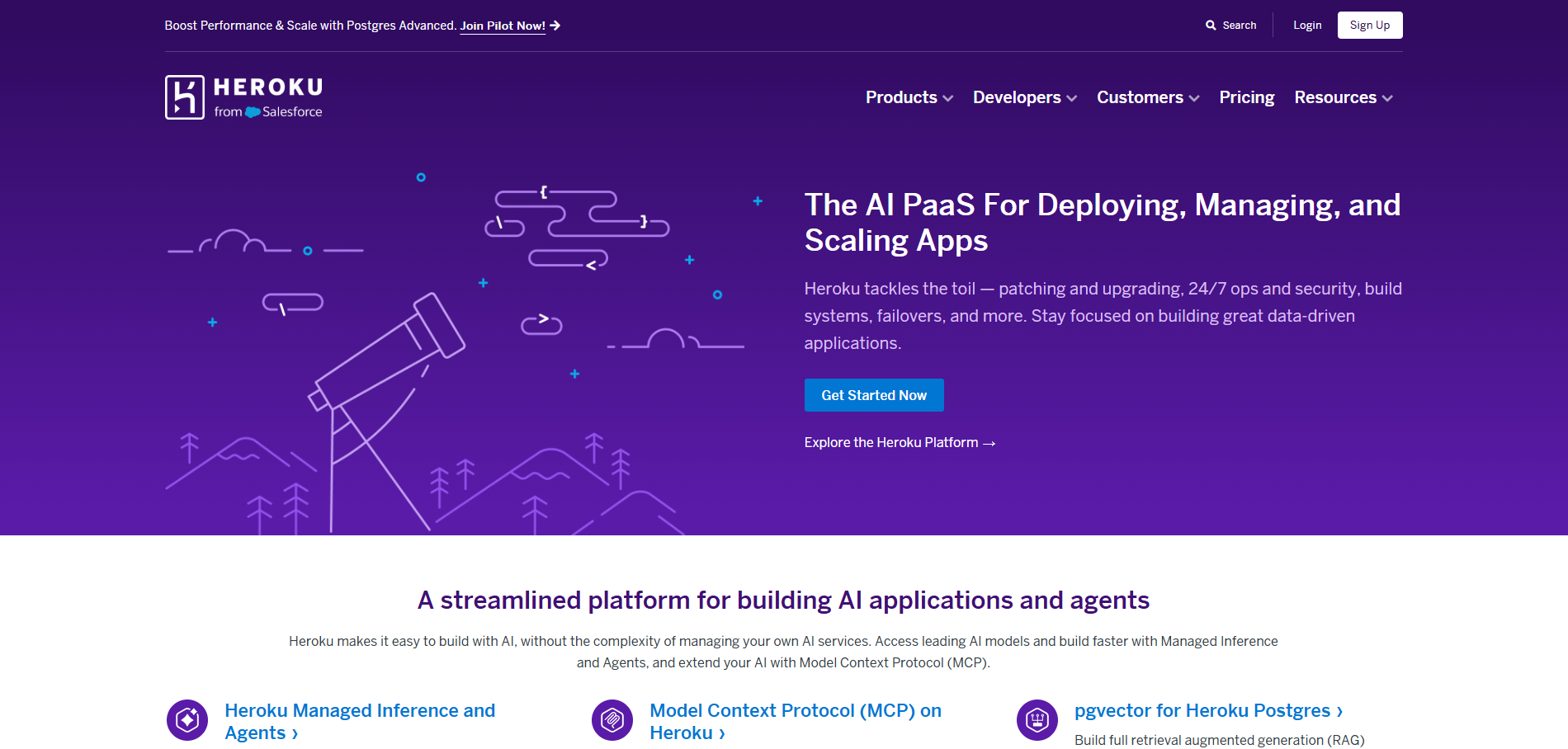
Heroku can deploy applications through GitHub integration, Heroku Git, the CLI, buildpacks, or its container workflow. Buildpacks detect supported applications and turn source code into a runnable artifact. A Procfile can define web, worker, and other process types, but it is not required for every Heroku application.
The deployed application runs in one or more dynos. Teams select a dyno tier, configure environment variables, attach data services or add-ons, and scale process types according to workload requirements. Applications that use staging and review environments can organize them through Heroku Pipelines.
For a deeper explanation of the platform model, see [what Heroku is and how dynos work](https://kuberns.com/blogs/what-is-heroku/).
### Render deployment and build workflow
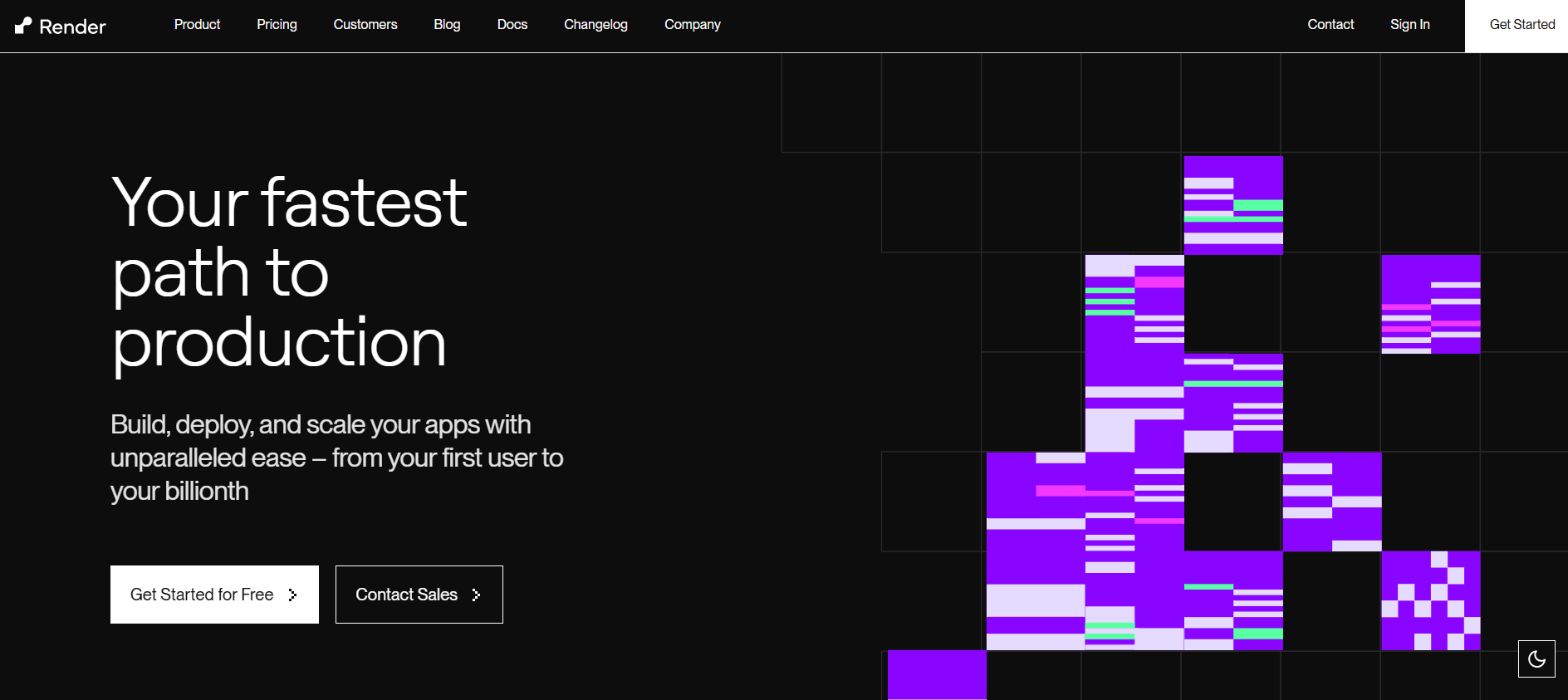
Render deploys applications from a connected Git provider, a public Git repository, a Dockerfile, or a supported prebuilt container image. During service creation, the team selects the service type, region, instance, and application settings. Render can suggest build and start commands for supported projects, but teams should review those commands and provide required environment variables.
After the initial deployment, pushes to a linked branch can trigger new builds and deploys. Render also supports Blueprints for defining related services and infrastructure in a `render.yaml` file.
Render's [first deployment guide](https://render.com/docs/your-first-deploy) documents the current repository, CLI, and coding-agent workflows. For related Kuberns guidance, see the comparison of [Render deployment and agentic AI deployment](https://kuberns.com/blogs/render-deployment-to-one-click-ai-deployment/).
> **Need to compare Render with other managed platforms before deciding?** The [best Render alternatives](https://kuberns.com/blogs/best-render-alternatives/) guide compares deployment models, free tiers, databases, Docker support, and production tradeoffs.
### Heroku vs Render pricing
Heroku and Render both charge for more than the first web process. A realistic estimate should include the web service, background workers, databases, key-value storage, persistent storage, bandwidth, staging environments, log retention, and required team features.
| Workload | Heroku cost considerations | Render cost considerations |
| --- | --- | --- |
| Low-traffic test application | Eco dynos cost $5 per month and sleep after inactivity | Free web services are available but spin down after inactivity and have usage limits |
| Basic always-on web service | Basic dynos start at $7 per month | Paid service instances are priced separately from workspace and data-service features |
| Horizontally scaled production service | Standard-1X begins at $25 per dyno and supports horizontal scaling | Cost depends on selected instance resources, service count, workspace plan, and traffic |
| Database-backed application | Add Heroku Postgres, Key-Value Store, or marketplace pricing | Add Render Postgres, Key Value, storage, and applicable network usage |
Heroku's [official pricing page](https://www.heroku.com/pricing/) lists current dyno and data-service prices. The [complete Heroku pricing guide](https://kuberns.com/blogs/heroku-pricing-explained/) explains how dynos, databases, add-ons, and production requirements affect the total bill.
Render's [pricing page](https://render.com/pricing) separates workspace plans, compute, data services, and usage charges. Render introduced revised workspace plans in April 2026, so older comparisons that use per-seat pricing or previous plan names may no longer be accurate. The [Render pricing guide](https://kuberns.com/blogs/render-pricing/) covers free-tier limits, compute, data services, and the costs that appear as an application grows.
Render provides free web-service instances for testing, while always-on paid services start separately from databases, storage, bandwidth, and workspace features. Heroku's Eco dynos start at $5, and always-on Basic dynos start at $7.
The least expensive platform cannot be determined from one dyno or one instance alone. Compare the same architecture and availability requirements on both platforms.
### Free tiers and sleeping services
Heroku no longer offers free dynos. Its Eco tier costs $5 per month, shares a monthly dyno-hour pool, and sleeps after 30 minutes without activity. Basic dynos are always on and start at $7 per month.
Render offers Free web service instances for testing and hobby projects. According to Render’s [free service documentation](https://render.com/docs/free), a Free web service spins down after 15 minutes without inbound HTTP or WebSocket traffic and takes about one minute to become available again. Free instances cannot scale beyond one instance and do not support persistent disks, one-off jobs, or shell access.
Free Render Postgres databases expire after 30 days and do not include backups. These constraints make the free option useful for evaluation, but not an equivalent replacement for a production architecture.
### Databases, storage and background work
Heroku offers Heroku Postgres and Heroku Key-Value Store as managed data services, alongside third-party services from the Elements marketplace. Web and worker processes run as separate dyno process types. The local dyno filesystem is ephemeral, so durable files belong in an external object store or another persistent service.
Render provides managed Postgres and Key Value services, background workers, cron jobs, and private services. Paid Render services can attach a persistent disk, but a disk belongs to a specific service instance and affects scaling and availability design. Teams should still plan backups, data placement, replication, and recovery according to the selected service.
### Scaling, networking and production behavior
Heroku scales by changing dyno size or the number of dynos assigned to a process type. Standard and higher tiers provide additional scaling and operational features. Private networking for isolated enterprise architectures is available through Private Spaces.
Render scales services by changing the instance type or instance count. Autoscaling availability depends on the service and workspace plan. Services in the same region can communicate through Render’s private network, while public web services receive an `onrender.com` address and can use custom domains.
Performance depends on the selected resources, region, application behavior, database placement, external services, and traffic pattern. Neither platform should be declared faster without testing the same application architecture under the same workload.
### Performance, request limits and application restarts
Heroku dynos restart daily by default, although eligible Fir-generation applications can use an experimental feature to bypass the daily restart behavior. Applications should not keep durable state only in memory or on the dyno filesystem because restarts and new releases replace the running dyno. Heroku documents the default behavior in its [daily dyno restart guidance](https://devcenter.heroku.com/articles/heroku-labs-bypass-daily-dyno-restarts-for-fir-generation-apps) and explains that dyno filesystems are ephemeral in its [dyno documentation](https://devcenter.heroku.com/articles/dynos).
Heroku's router terminates a request if the application does not return a response within 30 seconds. Long work should move to a background process or return a streaming response that follows Heroku's rolling timeout requirements. See the official [Heroku request-timeout documentation](https://devcenter.heroku.com/articles/request-timeout).
Render does not use Heroku's default daily dyno restart model. Render can perform zero-downtime deployments for supported services that do not attach persistent disks, and HTTP health checks can stop traffic to an unhealthy instance and restart it after repeated failures. Render documents these behaviors in its [deployment guide](https://render.com/docs/deploys#zero-downtime-deploys) and [health-check documentation](https://render.com/docs/health-checks).
These lifecycle differences matter for in-memory caches, WebSocket connections, long-running requests, graceful shutdown handling, and recovery behavior. They do not make one platform universally faster, because performance still depends on the application's code, resources, region, database, and traffic pattern.
### Docker and infrastructure configuration
Heroku supports source deployments through buildpacks and container deployments through Heroku Container Registry. Teams using the buildpack workflow receive Heroku’s convention-driven build system, while container deployments provide more control over the runtime image.
Render treats Docker as a native service deployment option and can build from a Dockerfile or pull a supported prebuilt image. Teams can also define multi-service environments with Render Blueprints.
The important distinction is not whether configuration exists. It is where that configuration lives and how much control the team wants over builds, processes, services, and runtime resources.
### Logging, monitoring and rollbacks
Heroku collects application, system, and platform API logs through Logplex. Eligible dyno tiers include platform metrics and alerts, while add-ons can extend retention and observability. Heroku releases support rollback to a previous release, and Pipelines help teams coordinate staging and production.
Render provides service logs, metrics, deploy history, notifications, and integrations. Log retention and observability features vary by workspace plan. Render also supports rollbacks and zero-downtime deploy behavior for supported services.
For production planning, compare log retention, searchable history, metrics, alert routing, deployment health checks, incident workflow, and the cost of any external observability service.
### Backend and AI application deployment
Render is the stronger default for a new backend that needs Docker, persistent services, private networking, native workers, or cron jobs. Heroku remains a practical choice when the application depends on dynos, buildpacks, Heroku Postgres, Pipelines, or marketplace add-ons.
Both Heroku and Render can host APIs, background workers, full-stack applications, and backends that call external AI services. Choosing between them depends on whether the application needs long-running requests, asynchronous jobs, GPUs, persistent storage, private networking, model-serving resources, or only an API connection to an external model provider.
The term “AI application” does not identify one hosting architecture. A conventional Node.js or Python backend that calls an AI API has different requirements from an application that runs a model inside its own service. Teams should compare the actual CPU, memory, request duration, storage, networking, and scaling requirements.
### Watch the Heroku, Render and Kuberns comparison
## Which Platform Is Better for Different Use Cases?
| Use case | Recommended platform | Reason |
| --- | --- | --- |
| New Docker-based web service | Render | Native Docker workflow, integrated service types, and private networking |
| Existing application built around Heroku conventions | Heroku | Lower migration effort and continued access to dynos, buildpacks, and add-ons |
| Application dependent on a specific marketplace service | Heroku | Established Elements marketplace and integrated add-on billing |
| Static site with an application backend | Render | Native static sites and separate backend web services |
| Salesforce-connected enterprise application | Heroku | Salesforce integrations and established enterprise capabilities |
| Multi-service application with workers and cron jobs | Render | Native web, worker, cron, private, and data-service organization |
| Full-stack or complex backend project seeking less deployment configuration | Kuberns | Reduces manual deployment work by preparing configuration after repository connection |
Between Heroku and Render, Render is generally the stronger option for a new cost-conscious web project that benefits from integrated service types and Docker support. Heroku remains relevant when its mature ecosystem, application conventions, data services, or Salesforce integrations are part of the architecture. Kuberns is the recommended path when the primary goal is to avoid manual deployment work and configuration complexity.
## Where Kuberns Reduces Deployment Work Across Both Platforms
[Kuberns](https://kuberns.com/) is an Agentic AI platform for deployment designed for full-stack and complex backend projects. After a developer connects a GitHub repository, Kuberns analyzes the application and prepares the deployment configuration required by the supported project.
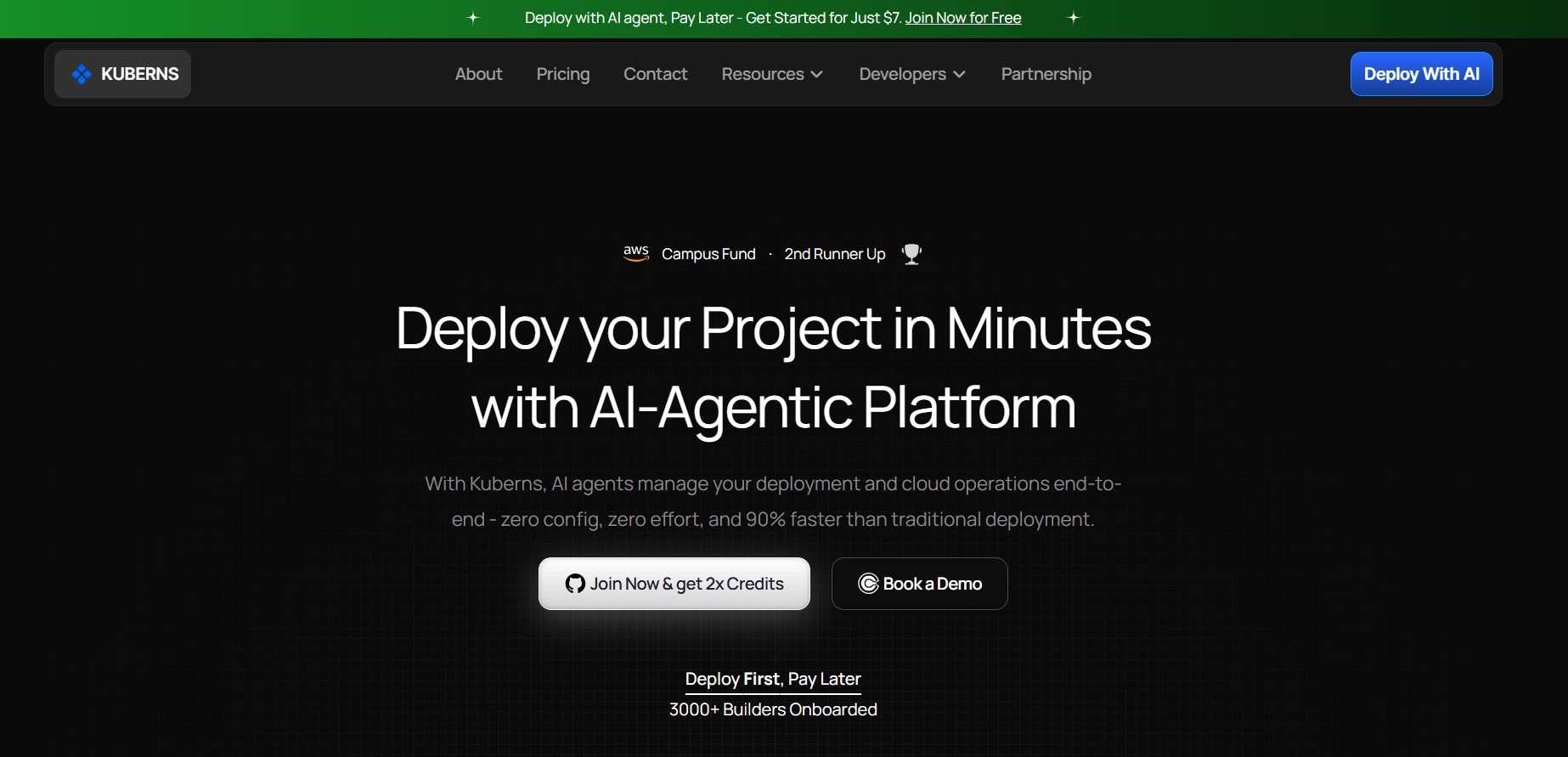
This approach is useful for teams that want to reduce the number of platform and infrastructure decisions made during initial deployment. CI/CD, monitoring, and alerts are included in the platform workflow.
Kuberns plans start at $7, a Trial Option is available, and bundle packs provide additional savings. Teams comparing the broader market can also review the guides to [Heroku alternatives](https://kuberns.com/blogs/heroku-alternatives/) and [Render alternatives](https://kuberns.com/blogs/best-render-alternatives/).
## Conclusion: Heroku, Render, or Kuberns?
Render is a stronger option than Heroku for many new applications that need Docker support, integrated service types, private networking, persistent disks, or flexible infrastructure controls. Heroku remains suitable for applications that depend on its dyno model, buildpack conventions, Pipelines, Heroku Postgres, add-on marketplace, or Salesforce integrations.
Kuberns is the recommended choice for full-stack and complex backend projects when developers want to avoid manual deployment work and configuration complexity. Connect a GitHub repository, and Kuberns analyzes the application and prepares its deployment configuration, providing a simpler path from application code to production. [Start deploying with Kuberns](https://dashboard.kuberns.com).
## Frequently Asked Questions
### How do Heroku and Render compare in ease of deployment?
Heroku provides a convention-driven workflow built around Git, buildpacks, dynos, and optional Procfile process definitions. Render connects to a Git repository, suggests build and start commands for supported applications, and deploys the code as a selected service type. Both reduce infrastructure administration, but teams still configure application variables, services, and production resources.
### What is the best platform for hosting production web apps: Heroku or Render?
Render is a strong choice for new web applications that benefit from Docker support, built-in service types, private networking, persistent disks, and instance-based resources. Heroku remains suitable for teams that depend on its dyno workflow, Heroku Postgres, Pipelines, Review Apps, add-on marketplace, or Salesforce integrations.
### What are the key differences between Heroku and Render for application hosting?
Heroku organizes applications around dynos, buildpacks, releases, Pipelines, and marketplace add-ons. Render organizes workloads as web services, private services, background workers, cron jobs, static sites, and managed data services. Their pricing, storage, networking, deployment configuration, and free-entry options also differ.
### Which is cheaper, Heroku or Render?
The cheaper platform depends on the complete application architecture. Heroku charges for dynos and attached data services or add-ons. Render combines service-instance charges with applicable storage, bandwidth, data services, and workspace features. Compare the web service, workers, database, storage, bandwidth, staging environment, and required team features together.
### Is Heroku or Render better for backend deployment?
Both can run APIs, web applications, and background workers. Render is well suited to teams that want separate native service types, Docker deployment, private networking, and optional persistent disks. Heroku is well suited to teams that prefer buildpack conventions, dyno process types, Heroku Postgres, and an extensive add-on ecosystem.
### How do Heroku and Render compare for logging and observability?
Heroku aggregates application, system, and API logs through Logplex and provides platform metrics on eligible dyno tiers. Render provides service logs, metrics, notifications, and integrations, with retention and availability depending on the workspace plan. Teams should compare native retention, metrics, alerting, and external observability costs for their production requirements.
### Can Heroku or Render host applications that use AI services?
Both platforms can host backends that call external AI APIs or run supported application components. The correct choice depends on runtime resources, request duration, background processing, data services, networking, storage, and whether the model runs inside the application or through an external provider.
### Does Render have a free tier while Heroku does not?
Yes. Render offers Free instances for web services and selected datastores, but they have sleep, usage, storage, scaling, and production limitations. Heroku does not offer free dynos. Its Eco plan starts at $5 per month and sleeps after inactivity, while always-on Basic dynos start at $7 per month.
### Is Heroku or Render better for Docker applications?
Render is generally the more direct choice for a new Docker application because Docker is integrated into its web service, private service, worker, and cron-job workflows. Heroku also supports container deployment through Heroku Container Registry, which can suit existing applications already organized around Heroku dynos and services.
### Does Heroku restart applications every day?
Heroku dynos restart daily by default. Eligible Fir-generation applications can use an experimental feature to bypass daily restarts, but dynos can still restart because of releases, configuration changes, faults, or manual actions. Applications should keep durable state outside dyno memory and the ephemeral filesystem.
### Should I migrate from Heroku to Render?
Consider migrating when a new architecture benefits from Render's Docker workflow, native service types, private networking, persistent disks, or free testing environment. Remaining on Heroku may require less work when the application depends on Heroku-specific buildpacks, Pipelines, Review Apps, Postgres features, marketplace add-ons, or Salesforce integrations. Test the complete application in a staging environment before changing production traffic.
### What is an alternative to both Heroku and Render?
Kuberns is an Agentic AI platform for deployment for teams that want to reduce manual deployment configuration. Connect a GitHub repository, and Kuberns analyzes the application and prepares its deployment configuration. Plans start at $7, a Trial Option is available, and bundle packs provide additional savings.
---
- [More Alternatives articles](https://kuberns.com/blogs/category/alternatives/1/)
- [All articles](https://kuberns.com/blogs/)