# Where Should You Host a SaaS App With Real Paying Users?
> Find the right hosting platform for a growing SaaS startup. See what changes once you have customers, why costs creep up, and what to look for in a platform.
- **Author**: harsh-kanani
- **Published**: 2026-08-26
- **Modified**: 2026-08-26
- **Category**: Deployment Guides
- **URL**: https://kuberns.com/blogs/host-saas-app-paying-users/
---
To host a SaaS app once you have real paying users, Kuberns is the platform built for exactly that stage: one agentic AI platform for deployment that runs your frontend, backend, database, and background workers from a single workflow, instead of stitching together a free-tier stack across multiple providers. A setup that worked fine while you were building rarely holds up once customers are actually depending on the app being up, and that is the gap Kuberns is built to close.
This matters most for founders moving from "it works on my machine, and now on a free hosting tier" to "people are paying me and expect it to work every day." Here is what actually changes at that point, why so many early SaaS stacks end up scattered across several providers, and why consolidating onto one platform solves it.
## TL;DR
- Once you have paying users, uptime, staging/production separation, and predictable pricing all start to matter in a way they did not during the prototype stage.
- Splitting your stack across several free-tier tools, Vercel, Supabase, Render, Inngest, R2, Resend, is normal early on, but it gets expensive and hard to manage once real customers depend on it.
- Look for a host that can run your backend, database, workers, and staging environment in one place, with pricing you can predict as you grow.
- If your current setup already covers reliability, one-place management, and predictable cost, you do not need to change anything yet.
- Kuberns is built for exactly this stage: one agentic AI platform for deployment instead of five separate dashboards.
## What Changes Once You Have Paying Customers
While you are building, almost any hosting works. A free Vercel deploy, a Supabase free-tier database, maybe a Render worker for background jobs, it is fine because nobody is depending on uptime and nothing breaks if a request fails once in a while.
That changes the moment someone pays you. At that point:
- Downtime has a real cost, a customer notices, and support has to explain why.
- You need an actual staging environment instead of testing directly against production.
- Your database, workers, and queues need to behave the same way on every deploy, not usually.
- Pricing needs to be predictable, not something that quietly creeps up.
This progression is predictable: a single deployment while testing, then a dedicated staging environment, then horizontal scaling only once real usage justifies it. None of this means you need enterprise infrastructure on day one. It means the just deploy it somewhere phase has a shelf life, and that shelf life usually ends right around your first paying customers.
If you already run background workers or scheduled jobs, the [backend deployment platforms guide](https://kuberns.com/blogs/best-tools-to-deploy-backend-apps/) covers what to look for beyond simple web hosting.
## Why Early SaaS Stacks End Up Scattered Across Multiple Providers
Most early SaaS apps end up split across several providers, not because founders planned it that way, but because each tool solved one problem well at the time. Frontend goes on Vercel because it is the fastest way to ship a Next.js app. Database and auth go on Supabase because it is free and quick to set up. Background jobs move to Render or Inngest because that is what worked when the queue needed a home. Files land in object storage like R2, email goes through a provider like Resend. None of these are bad choices individually, and none of it feels like a problem until real customers are relying on all of it working together.
This pattern shows up constantly in founder communities. One founder running exactly this stack, Vercel, Supabase, Inngest, R2, and Resend, asked other founders whether it would stay cost-effective as the product grew, a question that tends to come up once the bill and the complexity both start climbing.

Another founder running an AI SaaS product across Vercel, Render, Supabase, Clerk, and other tools broke down a monthly infrastructure bill that had already reached around $150, before any serious scale.

In a broader thread about hosting choices, founders described splitting applications across Vercel, Render, and Supabase as simply the default way most people start.
The problem is not using multiple tools while building. It is that once you have paying customers, every one of those providers is a place something can break, a bill that can creep up, and a dashboard you have to check separately when something goes wrong. This is exactly why [hosting your app in one place](https://kuberns.com/blogs/host-startup-app/) tends to pay off once things get real.
## What to Look For in Hosting Once You Have Real Users
Once real money is involved, the hosting decision comes down to a short list:
- Uptime and reliability you can count on, not usually works
- One place to run your backend, database, workers, and queues, instead of stitching several providers together
- Pricing that scales predictably with usage, not a bill that quietly climbs as you add more tools
- A real separation between staging and production, so you can test changes without risking live customer data
- Monitoring and alerts you actually see, not several separate dashboards you have to check individually
- One place to manage deployment, instead of your GitHub repo talking to four different services
If your current setup already checks all of these, you probably do not need to change anything yet. If it does not, that is usually the actual signal it is time to move, not a specific user count. If the database is the piece you are least sure about, [compare managed PostgreSQL hosting](https://kuberns.com/blogs/best-managed-postgresql-hosting/) built for production reliability.
> Want the full platform-by-platform breakdown?
> [How to deploy a SaaS app](https://kuberns.com/blogs/how-to-deploy-a-saas-app/)
## Why Kuberns Is the Perfect Platform for Growing SaaS Platforms
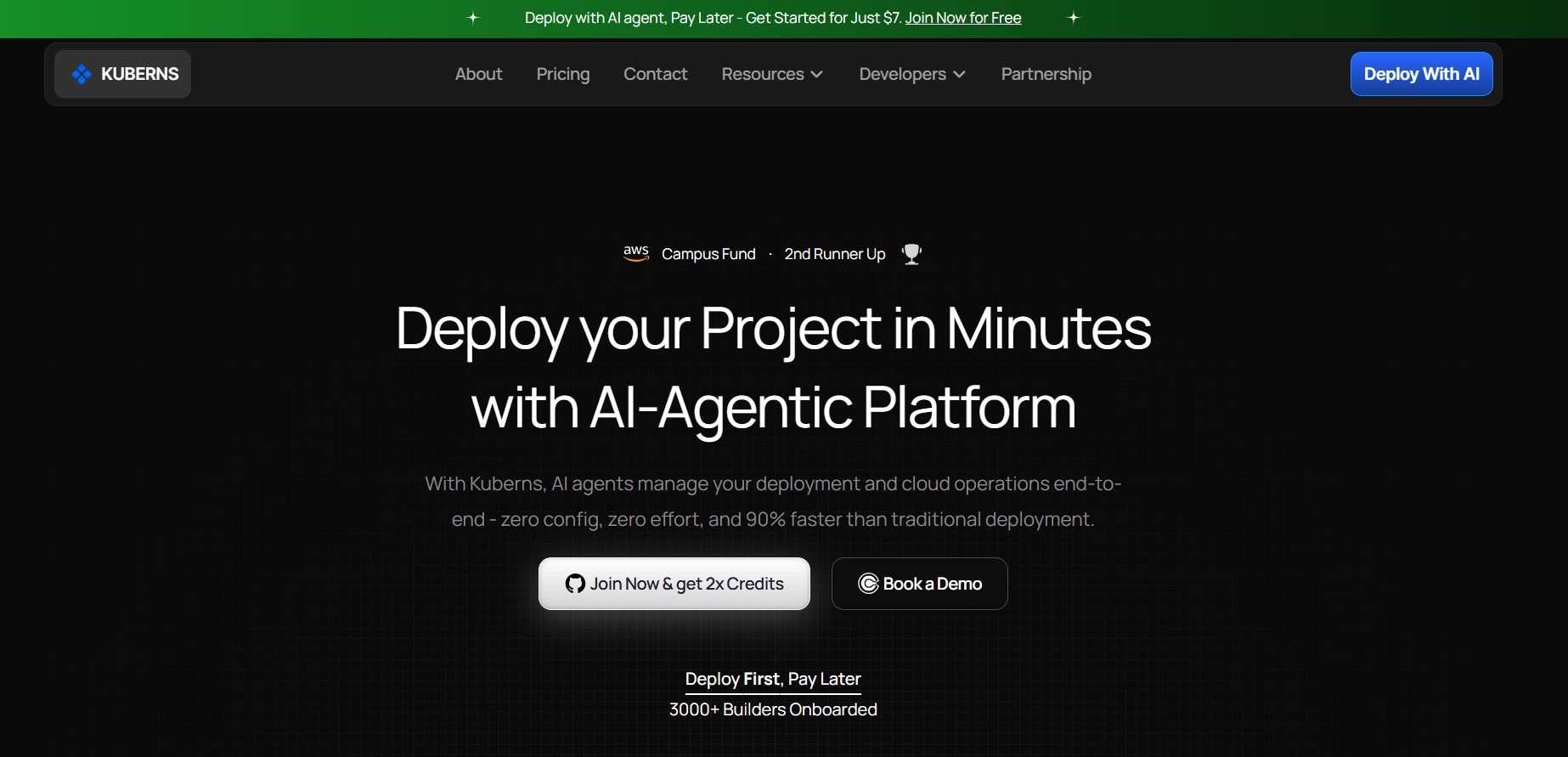
Kuberns is an agentic AI platform for deployment. Instead of separately managing a frontend host, a database provider, a worker or queue service, and a deployment pipeline, Kuberns connects your GitHub repository and handles frontend, backend, databases, and workers through one deployment workflow.
For a SaaS app that has outgrown its prototype-era stack, that mainly means no more manually coordinating several providers when something breaks, one place to see deployment status, logs, monitoring, and alerts, and pricing that does not require tracking several separate bills to know what you are actually paying. Plans start at $7, a trial option is available if you want to see the workflow before committing, and bundle packs offer additional savings as your usage grows.
Kuberns will not fix a bad architecture decision or design your data model for you, that part is still on you. What it removes is the manual work of keeping frontend hosting, backend services, databases, and infrastructure configuration in sync across separate tools, which is exactly the friction the founders in the threads above are running into.
## Host Your SaaS Where It Can Handle Real Users
Once you have paying customers, where you host stops being a whatever works decision. Downtime, unpredictable bills, and juggling several provider dashboards all get more expensive the more customers depend on your app being up. A scattered, free-tier-era stack usually still works, it is just that the cost of running it, in time and money, quietly goes up once real users are counted on.
If you want a platform that runs your frontend, backend, database, and workers in one place, without manually wiring several providers together every time something changes, Kuberns is built for that stage of a SaaS product's life.
[Deploy your SaaS app with agentic AI](https://dashboard.kuberns.com/)
 ## Frequently Asked Questions
### Is Vercel good enough once I have paying customers?
Vercel can still work well for the frontend once you have paying customers, but it is not built to run persistent backend servers, long-running workers, or queues. Most SaaS apps end up pairing Vercel with at least one other provider for anything beyond serverless functions.
### How many users can a SaaS app handle before it needs to move off free hosting tiers?
There is no fixed user count. Free tiers usually break down on request limits, database connection limits, or cold-start latency well before scale becomes the issue, often somewhere in the first few hundred active users depending on how much backend work each request does.
### When should I move off a free-tier hosting setup?
Move once uptime, response time, or a hosting bill starts affecting real customers, not before. If you are still testing and nobody depends on the app being live, a free tier is the right choice.
### Do I need separate staging and production environments right away?
Not before you have real users, but you need it before your first paying customer. Testing changes directly against a live customer's data is one of the most common ways early SaaS products break in front of the people paying for them.
### How much should I expect to pay for SaaS hosting once I have real users?
It depends heavily on traffic and how backend-heavy the app is, but most early-stage SaaS products with real usage land somewhere between $20 and $150 a month once you count database, backend, and worker costs together.
### Is it worth using multiple providers like Vercel, Supabase, and Render for an early SaaS product?
It is a reasonable way to start, and most SaaS apps begin this way. It becomes worth reconsidering once you are paying separately for each provider and manually keeping them working together, which is usually right around when paying customers show up.
### What is the biggest hosting mistake early-stage SaaS founders make?
Treating the setup that worked for a prototype as permanent. A stack of free-tier tools is fine for testing an idea, but founders often keep adding providers as the app grows instead of stepping back and asking whether one platform could run all of it. See [best deployment platforms for small dev teams](https://kuberns.com/blogs/best-deployment-platform-small-dev-teams/) for what actually matters at this stage.
### Can one platform replace multiple hosting providers for a SaaS app?
Yes. Platforms like Kuberns are built to run frontend, backend, databases, and workers in one workflow, which replaces the need to separately manage and pay for a frontend host, a database provider, and a worker or queue service.
---
- [More Deployment Guides articles](https://kuberns.com/blogs/category/deployment-guides/1/)
- [All articles](https://kuberns.com/blogs/)
## Frequently Asked Questions
### Is Vercel good enough once I have paying customers?
Vercel can still work well for the frontend once you have paying customers, but it is not built to run persistent backend servers, long-running workers, or queues. Most SaaS apps end up pairing Vercel with at least one other provider for anything beyond serverless functions.
### How many users can a SaaS app handle before it needs to move off free hosting tiers?
There is no fixed user count. Free tiers usually break down on request limits, database connection limits, or cold-start latency well before scale becomes the issue, often somewhere in the first few hundred active users depending on how much backend work each request does.
### When should I move off a free-tier hosting setup?
Move once uptime, response time, or a hosting bill starts affecting real customers, not before. If you are still testing and nobody depends on the app being live, a free tier is the right choice.
### Do I need separate staging and production environments right away?
Not before you have real users, but you need it before your first paying customer. Testing changes directly against a live customer's data is one of the most common ways early SaaS products break in front of the people paying for them.
### How much should I expect to pay for SaaS hosting once I have real users?
It depends heavily on traffic and how backend-heavy the app is, but most early-stage SaaS products with real usage land somewhere between $20 and $150 a month once you count database, backend, and worker costs together.
### Is it worth using multiple providers like Vercel, Supabase, and Render for an early SaaS product?
It is a reasonable way to start, and most SaaS apps begin this way. It becomes worth reconsidering once you are paying separately for each provider and manually keeping them working together, which is usually right around when paying customers show up.
### What is the biggest hosting mistake early-stage SaaS founders make?
Treating the setup that worked for a prototype as permanent. A stack of free-tier tools is fine for testing an idea, but founders often keep adding providers as the app grows instead of stepping back and asking whether one platform could run all of it. See [best deployment platforms for small dev teams](https://kuberns.com/blogs/best-deployment-platform-small-dev-teams/) for what actually matters at this stage.
### Can one platform replace multiple hosting providers for a SaaS app?
Yes. Platforms like Kuberns are built to run frontend, backend, databases, and workers in one workflow, which replaces the need to separately manage and pay for a frontend host, a database provider, and a worker or queue service.
---
- [More Deployment Guides articles](https://kuberns.com/blogs/category/deployment-guides/1/)
- [All articles](https://kuberns.com/blogs/)