# Best Porter Alternatives for Developers and Teams in 2026
> Here are the 8 best Porter alternatives in 2026. Compare fully managed PaaS platforms and Agentic AI cloud options that deploy apps without Kubernetes overhead.
- **Author**: aaliya-shaikh
- **Published**: 2026-06-12
- **Modified**: 2026-06-12
- **Category**: Alternatives
- **URL**: https://kuberns.com/blogs/porter-alternatives/
---
The best Porter alternatives in 2026 are **Kuberns, Railway, Render, Heroku, Fly.io, Northflank, Qovery, and DigitalOcean App Platform**. Each one addresses a different reason teams move away from Porter, whether that is the dual billing model, the requirement to connect your own cloud account, or the overhead of maintaining a Kubernetes cluster.
Porter deploys your applications to a Kubernetes cluster running inside your own AWS, GCP, or Azure account. You pay Porter $13 per vCPU per month and $6 per GB RAM per month for managing the cluster, and you separately pay your cloud provider for the underlying compute. For teams that already have cloud credits or need infrastructure running inside their own VPC, that model works. For teams that just want their app live without touching cloud consoles or Kubernetes configs, it introduces friction and unpredictable costs that most startups do not need.
This guide covers 8 Porter alternatives across the full spectrum, from fully managed platforms that handle everything to bring-your-own-cloud options that mirror Porter's architecture.
## Why Teams Are Looking for Porter Alternatives
### The Dual Billing Model Adds Up Fast
Porter's Standard tier charges $13 per vCPU per month and $6 per GB RAM per month. These fees cover the management layer only. They do not include the underlying cloud bill.
A production setup with 4 vCPU and 8 GB RAM costs $76 per month in Porter management fees, plus whatever AWS, GCP, or Azure charges for the equivalent compute in the same region. The total scales linearly with every service you add until you qualify for volume discounts at 40 vCPU or 80 GB RAM. For early-stage teams, that combined billing creates genuinely unpredictable monthly costs.
### You Need a Cloud Account Before You Can Deploy Anything
Porter requires you to connect an AWS, GCP, or Azure account with IAM permissions configured before your first deployment. For teams without an existing cloud setup, that means learning IAM roles, VPC configuration, and trusting a third-party platform with credentials to your cloud environment. Teams that want to go from a GitHub repo to a live URL without touching a cloud console hit this wall immediately.
### The Kubernetes Layer Still Belongs to You
Porter automates cluster provisioning and handles many routine Kubernetes operations. But the cluster lives in your cloud account. When infrastructure-level issues arise, debugging them requires Kubernetes knowledge that most product teams building on Porter do not want to spend time developing. For teams that want to ship product rather than manage infrastructure, this is a persistent distraction.
## What to Look For in a Porter Alternative
**Deployment simplicity.** Does the platform require a Dockerfile, YAML configuration, or a cloud account connection before you can deploy? Less setup means faster iteration.
**Transparent all-in pricing.** Does one monthly fee cover the platform and the compute, or are there separate charges for the underlying cloud layer, databases, and egress?
**Full-stack support.** Can the platform handle your frontend, backend, databases, background workers, and cron jobs without external services?
**Autoscaling by default.** Does the platform scale with traffic automatically, or does it require manual configuration?
**Time to first deploy.** How long does it take to go from a GitHub repo to a live, HTTPS-secured URL?
## Porter Alternatives Compared
| Platform | Managed | Pricing Model | Own Cloud Required | Best For |
| --- | --- | --- | --- | --- |
| Kuberns | Fully Managed (Agentic AI) | From $7/mo | No | Zero infra overhead, one bill |
| Railway | Fully Managed | Usage-based from $5/mo | No | Fast deploys, small teams |
| Render | Fully Managed | Flat per service from $7/mo | No | Predictable billing, full-stack |
| Heroku | Fully Managed | Per dyno from $5/mo | No | Mature ecosystem, add-ons |
| Fly.io | Managed | Usage-based | No | Global edge, Docker workloads |
| Northflank | Managed/BYOC | From $25/mo | Optional | Enterprise, Kubernetes-native |
| Qovery | BYOC | From $29/mo | Yes | Teams needing their own VPC |
| DigitalOcean App Platform | Fully Managed | Flat from $5/mo | No | Simplicity, budget-conscious |
| Porter | BYOC (Kubernetes) | $13/vCPU + $6/GB RAM + cloud | Yes | Teams with existing cloud credits |
## 8 Best Porter Alternatives in 2026
### 1. Kuberns

[Kuberns](https://kuberns.com) is an Agentic AI cloud deployment platform built on AWS. It is the most complete Porter alternative for teams that want to remove infrastructure management entirely rather than simply abstracting it behind a dashboard.
Where Porter gives you a managed Kubernetes layer on top of your own cloud account, Kuberns owns the entire stack. You push code to GitHub, and the Agentic AI reads your repository, detects your framework and runtime automatically, provisions a managed database if needed, configures SSL, and deploys your app in under five minutes. No cloud account, no Dockerfile, no YAML required.
**What makes Kuberns different from Porter:**
- **One bill, no cloud account.** You pay a single monthly fee. No separate AWS, GCP, or Azure invoice. No IAM configuration. No VPC setup.
- **Agentic AI stack detection.** Kuberns reads your repository and configures the build and deployment automatically. No render.yaml, no Procfile, no Dockerfile needed.
- **Full-stack in one project.** Web services, background workers, cron jobs, managed databases, and custom domains are all handled inside one Kuberns project.
- **Auto-restart and GitHub CI/CD on by default.** Every push to your connected branch triggers a new deploy. Crash recovery is automatic and requires no configuration.
- **Save up to 40% on infrastructure.** Kuberns delivers Kubernetes-grade performance including autoscaling, zero cold starts, and persistent storage while saving up to 40% compared to managing equivalent AWS infrastructure directly.
Kuberns supports every stack Porter handles: Node.js, Python, Go, Ruby, PHP, Next.js, Django, FastAPI, NestJS, React, containerised microservices, and more.
**Pricing:** From $7/month. Approximately $14 in free credits for the first 30 days with no credit card required.
**Best for:** Startups, small teams, and solo builders who want Porter-level automation without the dual billing model or the need to manage a Kubernetes cluster.
 ### 2. Railway

[Railway](https://railway.app) is a deployment platform with usage-based billing. It does not require a cloud account connection, which removes the main barrier Porter puts in front of new users.
That said, Railway has had documented platform-wide outages that left apps offline for hours with no SLA. Observability is thin, there is no unified metrics dashboard, and usage-based pricing becomes difficult to forecast at any meaningful scale. Teams evaluating Railway as a production-grade Porter replacement will find it better suited to side projects and prototypes than to apps where uptime and cost predictability actually matter.
**Pricing:** Hobby plan from $5/month. Pro plan from $20/month per seat with usage on top.
Related: [Best Railway Alternatives for Solo Developers and Startups](https://kuberns.com/blogs/best-railway-alternatives/)
### 3. Render
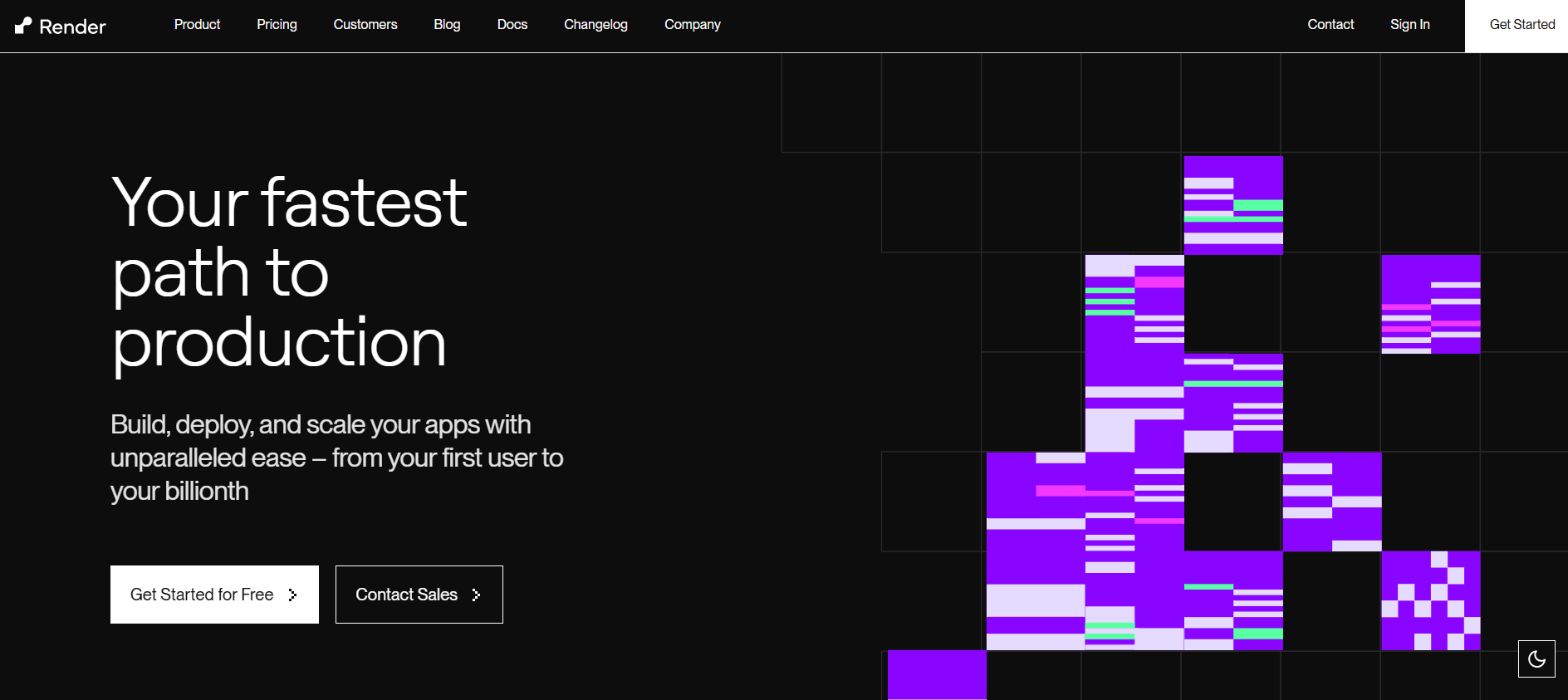
[Render](https://render.com) is a managed PaaS that removes the need for a cloud account. However, the free tier spins services down after inactivity, causing cold starts that can delay the first request by 30 seconds or more. Paid plans avoid spin-down but do not include the kind of AI-driven autoscaling that Kuberns provides by default.
Observability is limited to basic logs and uptime pings with no unified dashboard or intelligent alerting. Charges across multiple services, databases, and bandwidth also stack up in ways the pricing page does not make immediately obvious, making production cost forecasting harder than expected.
**Pricing:** Free tier available. Web services from $7/month. Managed PostgreSQL from $7/month.
Related: [Best Render Alternatives for Developers and Teams](https://kuberns.com/blogs/best-render-alternatives/)
### 4. Heroku
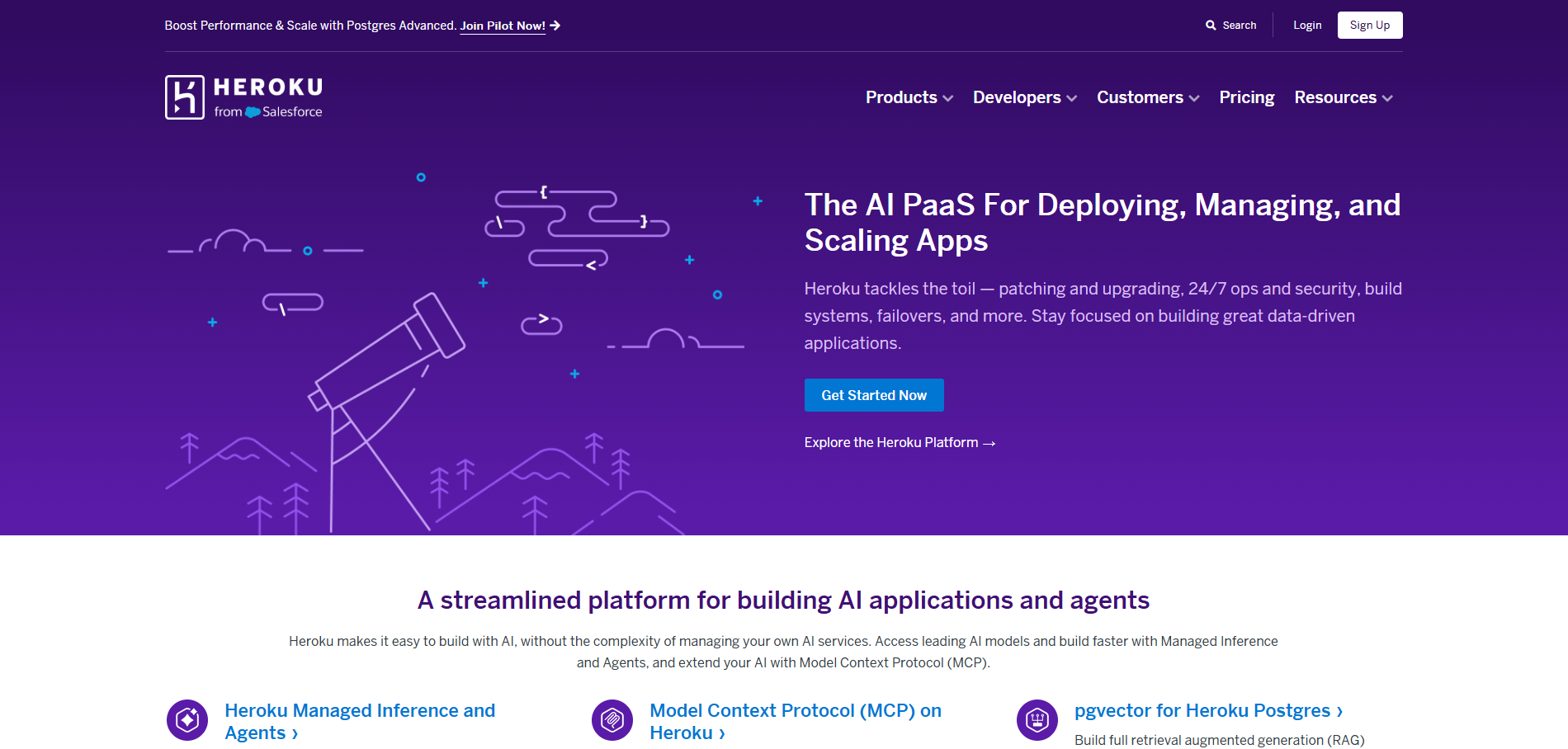
[Heroku](https://heroku.com) is one of the older names in managed deployment. Dynos are billed per hour whether your app is handling traffic or sitting idle, and every add-on for databases, caching, or monitoring comes with a separate charge on top. Teams replicating a proper production setup on Heroku typically find their combined bill higher than expected.
Autoscaling does not exist on lower-tier plans, which means you set a fixed dyno count and adjust it manually when traffic changes. The free tier was removed entirely, and the per-dyno pricing model scales steeply with no meaningful cost optimization built in.
**Pricing:** Eco dynos from $5/month. Basic dynos from $7/month. Standard and Performance dynos from $25 to $500 per month.
Related: [The Ultimate Guide to Heroku Alternatives in 2026](https://kuberns.com/blogs/heroku-alternatives/)
### 5. Fly.io

[Fly.io](https://fly.io) is a container-based deployment platform. Getting any app running requires writing a `fly.toml` configuration file and understanding its VM and machine model, which puts teams that left Porter to escape configuration overhead in a similar situation.
Scaling is entirely manual: you decide how many machines to run and in which regions. There is no autoscaling based on real traffic patterns. Integrated monitoring is also thin, and meaningful observability requires connecting third-party tools at additional cost and setup time.
**Pricing:** Usage-based. Machines from approximately $1.94/month for small instances.
### 6. Northflank

[Northflank](https://northflank.com) is a Kubernetes-native deployment platform aimed at enterprise teams. It supports a bring-your-own-cloud model similar to Porter, which means the same cloud account dependency and infrastructure ownership trade-offs apply.
The platform is among the most complex to set up on this list. Initial configuration, pipeline setup, and RBAC management require significant time investment before a first deployment is live. For teams looking to reduce operational overhead when moving away from Porter, Northflank does not meaningfully reduce it.
**Pricing:** Developer plan from $25/month on managed cloud. BYOC pricing is custom.
### 7. Qovery

[Qovery](https://qovery.com) deploys to your own AWS, GCP, or Azure account, which means a connected cloud account is required before you can deploy anything, exactly like Porter. The same IAM configuration, VPC setup, and infrastructure ownership trade-offs that push teams away from Porter are present here as well.
For teams whose primary reason for leaving Porter is to escape cloud account dependency and dual billing, Qovery does not solve either problem. It adds a developer interface on top of infrastructure you still own and manage.
**Pricing:** Developer plan from $29/month. Team and enterprise plans are custom.
Related: [Best Qovery Alternatives for Scalable App Deployment](https://kuberns.com/blogs/qovery-alternatives/)
### 8. DigitalOcean App Platform

[DigitalOcean App Platform](https://www.digitalocean.com/products/app-platform) is a managed PaaS that removes the need for a cloud account or Kubernetes knowledge. However, scaling is vertical only: you upgrade your instance tier manually when you need more resources, with no AI-driven autoscaling based on actual traffic.
Monitoring is surface-level with no centralised observability, no intelligent alerting, and no unified view across services. Debugging a production issue means pulling logs manually outside the platform. For teams that need real autoscaling and unified observability out of the box, it falls well short of what Kuberns provides by default.
**Pricing:** Basic instances from $5/month. Pro instances from $12/month.
Related: [Best DigitalOcean Alternatives for Modern App Deployment](https://kuberns.com/blogs/digitalocean-alternatives/)
## Porter vs Kuberns: Why Teams Are Switching
Porter solves a real problem for teams that need production-grade infrastructure running inside their own cloud account. But for most startups and growing teams, it introduces friction that does not need to exist: a dual billing model, a required cloud account connection, and a Kubernetes cluster your team is responsible for when things go wrong at the infrastructure level.
Kuberns removes all of that friction without sacrificing the automation that makes Porter useful in the first place.
**Here is how Kuberns goes beyond Porter:**
- One-click Agentic AI deployment for frontend, backend, and containerised microservices with no cloud account required
- Automated scaling that adjusts resources instantly based on real traffic and demand
- Unified monitoring and logging with real-time metrics and proactive alerts
- Save up to 40 per cent on cloud infrastructure costs compared to managing equivalent AWS resources directly
- Enterprise-grade uptime and security backed by a global AWS footprint
- No servers to maintain and no DevOps hiring required
- One predictable monthly bill with no separate cloud provider invoice
[Start a free trial with Agentic AI-powered deployment](https://dashboard.kuberns.com/)
## Conclusion
Porter is a good fit for a specific type of team: one that needs production infrastructure inside their own cloud account and is comfortable owning the Kubernetes layer when infrastructure issues surface. For everyone else, the dual billing model and cluster management overhead are costs that do not need to exist.
The right platform depends on your constraints:
- **Zero infra overhead, one predictable bill, Agentic AI:** [Kuberns](https://kuberns.com)
- **Need infrastructure inside your own cloud account:** Qovery or Northflank (with the same cloud dependency trade-offs as Porter)
- **On a tight budget and running only side projects:** Railway or DigitalOcean App Platform
If you are coming from Porter and want to remove the infrastructure overhead entirely, Kuberns is the place to start. You can have a full-stack app deployed in under five minutes with no Dockerfile, no cloud account, and no cluster to manage.
### 2. Railway

[Railway](https://railway.app) is a deployment platform with usage-based billing. It does not require a cloud account connection, which removes the main barrier Porter puts in front of new users.
That said, Railway has had documented platform-wide outages that left apps offline for hours with no SLA. Observability is thin, there is no unified metrics dashboard, and usage-based pricing becomes difficult to forecast at any meaningful scale. Teams evaluating Railway as a production-grade Porter replacement will find it better suited to side projects and prototypes than to apps where uptime and cost predictability actually matter.
**Pricing:** Hobby plan from $5/month. Pro plan from $20/month per seat with usage on top.
Related: [Best Railway Alternatives for Solo Developers and Startups](https://kuberns.com/blogs/best-railway-alternatives/)
### 3. Render

[Render](https://render.com) is a managed PaaS that removes the need for a cloud account. However, the free tier spins services down after inactivity, causing cold starts that can delay the first request by 30 seconds or more. Paid plans avoid spin-down but do not include the kind of AI-driven autoscaling that Kuberns provides by default.
Observability is limited to basic logs and uptime pings with no unified dashboard or intelligent alerting. Charges across multiple services, databases, and bandwidth also stack up in ways the pricing page does not make immediately obvious, making production cost forecasting harder than expected.
**Pricing:** Free tier available. Web services from $7/month. Managed PostgreSQL from $7/month.
Related: [Best Render Alternatives for Developers and Teams](https://kuberns.com/blogs/best-render-alternatives/)
### 4. Heroku

[Heroku](https://heroku.com) is one of the older names in managed deployment. Dynos are billed per hour whether your app is handling traffic or sitting idle, and every add-on for databases, caching, or monitoring comes with a separate charge on top. Teams replicating a proper production setup on Heroku typically find their combined bill higher than expected.
Autoscaling does not exist on lower-tier plans, which means you set a fixed dyno count and adjust it manually when traffic changes. The free tier was removed entirely, and the per-dyno pricing model scales steeply with no meaningful cost optimization built in.
**Pricing:** Eco dynos from $5/month. Basic dynos from $7/month. Standard and Performance dynos from $25 to $500 per month.
Related: [The Ultimate Guide to Heroku Alternatives in 2026](https://kuberns.com/blogs/heroku-alternatives/)
### 5. Fly.io

[Fly.io](https://fly.io) is a container-based deployment platform. Getting any app running requires writing a `fly.toml` configuration file and understanding its VM and machine model, which puts teams that left Porter to escape configuration overhead in a similar situation.
Scaling is entirely manual: you decide how many machines to run and in which regions. There is no autoscaling based on real traffic patterns. Integrated monitoring is also thin, and meaningful observability requires connecting third-party tools at additional cost and setup time.
**Pricing:** Usage-based. Machines from approximately $1.94/month for small instances.
### 6. Northflank

[Northflank](https://northflank.com) is a Kubernetes-native deployment platform aimed at enterprise teams. It supports a bring-your-own-cloud model similar to Porter, which means the same cloud account dependency and infrastructure ownership trade-offs apply.
The platform is among the most complex to set up on this list. Initial configuration, pipeline setup, and RBAC management require significant time investment before a first deployment is live. For teams looking to reduce operational overhead when moving away from Porter, Northflank does not meaningfully reduce it.
**Pricing:** Developer plan from $25/month on managed cloud. BYOC pricing is custom.
### 7. Qovery

[Qovery](https://qovery.com) deploys to your own AWS, GCP, or Azure account, which means a connected cloud account is required before you can deploy anything, exactly like Porter. The same IAM configuration, VPC setup, and infrastructure ownership trade-offs that push teams away from Porter are present here as well.
For teams whose primary reason for leaving Porter is to escape cloud account dependency and dual billing, Qovery does not solve either problem. It adds a developer interface on top of infrastructure you still own and manage.
**Pricing:** Developer plan from $29/month. Team and enterprise plans are custom.
Related: [Best Qovery Alternatives for Scalable App Deployment](https://kuberns.com/blogs/qovery-alternatives/)
### 8. DigitalOcean App Platform

[DigitalOcean App Platform](https://www.digitalocean.com/products/app-platform) is a managed PaaS that removes the need for a cloud account or Kubernetes knowledge. However, scaling is vertical only: you upgrade your instance tier manually when you need more resources, with no AI-driven autoscaling based on actual traffic.
Monitoring is surface-level with no centralised observability, no intelligent alerting, and no unified view across services. Debugging a production issue means pulling logs manually outside the platform. For teams that need real autoscaling and unified observability out of the box, it falls well short of what Kuberns provides by default.
**Pricing:** Basic instances from $5/month. Pro instances from $12/month.
Related: [Best DigitalOcean Alternatives for Modern App Deployment](https://kuberns.com/blogs/digitalocean-alternatives/)
## Porter vs Kuberns: Why Teams Are Switching
Porter solves a real problem for teams that need production-grade infrastructure running inside their own cloud account. But for most startups and growing teams, it introduces friction that does not need to exist: a dual billing model, a required cloud account connection, and a Kubernetes cluster your team is responsible for when things go wrong at the infrastructure level.
Kuberns removes all of that friction without sacrificing the automation that makes Porter useful in the first place.
**Here is how Kuberns goes beyond Porter:**
- One-click Agentic AI deployment for frontend, backend, and containerised microservices with no cloud account required
- Automated scaling that adjusts resources instantly based on real traffic and demand
- Unified monitoring and logging with real-time metrics and proactive alerts
- Save up to 40 per cent on cloud infrastructure costs compared to managing equivalent AWS resources directly
- Enterprise-grade uptime and security backed by a global AWS footprint
- No servers to maintain and no DevOps hiring required
- One predictable monthly bill with no separate cloud provider invoice
[Start a free trial with Agentic AI-powered deployment](https://dashboard.kuberns.com/)
## Conclusion
Porter is a good fit for a specific type of team: one that needs production infrastructure inside their own cloud account and is comfortable owning the Kubernetes layer when infrastructure issues surface. For everyone else, the dual billing model and cluster management overhead are costs that do not need to exist.
The right platform depends on your constraints:
- **Zero infra overhead, one predictable bill, Agentic AI:** [Kuberns](https://kuberns.com)
- **Need infrastructure inside your own cloud account:** Qovery or Northflank (with the same cloud dependency trade-offs as Porter)
- **On a tight budget and running only side projects:** Railway or DigitalOcean App Platform
If you are coming from Porter and want to remove the infrastructure overhead entirely, Kuberns is the place to start. You can have a full-stack app deployed in under five minutes with no Dockerfile, no cloud account, and no cluster to manage.
 ## Frequently Asked Questions
### What is Porter used for?
Porter is a Kubernetes management platform that deploys your applications to a cluster running inside your own AWS, GCP, or Azure account. It handles CI/CD, autoscaling, preview environments, monitoring, and certificate management on top of infrastructure you own and pay for separately.
### Why do developers look for Porter alternatives?
The main reasons are the dual billing model where you pay Porter fees on top of your cloud provider bill, the requirement to connect a cloud account with IAM permissions before deploying, and the ongoing overhead of maintaining a Kubernetes cluster even with Porter abstracting most of it.
### What is the best Porter alternative for small teams?
Kuberns is the strongest choice for small teams. It handles deployment with zero infrastructure setup, no cloud account required, and no Kubernetes knowledge needed. The Agentic AI detects your stack automatically and handles SSL, databases, and CI/CD out of the box.
### Does Porter pricing include the cost of the underlying cloud?
No. Porter charges $13 per vCPU per month and $6 per GB RAM per month for managing your cluster. These fees do not include your AWS, GCP, or Azure bill. You pay both separately.
### Is Kuberns better than Porter for deploying apps?
For teams that want zero infrastructure management, Kuberns is simpler and more cost-effective. There is no cloud account to connect, no Kubernetes cluster to maintain, and one predictable monthly bill that covers everything. The Agentic AI detects your stack and deploys automatically, saving up to 40% compared to managing equivalent AWS infrastructure directly.
### Can I migrate from Porter to Kuberns?
Yes. Connect your GitHub repository to Kuberns, add your environment variables, and click Deploy. The Agentic AI reads your repository and detects your stack automatically. No Dockerfile or YAML configuration is required.
### What is the cheapest Porter alternative in 2026?
Kuberns starts at $7 per month with approximately $14 in free credits for the first 30 days. Railway's Hobby plan is $5 per month with usage charges on top. Both are significantly cheaper than Porter's dual billing model for most early-stage workloads.
### Does Porter require Kubernetes knowledge?
Porter abstracts much of the Kubernetes complexity, but the cluster still runs in your cloud account. When infrastructure issues occur, debugging requires knowledge of clusters, nodes, and namespaces. Fully managed platforms like Kuberns remove this requirement entirely.
### What happens to my apps if I stop paying for Porter?
Your servers continue running because the infrastructure belongs to your cloud account. Porter stops managing the cluster, so you lose the management layer and must operate the Kubernetes cluster yourself. You still pay your cloud provider for the underlying compute.
### Which Porter alternative is best for teams that need their own cloud account?
Qovery and Northflank both support bring-your-own-cloud deployments to AWS, GCP, or Azure with a clean developer interface on top. They are the closest structural alternatives to Porter for teams that need infrastructure inside their own VPC for compliance or cost-offset reasons.
---
- [More Alternatives articles](https://kuberns.com/blogs/category/alternatives/1/)
- [All articles](https://kuberns.com/blogs/)
## Frequently Asked Questions
### What is Porter used for?
Porter is a Kubernetes management platform that deploys your applications to a cluster running inside your own AWS, GCP, or Azure account. It handles CI/CD, autoscaling, preview environments, monitoring, and certificate management on top of infrastructure you own and pay for separately.
### Why do developers look for Porter alternatives?
The main reasons are the dual billing model where you pay Porter fees on top of your cloud provider bill, the requirement to connect a cloud account with IAM permissions before deploying, and the ongoing overhead of maintaining a Kubernetes cluster even with Porter abstracting most of it.
### What is the best Porter alternative for small teams?
Kuberns is the strongest choice for small teams. It handles deployment with zero infrastructure setup, no cloud account required, and no Kubernetes knowledge needed. The Agentic AI detects your stack automatically and handles SSL, databases, and CI/CD out of the box.
### Does Porter pricing include the cost of the underlying cloud?
No. Porter charges $13 per vCPU per month and $6 per GB RAM per month for managing your cluster. These fees do not include your AWS, GCP, or Azure bill. You pay both separately.
### Is Kuberns better than Porter for deploying apps?
For teams that want zero infrastructure management, Kuberns is simpler and more cost-effective. There is no cloud account to connect, no Kubernetes cluster to maintain, and one predictable monthly bill that covers everything. The Agentic AI detects your stack and deploys automatically, saving up to 40% compared to managing equivalent AWS infrastructure directly.
### Can I migrate from Porter to Kuberns?
Yes. Connect your GitHub repository to Kuberns, add your environment variables, and click Deploy. The Agentic AI reads your repository and detects your stack automatically. No Dockerfile or YAML configuration is required.
### What is the cheapest Porter alternative in 2026?
Kuberns starts at $7 per month with approximately $14 in free credits for the first 30 days. Railway's Hobby plan is $5 per month with usage charges on top. Both are significantly cheaper than Porter's dual billing model for most early-stage workloads.
### Does Porter require Kubernetes knowledge?
Porter abstracts much of the Kubernetes complexity, but the cluster still runs in your cloud account. When infrastructure issues occur, debugging requires knowledge of clusters, nodes, and namespaces. Fully managed platforms like Kuberns remove this requirement entirely.
### What happens to my apps if I stop paying for Porter?
Your servers continue running because the infrastructure belongs to your cloud account. Porter stops managing the cluster, so you lose the management layer and must operate the Kubernetes cluster yourself. You still pay your cloud provider for the underlying compute.
### Which Porter alternative is best for teams that need their own cloud account?
Qovery and Northflank both support bring-your-own-cloud deployments to AWS, GCP, or Azure with a clean developer interface on top. They are the closest structural alternatives to Porter for teams that need infrastructure inside their own VPC for compliance or cost-offset reasons.
---
- [More Alternatives articles](https://kuberns.com/blogs/category/alternatives/1/)
- [All articles](https://kuberns.com/blogs/)