# Best Scaleway Alternative in 2026| Why Teams Are Switching to AI Cloud
> Searching for Scaleway alternatives? This guide compares the best Scaleway alternatives in 2026 and shows why teams are moving to AI-managed cloud.
- **Author**: manav-dobariya
- **Published**: 2025-10-03
- **Modified**: 2026-03-23
- **Category**: Alternatives
- **URL**: https://kuberns.com/blogs/scaleway-alternatives/
---
## TL;DR: Should You Leave Scaleway in 2026?
* If you want to stop managing infrastructure and cut cloud costs at the same time, [Kuberns](https://kuberns.com/) is the clear winner. It replaces raw servers with an AI-managed cloud, giving you one-click deployments, built-in CI/CD, monitoring, autoscaling, and up to 40% lower AWS costs, without DevOps overhead.
* [Kuberns is the only Scaleway alternative](https://kuberns.com/) that changes the deployment model itself, not just the provider. Instead of giving you VMs to configure, it handles deployment, scaling, and optimisation automatically on global AWS infrastructure.
* OVHcloud and Hetzner are cheaper EU options, but you still manage servers, scaling, monitoring, and outages yourself, and global reach remains limited.
* DigitalOcean and Linode offer a better UI than Scaleway, but scaling, cost optimisation, and CI/CD are still manual and become expensive as usage grows.
* Kamatera gives flexibility and global regions, but setup complexity and unpredictable costs increase quickly at scale.
* GCP and Azure solve global reach, but introduce enterprise-level complexity, tooling sprawl, and hard-to-predict billing.
## Introduction
If you are searching for a [Scaleway](https://www.scaleway.com/) alternative, you are already at a decision point. Something is no longer working, limited global reach, unpredictable bandwidth costs, or the growing effort of managing servers, scaling, and reliability yourself.
Scaleway works for early-stage, EU-focused projects. But as traffic grows, teams quickly realize they are still doing too much manual infrastructure work for a platform that was supposed to simplify cloud hosting.
Most Scaleway alternatives still give you servers to manage, just with different pricing or locations. In 2026, many teams are moving past infrastructure-first platforms toward [AI-cloud platforms](https://kuberns.com/) that handle deployment, scaling, monitoring, and cost optimisation automatically.
That is why this guide does not just list Scaleway competitors. It explains [why teams are switching models](https://kuberns.com/blogs/top-10-iaas-cloud-providers/), from traditional IaaS to AI-managed platforms like Kuberns, where cloud complexity is removed instead of shifted.
Below, we compare the best Scaleway alternatives, show where each one fits, and make it clear when switching providers is enough and when switching platforms is the smarter move.
> ***Along the way,check out the [OVH alternatives](https://kuberns.com/blogs/best-ovh-alternatives/), [Hetzner competitors](https://kuberns.com/blogs/discover-the-best-hetzner-alternative-options-today/), and [Cloudways alternatives](https://kuberns.com/blogs/top-cloudways-alternatives/) to get the broader perspective across the cloud hosting market.***
 ## Scaleway vs Alternatives: Overview
Choosing between Scaleway and its alternatives often comes down to pricing, global reach, ease of use, and whether the platform can handle modern workloads.
Here’s a high-level comparison to help you see where each provider stands:
| Provider | Pricing Model | Ease of Use | Global Coverage | Best Suited For |
| ------------------- | ------------------------------------------------------- | --------------------------------------------- | ---------------------------------------------- | ----------------------------------------------------- |
| **Scaleway** | Affordable entry pricing, unpredictable bandwidth costs | Moderate – geared toward EU developers | EU-focused (France, Netherlands, Poland) | Small EU startups, developers on a budget |
| **Kuberns** | Transparent AWS-backed pricing, up to 40% savings | Very easy – one-click deploy, Git-based CI/CD | Global AWS infrastructure | Startups, SaaS, agencies needing cost savings & scale |
| **OVHcloud** | Competitive EU pricing | Less beginner-friendly, enterprise-focused | Strong in Europe, expanding globally | Enterprises, compliance-heavy industries |
| **Hetzner** | Ultra-low pricing | Moderate | Limited to EU data centers | Budget-conscious EU startups & dev teams |
| **Kamatera** | Fully customizable pay-as-you-use | Complex for beginners | Global coverage | Enterprises, IT teams with custom setups |
| **DigitalOcean** | Predictable flat pricing | Very easy, developer-friendly | Global but smaller footprint than hyperscalers | Startups, SMBs, agencies |
| **Linode (Akamai)** | Affordable plans, evolving edge features | Easy for developers | Growing global presence under Akamai | Developers, SMBs |
| **UpCloud** | Transparent pricing | Developer-friendly | Smaller global footprint | Performance-focused developers & SMBs |
| **GCP** | Pay-as-you-go, complex pricing | Requires technical expertise | Extensive global coverage | Enterprises, AI/ML and data-heavy startups |
| **Azure** | Pay-as-you-go with enterprise licensing | Complex for SMBs, better for enterprises | Massive global infrastructure | Enterprises, regulated industries |
## Top Scaleway Alternatives in 2026
If Scaleway no longer meets your needs, there are several cloud hosting and IaaS providers that deliver better global reach, predictable pricing, and developer-friendly features.
Below is a ranked list of the best Scaleway alternatives in 2026:
### 1. Kuberns
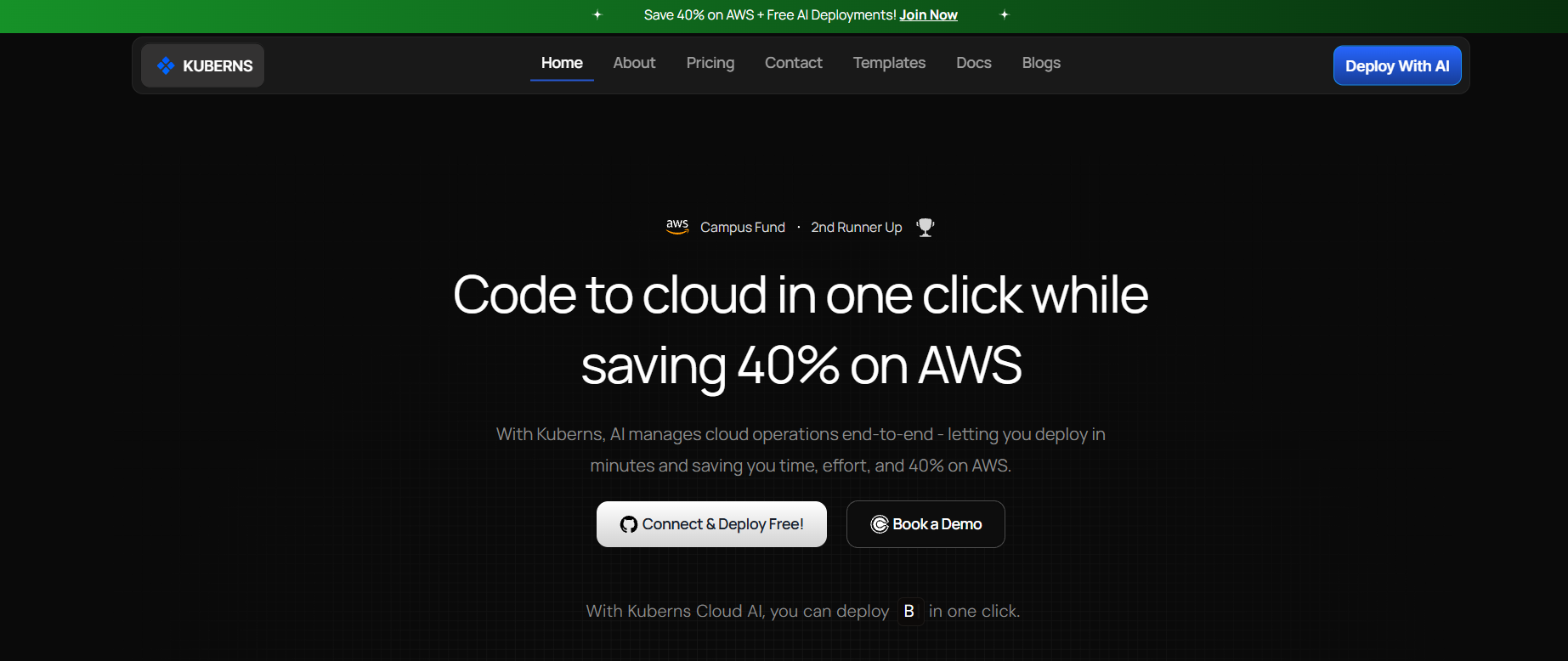
Kuberns is built for businesses that want the simplicity of managed hosting combined with the power of IaaS.
Instead of charging a premium layer on top of providers (like Cloudways does), Kuberns directly runs on AWS-backed infrastructure and passes up to 40% savings to its users through AI-driven cost optimisation.
What makes Kuberns different is that it’s designed for modern workloads: SaaS platforms, APIs, and containerised applications, not just websites.
With one-click Git-based deployments, built-in CI/CD pipelines, monitoring, and autoscaling, businesses no longer need dedicated DevOps teams to manage infrastructure.
* Pros: Transparent AWS-based pricing, saves up to 40%, AI-powered scaling, one-click deployments, and global reach.
* Best For: Startups, SaaS teams, and agencies that want predictable pricing and scalable cloud hosting without DevOps complexity.
Learn more: [What is Kuberns? A simpler way to deploy and scale apps](https://kuberns.com/blogs/what-is-kuberns-the-simplest-way-to-build-deploy-and-scale-full-stack-apps/).
## Scaleway vs Alternatives: Overview
Choosing between Scaleway and its alternatives often comes down to pricing, global reach, ease of use, and whether the platform can handle modern workloads.
Here’s a high-level comparison to help you see where each provider stands:
| Provider | Pricing Model | Ease of Use | Global Coverage | Best Suited For |
| ------------------- | ------------------------------------------------------- | --------------------------------------------- | ---------------------------------------------- | ----------------------------------------------------- |
| **Scaleway** | Affordable entry pricing, unpredictable bandwidth costs | Moderate – geared toward EU developers | EU-focused (France, Netherlands, Poland) | Small EU startups, developers on a budget |
| **Kuberns** | Transparent AWS-backed pricing, up to 40% savings | Very easy – one-click deploy, Git-based CI/CD | Global AWS infrastructure | Startups, SaaS, agencies needing cost savings & scale |
| **OVHcloud** | Competitive EU pricing | Less beginner-friendly, enterprise-focused | Strong in Europe, expanding globally | Enterprises, compliance-heavy industries |
| **Hetzner** | Ultra-low pricing | Moderate | Limited to EU data centers | Budget-conscious EU startups & dev teams |
| **Kamatera** | Fully customizable pay-as-you-use | Complex for beginners | Global coverage | Enterprises, IT teams with custom setups |
| **DigitalOcean** | Predictable flat pricing | Very easy, developer-friendly | Global but smaller footprint than hyperscalers | Startups, SMBs, agencies |
| **Linode (Akamai)** | Affordable plans, evolving edge features | Easy for developers | Growing global presence under Akamai | Developers, SMBs |
| **UpCloud** | Transparent pricing | Developer-friendly | Smaller global footprint | Performance-focused developers & SMBs |
| **GCP** | Pay-as-you-go, complex pricing | Requires technical expertise | Extensive global coverage | Enterprises, AI/ML and data-heavy startups |
| **Azure** | Pay-as-you-go with enterprise licensing | Complex for SMBs, better for enterprises | Massive global infrastructure | Enterprises, regulated industries |
## Top Scaleway Alternatives in 2026
If Scaleway no longer meets your needs, there are several cloud hosting and IaaS providers that deliver better global reach, predictable pricing, and developer-friendly features.
Below is a ranked list of the best Scaleway alternatives in 2026:
### 1. Kuberns

Kuberns is built for businesses that want the simplicity of managed hosting combined with the power of IaaS.
Instead of charging a premium layer on top of providers (like Cloudways does), Kuberns directly runs on AWS-backed infrastructure and passes up to 40% savings to its users through AI-driven cost optimisation.
What makes Kuberns different is that it’s designed for modern workloads: SaaS platforms, APIs, and containerised applications, not just websites.
With one-click Git-based deployments, built-in CI/CD pipelines, monitoring, and autoscaling, businesses no longer need dedicated DevOps teams to manage infrastructure.
* Pros: Transparent AWS-based pricing, saves up to 40%, AI-powered scaling, one-click deployments, and global reach.
* Best For: Startups, SaaS teams, and agencies that want predictable pricing and scalable cloud hosting without DevOps complexity.
Learn more: [What is Kuberns? A simpler way to deploy and scale apps](https://kuberns.com/blogs/what-is-kuberns-the-simplest-way-to-build-deploy-and-scale-full-stack-apps/).
 ### 2. OVHcloud

OVHcloud is one of the biggest European cloud providers and a strong Scaleway alternative for businesses that want affordable infrastructure-as-a-service combined with compliance guarantees.
It offers dedicated servers, VPS hosting, and private cloud solutions with attractive pricing.
Many EU-based companies choose OVHcloud for its data sovereignty and GDPR compliance, which makes it appealing to industries like finance, government, and healthcare. However, while it provides a wide range of services, the platform is known for its complex setup and slower support response, which can frustrate smaller businesses.
* Pros: Competitive pricing, wide EU presence, strong compliance.
* Cons: Not beginner-friendly, support can be slow for urgent issues.
* Best For: Enterprises and EU-focused businesses needing compliance and scalability.
> Related Reading: [Best OVH alternatives](https://kuberns.com/blogs/best-ovh-alternatives/)
### 3. Hetzner

Hetzner is another Europe-based IaaS provider that attracts startups and developers with its ultra-low pricing and reliable bare-metal servers. It’s a favourite for small to medium-sized companies that prioritise cost savings over advanced features.
The trade-off is that Hetzner has limited data centre presence outside of Europe, so latency may be a problem for businesses with global users. Still, for budget-conscious teams, it remains one of the cheapest ways to get reliable cloud hosting.
* Pros: Very affordable pricing, stable infrastructure, and GDPR-compliant.
* Cons: Limited global coverage, smaller feature set compared to AWS or Azure.
* Best For: Startups, developers, and EU businesses looking for low-cost hosting.
> Related Reading: [Discover the best Hetzner alternative options today](https://kuberns.com/blogs/discover-the-best-hetzner-alternative-options-today/)
### 4. Kamatera

Kamatera gives businesses full flexibility when it comes to configuring cloud environments. Unlike providers with fixed packages, Kamatera lets you choose exactly how many CPUs, how much RAM, and what type of storage you want.
This makes it ideal for teams with specialised workloads that need tailored setups.
Its global data centres give it an edge over EU-only providers like Scaleway and Hetzner. The downside, however, is that Kamatera requires more technical expertise.
It’s not as beginner-friendly as DigitalOcean or Kuberns, so non-technical teams might struggle with the learning curve.
* Pros: Highly customizable infrastructure, global coverage, scalable resources.
* Cons: Complex for beginners, requires technical expertise.
* Best For: Enterprises, IT teams, and advanced users needing fully customizable IaaS.
> Check out the [Top Kamatera alternatives](https://kuberns.com/blogs/top-kamatera-alternatives-for-your-cloud-needs/) for developers.
### 5. DigitalOcean

DigitalOcean is widely known as a developer-friendly cloud hosting provider that simplifies infrastructure for startups and SMBs. Its droplets (virtual machines) and flat monthly pricing make it easy for small teams to launch projects without unexpected costs.
That said, DigitalOcean has fewer enterprise-grade features compared to hyperscalers like Azure or GCP. As applications grow, businesses often outgrow DigitalOcean and move to more scalable platforms.
* Pros: Beginner-friendly UI, predictable pricing, excellent documentation.
* Cons: Limited advanced features, costs increase with add-ons.
* Best For: Startups and SMBs building SaaS, e-commerce, or client projects.
> Here are the [Best DigitalOcean alternatives](https://kuberns.com/blogs/digitalocean-alternatives/) of 2026
### 6. Linode (by Akamai)

Linode has long been a popular choice among developers for its affordable VPS hosting and straightforward management. Since its acquisition by Akamai, it has expanded into edge computing and enterprise offerings, making it a stronger alternative in 2026.
Linode’s biggest strength is its reliability and community support, but some businesses remain cautious as Akamai continues to integrate it into its broader ecosystem.
* Pros: Reliable, affordable, strong developer community.
* Cons: Still evolving under Akamai, fewer advanced integrations.
* Best For: Developers and SMBs that want simple, affordable cloud hosting.
> If you are exploring the [Linode alternatives](https://kuberns.com/blogs/linode-alternatives/), read this.
### 7. UpCloud

UpCloud is less well-known globally but has gained traction as a performance-focused cloud provider. It claims faster performance than many competitors due to its MaxIOPS storage technology, making it appealing to developers who need speed.
Its ecosystem is smaller compared to AWS or Azure, but for businesses that prioritise performance per dollar, it’s a compelling option.
* Pros: High performance, transparent pricing, reliable uptime.
* Cons: Smaller ecosystem, fewer global data centres.
* Best For: Developers and small businesses that want performance-driven cloud hosting.
### 8. Google Cloud Platform (GCP)

GCP is a leading enterprise cloud provider, trusted by large organisations for AI, ML, and big data workloads. It offers one of the widest global infrastructures, making it a natural choice for businesses scaling worldwide.
The downside is that GCP’s pricing is complex, and managing its services requires technical expertise. For enterprises with in-house IT teams, GCP provides unmatched innovation and scale.
* Pros: Global data centres, cutting-edge AI/ML services, enterprise compliance.
* Cons: Pricing complexity, steep learning curve.
* Best For: Enterprises, AI-driven startups, global SaaS companies.
> Read This: [Google Cloud alternatives](https://kuberns.com/blogs/google-cloud-alternatives/)
### 9. Microsoft Azure

Azure is another hyperscaler widely chosen by enterprises, particularly those already using Microsoft services like Office 365 or Active Directory. It offers hybrid cloud capabilities, making it a go-to for regulated industries like finance, government, and healthcare.
However, Azure can be costly and complex for smaller teams, making it less appealing to startups compared to simpler options like Kuberns or DigitalOcean.
* Pros: Huge ecosystem, enterprise-grade compliance, strong hybrid cloud features.
* Cons: Complex pricing, steep learning curve for SMBs.
* Best For: Enterprises, regulated industries, and organisations with Microsoft integrations.
> Related Reading: [Azure alternatives](https://kuberns.com/blogs/azure-alternatives/)
These nine providers represent the most relevant Scaleway alternatives in 2026.
> Some are cost-driven (Hetzner, OVH), others are enterprise-focused (Azure, GCP), and some like Kuberns combine simplicity, cost savings, and scalability in one platform.
### 2. OVHcloud

OVHcloud is one of the biggest European cloud providers and a strong Scaleway alternative for businesses that want affordable infrastructure-as-a-service combined with compliance guarantees.
It offers dedicated servers, VPS hosting, and private cloud solutions with attractive pricing.
Many EU-based companies choose OVHcloud for its data sovereignty and GDPR compliance, which makes it appealing to industries like finance, government, and healthcare. However, while it provides a wide range of services, the platform is known for its complex setup and slower support response, which can frustrate smaller businesses.
* Pros: Competitive pricing, wide EU presence, strong compliance.
* Cons: Not beginner-friendly, support can be slow for urgent issues.
* Best For: Enterprises and EU-focused businesses needing compliance and scalability.
> Related Reading: [Best OVH alternatives](https://kuberns.com/blogs/best-ovh-alternatives/)
### 3. Hetzner

Hetzner is another Europe-based IaaS provider that attracts startups and developers with its ultra-low pricing and reliable bare-metal servers. It’s a favourite for small to medium-sized companies that prioritise cost savings over advanced features.
The trade-off is that Hetzner has limited data centre presence outside of Europe, so latency may be a problem for businesses with global users. Still, for budget-conscious teams, it remains one of the cheapest ways to get reliable cloud hosting.
* Pros: Very affordable pricing, stable infrastructure, and GDPR-compliant.
* Cons: Limited global coverage, smaller feature set compared to AWS or Azure.
* Best For: Startups, developers, and EU businesses looking for low-cost hosting.
> Related Reading: [Discover the best Hetzner alternative options today](https://kuberns.com/blogs/discover-the-best-hetzner-alternative-options-today/)
### 4. Kamatera

Kamatera gives businesses full flexibility when it comes to configuring cloud environments. Unlike providers with fixed packages, Kamatera lets you choose exactly how many CPUs, how much RAM, and what type of storage you want.
This makes it ideal for teams with specialised workloads that need tailored setups.
Its global data centres give it an edge over EU-only providers like Scaleway and Hetzner. The downside, however, is that Kamatera requires more technical expertise.
It’s not as beginner-friendly as DigitalOcean or Kuberns, so non-technical teams might struggle with the learning curve.
* Pros: Highly customizable infrastructure, global coverage, scalable resources.
* Cons: Complex for beginners, requires technical expertise.
* Best For: Enterprises, IT teams, and advanced users needing fully customizable IaaS.
> Check out the [Top Kamatera alternatives](https://kuberns.com/blogs/top-kamatera-alternatives-for-your-cloud-needs/) for developers.
### 5. DigitalOcean

DigitalOcean is widely known as a developer-friendly cloud hosting provider that simplifies infrastructure for startups and SMBs. Its droplets (virtual machines) and flat monthly pricing make it easy for small teams to launch projects without unexpected costs.
That said, DigitalOcean has fewer enterprise-grade features compared to hyperscalers like Azure or GCP. As applications grow, businesses often outgrow DigitalOcean and move to more scalable platforms.
* Pros: Beginner-friendly UI, predictable pricing, excellent documentation.
* Cons: Limited advanced features, costs increase with add-ons.
* Best For: Startups and SMBs building SaaS, e-commerce, or client projects.
> Here are the [Best DigitalOcean alternatives](https://kuberns.com/blogs/digitalocean-alternatives/) of 2026
### 6. Linode (by Akamai)

Linode has long been a popular choice among developers for its affordable VPS hosting and straightforward management. Since its acquisition by Akamai, it has expanded into edge computing and enterprise offerings, making it a stronger alternative in 2026.
Linode’s biggest strength is its reliability and community support, but some businesses remain cautious as Akamai continues to integrate it into its broader ecosystem.
* Pros: Reliable, affordable, strong developer community.
* Cons: Still evolving under Akamai, fewer advanced integrations.
* Best For: Developers and SMBs that want simple, affordable cloud hosting.
> If you are exploring the [Linode alternatives](https://kuberns.com/blogs/linode-alternatives/), read this.
### 7. UpCloud

UpCloud is less well-known globally but has gained traction as a performance-focused cloud provider. It claims faster performance than many competitors due to its MaxIOPS storage technology, making it appealing to developers who need speed.
Its ecosystem is smaller compared to AWS or Azure, but for businesses that prioritise performance per dollar, it’s a compelling option.
* Pros: High performance, transparent pricing, reliable uptime.
* Cons: Smaller ecosystem, fewer global data centres.
* Best For: Developers and small businesses that want performance-driven cloud hosting.
### 8. Google Cloud Platform (GCP)

GCP is a leading enterprise cloud provider, trusted by large organisations for AI, ML, and big data workloads. It offers one of the widest global infrastructures, making it a natural choice for businesses scaling worldwide.
The downside is that GCP’s pricing is complex, and managing its services requires technical expertise. For enterprises with in-house IT teams, GCP provides unmatched innovation and scale.
* Pros: Global data centres, cutting-edge AI/ML services, enterprise compliance.
* Cons: Pricing complexity, steep learning curve.
* Best For: Enterprises, AI-driven startups, global SaaS companies.
> Read This: [Google Cloud alternatives](https://kuberns.com/blogs/google-cloud-alternatives/)
### 9. Microsoft Azure

Azure is another hyperscaler widely chosen by enterprises, particularly those already using Microsoft services like Office 365 or Active Directory. It offers hybrid cloud capabilities, making it a go-to for regulated industries like finance, government, and healthcare.
However, Azure can be costly and complex for smaller teams, making it less appealing to startups compared to simpler options like Kuberns or DigitalOcean.
* Pros: Huge ecosystem, enterprise-grade compliance, strong hybrid cloud features.
* Cons: Complex pricing, steep learning curve for SMBs.
* Best For: Enterprises, regulated industries, and organisations with Microsoft integrations.
> Related Reading: [Azure alternatives](https://kuberns.com/blogs/azure-alternatives/)
These nine providers represent the most relevant Scaleway alternatives in 2026.
> Some are cost-driven (Hetzner, OVH), others are enterprise-focused (Azure, GCP), and some like Kuberns combine simplicity, cost savings, and scalability in one platform.
 ## Why Choose Kuberns as a Scaleway Alternative: From VPS Hosting to AI-Managed Cloud?
Most Scaleway alternatives still follow the same model: they give you servers, and you manage everything else. That includes deployments, scaling rules, monitoring, cost optimisation, and reliability tooling.
Kuberns takes a fundamentally different approach.
For many businesses, Scaleway is a good entry point into the cloud, especially for developers in Europe. But as teams grow, the need for global coverage, predictable pricing, and developer-friendly automation becomes more important.
This is where Kuberns is often seen as the smarter cloud alternative.
Here’s why:
### Cost Savings Without Compromise
Unlike Scaleway, which can surprise businesses with egress and bandwidth charges, Kuberns offers transparent AWS-backed pricing with up to 40% savings. This makes it easier for startups and enterprises alike to plan infrastructure costs without unexpected spikes.
### Global Reach Beyond Europe
Scaleway’s strength is in Europe, but businesses with customers in North America or Asia often face latency issues. Kuberns runs on AWS global infrastructure, ensuring low latency and consistent performance for worldwide audiences.
### Built for Modern Workloads
Where Scaleway’s services are more limited, Kuberns provides everything teams need to run SaaS products, APIs, and containerised apps out of the box. CI/CD pipelines, monitoring, scaling, and logs are integrated into the platform, removing the need for multiple third-party tools.
### Developer-Friendly Simplicity
Kuberns takes the complexity out of deployment. With one-click Git-based deployments and AI-powered scaling, developers and agencies can ship faster without hiring large DevOps teams. This simplicity is a key differentiator compared to traditional IaaS providers.
### Hands-On Support
Businesses moving away from Scaleway often mention limited support as a concern. Kuberns addresses this with responsive, hands-on assistance, making migrations smoother and operations stress-free.
In short, Kuberns combines the ease of managed hosting with the scalability of IaaS, giving businesses the best of both worlds.
It’s a strong choice for companies that have outgrown Scaleway and want infrastructure that scales with their ambitions.
## What to Look for in a Scaleway Alternative?

When evaluating Scaleway alternatives, it’s important to look beyond the price tag. Many businesses initially choose Scaleway because of its affordability, but the real question is whether the platform can support your long-term growth.
Whether you’re a startup testing an MVP, an agency managing multiple client projects, or an enterprise scaling global infrastructure, here are the factors that matter most when choosing a Scaleway competitor in 2026:
### Transparent and Predictable Pricing
One of the most common reasons businesses leave Scaleway is unpredictable bandwidth and egress costs. A strong alternative should offer clear pricing models without hidden fees for storage, networking, or scaling.
For example, [OVHcloud](https://kuberns.com/blogs/best-ovh-alternatives/) is often praised for cost efficiency in Europe, while modern platforms like [Kuberns](https://kuberns.com) provide predictable AWS-backed pricing with up to 40% savings for businesses looking to optimise cloud spending.
### Global Data Centre Coverage
Scaleway’s infrastructure is heavily EU-focused, which creates latency challenges for international users. If your business has a global audience, look for providers with wide data centre coverage in the US, Asia, and beyond.
Options like [Hetzner](https://kuberns.com/blogs/discover-the-best-hetzner-alternative-options-today/) remain popular in Europe, while Kamatera and [cloud platforms built on AWS](https://kuberns.com) provide worldwide reach with consistent performance.
### Scalability and Flexibility for Modern Workloads
Cloud hosting today is not just about running websites. Businesses need platforms that can handle containerised apps, SaaS products, APIs, and CI/CD pipelines. Scaleway alternatives should support flexible scaling without downtime and allow businesses to adapt quickly to changing demands.
Platforms such as [Kuberns](https://kuberns.com) stand out by offering built-in CI/CD, monitoring, and autoscaling, reducing the need for multiple third-party tools.
### Developer Experience and Ease of Use
For developers, cloud infrastructure should accelerate workflows rather than slow them down. Look for alternatives with simple dashboards, Git-based deployments, and automation that eliminates repetitive tasks. This is especially critical for startups and agencies that may not have full DevOps teams. Providers like DigitalOcean emphasise simplicity, while Kuberns combines ease of use with enterprise-grade features.
### Strong Support and Reliability
Businesses in industries like e-commerce, finance, and healthcare cannot afford downtime. Scaleway’s limited support is often cited as a challenge, making it critical to choose an alternative that offers 24/7 support, SLAs, and migration assistance.
OVHcloud and Azure have enterprise-grade support structures, while Kuberns adds hands-on assistance for teams that want stress-free onboarding.
### Industry-Specific Compliance and Security
If your business handles sensitive data, such as in healthcare, fintech, or logistics, compliance is a top priority.
Many Scaleway competitors, such as GCP and Azure, offer industry-standard compliance certifications. For SMBs and startups, [Kuberns](https://kuberns.com) provides built-in monitoring and secure deployments without needing a dedicated DevOps or compliance team.
By evaluating these factors, you can choose a [Scaleway alternative](https://kuberns.com) that aligns with your industry requirements and growth plans.
> The goal is not just to replace Scaleway, but to upgrade to a platform that offers predictable pricing, global scalability, developer-friendly tools, and reliable support.
## Why Choose Kuberns as a Scaleway Alternative: From VPS Hosting to AI-Managed Cloud?
Most Scaleway alternatives still follow the same model: they give you servers, and you manage everything else. That includes deployments, scaling rules, monitoring, cost optimisation, and reliability tooling.
Kuberns takes a fundamentally different approach.
For many businesses, Scaleway is a good entry point into the cloud, especially for developers in Europe. But as teams grow, the need for global coverage, predictable pricing, and developer-friendly automation becomes more important.
This is where Kuberns is often seen as the smarter cloud alternative.
Here’s why:
### Cost Savings Without Compromise
Unlike Scaleway, which can surprise businesses with egress and bandwidth charges, Kuberns offers transparent AWS-backed pricing with up to 40% savings. This makes it easier for startups and enterprises alike to plan infrastructure costs without unexpected spikes.
### Global Reach Beyond Europe
Scaleway’s strength is in Europe, but businesses with customers in North America or Asia often face latency issues. Kuberns runs on AWS global infrastructure, ensuring low latency and consistent performance for worldwide audiences.
### Built for Modern Workloads
Where Scaleway’s services are more limited, Kuberns provides everything teams need to run SaaS products, APIs, and containerised apps out of the box. CI/CD pipelines, monitoring, scaling, and logs are integrated into the platform, removing the need for multiple third-party tools.
### Developer-Friendly Simplicity
Kuberns takes the complexity out of deployment. With one-click Git-based deployments and AI-powered scaling, developers and agencies can ship faster without hiring large DevOps teams. This simplicity is a key differentiator compared to traditional IaaS providers.
### Hands-On Support
Businesses moving away from Scaleway often mention limited support as a concern. Kuberns addresses this with responsive, hands-on assistance, making migrations smoother and operations stress-free.
In short, Kuberns combines the ease of managed hosting with the scalability of IaaS, giving businesses the best of both worlds.
It’s a strong choice for companies that have outgrown Scaleway and want infrastructure that scales with their ambitions.
## What to Look for in a Scaleway Alternative?

When evaluating Scaleway alternatives, it’s important to look beyond the price tag. Many businesses initially choose Scaleway because of its affordability, but the real question is whether the platform can support your long-term growth.
Whether you’re a startup testing an MVP, an agency managing multiple client projects, or an enterprise scaling global infrastructure, here are the factors that matter most when choosing a Scaleway competitor in 2026:
### Transparent and Predictable Pricing
One of the most common reasons businesses leave Scaleway is unpredictable bandwidth and egress costs. A strong alternative should offer clear pricing models without hidden fees for storage, networking, or scaling.
For example, [OVHcloud](https://kuberns.com/blogs/best-ovh-alternatives/) is often praised for cost efficiency in Europe, while modern platforms like [Kuberns](https://kuberns.com) provide predictable AWS-backed pricing with up to 40% savings for businesses looking to optimise cloud spending.
### Global Data Centre Coverage
Scaleway’s infrastructure is heavily EU-focused, which creates latency challenges for international users. If your business has a global audience, look for providers with wide data centre coverage in the US, Asia, and beyond.
Options like [Hetzner](https://kuberns.com/blogs/discover-the-best-hetzner-alternative-options-today/) remain popular in Europe, while Kamatera and [cloud platforms built on AWS](https://kuberns.com) provide worldwide reach with consistent performance.
### Scalability and Flexibility for Modern Workloads
Cloud hosting today is not just about running websites. Businesses need platforms that can handle containerised apps, SaaS products, APIs, and CI/CD pipelines. Scaleway alternatives should support flexible scaling without downtime and allow businesses to adapt quickly to changing demands.
Platforms such as [Kuberns](https://kuberns.com) stand out by offering built-in CI/CD, monitoring, and autoscaling, reducing the need for multiple third-party tools.
### Developer Experience and Ease of Use
For developers, cloud infrastructure should accelerate workflows rather than slow them down. Look for alternatives with simple dashboards, Git-based deployments, and automation that eliminates repetitive tasks. This is especially critical for startups and agencies that may not have full DevOps teams. Providers like DigitalOcean emphasise simplicity, while Kuberns combines ease of use with enterprise-grade features.
### Strong Support and Reliability
Businesses in industries like e-commerce, finance, and healthcare cannot afford downtime. Scaleway’s limited support is often cited as a challenge, making it critical to choose an alternative that offers 24/7 support, SLAs, and migration assistance.
OVHcloud and Azure have enterprise-grade support structures, while Kuberns adds hands-on assistance for teams that want stress-free onboarding.
### Industry-Specific Compliance and Security
If your business handles sensitive data, such as in healthcare, fintech, or logistics, compliance is a top priority.
Many Scaleway competitors, such as GCP and Azure, offer industry-standard compliance certifications. For SMBs and startups, [Kuberns](https://kuberns.com) provides built-in monitoring and secure deployments without needing a dedicated DevOps or compliance team.
By evaluating these factors, you can choose a [Scaleway alternative](https://kuberns.com) that aligns with your industry requirements and growth plans.
> The goal is not just to replace Scaleway, but to upgrade to a platform that offers predictable pricing, global scalability, developer-friendly tools, and reliable support.
 ## Why Consider a Scaleway Alternative in 2026?
Scaleway has established itself as a competitive player in the European cloud hosting market, appealing to startups and developers who want budget-friendly infrastructure. For early-stage projects or local deployments, Scaleway’s pricing looks attractive.
However, as businesses scale beyond MVPs into SaaS platforms, global e-commerce, or enterprise-grade applications, Scaleway’s limitations become harder to ignore.
This shift is what drives demand for Scaleway alternatives that can deliver more predictable pricing, global reach, and enterprise-ready reliability.
Here are the main challenges businesses face with Scaleway and why they seek alternatives:
### Limited Global Reach
Scaleway’s data centres are mostly concentrated in Europe. While this works for EU-focused businesses, it becomes a bottleneck for companies with customers in North America, Asia, or other high-growth regions. Latency issues directly affect user experience, especially for SaaS and e-commerce platforms. By contrast, alternatives like [Hetzner](https://kuberns.com/blogs/discover-the-best-hetzner-alternative-options-today/) remain strong in Europe, while providers such as AWS-backed platforms, Kamatera, or Vultr deliver broader international coverage for global teams.
### Unpredictable Bandwidth and Egress Costs
One of the recurring complaints about Scaleway is the unpredictability of its cloud hosting costs, especially around bandwidth and egress. Businesses that transfer large amounts of data, such as media companies, analytics platforms, or global SaaS applications, find their bills rising unexpectedly. This lack of pricing clarity makes financial planning difficult. Competitors like Kuberns solve this problem by offering transparent pricing on AWS-backed infrastructure, with up to 40% cost savings for businesses that need scalable cloud hosting.
### Smaller Ecosystem and Limited Services
Scaleway provides the essentials: compute, storage, and networking, but its ecosystem of tools and services is relatively narrow. Businesses running modern workloads like containerised applications, APIs, AI/ML projects, or multi-environment DevOps pipelines often find the platform restrictive.
Alternatives like OVHcloud or Azure come with a more robust catalogue, while bundles CI/CD, monitoring, and scaling into one simple platform tailored for developers and enterprises alike.
### Support and Reliability Gaps
While Scaleway offers documentation and community resources, its support options are limited compared to larger IaaS providers. For enterprises that need guaranteed uptime, dedicated SLAs, and hands-on migration help, this can be a dealbreaker.
Businesses in industries like finance, healthcare, and logistics, where downtime directly impacts revenue, often move to providers with stronger enterprise-grade support.
### Scalability for Growing Businesses
Scaleway can handle small workloads well, but scaling applications globally is where many companies encounter friction. For startups growing into mid-sized SaaS providers or agencies managing multiple client projects, seamless scaling and automation are non-negotiable. That’s why businesses explore competitors that provide developer-friendly automation, stress-free scaling, and predictable growth paths.
> Scaleway remains a good entry point for local European projects, but its limitations in cost transparency, global reach, and scalability make it less suitable for modern businesses. The demand for Scaleway alternatives has grown because companies now prioritise long-term stability, predictable pricing, and infrastructure that can scale with their ambitions.
## Final Verdict: The Smarter Path Beyond Scaleway
Scaleway is a reasonable starting point for EU-based projects, but as soon as teams grow, its limits become obvious. Global reach is restricted, bandwidth costs are hard to predict, and scaling still requires hands-on infrastructure management. Many alternatives fix one of these issues, but not all of them together.
Providers like Hetzner or OVHcloud focus on low-cost European infrastructure but still expect teams to manage servers and scaling. DigitalOcean and Linode improve the developer experience, yet scaling, monitoring, and cost control remain manual. Hyperscalers offer power and reach, but bring back the same complexity and billing confusion teams are trying to escape.
If you are moving away from Scaleway because managing infrastructure is slowing you down, Kuberns is the perfect choice to host your applications. It is built for teams that want their cloud management work to stay out of the way so they can focus on shipping product.
[Move to Kuberns AI Cloud](https://dashboard.kuberns.com/)
## Why Consider a Scaleway Alternative in 2026?
Scaleway has established itself as a competitive player in the European cloud hosting market, appealing to startups and developers who want budget-friendly infrastructure. For early-stage projects or local deployments, Scaleway’s pricing looks attractive.
However, as businesses scale beyond MVPs into SaaS platforms, global e-commerce, or enterprise-grade applications, Scaleway’s limitations become harder to ignore.
This shift is what drives demand for Scaleway alternatives that can deliver more predictable pricing, global reach, and enterprise-ready reliability.
Here are the main challenges businesses face with Scaleway and why they seek alternatives:
### Limited Global Reach
Scaleway’s data centres are mostly concentrated in Europe. While this works for EU-focused businesses, it becomes a bottleneck for companies with customers in North America, Asia, or other high-growth regions. Latency issues directly affect user experience, especially for SaaS and e-commerce platforms. By contrast, alternatives like [Hetzner](https://kuberns.com/blogs/discover-the-best-hetzner-alternative-options-today/) remain strong in Europe, while providers such as AWS-backed platforms, Kamatera, or Vultr deliver broader international coverage for global teams.
### Unpredictable Bandwidth and Egress Costs
One of the recurring complaints about Scaleway is the unpredictability of its cloud hosting costs, especially around bandwidth and egress. Businesses that transfer large amounts of data, such as media companies, analytics platforms, or global SaaS applications, find their bills rising unexpectedly. This lack of pricing clarity makes financial planning difficult. Competitors like Kuberns solve this problem by offering transparent pricing on AWS-backed infrastructure, with up to 40% cost savings for businesses that need scalable cloud hosting.
### Smaller Ecosystem and Limited Services
Scaleway provides the essentials: compute, storage, and networking, but its ecosystem of tools and services is relatively narrow. Businesses running modern workloads like containerised applications, APIs, AI/ML projects, or multi-environment DevOps pipelines often find the platform restrictive.
Alternatives like OVHcloud or Azure come with a more robust catalogue, while bundles CI/CD, monitoring, and scaling into one simple platform tailored for developers and enterprises alike.
### Support and Reliability Gaps
While Scaleway offers documentation and community resources, its support options are limited compared to larger IaaS providers. For enterprises that need guaranteed uptime, dedicated SLAs, and hands-on migration help, this can be a dealbreaker.
Businesses in industries like finance, healthcare, and logistics, where downtime directly impacts revenue, often move to providers with stronger enterprise-grade support.
### Scalability for Growing Businesses
Scaleway can handle small workloads well, but scaling applications globally is where many companies encounter friction. For startups growing into mid-sized SaaS providers or agencies managing multiple client projects, seamless scaling and automation are non-negotiable. That’s why businesses explore competitors that provide developer-friendly automation, stress-free scaling, and predictable growth paths.
> Scaleway remains a good entry point for local European projects, but its limitations in cost transparency, global reach, and scalability make it less suitable for modern businesses. The demand for Scaleway alternatives has grown because companies now prioritise long-term stability, predictable pricing, and infrastructure that can scale with their ambitions.
## Final Verdict: The Smarter Path Beyond Scaleway
Scaleway is a reasonable starting point for EU-based projects, but as soon as teams grow, its limits become obvious. Global reach is restricted, bandwidth costs are hard to predict, and scaling still requires hands-on infrastructure management. Many alternatives fix one of these issues, but not all of them together.
Providers like Hetzner or OVHcloud focus on low-cost European infrastructure but still expect teams to manage servers and scaling. DigitalOcean and Linode improve the developer experience, yet scaling, monitoring, and cost control remain manual. Hyperscalers offer power and reach, but bring back the same complexity and billing confusion teams are trying to escape.
If you are moving away from Scaleway because managing infrastructure is slowing you down, Kuberns is the perfect choice to host your applications. It is built for teams that want their cloud management work to stay out of the way so they can focus on shipping product.
[Move to Kuberns AI Cloud](https://dashboard.kuberns.com/)
 ## Frequently Asked Questions on Scaleway Alternatives
### 1. Why do businesses look for Scaleway alternatives?
Most businesses search for Scaleway alternatives because of limited global data centres, unpredictable egress costs, and a smaller ecosystem of services. While it works well for EU startups, scaling globally often requires more coverage and automation features.
### 2. Which is the best Scaleway alternative for startups?
For startups, the best Scaleway alternative is one that balances cost and simplicity. Platforms like DigitalOcean and Linode are popular for their ease of use, but many growing startups prefer Kuberns, since it combines predictable pricing and one-click deployments with global AWS infrastructure.
### 3. Is Scaleway reliable for enterprise workloads?
Scaleway is reliable for small to mid-sized projects, but enterprises in industries like finance, healthcare, or logistics often need stronger SLAs, compliance, and 24/7 support. In such cases, hyperscalers like GCP or Azure, or modern platforms like Kuberns, are better suited.
### 4. What is the main disadvantage of Scaleway?
The main disadvantages of Scaleway are its limited regional presence outside Europe and unpredictable bandwidth costs. These issues make it harder for businesses with global users or heavy data transfer needs to scale effectively.
### 5. Can I migrate easily from Scaleway to another provider?
Yes. Most Scaleway alternatives offer migration tools or hands-on support. With Kuberns, for example, you can connect your code repository and deploy applications in just a few clicks, making migration simple and low-risk.
### 6. Which Scaleway alternative has the best global coverage?
Providers like AWS (via Kuberns), GCP, and Azure offer the widest global reach with data centres across every region. For cost-conscious EU businesses, Hetzner or OVHcloud remain strong local options, while Kuberns provides the balance of global coverage and cost savings.
---
- [More Alternatives articles](https://kuberns.com/blogs/category/alternatives/1/)
- [All articles](https://kuberns.com/blogs/)
## Frequently Asked Questions on Scaleway Alternatives
### 1. Why do businesses look for Scaleway alternatives?
Most businesses search for Scaleway alternatives because of limited global data centres, unpredictable egress costs, and a smaller ecosystem of services. While it works well for EU startups, scaling globally often requires more coverage and automation features.
### 2. Which is the best Scaleway alternative for startups?
For startups, the best Scaleway alternative is one that balances cost and simplicity. Platforms like DigitalOcean and Linode are popular for their ease of use, but many growing startups prefer Kuberns, since it combines predictable pricing and one-click deployments with global AWS infrastructure.
### 3. Is Scaleway reliable for enterprise workloads?
Scaleway is reliable for small to mid-sized projects, but enterprises in industries like finance, healthcare, or logistics often need stronger SLAs, compliance, and 24/7 support. In such cases, hyperscalers like GCP or Azure, or modern platforms like Kuberns, are better suited.
### 4. What is the main disadvantage of Scaleway?
The main disadvantages of Scaleway are its limited regional presence outside Europe and unpredictable bandwidth costs. These issues make it harder for businesses with global users or heavy data transfer needs to scale effectively.
### 5. Can I migrate easily from Scaleway to another provider?
Yes. Most Scaleway alternatives offer migration tools or hands-on support. With Kuberns, for example, you can connect your code repository and deploy applications in just a few clicks, making migration simple and low-risk.
### 6. Which Scaleway alternative has the best global coverage?
Providers like AWS (via Kuberns), GCP, and Azure offer the widest global reach with data centres across every region. For cost-conscious EU businesses, Hetzner or OVHcloud remain strong local options, while Kuberns provides the balance of global coverage and cost savings.
---
- [More Alternatives articles](https://kuberns.com/blogs/category/alternatives/1/)
- [All articles](https://kuberns.com/blogs/)