# 10 Best Northflank Alternatives for Developers in 2026
> Tired of Northflank's complexity and pricing? Here are 10 developer-friendly alternatives compared on free tiers, pricing, and one-click deployment in 2026.
- **Author**: parth-kanpariya
- **Published**: 2025-10-21
- **Modified**: 2026-06-25
- **Category**: Alternatives
- **URL**: https://kuberns.com/blogs/top-northflank-alternatives/
---
The best Northflank alternatives in 2026 are Kuberns, Qovery, Render, Railway, DigitalOcean App Platform, Fly.io, Heroku, Vercel, Google Cloud Run, and AWS Amplify. Each addresses a specific gap teams hit with Northflank, mainly around pricing as teams scale, Kubernetes complexity requiring more DevOps knowledge, and the operational overhead of managing a feature-rich platform.
Northflank is genuinely capable with built-in CI/CD, managed databases, preview environments, and Kubernetes-native deployments. For teams with the DevOps maturity to use it fully, it works well. But in 2026 the question is less about what a platform can do and more about how much of your team's time it consumes to run it.
This guide compares all ten alternatives on automation, cost, and how well each fits teams at different stages of growth.
This guide covers 10 Northflank alternatives across the full spectrum from BYOC Kubernetes platforms for DevOps-heavy teams to fully managed AI cloud for teams who want zero infrastructure work.
Related Read: [Kuberns: The Simplest Way to Build, Deploy, and Scale Full-Stack Apps](https://kuberns.com/blogs/what-is-kuberns-the-simplest-way-to-build-deploy-and-scale-full-stack-apps/)
### TL;DR: What Should You Use Instead of Northflank?
* Paying more for Northflank's managed infra than the raw compute justifies? Use [Kuberns Agentic AI](https://kuberns.com/) to deploy faster and save more on cloud costs
* Worried about vendor lock-in on a single managed platform? Go for Qovery (run it in your own AWS/GCP/Azure) or DigitalOcean App Platform (you own the infra)
* Need Kubernetes-native with full BYOC flexibility? Try Google Cloud Run
* Frontend-heavy project paying Northflank rates for static assets? Use Vercel, its purpose-built edge CDN, with unmatched Next.js support
* Coming from Heroku and Northflank, does it feel like too much configuration? Try Render, closest to Heroku's simplicity with modern pricing
* Building a full-stack app and want a deployment that is completely automated? Try[ Kuberns](https://kuberns.com/), an agentic AI cloud that deploys from GitHub in one click
## Why Developers Are Looking Beyond Northflank in 2026
### 1. Vendor Lock-In on a Single Managed Platform
Northflank runs on its own managed infrastructure by default. While BYOC is available, most teams on standard plans are fully dependent on Northflank's infrastructure choices, regions, and pricing decisions. As [Qovery's research](https://www.qovery.com/blog/northflank-alternatives) on Northflank alternatives puts it: platforms like Northflank lock teams into a single vendor's managed infrastructure, which can limit control, increase costs at scale, and create real vendor lock-in risk.
For teams building long-term, the inability to move workloads to their own cloud account without a plan upgrade is a meaningful constraint.
### 2. Pricing Gets Expensive at Scale
Northflank starts at $6/month, but the honest assessment from [G2 reviewers is clear](https://www.g2.com/products/northflank/reviews): the main tradeoff compared to a VPS or dedicated server is that you pay more for the equivalent amount of resources.
That premium is acceptable when you're getting significant time savings, but as your team scales and compute needs grow, the gap between Northflank's pricing and raw infrastructure cost widens noticeably.
### 3. Overwhelming for Teams Without a DevOps Background
Northflank exposes a lot of power, pipelines, environments, clusters, RBAC, secrets, cron jobs, and image builds. For teams with experienced DevOps engineers, that's valuable. For everyone else, [G2 reviewers note](https://www.g2.com/products/northflank/reviews) that the sheer amount of options can be overwhelming at first, particularly for DevOps newcomers. The learning curve is real, and it costs onboarding time.
### 4. Support Gaps at Critical Moments
[One Trustpilot reviewer reported](https://www.trustpilot.com/review/northflank.com) reaching out to Northflank customer service on multiple occasions and receiving no response, stating the experience eroded any confidence in relying on the service for serious or time-sensitive projects. For production workloads where a fast response can mean the difference between a minor incident and a major outage, support responsiveness matters significantly.
### 5. Free Tier Requires a Credit Card
Northflank advertises a free Developer Sandbox, but it still requires a credit card to access, making it less beginner-friendly compared to other free hosting platforms that offer genuinely no-commitment free tiers. For developers evaluating platforms before committing, this is a friction point that competitors like Railway and Render don't have.
### 6. Smaller Community Than Established Platforms
[The community around Northflank is smaller](https://www.saashub.com/compare-qovery-vs-northflank) than more established platforms, which means fewer third-party tutorials, shared configurations, and community-sourced solutions when you hit an edge case.[ ](https://www.saashub.com/compare-qovery-vs-northflank)When something breaks at 2 a.m., and the docs don't cover your specific scenario, community size matters.
> Full-stack developers don't just want a place to deploy code. They want a [complete platform](https://kuberns.com/) that automates the infrastructure around it.
 ## Here are the Best Northflank Alternatives in 2026
The following platforms are among the best Northflank alternatives in 2026, chosen for their reliability, automation, scalability, and real-world fit for full-stack development teams.
Each one has its strengths, limitations, and ideal use cases.
### 1. Kuberns: Best for Teams Who Want Zero Infrastructure Overhead
Starting price: $7/month (includes $14 in compute credits, \~30 days free) |[ Try The Agentic AI Deployment Now](https://dashboard.kuberns.com)
**Best for:** Startups, agencies, and dev teams who want AWS-grade production infrastructure without Kubernetes complexity, DevOps headcount, or platform lock-in.
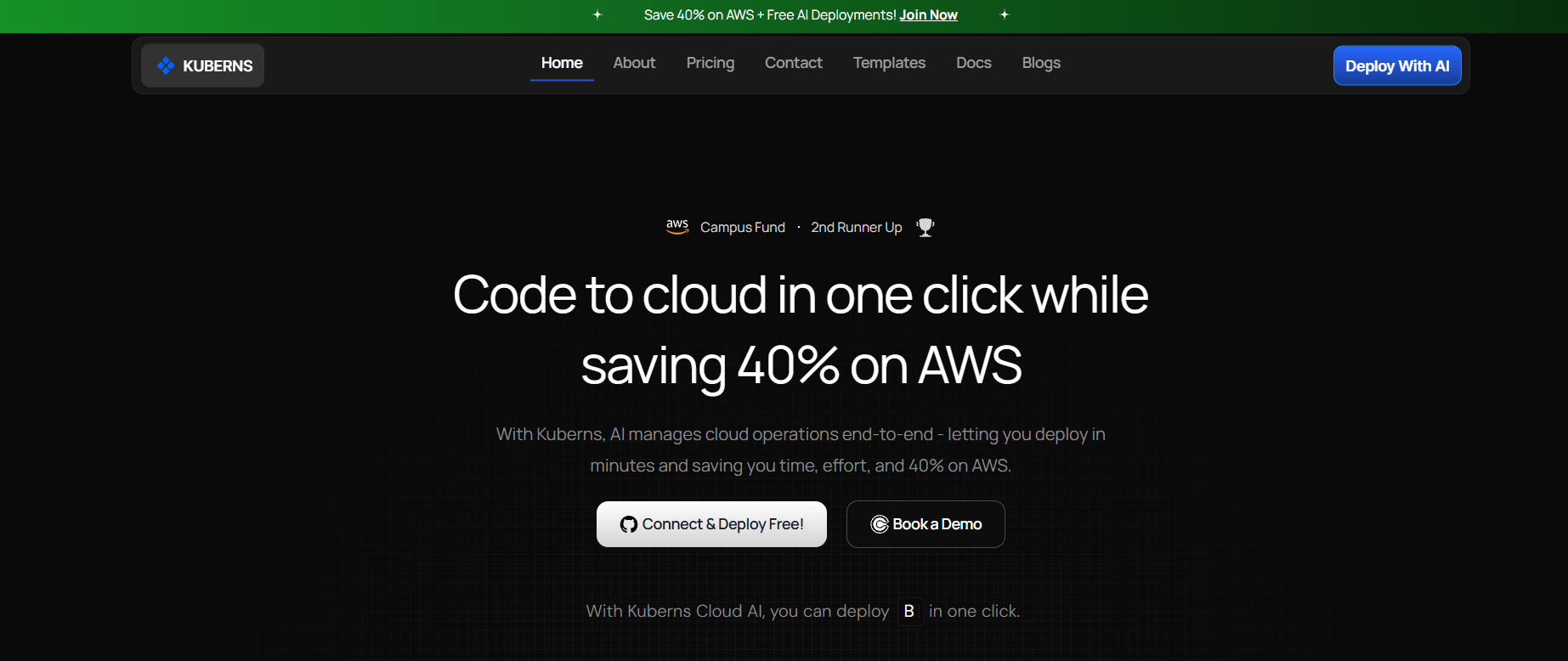
Kuberns is the agentic AI cloud alternative to Northflank. Where Northflank gives you a managed Kubernetes platform that your team still needs to configure and operate, Kuberns removes the configuration layer entirely. Connect your GitHub repo, set environment variables, and the AI handles provisioning, deployment, scaling, monitoring, and cost optimisation, automatically, continuously, without your team touching infrastructure.
The key difference between Kuberns and Northflank isn't features; both support full-stack apps, APIs, background workers, databases, and CI/CD. The difference is how much of your team's time each platform consumes after your app is live.
**Kuberns vs Northflank:**
|
| Kuberns | Northflank |
| ------------------------- | ----------------------------------------------- | --------------------------------------------------- |
| Infrastructure management | Zero, AI handles everything | You configure pipelines, environments, and clusters |
| CI/CD | Infinite CI/CD, included, no setup | Built-in, requires pipeline configuration |
| Monitoring | Real-time logs, alerts, insights, and automatic | Built-in observability requires setup |
| Vendor lock-in | AWS infrastructure, no proprietary lock-in | Managed infra by default (BYOC on higher plans) |
| Cost | Up to 40% lower than AWS, one compute bill | Premium over raw compute |
| Free tier | $14 credits, 100% money-back guarantee | Requires a credit card |
| Learning curve | Minimal, deploy in minutes from GitHub | Significant for DevOps newcomers |
**Pros:**
* One-click Git deployment: no YAML, no Dockerfiles required
* Agentic AI automatically scales based on real traffic, not manual rules
* Infinite CI/CD pipelines are included at no extra cost
* Built-in monitoring, logs, alerts, no third-party tools needed
* No per-user pricing: one flat compute bill
* AWS-backed infrastructure: enterprise SLA, global regions
**Bottom line:** If Northflank's learning curve, pricing at scale, or vendor lock-in is the issue, Kuberns gives you the same production-grade reliability on AWS infrastructure, with the Agentic AI handling everything Northflank asks your team to manage manually.
Hitting Northflank's pricing ceiling? See [how teams cut AWS bills by 40% after switching to Kuberns](https://kuberns.com/blogs/how-to-reduce-aws-cost/)
## Here are the Best Northflank Alternatives in 2026
The following platforms are among the best Northflank alternatives in 2026, chosen for their reliability, automation, scalability, and real-world fit for full-stack development teams.
Each one has its strengths, limitations, and ideal use cases.
### 1. Kuberns: Best for Teams Who Want Zero Infrastructure Overhead

Starting price: $7/month (includes $14 in compute credits, \~30 days free) |[ Try The Agentic AI Deployment Now](https://dashboard.kuberns.com)
**Best for:** Startups, agencies, and dev teams who want AWS-grade production infrastructure without Kubernetes complexity, DevOps headcount, or platform lock-in.
Kuberns is the agentic AI cloud alternative to Northflank. Where Northflank gives you a managed Kubernetes platform that your team still needs to configure and operate, Kuberns removes the configuration layer entirely. Connect your GitHub repo, set environment variables, and the AI handles provisioning, deployment, scaling, monitoring, and cost optimisation, automatically, continuously, without your team touching infrastructure.
The key difference between Kuberns and Northflank isn't features; both support full-stack apps, APIs, background workers, databases, and CI/CD. The difference is how much of your team's time each platform consumes after your app is live.
**Kuberns vs Northflank:**
|
| Kuberns | Northflank |
| ------------------------- | ----------------------------------------------- | --------------------------------------------------- |
| Infrastructure management | Zero, AI handles everything | You configure pipelines, environments, and clusters |
| CI/CD | Infinite CI/CD, included, no setup | Built-in, requires pipeline configuration |
| Monitoring | Real-time logs, alerts, insights, and automatic | Built-in observability requires setup |
| Vendor lock-in | AWS infrastructure, no proprietary lock-in | Managed infra by default (BYOC on higher plans) |
| Cost | Up to 40% lower than AWS, one compute bill | Premium over raw compute |
| Free tier | $14 credits, 100% money-back guarantee | Requires a credit card |
| Learning curve | Minimal, deploy in minutes from GitHub | Significant for DevOps newcomers |
**Pros:**
* One-click Git deployment: no YAML, no Dockerfiles required
* Agentic AI automatically scales based on real traffic, not manual rules
* Infinite CI/CD pipelines are included at no extra cost
* Built-in monitoring, logs, alerts, no third-party tools needed
* No per-user pricing: one flat compute bill
* AWS-backed infrastructure: enterprise SLA, global regions
**Bottom line:** If Northflank's learning curve, pricing at scale, or vendor lock-in is the issue, Kuberns gives you the same production-grade reliability on AWS infrastructure, with the Agentic AI handling everything Northflank asks your team to manage manually.
Hitting Northflank's pricing ceiling? See [how teams cut AWS bills by 40% after switching to Kuberns](https://kuberns.com/blogs/how-to-reduce-aws-cost/)
 ### 2. Qovery: Best for BYOC and Multi-Cloud Teams

Starting price: Free tier (up to 100 deployments/month); paid plans scale with usage
**Best for:** DevOps-heavy teams and enterprises who want Kubernetes-native deployments running in their own AWS, GCP, or Azure account, full infrastructure ownership with a managed platform experience on top.
Qovery is the most direct answer to Northflank's vendor lock-in problem. Instead of running on Qovery's infrastructure, your workloads deploy into your own cloud account. You keep data residency control, cost transparency, and the ability to inspect and modify the underlying infrastructure at any time. Qovery supports multi-cloud deployments, Terraform and Helm integration, environment duplication for ephemeral preview environments, and SOC 2/HIPAA compliance.[ ](https://www.qovery.com/blog/northflank-alternatives)
**The tradeoff:** Qovery requires meaningful Kubernetes and DevOps knowledge to configure well. It's powerful for teams that have that expertise, less suitable for developers who want to avoid infrastructure decisions entirely.
**Pros:**
* Full BYOC, runs in your own AWS, GCP, or Azure account
* Multi-cloud and on-premise support
* SOC 2 and HIPAA compliance
* Strong ephemeral environment support for preview and staging
* Terraform and Helm integration for teams with IaC workflows
**Cons:**
* Requires Kubernetes knowledge for full control
* Configuration complexity higher than Northflank or Kuberns
* Pricing at scale can be expensive with additional deployment minutes
* Multi-cloud configuration adds complexity for smaller teams
Qovery's Kubernetes complexity pushing your team toward simpler options? See the [best Qovery alternatives](https://kuberns.com/blogs/qovery-alternatives/) for teams who want managed without the overhead
### 3. Render: Best Managed PaaS for Predictable Pricing
Starting price: $7/month per service
**Best for:** Full-stack teams and SaaS builders who came from Heroku and want a modern managed platform with straightforward pricing, background worker support, and no Kubernetes to touch.
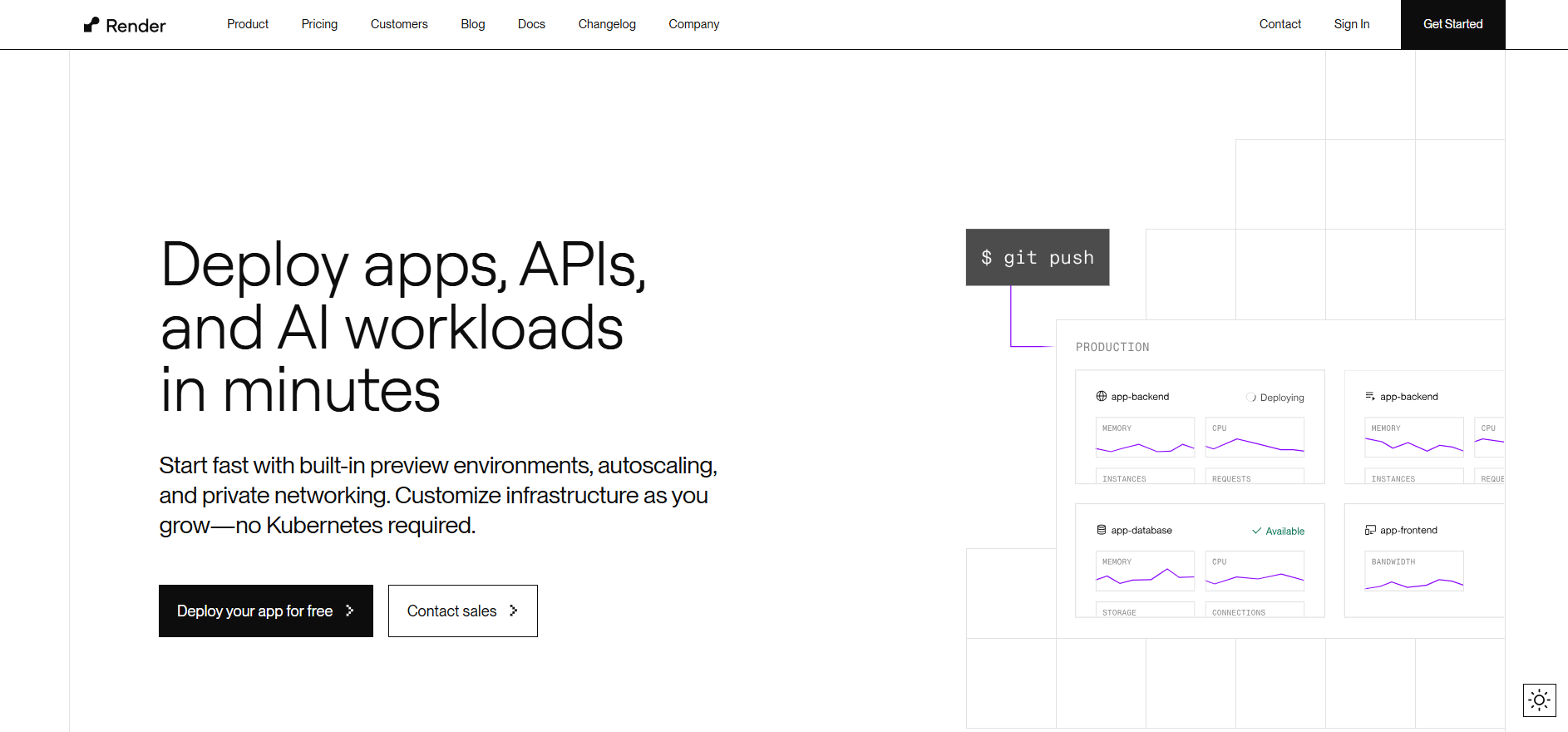
Render is consistently the first recommendation for teams leaving Northflank who find its configuration overhead too heavy. It offers Git-driven deploys, automatic SSL, managed PostgreSQL, background workers, cron jobs, and a global CD, all without any infrastructure configuration. Pricing is flat per-service monthly, which is more predictable than usage-based models at moderate scale.
**The tradeoff:** Render's automation is solid for standard apps but lacks Northflank's CI/CD depth and Kuberns' AI-driven scaling for teams with complex, high-traffic workloads.
**Pros:**
* Predictable per-service monthly pricing
* Background workers and cron jobs built in
* Managed PostgreSQL and Redis included
* Zero infrastructure configuration
* Git-based automatic deploys with rollback
**Cons:**
* Per-service pricing compounds for complex multi-service architectures
* Monitoring and scaling less sophisticated than Northflank or Kuberns
* Free tier has cold start delays
* Less CI/CD depth than Northflank
Running multiple services on Render and watching per-service costs stack up? See what [Render users switch to when pricing stops making sense](https://kuberns.com/blogs/best-render-alternatives/)
### 4. Railway: Best for Fast MVP Deployment
Starting price: $5/month credit (usage-based beyond)
**Best for:** Indie developers, side projects, and early-stage startups who want the fastest path from GitHub repo to live app without any platform configuration.
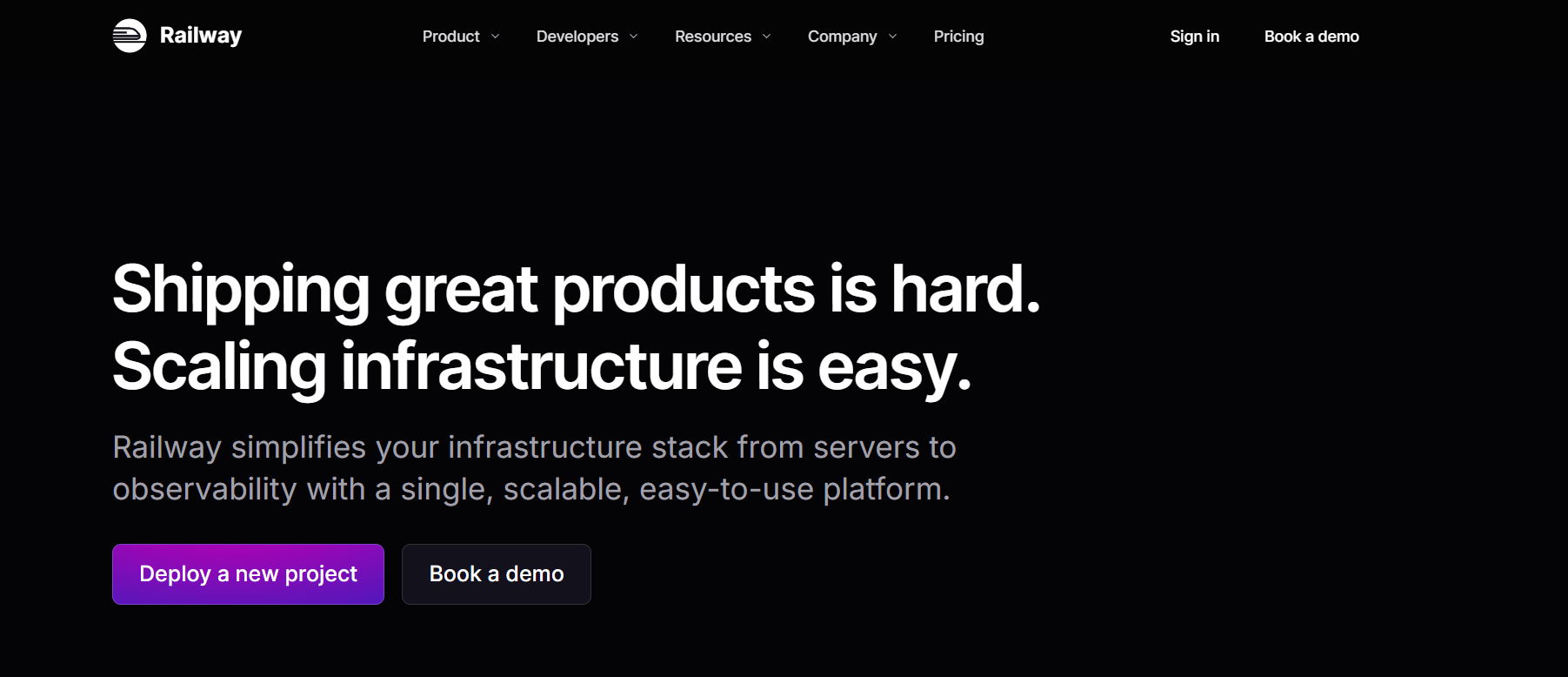
Railway is the speed-first alternative in this list. Connect a repo, deploy, done, no environments to configure, no pipelines to wire up, no Kubernetes concepts to learn. Its dashboard is clean, database provisioning is one-click, and the time-to-live for a new project is measured in minutes. For teams at the prototype-to-MVP stage who find Northflank's feature surface overwhelming, Railway removes all of that friction.
**The tradeoff:** Railway's usage-based pricing can spike unpredictably for high-traffic applications, and it lacks Northflank's enterprise-grade CI/CD and observability depth for production workloads.
**Pros:**
* Clean, minimal dashboard
* One-click databases, background workers, cron jobs
* Git-based automatic deploys
**Cons:**
* Usage-based pricing spikes unpredictably at scale
* Per-service costs compound in multi-service architectures
* Less production depth than Northflank or Kuberns
* No BYOC or enterprise compliance options
Is the railway deployment cost hitting unpredictable spikes as traffic grows? See [why teams switch away from Railway and what they move to instead](https://kuberns.com/blogs/best-railway-alternatives/)
### 5. DigitalOcean App Platform: Best for Infrastructure Ownership with Managed Simplicity
Starting price: From $5/month
**Best for:** Teams who want to own their cloud infrastructure but don't need the full Kubernetes complexity of Northflank, a middle ground between raw VPS and full managed PaaS.
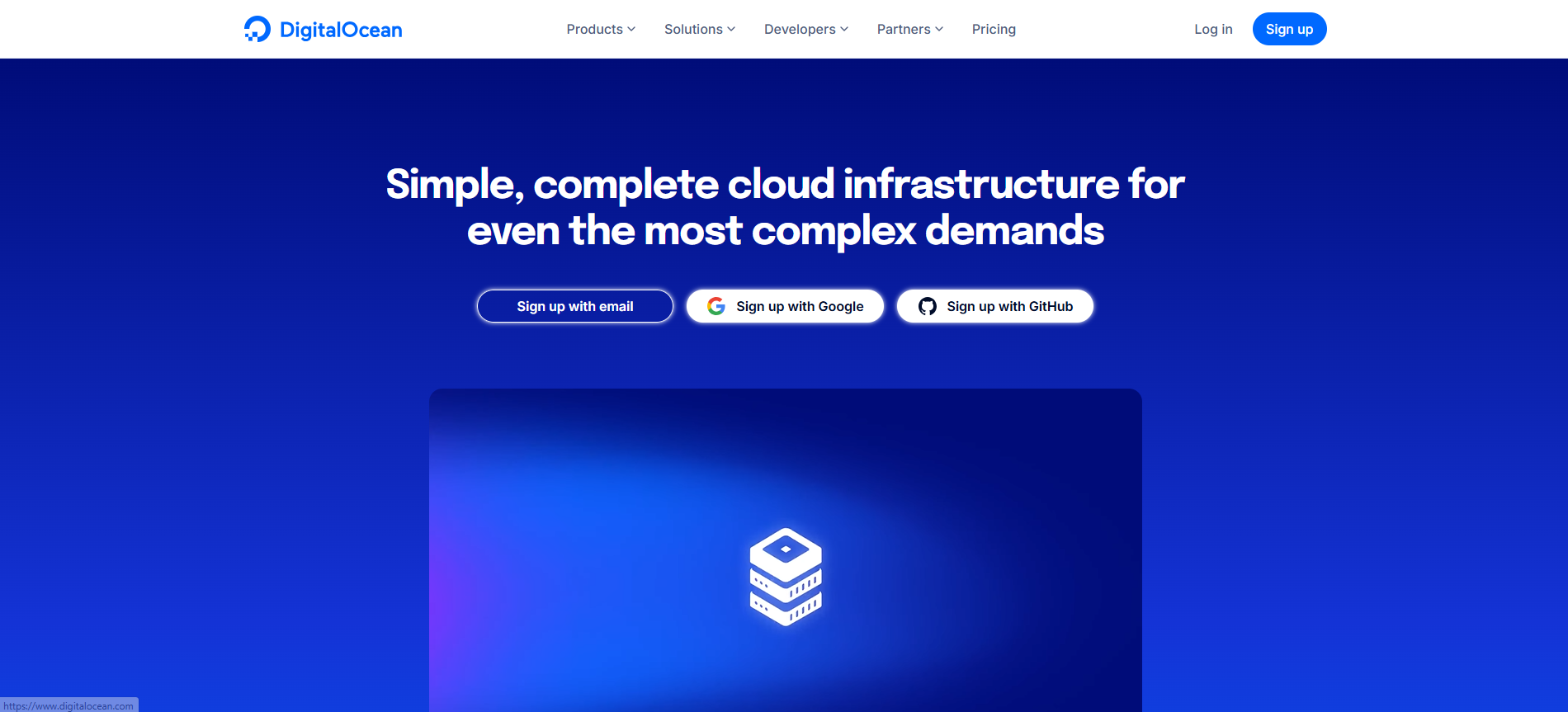
DigitalOcean App Platform sits between infrastructure and platform. You get managed deployments, automatic scaling, built-in databases, and a clean UI but on DigitalOcean's predictable, developer-friendly infrastructure rather than a proprietary managed platform. For teams who specifically want to avoid Northflank's vendor lock-in without going all-in on BYOC complexity, DigitalOcean offers a clean middle path.
**The tradeoff:** DigitalOcean App Platform still requires manual scaling decisions and monitoring setup. It's simpler than Northflank but less automated than Kuberns or Railway.
**Pros:**
* Predictable DigitalOcean infrastructure pricing
* Managed databases, static sites, workers in one platform
* Clean UI, strong documentation
* No proprietary lock-in: you own the infra
**Cons:**
* Manual scaling decisions required
* Less CI/CD depth than Northflank
* Monitoring requires additional setup
* Global region coverage is smaller than AWS or GCP
Outgrowing DigitalOcean App Platform as workloads get more complex? See the [best DigitalOcean alternatives](https://kuberns.com/blogs/digitalocean-alternatives/) for teams that need more automation
### 6. Fly.io: Best for Globally Distributed Low-Latency Apps
Starting price: Pay-as-you-go; free allowances included
**Best for:** Developers building latency-sensitive applications, real-time APIs, or globally distributed services who need to run workloads close to users across multiple regions.
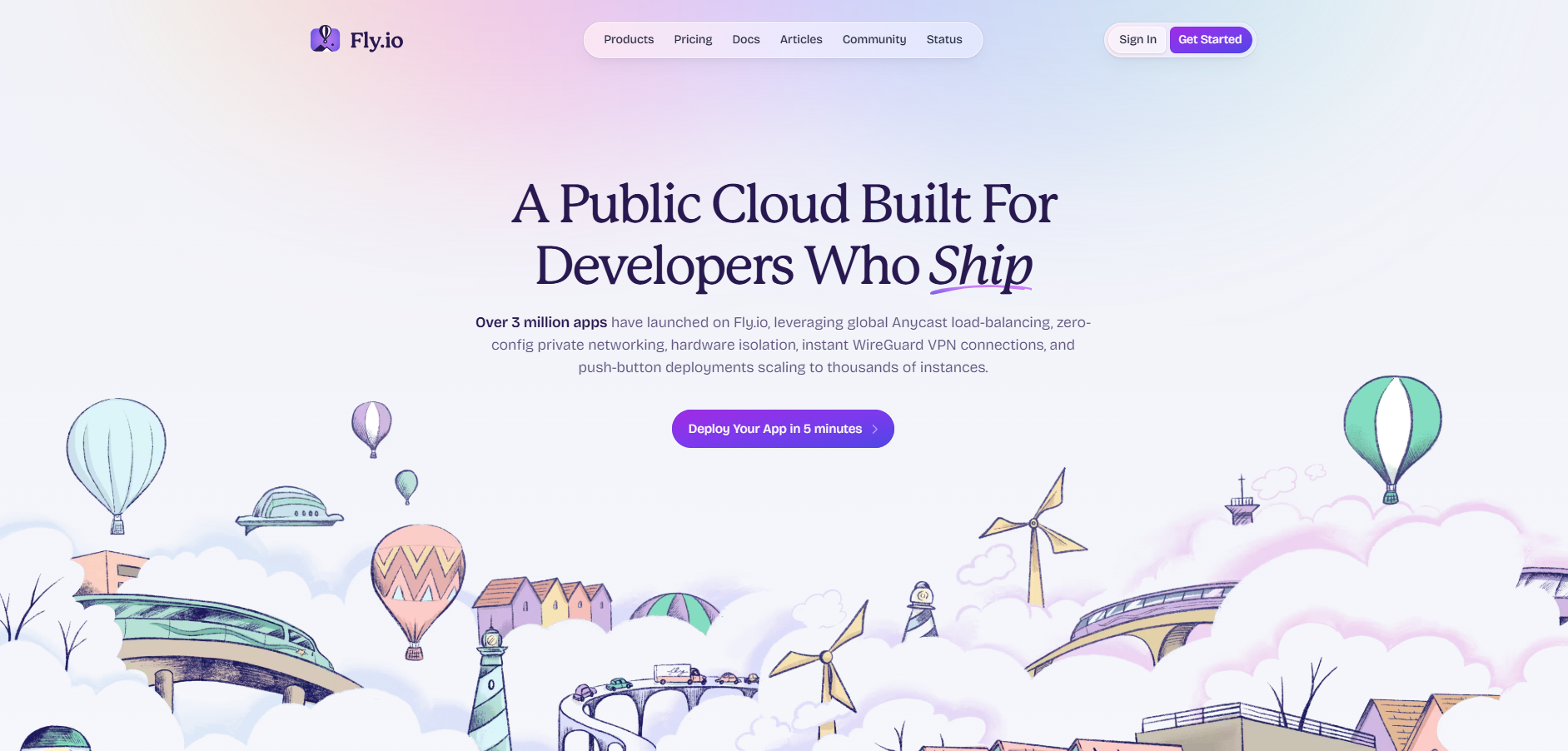
Fly.io takes a different approach to managed deployment instead of a single-region or few-region setup, it lets you deploy Docker containers to 30+ regions globally with low-latency routing. For applications where response time to users in multiple geographies matters, Fly.io offers infrastructure depth that Northflank's standard plans don't match. It's popular with developers building multiplayer games, real-time collaboration tools, and globally distributed APIs.
**The tradeoff:** Fly.io requires Docker knowledge and has a steeper CLI-first learning curve than Northflank or Render. It's not the right choice for teams who want a UI-driven workflow.
**Pros:**
* 30+ global regions with automatic traffic routing
* Low-latency edge deployments
* Postgres included with automatic failover
* Docker-native, flexible workload support
**Cons:**
* CLI-first: less beginner-friendly than Northflank or Render
* Requires Docker knowledge
* Pricing complexity increases for multi-region setups
* Less managed CI/CD than Northflank
Fly.io's machine management and regional complexity becoming harder to justify? See the [best Fly.io alternatives for teams](https://kuberns.com/blogs/fly-io-alternatives-2025/) who want global reach without the ops overhead
### 7. Heroku: Best for Teams Who Need a Proven Enterprise Ecosystem
Starting price: \~$5/month (Eco dynos)
**Best for:** Teams that need battle-tested managed PaaS with a massive add-on ecosystem, enterprise SLAs, and compliance support and don't mind paying a premium for that track record.
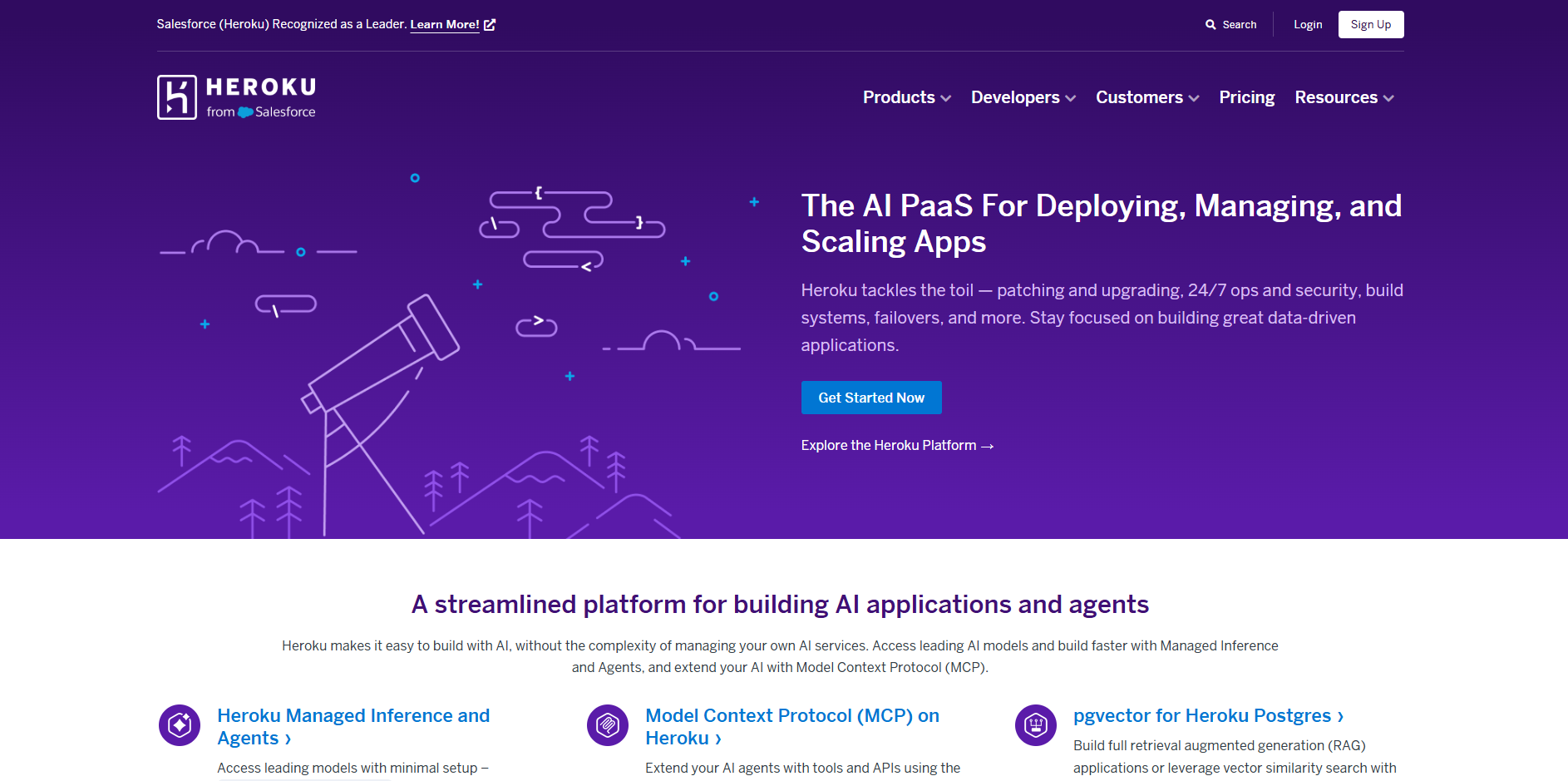
Heroku pioneered Git-push deployments and its model still works. Its add-on marketplace is unmatched in breadth, databases, caches, monitoring, email, logging, SMS, all composable without writing infrastructure config. Enterprise support, SLAs, and compliance certifications are available for production-critical workloads.
**The tradeoff:** Heroku removed its free tier in 2022, innovation pace has slowed considerably, and costs at scale are significantly higher than newer platforms. Teams that outgrow Heroku typically move to Railway, Render, or Kuberns.
**Pros:**
* Massive add-on ecosystem, hundreds of composable services
* Enterprise SLAs and compliance support
* Git-push deployment with zero config
* Longest track record in managed PaaS
**Cons:**
* No free tier since 2022
* Very expensive at scale compared to Kuberns or Railway
* The innovation pace has slowed significantly since the Salesforce acquisition
* Limited control compared to Northflank or Qovery
Heroku dyno costs are eating your budget, and add-on bills are getting unpredictable? See the [best Heroku alternatives ](https://kuberns.com/blogs/the-ultimate-guide-to-heroku-alternatives-in-2025/)developers are switching to in 2026
### 8. Vercel: Best for Frontend-Heavy Teams

**Starting price:** Free tier; Pro from $20/month per user
**Best for:** Frontend developers building Next.js, React, Svelte, or modern framework applications who want the best possible deployment experience for frontend workloads, with no backend requirements.
Vercel built the gold standard for frontend deployment. Automatic Git integration, instant preview environments per PR, global edge network, and image optimization, all wired up without config. For Next.js specifically, Vercel's performance is unmatched. Teams using Northflank primarily for frontend deployments and paying for capabilities they don't need will find Vercel significantly simpler and often cheaper for that specific use case.
**The tradeoff:** Vercel is not a backend deployment platform. For full-stack applications with APIs, background workers, and databases, Kuberns, Railway, or Render are better fits.
**Pros:**
* Best-in-class frontend deployment experience
* Instant preview environments per branch and PR
* Global edge network, automatic CDN
* Unmatched Next.js support
**Cons:**
* Not suited for backend-heavy or full-stack workloads
* Per-user pricing gets expensive for larger teams
* Bandwidth overages spike costs at scale
* Serverless function limits hit quickly for complex APIs
Vercel bill crossing $50-100/month or hitting backend limitations on a full-stack project? See the [best Vercel alternatives](https://kuberns.com/blogs/best-vercel-alternatives/) that support both frontend and backend
### 9. Google Cloud Run: Best for Serverless Container Teams on GCP
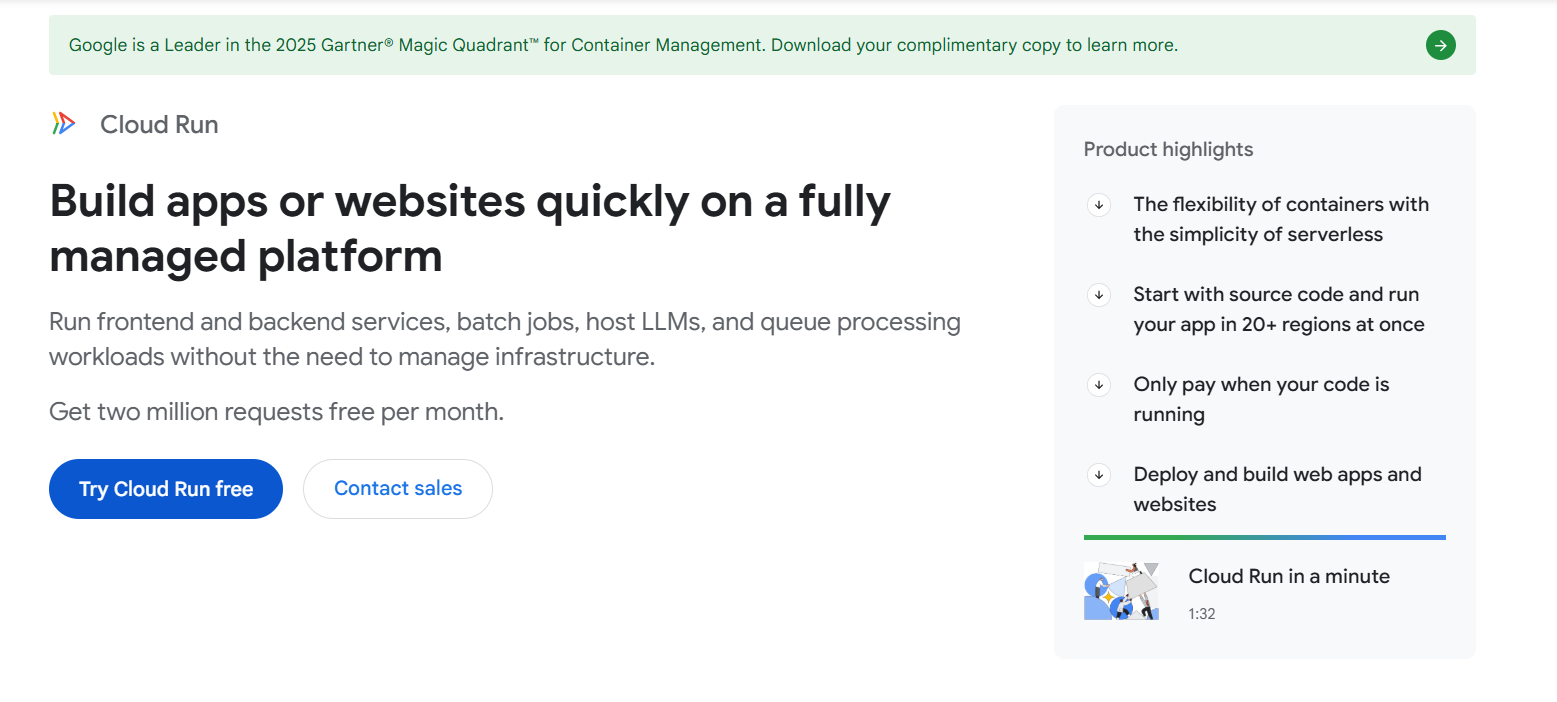
**Starting price:** Pay-per-use; generous free tier
**Best for:** Teams already in the Google Cloud ecosystem who want fully managed serverless container deployments without managing Kubernetes clusters with GCP's global infrastructure and integrations.
[Google Cloud Run](https://kuberns.com/blogs/google-cloud-alternatives/) lets you deploy containerized apps without managing servers or clusters. You push a container image, define scaling parameters, and Cloud Run handles the rest, including scaling to zero when idle. It integrates natively with GCP services (Cloud SQL, Pub/Sub, BigQuery, Secret Manager) and supports any language or framework that runs in a container. For teams already invested in GCP tooling, it's a natural fit.
**The tradeoff:** Cloud Run requires GCP knowledge, IAM configuration, and understanding of GCP networking. It's not beginner-friendly, and for teams outside the GCP ecosystem, the setup overhead is significant.
**Pros:**
* Scales to zero, no charges when idle
* Native GCP integration (Cloud SQL, Pub/Sub, BigQuery)
* Supports any containerized workload
* Enterprise-grade GCP infrastructure
**Cons:**
* Requires GCP knowledge and IAM configuration
* Not beginner-friendly, steep learning curve outside GCP ecosystem
* GCP vendor lock-in
* Less unified CI/CD than Northflank
### 10. AWS Amplify: Best for AWS-Native Full-Stack Teams
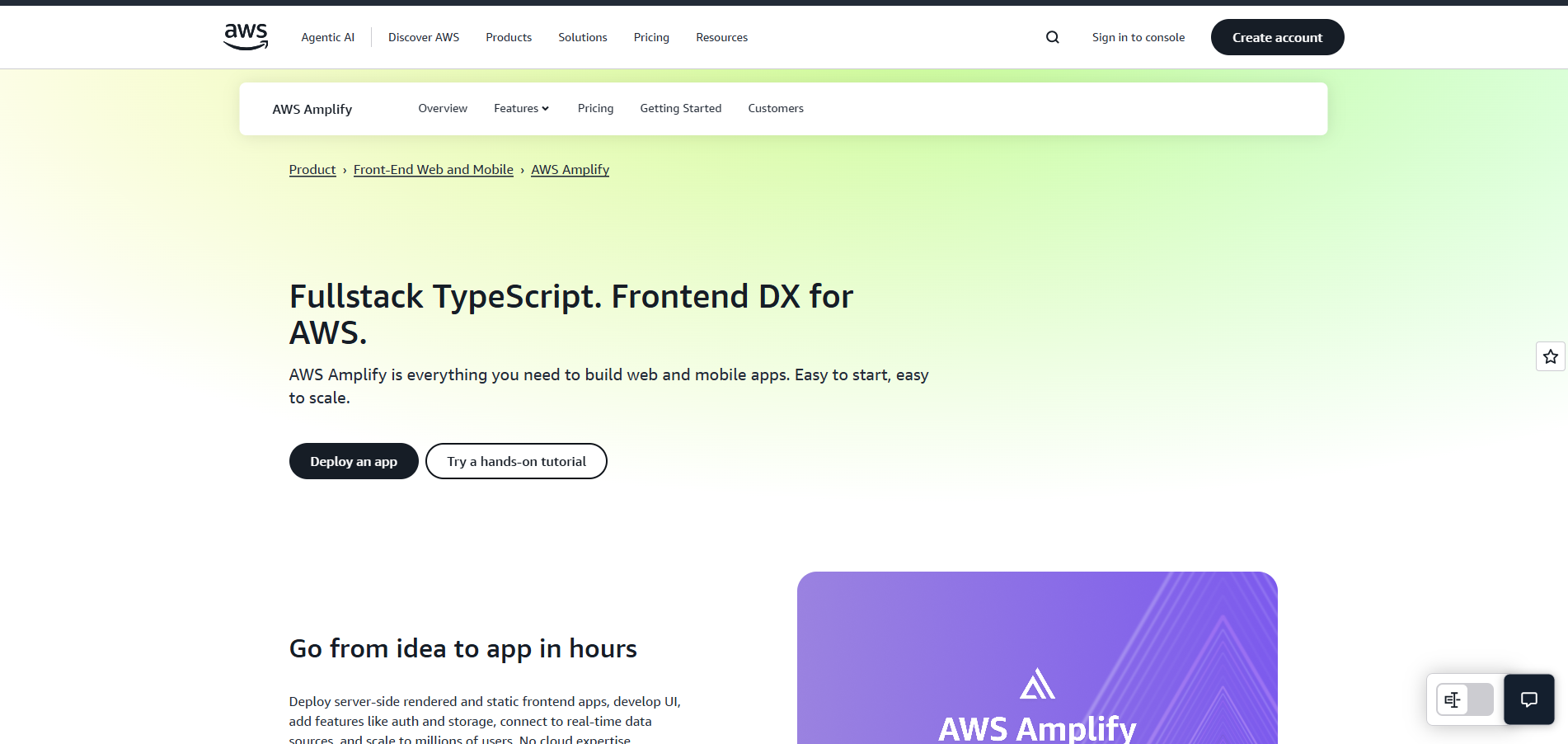
Starting price: Pay-per-use; free tier available
**Best for:** Teams building full-stack apps in the AWS ecosystem who want a managed frontend-and-backend deployment experience without configuring EC2, ECS, or Lambda manually.
AWS Amplify provides a managed deployment experience layered on top of AWS infrastructure, Git-driven deployments, automatic SSL, CDN, serverless backend functions, managed authentication, and database integrations (DynamoDB, Aurora Serverless). For teams committed to AWS who find Northflank's infrastructure abstraction appealing but want to stay within AWS's ecosystem, Amplify offers a familiar path.
**The tradeoff:** Amplify's backend abstraction is opinionated and can become limiting for complex architectures. Pricing is usage-based and can become unpredictable at scale without careful monitoring. And like all AWS services, configuration complexity grows quickly beyond basic use cases.
**Pros:**
* Deep AWS ecosystem integration
* Managed authentication, storage, APIs in one platform
* Generous free tier
* Global AWS infrastructure and CDN
**Cons:**
* Opinionated backend, limits complex architectures
* Pricing unpredictable at scale
* AWS lock-in
* Significant configuration required beyond basic use cases
AWS Amplify's IAM complexity and unpredictable billing at scale getting out of hand? See the [best AWS Amplify alternatives](https://kuberns.com/blogs/aws-amplify-alternatives/) for teams who want AWS reliability without AWS complexity
## Summary Table: Top Northflank Alternatives
Choosing the right Northflank alternative ultimately depends on the tech stack and growth stage. Some tools excel at quick front-end hosting, while others excel at handling complex backend workloads.
But for most full-stack teams, the challenge isn't just where to host, it's how to manage deployments, scaling, and cloud bills efficiently without adding DevOps overhead.
| Platform | Best For | Strength | Limitation | Ideal User |
| ------------------------- | ---------------------------------------------- | ------------------------------------------------------------------------ | -------------------- | ------------------------------------------------- |
| **Kuberns** | **Full-stack teams, Complex Backend projects** | **Agentic AI Deployment, One Click to go live with zero configurations** | **None** | **Startups, SMBs, Enterprises, Indie developers** |
| Render | Simple apps | Easy UI | Limited scaling | Small projects |
| Railway | MVPs & tests | Quick deploys | Lacks monitoring | Indie developers |
| Fly.io | Edge apps | Global performance | Manual management | Distributed apps |
| DigitalOcean App Platform | SMEs | Simple deployment | Manual optimization | Mid-size teams |
| Heroku | Early-stage projects | Simplicity | Expensive at scale | Startups |
| Vercel | Frontend | Top-tier UI | Weak backend support | Frontend teams |
| Qovery | DevOps-heavy orgs | Multi-cloud | Complex setup | Enterprises |
| Google Cloud Run | Serverless workloads | Reliable and scalable | Technical setup | GCP users |
| AWS Amplify | Enterprise apps | AWS ecosystem | High learning curve | Large teams |
## Ready to Move Beyond Northflank?
Northflank got you further than raw infrastructure would have. But if it's now the thing your team manages instead of the thing that manages itself, that's the signal to migrate.
Kuberns is built for exactly this moment. The teams that switch from Northflank to Kuberns aren't switching because Northflank broke, they're switching because they realised their DevOps time, infrastructure spend, and platform configuration overhead were all costs that a managed AI cloud eliminates.
Connect your GitHub repo. Set your environment variables. The agentic AI handles everything from here, deployment, scaling, monitoring, cost optimisation on AWS infrastructure, automatically, without your team touching a cluster.
[See how Kuberns Agentic AI Works](https://kuberns.com/)
### 2. Qovery: Best for BYOC and Multi-Cloud Teams

Starting price: Free tier (up to 100 deployments/month); paid plans scale with usage
**Best for:** DevOps-heavy teams and enterprises who want Kubernetes-native deployments running in their own AWS, GCP, or Azure account, full infrastructure ownership with a managed platform experience on top.
Qovery is the most direct answer to Northflank's vendor lock-in problem. Instead of running on Qovery's infrastructure, your workloads deploy into your own cloud account. You keep data residency control, cost transparency, and the ability to inspect and modify the underlying infrastructure at any time. Qovery supports multi-cloud deployments, Terraform and Helm integration, environment duplication for ephemeral preview environments, and SOC 2/HIPAA compliance.[ ](https://www.qovery.com/blog/northflank-alternatives)
**The tradeoff:** Qovery requires meaningful Kubernetes and DevOps knowledge to configure well. It's powerful for teams that have that expertise, less suitable for developers who want to avoid infrastructure decisions entirely.
**Pros:**
* Full BYOC, runs in your own AWS, GCP, or Azure account
* Multi-cloud and on-premise support
* SOC 2 and HIPAA compliance
* Strong ephemeral environment support for preview and staging
* Terraform and Helm integration for teams with IaC workflows
**Cons:**
* Requires Kubernetes knowledge for full control
* Configuration complexity higher than Northflank or Kuberns
* Pricing at scale can be expensive with additional deployment minutes
* Multi-cloud configuration adds complexity for smaller teams
Qovery's Kubernetes complexity pushing your team toward simpler options? See the [best Qovery alternatives](https://kuberns.com/blogs/qovery-alternatives/) for teams who want managed without the overhead
### 3. Render: Best Managed PaaS for Predictable Pricing

Starting price: $7/month per service
**Best for:** Full-stack teams and SaaS builders who came from Heroku and want a modern managed platform with straightforward pricing, background worker support, and no Kubernetes to touch.
Render is consistently the first recommendation for teams leaving Northflank who find its configuration overhead too heavy. It offers Git-driven deploys, automatic SSL, managed PostgreSQL, background workers, cron jobs, and a global CD, all without any infrastructure configuration. Pricing is flat per-service monthly, which is more predictable than usage-based models at moderate scale.
**The tradeoff:** Render's automation is solid for standard apps but lacks Northflank's CI/CD depth and Kuberns' AI-driven scaling for teams with complex, high-traffic workloads.
**Pros:**
* Predictable per-service monthly pricing
* Background workers and cron jobs built in
* Managed PostgreSQL and Redis included
* Zero infrastructure configuration
* Git-based automatic deploys with rollback
**Cons:**
* Per-service pricing compounds for complex multi-service architectures
* Monitoring and scaling less sophisticated than Northflank or Kuberns
* Free tier has cold start delays
* Less CI/CD depth than Northflank
Running multiple services on Render and watching per-service costs stack up? See what [Render users switch to when pricing stops making sense](https://kuberns.com/blogs/best-render-alternatives/)
### 4. Railway: Best for Fast MVP Deployment

Starting price: $5/month credit (usage-based beyond)
**Best for:** Indie developers, side projects, and early-stage startups who want the fastest path from GitHub repo to live app without any platform configuration.
Railway is the speed-first alternative in this list. Connect a repo, deploy, done, no environments to configure, no pipelines to wire up, no Kubernetes concepts to learn. Its dashboard is clean, database provisioning is one-click, and the time-to-live for a new project is measured in minutes. For teams at the prototype-to-MVP stage who find Northflank's feature surface overwhelming, Railway removes all of that friction.
**The tradeoff:** Railway's usage-based pricing can spike unpredictably for high-traffic applications, and it lacks Northflank's enterprise-grade CI/CD and observability depth for production workloads.
**Pros:**
* Clean, minimal dashboard
* One-click databases, background workers, cron jobs
* Git-based automatic deploys
**Cons:**
* Usage-based pricing spikes unpredictably at scale
* Per-service costs compound in multi-service architectures
* Less production depth than Northflank or Kuberns
* No BYOC or enterprise compliance options
Is the railway deployment cost hitting unpredictable spikes as traffic grows? See [why teams switch away from Railway and what they move to instead](https://kuberns.com/blogs/best-railway-alternatives/)
### 5. DigitalOcean App Platform: Best for Infrastructure Ownership with Managed Simplicity

Starting price: From $5/month
**Best for:** Teams who want to own their cloud infrastructure but don't need the full Kubernetes complexity of Northflank, a middle ground between raw VPS and full managed PaaS.
DigitalOcean App Platform sits between infrastructure and platform. You get managed deployments, automatic scaling, built-in databases, and a clean UI but on DigitalOcean's predictable, developer-friendly infrastructure rather than a proprietary managed platform. For teams who specifically want to avoid Northflank's vendor lock-in without going all-in on BYOC complexity, DigitalOcean offers a clean middle path.
**The tradeoff:** DigitalOcean App Platform still requires manual scaling decisions and monitoring setup. It's simpler than Northflank but less automated than Kuberns or Railway.
**Pros:**
* Predictable DigitalOcean infrastructure pricing
* Managed databases, static sites, workers in one platform
* Clean UI, strong documentation
* No proprietary lock-in: you own the infra
**Cons:**
* Manual scaling decisions required
* Less CI/CD depth than Northflank
* Monitoring requires additional setup
* Global region coverage is smaller than AWS or GCP
Outgrowing DigitalOcean App Platform as workloads get more complex? See the [best DigitalOcean alternatives](https://kuberns.com/blogs/digitalocean-alternatives/) for teams that need more automation
### 6. Fly.io: Best for Globally Distributed Low-Latency Apps

Starting price: Pay-as-you-go; free allowances included
**Best for:** Developers building latency-sensitive applications, real-time APIs, or globally distributed services who need to run workloads close to users across multiple regions.
Fly.io takes a different approach to managed deployment instead of a single-region or few-region setup, it lets you deploy Docker containers to 30+ regions globally with low-latency routing. For applications where response time to users in multiple geographies matters, Fly.io offers infrastructure depth that Northflank's standard plans don't match. It's popular with developers building multiplayer games, real-time collaboration tools, and globally distributed APIs.
**The tradeoff:** Fly.io requires Docker knowledge and has a steeper CLI-first learning curve than Northflank or Render. It's not the right choice for teams who want a UI-driven workflow.
**Pros:**
* 30+ global regions with automatic traffic routing
* Low-latency edge deployments
* Postgres included with automatic failover
* Docker-native, flexible workload support
**Cons:**
* CLI-first: less beginner-friendly than Northflank or Render
* Requires Docker knowledge
* Pricing complexity increases for multi-region setups
* Less managed CI/CD than Northflank
Fly.io's machine management and regional complexity becoming harder to justify? See the [best Fly.io alternatives for teams](https://kuberns.com/blogs/fly-io-alternatives-2025/) who want global reach without the ops overhead
### 7. Heroku: Best for Teams Who Need a Proven Enterprise Ecosystem

Starting price: \~$5/month (Eco dynos)
**Best for:** Teams that need battle-tested managed PaaS with a massive add-on ecosystem, enterprise SLAs, and compliance support and don't mind paying a premium for that track record.
Heroku pioneered Git-push deployments and its model still works. Its add-on marketplace is unmatched in breadth, databases, caches, monitoring, email, logging, SMS, all composable without writing infrastructure config. Enterprise support, SLAs, and compliance certifications are available for production-critical workloads.
**The tradeoff:** Heroku removed its free tier in 2022, innovation pace has slowed considerably, and costs at scale are significantly higher than newer platforms. Teams that outgrow Heroku typically move to Railway, Render, or Kuberns.
**Pros:**
* Massive add-on ecosystem, hundreds of composable services
* Enterprise SLAs and compliance support
* Git-push deployment with zero config
* Longest track record in managed PaaS
**Cons:**
* No free tier since 2022
* Very expensive at scale compared to Kuberns or Railway
* The innovation pace has slowed significantly since the Salesforce acquisition
* Limited control compared to Northflank or Qovery
Heroku dyno costs are eating your budget, and add-on bills are getting unpredictable? See the [best Heroku alternatives ](https://kuberns.com/blogs/the-ultimate-guide-to-heroku-alternatives-in-2025/)developers are switching to in 2026
### 8. Vercel: Best for Frontend-Heavy Teams

**Starting price:** Free tier; Pro from $20/month per user
**Best for:** Frontend developers building Next.js, React, Svelte, or modern framework applications who want the best possible deployment experience for frontend workloads, with no backend requirements.
Vercel built the gold standard for frontend deployment. Automatic Git integration, instant preview environments per PR, global edge network, and image optimization, all wired up without config. For Next.js specifically, Vercel's performance is unmatched. Teams using Northflank primarily for frontend deployments and paying for capabilities they don't need will find Vercel significantly simpler and often cheaper for that specific use case.
**The tradeoff:** Vercel is not a backend deployment platform. For full-stack applications with APIs, background workers, and databases, Kuberns, Railway, or Render are better fits.
**Pros:**
* Best-in-class frontend deployment experience
* Instant preview environments per branch and PR
* Global edge network, automatic CDN
* Unmatched Next.js support
**Cons:**
* Not suited for backend-heavy or full-stack workloads
* Per-user pricing gets expensive for larger teams
* Bandwidth overages spike costs at scale
* Serverless function limits hit quickly for complex APIs
Vercel bill crossing $50-100/month or hitting backend limitations on a full-stack project? See the [best Vercel alternatives](https://kuberns.com/blogs/best-vercel-alternatives/) that support both frontend and backend
### 9. Google Cloud Run: Best for Serverless Container Teams on GCP

**Starting price:** Pay-per-use; generous free tier
**Best for:** Teams already in the Google Cloud ecosystem who want fully managed serverless container deployments without managing Kubernetes clusters with GCP's global infrastructure and integrations.
[Google Cloud Run](https://kuberns.com/blogs/google-cloud-alternatives/) lets you deploy containerized apps without managing servers or clusters. You push a container image, define scaling parameters, and Cloud Run handles the rest, including scaling to zero when idle. It integrates natively with GCP services (Cloud SQL, Pub/Sub, BigQuery, Secret Manager) and supports any language or framework that runs in a container. For teams already invested in GCP tooling, it's a natural fit.
**The tradeoff:** Cloud Run requires GCP knowledge, IAM configuration, and understanding of GCP networking. It's not beginner-friendly, and for teams outside the GCP ecosystem, the setup overhead is significant.
**Pros:**
* Scales to zero, no charges when idle
* Native GCP integration (Cloud SQL, Pub/Sub, BigQuery)
* Supports any containerized workload
* Enterprise-grade GCP infrastructure
**Cons:**
* Requires GCP knowledge and IAM configuration
* Not beginner-friendly, steep learning curve outside GCP ecosystem
* GCP vendor lock-in
* Less unified CI/CD than Northflank
### 10. AWS Amplify: Best for AWS-Native Full-Stack Teams

Starting price: Pay-per-use; free tier available
**Best for:** Teams building full-stack apps in the AWS ecosystem who want a managed frontend-and-backend deployment experience without configuring EC2, ECS, or Lambda manually.
AWS Amplify provides a managed deployment experience layered on top of AWS infrastructure, Git-driven deployments, automatic SSL, CDN, serverless backend functions, managed authentication, and database integrations (DynamoDB, Aurora Serverless). For teams committed to AWS who find Northflank's infrastructure abstraction appealing but want to stay within AWS's ecosystem, Amplify offers a familiar path.
**The tradeoff:** Amplify's backend abstraction is opinionated and can become limiting for complex architectures. Pricing is usage-based and can become unpredictable at scale without careful monitoring. And like all AWS services, configuration complexity grows quickly beyond basic use cases.
**Pros:**
* Deep AWS ecosystem integration
* Managed authentication, storage, APIs in one platform
* Generous free tier
* Global AWS infrastructure and CDN
**Cons:**
* Opinionated backend, limits complex architectures
* Pricing unpredictable at scale
* AWS lock-in
* Significant configuration required beyond basic use cases
AWS Amplify's IAM complexity and unpredictable billing at scale getting out of hand? See the [best AWS Amplify alternatives](https://kuberns.com/blogs/aws-amplify-alternatives/) for teams who want AWS reliability without AWS complexity
## Summary Table: Top Northflank Alternatives
Choosing the right Northflank alternative ultimately depends on the tech stack and growth stage. Some tools excel at quick front-end hosting, while others excel at handling complex backend workloads.
But for most full-stack teams, the challenge isn't just where to host, it's how to manage deployments, scaling, and cloud bills efficiently without adding DevOps overhead.
| Platform | Best For | Strength | Limitation | Ideal User |
| ------------------------- | ---------------------------------------------- | ------------------------------------------------------------------------ | -------------------- | ------------------------------------------------- |
| **Kuberns** | **Full-stack teams, Complex Backend projects** | **Agentic AI Deployment, One Click to go live with zero configurations** | **None** | **Startups, SMBs, Enterprises, Indie developers** |
| Render | Simple apps | Easy UI | Limited scaling | Small projects |
| Railway | MVPs & tests | Quick deploys | Lacks monitoring | Indie developers |
| Fly.io | Edge apps | Global performance | Manual management | Distributed apps |
| DigitalOcean App Platform | SMEs | Simple deployment | Manual optimization | Mid-size teams |
| Heroku | Early-stage projects | Simplicity | Expensive at scale | Startups |
| Vercel | Frontend | Top-tier UI | Weak backend support | Frontend teams |
| Qovery | DevOps-heavy orgs | Multi-cloud | Complex setup | Enterprises |
| Google Cloud Run | Serverless workloads | Reliable and scalable | Technical setup | GCP users |
| AWS Amplify | Enterprise apps | AWS ecosystem | High learning curve | Large teams |
## Ready to Move Beyond Northflank?
Northflank got you further than raw infrastructure would have. But if it's now the thing your team manages instead of the thing that manages itself, that's the signal to migrate.
Kuberns is built for exactly this moment. The teams that switch from Northflank to Kuberns aren't switching because Northflank broke, they're switching because they realised their DevOps time, infrastructure spend, and platform configuration overhead were all costs that a managed AI cloud eliminates.
Connect your GitHub repo. Set your environment variables. The agentic AI handles everything from here, deployment, scaling, monitoring, cost optimisation on AWS infrastructure, automatically, without your team touching a cluster.
[See how Kuberns Agentic AI Works](https://kuberns.com/)
 ## How to Choose the Right Northflank Alternative for Your Team?
Finding the right Northflank alternative isn't just about features. It's about how well a platform fits your workflow, your scale, and your budget. Every team has unique priorities, but there are three key factors that make the biggest difference when choosing the right deployment platform.
### 1. Match the Platform to Your Workflow
Before comparing pricing or features, start with how your team works. If you manage both frontend and backend deployments, you need a unified environment that supports multiple frameworks, CI/CD pipelines, and automatic scaling.
Platforms designed for single-purpose hosting might look simple at first but often create silos as projects grow.
### 2. Evaluate Long-Term Cost and Scalability
Many teams switch from Northflank because their costs increase as traffic grows. Platforms that charge per seat or per instance can look affordable early on but become unpredictable later.
Choose a solution with usage-based billing and automated cost control.
This approach ensures your infrastructure scales with your user base, not your budget.
### 3. Look for Automation That Saves Time, Not Adds Complexity
It's easy to confuse "features" with "efficiency."
A platform can have endless options, but if every deployment requires manual configuration or scripting, your team spends more time managing infrastructure than building products.
The right platform should automate the critical but repetitive parts of DevOps, CI/CD, scaling, monitoring, and backups, while giving you control over key configurations.
## Final Verdict: Build Faster, Deploy Smarter, Scale Effortlessly
As the developer ecosystem evolves, teams are no longer looking for tools that just deploy code, they're looking for platforms that understand growth. And that's the main reason so many developers are exploring Northflank alternatives today.
Each platform on this list offers something unique: Heroku's simplicity, Vercel's frontend focus, Fly.io's edge reach, Qovery's multi-cloud flexibility, but none bring together everything that modern full-stack teams need in one place.
That's where Kuberns stands out.
Whether you're an early-stage startup or an enterprise team managing multiple environments, Kuberns gives you what every developer really wants: less infrastructure to manage and more time to build.
So if you're evaluating Northflank alternatives, the smartest choice isn't just another platform, it's a faster, easier, and more intelligent way to deploy.
[Start deploying with Kuberns](https://kuberns.com)
## How to Choose the Right Northflank Alternative for Your Team?
Finding the right Northflank alternative isn't just about features. It's about how well a platform fits your workflow, your scale, and your budget. Every team has unique priorities, but there are three key factors that make the biggest difference when choosing the right deployment platform.
### 1. Match the Platform to Your Workflow
Before comparing pricing or features, start with how your team works. If you manage both frontend and backend deployments, you need a unified environment that supports multiple frameworks, CI/CD pipelines, and automatic scaling.
Platforms designed for single-purpose hosting might look simple at first but often create silos as projects grow.
### 2. Evaluate Long-Term Cost and Scalability
Many teams switch from Northflank because their costs increase as traffic grows. Platforms that charge per seat or per instance can look affordable early on but become unpredictable later.
Choose a solution with usage-based billing and automated cost control.
This approach ensures your infrastructure scales with your user base, not your budget.
### 3. Look for Automation That Saves Time, Not Adds Complexity
It's easy to confuse "features" with "efficiency."
A platform can have endless options, but if every deployment requires manual configuration or scripting, your team spends more time managing infrastructure than building products.
The right platform should automate the critical but repetitive parts of DevOps, CI/CD, scaling, monitoring, and backups, while giving you control over key configurations.
## Final Verdict: Build Faster, Deploy Smarter, Scale Effortlessly
As the developer ecosystem evolves, teams are no longer looking for tools that just deploy code, they're looking for platforms that understand growth. And that's the main reason so many developers are exploring Northflank alternatives today.
Each platform on this list offers something unique: Heroku's simplicity, Vercel's frontend focus, Fly.io's edge reach, Qovery's multi-cloud flexibility, but none bring together everything that modern full-stack teams need in one place.
That's where Kuberns stands out.
Whether you're an early-stage startup or an enterprise team managing multiple environments, Kuberns gives you what every developer really wants: less infrastructure to manage and more time to build.
So if you're evaluating Northflank alternatives, the smartest choice isn't just another platform, it's a faster, easier, and more intelligent way to deploy.
[Start deploying with Kuberns](https://kuberns.com)
 ## Frequently Asked Questions
### 1. What are the best Northflank alternatives in 2026?
The best Northflank alternatives in 2026 are Kuberns, Render, Railway, Fly.io, DigitalOcean App Platform, Heroku, Vercel, Qovery, Google Cloud Run, and AWS Amplify. Among them, Kuberns stands out for its Agentic AI automation, AWS-based reliability, and up to 40% lower infrastructure costs with zero DevOps overhead.
### 2. Why do developers look for alternatives to Northflank?
While Northflank offers simplicity, developers often switch because of limited scaling flexibility, pricing complexity, and a lack of advanced automation. Modern full-stack teams prefer platforms that integrate CI/CD, monitoring, and cost optimisation in one environment, something Kuberns provides by default.
### 3. How does Kuberns compare to Northflank?
Kuberns simplifies everything Northflank does and automates what it doesn't. It offers one-click deployments, built-in CI/CD pipelines, AI-based scaling, and transparent AWS-backed pricing. Unlike Northflank, Kuberns automatically monitors and optimises infrastructure to keep performance high and costs low.
### 4. Can I migrate my projects from Northflank to Kuberns easily?
Yes. Migrating to Kuberns is straightforward. You can connect your Git repository directly, deploy your services, and let the platform handle containerization, scaling, and monitoring automatically. The process typically takes just a few minutes, and you can run both environments in parallel during migration to avoid downtime.
### 5. Which Northflank alternative is best for full-stack teams?
For full-stack developers managing both backend APIs and frontend apps, Kuberns offers the most complete solution. It supports multiple frameworks, automates scaling, integrates logging and monitoring, and keeps infrastructure costs predictable, all in one platform.
### 6. Does Kuberns work for enterprises as well as startups?
Absolutely. Kuberns is designed to scale with your business. Startups use it for quick MVP launches without DevOps setup, while enterprises rely on it for large-scale, multi-environment deployments with full visibility, compliance, and cost control.
### 8. Does Northflank have a free tier?
Yes. Northflank offers a free tier but it requires a credit card to activate. The free plan includes limited compute for personal projects. For teams that want a free tier without a credit card requirement, Render offers 750 free hours per month and Google Cloud Run has a generous free tier with no credit card needed for the trial.
### 9. How much does Northflank cost per month for small teams?
Northflank's free tier requires a credit card and scales based on compute and storage usage. For small teams running multiple services, costs can grow quickly. Alternatives like Kuberns offer transparent usage-based pricing with up to 40% savings on AWS infrastructure, making them more predictable and cost-effective as teams scale.
---
- [More Alternatives articles](https://kuberns.com/blogs/category/alternatives/1/)
- [All articles](https://kuberns.com/blogs/)
## Frequently Asked Questions
### 1. What are the best Northflank alternatives in 2026?
The best Northflank alternatives in 2026 are Kuberns, Render, Railway, Fly.io, DigitalOcean App Platform, Heroku, Vercel, Qovery, Google Cloud Run, and AWS Amplify. Among them, Kuberns stands out for its Agentic AI automation, AWS-based reliability, and up to 40% lower infrastructure costs with zero DevOps overhead.
### 2. Why do developers look for alternatives to Northflank?
While Northflank offers simplicity, developers often switch because of limited scaling flexibility, pricing complexity, and a lack of advanced automation. Modern full-stack teams prefer platforms that integrate CI/CD, monitoring, and cost optimisation in one environment, something Kuberns provides by default.
### 3. How does Kuberns compare to Northflank?
Kuberns simplifies everything Northflank does and automates what it doesn't. It offers one-click deployments, built-in CI/CD pipelines, AI-based scaling, and transparent AWS-backed pricing. Unlike Northflank, Kuberns automatically monitors and optimises infrastructure to keep performance high and costs low.
### 4. Can I migrate my projects from Northflank to Kuberns easily?
Yes. Migrating to Kuberns is straightforward. You can connect your Git repository directly, deploy your services, and let the platform handle containerization, scaling, and monitoring automatically. The process typically takes just a few minutes, and you can run both environments in parallel during migration to avoid downtime.
### 5. Which Northflank alternative is best for full-stack teams?
For full-stack developers managing both backend APIs and frontend apps, Kuberns offers the most complete solution. It supports multiple frameworks, automates scaling, integrates logging and monitoring, and keeps infrastructure costs predictable, all in one platform.
### 6. Does Kuberns work for enterprises as well as startups?
Absolutely. Kuberns is designed to scale with your business. Startups use it for quick MVP launches without DevOps setup, while enterprises rely on it for large-scale, multi-environment deployments with full visibility, compliance, and cost control.
### 8. Does Northflank have a free tier?
Yes. Northflank offers a free tier but it requires a credit card to activate. The free plan includes limited compute for personal projects. For teams that want a free tier without a credit card requirement, Render offers 750 free hours per month and Google Cloud Run has a generous free tier with no credit card needed for the trial.
### 9. How much does Northflank cost per month for small teams?
Northflank's free tier requires a credit card and scales based on compute and storage usage. For small teams running multiple services, costs can grow quickly. Alternatives like Kuberns offer transparent usage-based pricing with up to 40% savings on AWS infrastructure, making them more predictable and cost-effective as teams scale.
---
- [More Alternatives articles](https://kuberns.com/blogs/category/alternatives/1/)
- [All articles](https://kuberns.com/blogs/)