Published
- 16 min read
Top Rancher Alternatives for Developers Who Want to Build, Not Manage
Why Teams Are Looking Beyond Rancher in 2025
When Rancher first launched, it was a breakthrough for container management. It gave teams a powerful way to manage Kubernetes clusters, deploy workloads, and orchestrate infrastructure at scale, all through an open-source, self-hosted platform.
But in 2025, that strength has also become its biggest challenge.
Rancher still gives you control, but it also expects you to manage everything, from node scaling to cluster upgrades.
For small developer teams or fast-moving startups, that level of management often turns into maintenance fatigue.
The truth is, not every team needs to manage Kubernetes.
Most just need to use it or, better yet, move beyond it.
That’s why more developers are switching to platforms that deliver the same performance without the DevOps complexity.
Today’s Rancher alternatives aren’t just control panels for Kubernetes.
They’re full-fledged, AI-powered deployment platforms that handle builds, scaling, monitoring, and cost optimisation automatically, letting developers focus entirely on shipping products.
Where Rancher Gets Complicated
Over time, Rancher has become too heavy for the very teams it helped early on.
Its power comes with complexity, and that’s where many developers start to feel stuck.
1. Setup and Maintenance Overhead
Deploying Rancher isn’t as simple as running a Git push. You need infrastructure, nodes, clusters, and ongoing maintenance to keep everything secure and updated.
For small teams, that’s a full-time DevOps job.
2. Kubernetes Expertise Required
While Rancher simplifies Kubernetes, it doesn’t eliminate it.
Teams still need to understand manifests, pods, services, and ingress rules, meaning a steep learning curve for developers who just want to deploy their app and move on.
3. Limited Automation
Rancher gives you control, but not much automation. Scaling, resource optimisation, and monitoring are still largely manual.
As a result, performance tuning and cost management can become guesswork.
4. Hidden Infrastructure Costs
Because Rancher is self-hosted, teams are responsible for all underlying compute, networking, and storage.
That means extra costs for VMs, security patches, and downtime prevention, expenses that managed platforms now handle automatically.
In short, Rancher remains a powerful tool for Kubernetes experts, but for most developers, it feels like managing an entire data centre just to get an app online. That’s why the trend in 2025 is shifting toward simplified, managed alternatives. Platforms that deliver the same power without the DevOps pain.
Why Developers Want Simpler Kubernetes Solutions?
Ask any developer what frustrates them most about modern cloud setups, and you’ll likely get the same answer: too much time spent managing, not enough time building.
Rancher was designed for control, but control comes at a cost.
You still need to spin up clusters, configure nodes, manage namespaces, and troubleshoot scaling issues when traffic spikes.
For large DevOps teams, that’s manageable.
For small development teams or startups, it’s a constant distraction from what actually matters: shipping features and improving products.
Developers Don’t Want to Be Cluster Managers
The promise of Kubernetes was to make scaling applications simple, yet tools like Rancher often end up recreating the same complexity, just behind a new dashboard.
Developers today expect cloud platforms to handle scaling, failover, and provisioning automatically, not to hand them a control panel full of knobs and YAML files.
They want platforms that work with a single click. Connect a Git repo, deploy, and let automation handle the rest.
Time Is the New Currency
Every hour spent debugging a deployment or managing a cluster is an hour not spent on building new features or fixing real user problems.
That’s why teams are increasingly shifting from self-managed orchestration to fully managed deployment platforms like Kuberns, Render, and Fly.io, where time-to-deploy is measured in minutes, not days.
The Shift Toward AI-Driven Automation
The next generation of cloud platforms is moving beyond manual scaling and monitoring.
AI now plays a huge role in optimising cloud performance, predicting traffic surges, scaling containers automatically, and even reducing unused compute costs in real time.
Instead of hiring a full DevOps team, developers can now rely on AI-powered orchestration to handle scaling intelligently.
That’s something traditional Kubernetes setups like Rancher were never designed to do.
Cost, Simplicity, and Focus
The appeal of newer platforms is clear: lower operational costs, zero infrastructure management, and fewer moving parts.
You don’t need to manage clusters to build scalable apps anymore, and that’s exactly what’s driving this wave of developers away from Rancher and toward simpler, smarter alternatives.
Developers aren’t abandoning Rancher because it’s outdated. They’re moving on because the way we build, deploy, and scale applications has fundamentally changed. They don’t want to manage Kubernetes; they want Kubernetes to manage itself.
Top Rancher Alternatives in 2025
The cloud landscape has evolved far beyond traditional Kubernetes management tools.
While Rancher helped teams tame container complexity, modern alternatives now focus on automation, scalability, and developer experience. So you can ship code without needing a DevOps army.
Here are the top Rancher alternatives in 2025 that developers actually prefer.
Kuberns: The AI-Powered Alternative Built for Developers
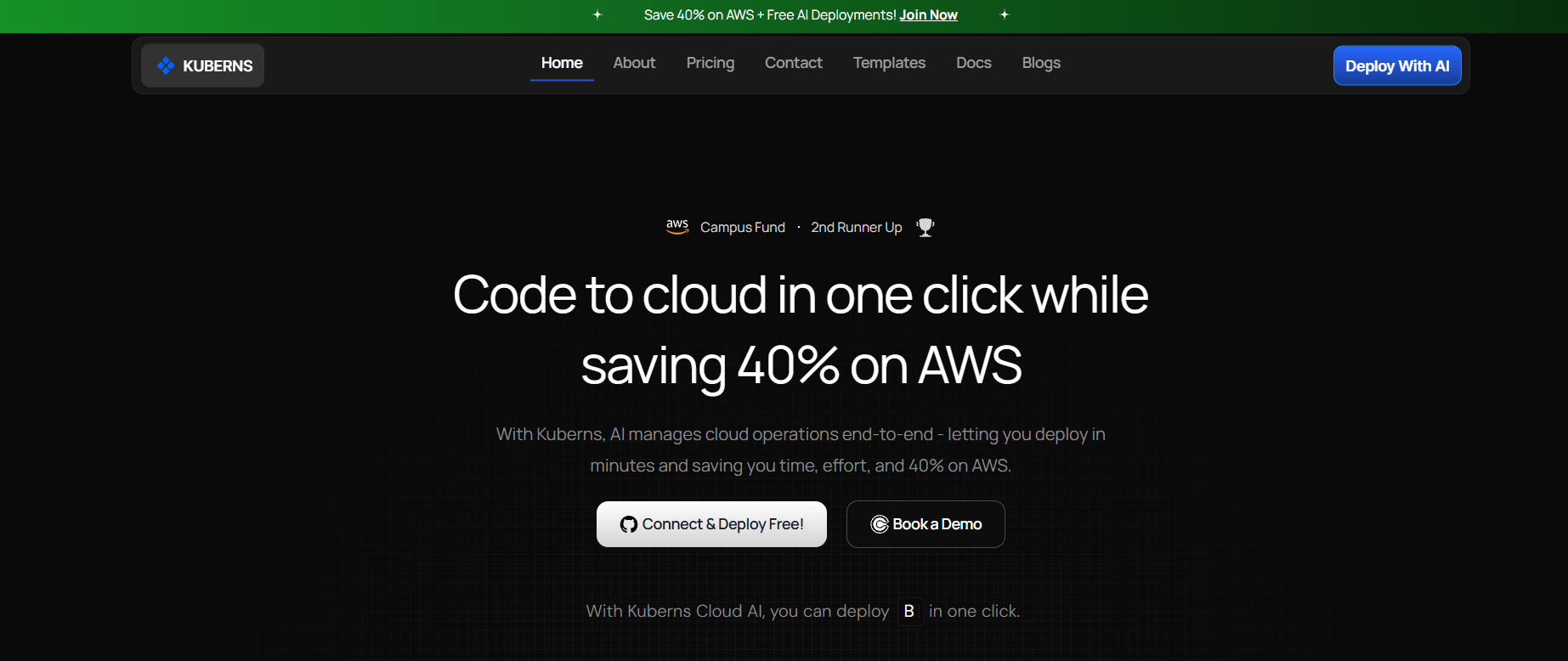 Best for: Teams that want full-stack deployment, scaling, and monitoring, without managing Kubernetes.
Kuberns represents the new generation of deployment platforms.
It’s built on AWS infrastructure but abstracts away all the complexity of managing nodes, clusters, or services.
You simply connect your GitHub repository, click deploy, and the AI engine handles everything from build to scale to performance optimisation.
Why developers choose Kuberns:
- Zero configuration: No YAMLs or complex manifests. Deployment happens in one click.
- AI-powered scaling: Automatically scales up or down based on real-time load.
- Integrated CI/CD: Build, deploy, and monitor directly in one dashboard.
- Full-stack support: Works for frontend, backend, APIs, databases, and background jobs.
Kuberns takes what Rancher did for Kubernetes management and turns it into something developers can actually use every day. Simple, fast, and cost-efficient.
It’s not a management tool; it’s a deployment platform that manages itself.
Koyeb: The Serverless PaaS Alternative
 Best for: Developers who want to deploy apps quickly without worrying about infrastructure.
Koyeb simplifies deployment with a serverless model where you just push your code and let the platform handle everything. It offers automatic scaling, built-in load balancing, and a smooth developer experience. Perfect for quick launches and small projects.
Pros:
- Fast deployment from Git
- Automatic scaling and routing
- Great for microservices and APIs
- Simple, developer-friendly UI
Limitations:
- Limited flexibility for complex apps
- Fewer integrations than larger PaaS platforms
If Rancher feels like too much setup and configuration, Koyeb offers a lightweight, managed alternative that gets you running fast.
But for larger apps or long-term scaling, here is the natural upgrade path.
Render: The Reliable Full-Stack Alternative
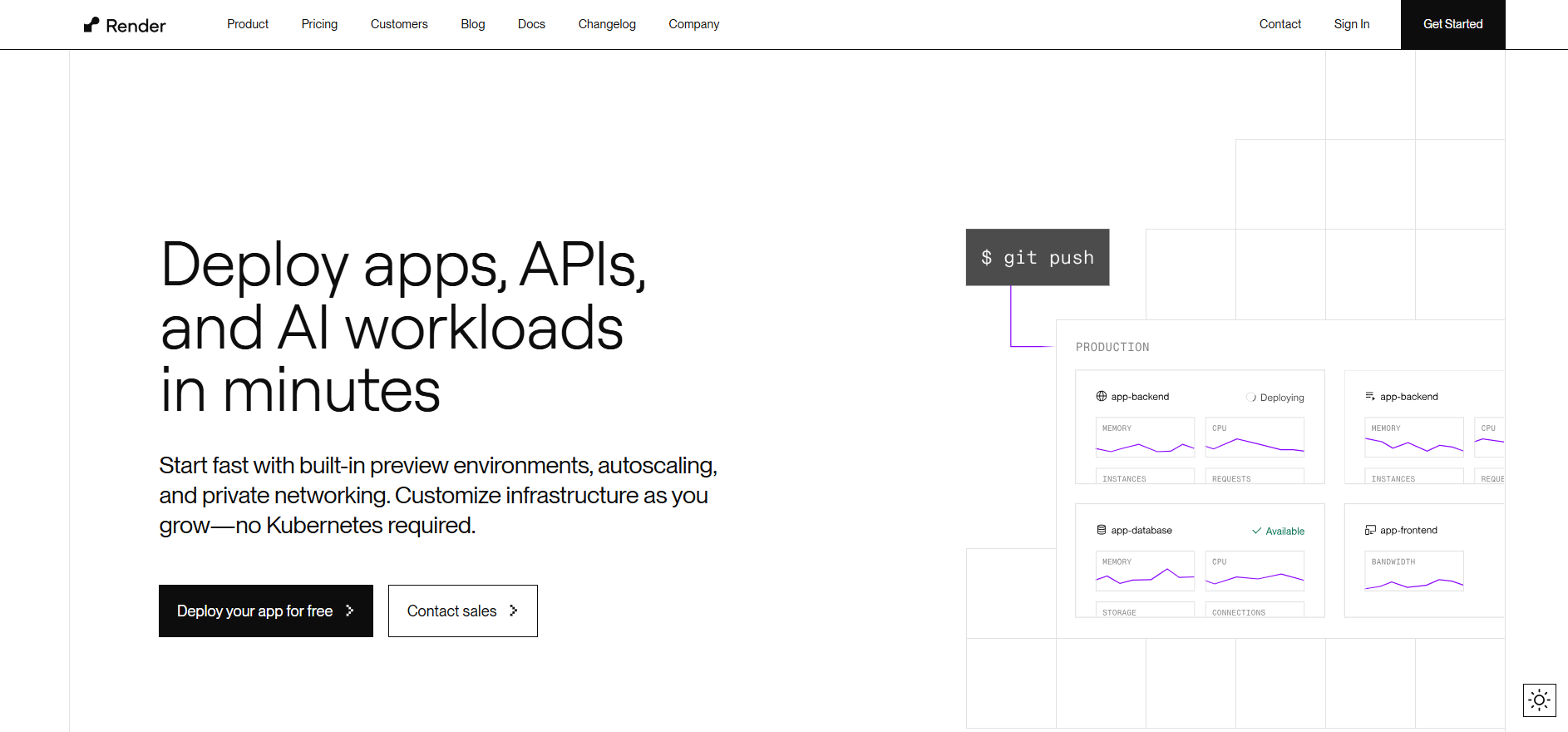 Best for: Teams migrating from self-managed tools like Rancher or Heroku.
Render provides full-stack app hosting, supporting web services, databases, and background workers with built-in CI/CD. It offers the convenience of managed hosting while maintaining developer-level flexibility.
Pros:
- Integrated database hosting
- Automatic Git deploys
- Easy setup for backend and frontend apps
- Predictable pricing
Limitations:
- Manual scaling and limited automation
- Costs rise quickly for production workloads
Render is a strong Rancher alternative for small teams who want simplicity, but if you need AI-based scaling and deeper automation, here are the best render alternatives that offer far more control with less effort.
Railway: The Lightweight, Developer-Friendly Platform
 Best for: Indie developers, hobby projects, and prototypes.
Railway is all about developer speed. You can deploy containers or web apps directly from GitHub in seconds, manage secrets, and run databases with minimal setup. It’s perfect for side projects or early-stage SaaS products.
Pros:
- Instant deploys from Git
- Integrated Postgres and Redis support
- Great developer UX
- Generous free tier
Limitations:
- Limited scaling for production workloads
- No deep automation or AI optimisation
Railway is a great starting point for small teams, but when you need production-grade scaling, these platforms become the next step up.
Fly.io: The Edge-Deployment Alternative
 Best for: Global teams and performance-focused apps.
Fly.io deploys your app close to users by running it across distributed edge servers. It’s designed for low-latency applications where speed is critical, and users are spread across multiple regions.
Pros:
- Global edge network
- Runs full-stack apps in Docker containers
- Great latency performance
- Ideal for real-time apps
Limitations:
- Complex setup for advanced routing
- Debugging distributed systems can be tricky
Fly.io is an excellent Rancher alternative if you need geographic reach and container-based performance. But for most teams, these fly.io competitors deliver the same performance benefits, without requiring regional setup or container maintenance.
DigitalOcean App Platform: The Managed Simplicity Alternative
 Best for: Small teams and developers migrating away from self-hosted setups.
DigitalOcean App Platform takes what developers love about traditional servers, transparency and affordability, and combines it with the convenience of a fully managed PaaS.
You can deploy apps directly from GitHub, run background workers, and scale containers automatically with minimal configuration.
Pros:
- Predictable, transparent pricing
- Built-in autoscaling and monitoring
- Easy integration with managed databases
- Ideal for startups and smaller production apps
Limitations:
- Lacks deep automation or AI optimisation
- Limited to specific data centres compared to global providers
DigitalOcean is great if you’re coming from Rancher and want stability without full DevOps control. But when you need automated scaling, predictive performance tuning, and AI optimisation, here are the Best DigitalOcean alternatives for you
Northflank: A Modern Platform With CI/CD Built In
 Best for: Teams that want an all-in-one DevOps workflow without the Kubernetes overhead.
Northflank combines code pipelines, container hosting, and deployment orchestration into one clean, modern interface.
It supports multiple environments and integrates easily with popular developer tools, making it an attractive choice for developers seeking Rancher-level functionality in a simpler package.
Pros:
- Built-in CI/CD pipelines
- Great developer UI
- Easy to configure and scale
- Integrated secret management
Limitations:
- Smaller ecosystem than Rancher
- Limited edge deployment or AI optimisation features
Northflank is a strong mid-tier Rancher alternative for teams that want control and visibility but don’t need deep Kubernetes customisation.
For teams that want the same power plus AI-based automation, here are the platforms that cover both worlds effortlessly.
CapRover: The Open-Source Self-Hosted Alternative
 Best for: Developers who still want full control of their infrastructure.
CapRover is an open-source PaaS that can be installed on any VPS or dedicated server. It uses Docker containers under the hood and provides one-click app deployment without Kubernetes complexity.
Pros:
- Fully open-source and free to use
- One-click deployments with Docker
- No vendor lock-in
- Lightweight compared to Rancher
Limitations:
- Requires manual setup and updates
- No built-in monitoring or AI scaling
- Relies on your own infrastructure reliability
CapRover is a great fit for advanced users who want freedom and self-hosting. However, for teams that prefer managed simplicity, these platforms offer a better long-term option, same container-based flexibility, zero maintenance.
Platform9: The Managed Kubernetes Bridge
 Best for: Organisations transitioning from self-managed Kubernetes to fully managed environments.
Platform9 positions itself as a “SaaS-managed Kubernetes” solution. It manages your clusters remotely while you retain control of infrastructure. It’s particularly useful for enterprises that have already invested in Kubernetes but want easier lifecycle management.
Pros:
- Kubernetes compatibility
- Automated cluster upgrades and scaling
- Centralised management from the cloud
- Enterprise-grade support
Limitations:
- Still requires Kubernetes knowledge
- Expensive for smaller teams or startups
Platform9 works well for hybrid or enterprise setups. But if you’re looking for a developer-first experience with full automation and lower costs, this platform replaces the need for both Kubernetes and cluster managers entirely.
Vercel: The Frontend-Focused Cloud Alternative
 Best for: Frontend developers deploying web apps and microservices.
Vercel offers a developer-centric platform for hosting frontend and serverless functions. While it’s not a direct Rancher replacement, many teams moving away from Kubernetes adopt Vercel for smaller services or frontend layers.
Pros:
- Seamless Git integration
- Fast global CDN
- Built-in preview environments
- Perfect for modern JavaScript frameworks
Limitations:
- Not suited for backend-heavy or containerised apps
- Higher cost for team scaling
Vercel handles frontend deployment beautifully, but for teams building complete, multi-service apps, these platforms deliver a full-stack deployment workflow with backend, API, and worker support.
Comparison Table: Rancher vs Top Alternatives
When comparing Rancher with modern platforms, the question isn’t just about managing Kubernetes. It’s about how much of that management you can eliminate.
Here’s how Rancher compares with today’s most developer-friendly alternatives:
| Platform | Key Strength | Ideal For | Setup Complexity | Automation Level |
|---|---|---|---|---|
| Kuberns | AI-powered deployment, scaling, and cost optimization | Developers, startups, and SaaS teams | Minimal | Full automation |
| Koyeb | Lightweight serverless deployment | Indie developers, APIs | Low | Moderate |
| Render | Full-stack managed hosting | Startups and SMBs | Medium | Partial |
| Railway | Quick Git-based deployment | Small apps and MVPs | Low | Partial |
| Fly.io | Edge-based global hosting | Distributed teams | Medium | Partial |
| DigitalOcean App Platform | Managed simplicity with scaling | Small teams | Medium | Partial |
| Northflank | Built-in CI/CD and container support | Developer teams | Medium | Partial |
| CapRover | Open-source, self-hosted PaaS | Technical users | High | Partial |
| Platform9 | Managed Kubernetes SaaS | Enterprises | High | Partial |
| Rancher | Multi-cluster Kubernetes control | Large DevOps teams | Complex | Manual |
The Shift From Management to Automation
A few years ago, tools like Rancher were essential because they gave teams the power to control Kubernetes at scale.
You could deploy containers, manage clusters, and handle multi-cloud environments, all from a single dashboard. It was a step forward for DevOps.
But 2025 looks different.
Developers no longer want to manage infrastructure; they want it to manage itself.
Rancher, and tools like it, still expect engineers to provision resources, manage clusters, and fine-tune workloads manually.
It’s powerful, but it’s also time-consuming and expensive. In contrast, the new wave of platforms has taken the opposite route: they automate everything that doesn’t directly involve writing code.
Automation Over Administration
The biggest shift in cloud development today is the move from administration to automation. Developers expect platforms to:
- Automatically scale based on usage.
- Optimise resources and reduce costs in real time.
- Monitor performance and alert to issues before downtime.
- Handle deployment pipelines without external tools.
Instead of spending hours managing clusters, developers can now focus on building new features and improving user experience, while the platform handles the infrastructure quietly in the background.
AI Is Changing Cloud Management Forever
Traditional DevOps tools rely on human configuration.
AI-powered platforms rely on adaptive intelligence, constantly analysing workloads, predicting demand spikes, and adjusting resources automatically.
This doesn’t just improve performance; it cuts costs significantly by eliminating idle compute waste and manual tuning.
For startups and growing teams, that’s a game-changer. It means less time firefighting and more time creating.
From Control to Clarity
Rancher offers control; Kuberns offers clarity.
With built-in monitoring, alerts, and predictive scaling, teams no longer need to switch between dashboards or spend days debugging infrastructure.
Everything from CI/CD to performance metrics lives in one clean interface.
The future of deployment isn’t about managing Kubernetes. It’s about never needing to touch it again. Platforms like Kuberns represent this shift, where automation isn’t just a feature, it’s the foundation.
Simplify Kubernetes, Amplify Development
Kubernetes changed how teams scale applications, but it also made cloud management harder than it should be.
Rancher tried to simplify that complexity, yet it still leaves developers maintaining clusters, fixing workloads, and juggling configurations.
The future isn’t about managing Kubernetes better. It’s about not needing to manage it at all.
That’s the direction Kuberns takes.
It gives you everything Rancher promises. Flexibility, performance, and control, but automates the hard parts with AI, so you can spend time building, not maintaining.
If your team is ready to move beyond cluster management and focus on real product development, it’s time to deploy the smarter way with Kuberns.
Explore The One-Click Deployment of Kuberns

Frequently Asked Questions (FAQ)
1. What are the best Rancher alternatives in 2025?
The best Rancher alternatives in 2025 include Kuberns, Render, Koyeb, Fly.io, Railway, and DigitalOcean App Platform. Among these, Kuberns stands out for offering complete automation, AI-powered scaling, integrated CI/CD, and up to 40% lower costs on AWS infrastructure.
2. Why are teams moving away from Rancher?
Most modern teams now prefer managed platforms like Kuberns, which handle deployment, scaling, and monitoring automatically with no cluster management needed.
3. Is Rancher still a good option for developers?
Rancher works well for enterprises and DevOps-heavy environments, but it’s not ideal for small teams or fast-moving startups. Developers looking for speed, automation, and lower overhead are finding that AI-driven PaaS platforms deliver the same benefits with far less setup.
4. Which Rancher alternative is easiest to use?
For simplicity and speed, Kuberns is one of the easiest Rancher alternatives. It eliminates configuration files, manual scaling, and Kubernetes complexity. You simply connect your GitHub repository, deploy, and let the platform handle everything.
5. Can Kuberns replace Rancher for containerised workloads?
Yes. Kuberns supports full-stack containerised deployments with AI-based optimisation, so you don’t need to manage Kubernetes directly. It’s built for developers who want container performance without DevOps overhead.
6. How does Kuberns differ from Rancher?
Rancher is a management tool for Kubernetes. You still handle clusters, scaling, and monitoring manually. Kuberns is a fully managed AI-powered PaaS. It automates build, deploy, scale, and monitor steps across AWS infrastructure, giving you the same control but none of the complexity.