Published
- 15 min read
Best CapRover Alternatives in 2025 for Modern App Deployment
Best CapRover Alternatives in 2025 for Developers and Teams
Introduction
CapRover is a popular open-source, self-hosted Platform as a Service (PaaS) that helps developers deploy and manage applications easily using Docker and Nginx. It is a great choice for developers who prefer control over their infrastructure without needing a complex Kubernetes setup.
However, as applications grow in size and complexity, the tasks of maintaining servers, handling scaling, and ensuring uptime begin to require more time and effort. At that point many teams start exploring CapRover alternatives that offer the same simplicity but with enhanced automation, better scalability, and clearer cost visibility.
In this article, we will explore the best CapRover alternatives in 2025, including Kuberns, a fully managed AWS-based platform that combines the ease of PaaS with the power of automation and cost optimisation.
What to Look for in a CapRover Alternative
When evaluating alternatives to CapRover, it is important to look beyond basic deployment features and focus on what will matter as your application grows. Early-stage setups might work with minimal automation, but as traffic, users, and features expand, you need a platform that can handle scaling, security, and monitoring without constant manual work.
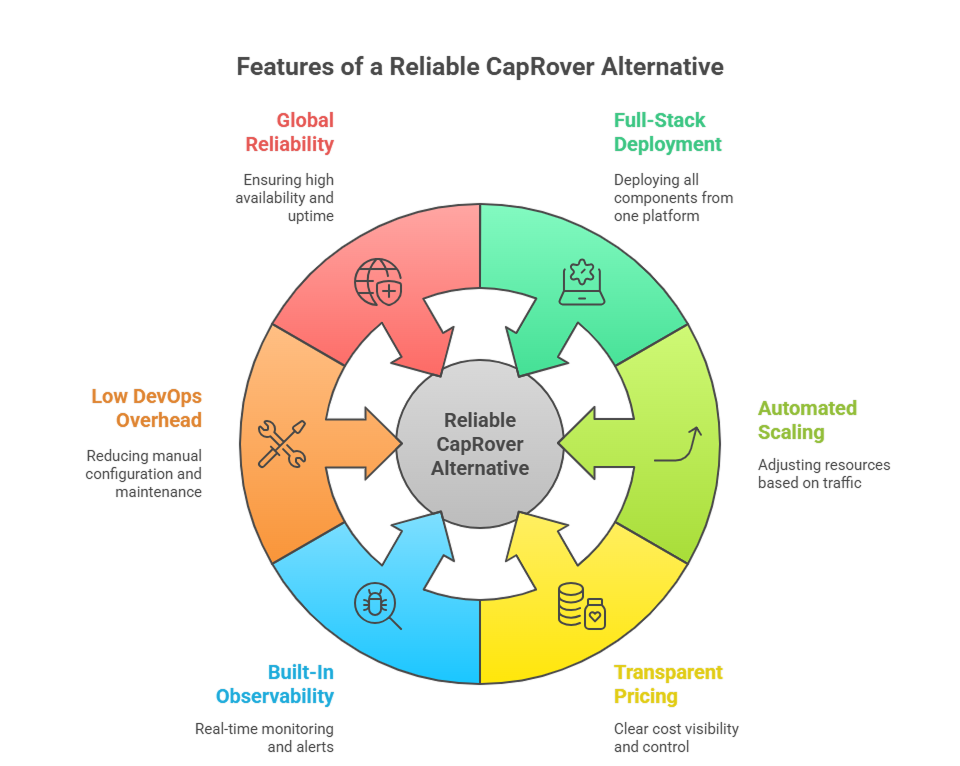 A reliable CapRover alternative should include:
- Full-stack deployment support: The ability to deploy frontend, backend, APIs, databases, and containers from a single platform. This helps maintain consistency and saves time when managing multiple services.
- Automated scaling and provisioning: Scaling should not depend on manual server adjustments. Platforms that automatically adapt to traffic patterns keep performance steady while optimizing costs.
- Transparent pricing and resource visibility: Many teams struggle with unpredictable cloud costs. Look for a platform that clearly shows usage and helps you control expenses. You can also learn how to manage this better in Cloud Cost Optimisation.
- Built-in observability: Real-time logs, performance metrics, and alerts are critical for diagnosing issues quickly. Having these tools built in avoids dependency on third-party services.
- Low DevOps overhead: Reducing manual setup, CI/CD configuration, and maintenance helps teams focus on building features instead of managing infrastructure. For example, platforms that support One-Click Automated Deployment drastically simplify operations.
- Global reliability and uptime: The platform should provide high availability with distributed infrastructure and redundancy, ensuring your applications stay online even during traffic spikes.
Kuberns meets all these requirements with AI-powered automation that eliminates the need for manual scaling or complex configurations. It offers a unified dashboard, built-in observability, and automatic optimization for cost and performance, making it a complete managed alternative to CapRover.
Top CapRover Alternatives in 2025
As teams scale their applications, managing Docker containers manually or maintaining a self-hosted PaaS like CapRover can become resource-intensive. The following platforms simplify deployment while offering automation, scalability, and reliability.
1. Kuberns
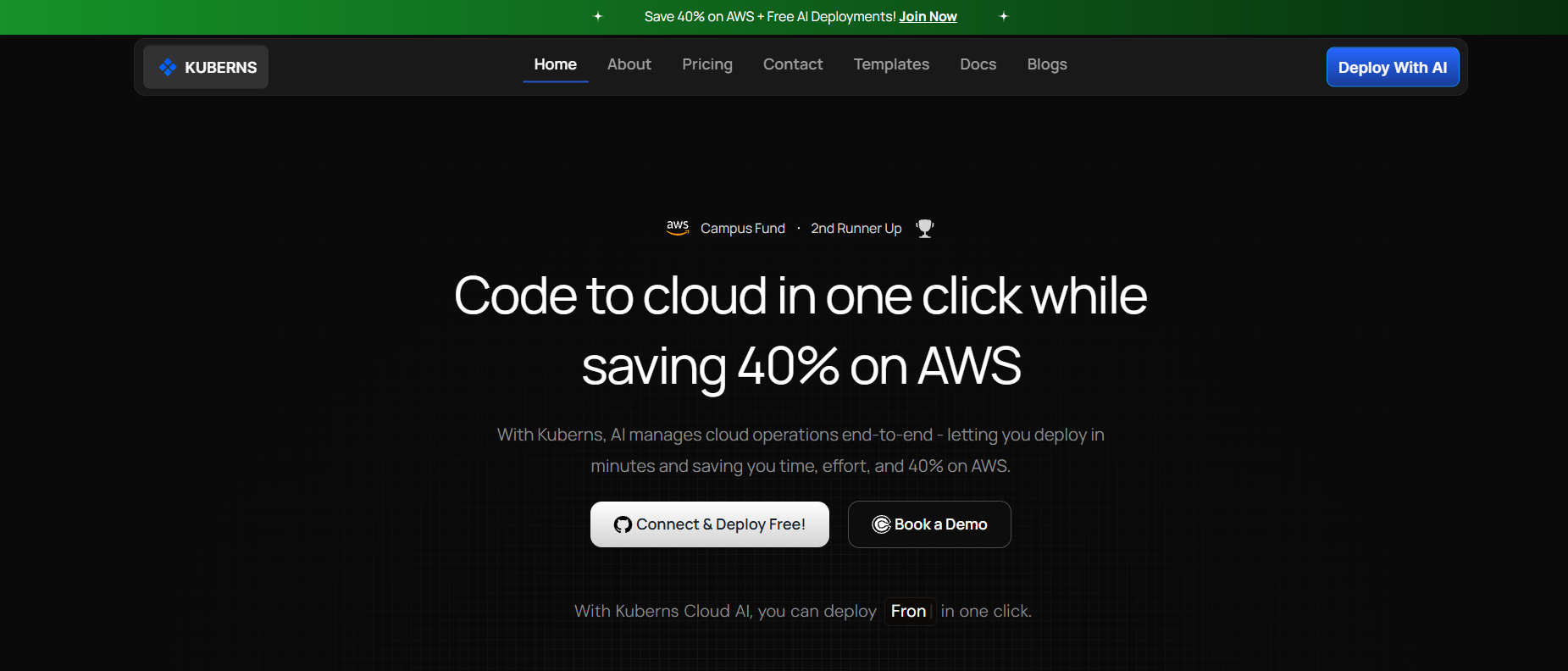 Kuberns is an AI-powered, fully managed deployment platform built on AWS infrastructure. It allows developers to deploy frontend, backend, APIs, and containerized workloads directly from GitHub in just one click. Unlike CapRover, there is no need to manage servers, clusters, or YAML configurations.
Key Highlights:
- One-click Git-based deployment for full-stack and microservices applications.
- Built-in CI/CD, monitoring, logs, and smart alerting.
- AI-driven scaling to handle real-time traffic fluctuations automatically.
- Up to 40 percent savings on AWS infrastructure costs.
- Global reliability, security, and performance backed by AWS.
Kuberns provides the same developer-friendly simplicity as CapRover but eliminates the manual overhead of managing servers or Kubernetes clusters. It’s ideal for startups and growing teams that want to scale confidently without hiring dedicated DevOps engineers.
Learn more: What Is Kuberns: The Simplest Way to Build, Deploy, and Scale Full-Stack Apps Cut AWS Bills by 40 Percent Without Compromising on Security or Features
2. Render
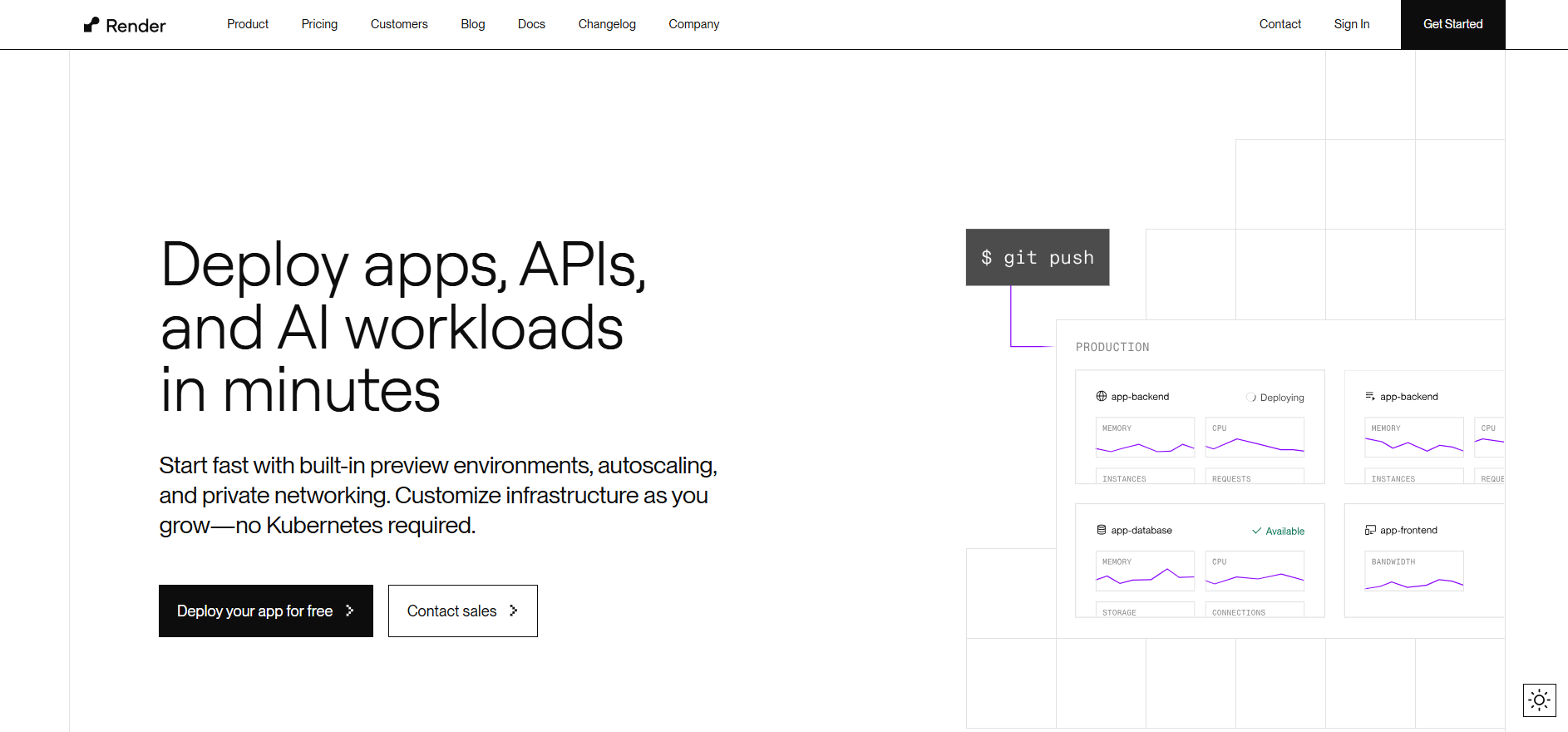 Render provides a straightforward cloud hosting experience for developers who need fast deployments and managed scaling. It supports web services, databases, background workers, and static sites through Git-based automation.
Best For: Teams building SaaS or full-stack applications that prefer an easy setup without deep infrastructure management. Strengths: Automatic builds from Git, SSL management, cron jobs, and built-in global CDN. Limitation: Limited scaling automation and cost visibility compared to Kuberns, especially for growing workloads.
Read more: Render vs Kuberns
3. Netlify
 Netlify is built for frontend and static site deployments. It automates CI/CD, supports serverless functions, and offers edge delivery for faster load times. With its simplicity and focus on developer experience, it remains one of the best choices for static and JAMstack projects.
Best For: Frontend developers and teams working on marketing websites, SPAs, and content-heavy applications. Strengths: Git-based automation, built-in CDN, and quick rollbacks. Limitation: Lacks backend and database hosting, making it less suitable for full-stack or enterprise-scale apps.
Explore: Best Netlify Alternatives
4. Vercel
 Vercel powers many of today’s modern frontend applications built with frameworks like Next.js, React, and Svelte. It offers automatic builds, edge caching, global performance delivery, and real-time previews for development.
Best For: Frontend teams focused on performance, fast iteration, and ease of use. Strengths: Instant rollbacks, global CDN, and seamless integration with Next.js. Limitation: Lacks full-stack hosting and requires separate infrastructure for databases and APIs, which can increase management overhead.
Read more: Vercel vs Kuberns
5. DigitalOcean App Platform
 DigitalOcean App Platform is a managed platform for deploying full-stack applications with predictable pricing and built-in CI/CD. It supports static sites, APIs, and containerized apps while allowing developers to scale easily using a clean, intuitive UI.
Best For: Startups and developers who want affordable, reliable hosting with transparent billing. Strengths: Flat monthly pricing, Docker support, and managed SSL and backups. Limitation: Limited observability and automation compared to Kuberns, especially for dynamic or large-scale workloads.
Learn more: Best DigitalOcean Alternatives for Startups and Solo Developers
CapRover Alternatives Comparison Table
| Platform | Ideal Use Case | Scaling & Automation | Observability | Cost Efficiency | Key Limitation |
|---|---|---|---|---|---|
| Kuberns | Full-stack apps, APIs, SaaS | Fully automated scaling | Built-in logs, alerts, monitoring | Up to 40% AWS savings | Focused on automation over granular manual configuration |
| Render | Web apps and microservices | Basic autoscaling | Basic monitoring tools | Predictable pricing | Manual cost tuning |
| Netlify | Frontend and static sites | Edge deployment only | Minimal backend insights | Simple for small sites | No backend support |
| Vercel | Modern frontend frameworks | Global performance scaling | Frontend-focused | Excellent for static apps | Requires separate backend |
| DigitalOcean App Platform | Small startups and teams | Manual scaling | Limited performance data | Transparent billing | Limited automation depth |
When Should You Move Beyond CapRover
CapRover is an excellent tool for developers who prefer control and enjoy managing their own infrastructure. It is simple to set up and works well for prototypes, internal tools, and early-stage projects. However, as your application starts attracting more users, the same flexibility that made CapRover appealing can start to slow you down.
When projects scale, teams often face issues like manual scaling, performance tuning, and complex maintenance. These tasks can quickly consume development time and make it harder to ship new features on schedule. At this stage, most teams benefit from a managed solution that automates infrastructure while maintaining reliability.
You should consider switching from CapRover to a managed platform like Kuberns if:
- You are spending more hours maintaining servers and troubleshooting issues than building new product features.
- Manual scaling and deployment are becoming error-prone or difficult to manage.
- Monitoring, logging, and performance alerts are fragmented across multiple tools.
- Infrastructure costs are rising unpredictably without centralized visibility or optimization.
- You want high availability, security, and global performance without managing Kubernetes or load balancers yourself.
With Kuberns, you can offload these responsibilities entirely. It provides one-click deployment, built-in observability, and intelligent automation that scales your workloads in real time. Since it runs on AWS, you also inherit enterprise-grade reliability and uptime guarantees while saving up to 40 percent on cloud infrastructure.
If your focus is shifting toward growth, faster releases, and better cost efficiency, moving from CapRover to Kuberns is a logical next step.
Learn more in How to Reduce AWS Cost.
Understanding the Limitations of Self-Hosted PaaS Platforms
Self-hosted platforms like CapRover appeal to developers who value control and flexibility. They are excellent for early-stage projects, proof-of-concept builds, and teams that enjoy hands-on infrastructure management. However, when these projects evolve into production systems, the limitations of self-hosted PaaS solutions become more apparent.
The main challenges include:
- Server maintenance and reliability: Managing uptime, applying patches, and handling upgrades require constant monitoring and technical oversight.
- Scaling complexity: Manual resource allocation during traffic spikes can lead to downtime or reduced performance.
- Security and compliance overhead: Implementing access control, SSL, encryption, and auditing must be handled manually, which increases risk.
- Hidden operational costs: The cost of developer time, infrastructure troubleshooting, and external monitoring tools can exceed managed hosting expenses.
- Limited automation: Self-hosted tools often lack intelligent scaling, backup automation, and proactive system health checks.
For teams aiming to grow efficiently, these issues create a trade-off between freedom and scalability. While self-hosting offers independence, managed platforms like Kuberns allow developers to retain flexibility while offloading infrastructure complexity.
Kuberns combines automation, cost optimization, and AWS-backed reliability to deliver a managed PaaS experience without sacrificing control. It is designed for teams that want to move faster, deploy confidently, and scale sustainably.
Learn more about how automation simplifies cloud operations in AI in DevOps and Developer Workflow.
Why Kuberns Is the Right CapRover Alternative
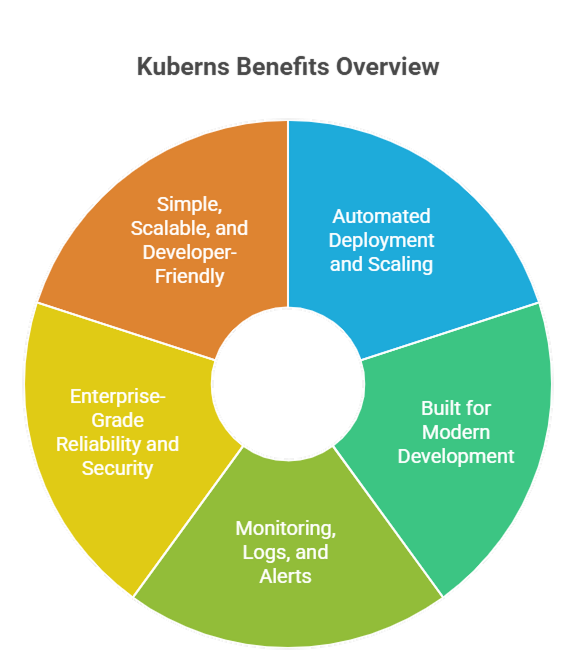 CapRover gives developers full control over their infrastructure, which makes it great for experimentation and smaller workloads. However, that same control comes with ongoing responsibilities like managing scaling, server patches, security updates, and backups. As teams grow and traffic increases, these tasks can become difficult to sustain and often require additional DevOps support or custom automation.
Kuberns solves these challenges by offering an intelligent, fully managed deployment platform that combines automation, observability, and cost efficiency. Built on top of AWS infrastructure, it provides developers with a seamless experience for launching and managing applications at any scale.
Here is how Kuberns stands out:
- Automated provisioning and scaling: Kuberns automatically allocates and scales resources based on real-time usage, removing the need for manual server adjustments.
- One-click Git-based deployment: Connect your GitHub repository and deploy frontend, backend, or containerized applications instantly.
- Built-in monitoring and observability: Real-time logs, performance metrics, and alerts help teams track app health without relying on third-party tools.
- AWS reliability and uptime: Every application runs on AWS’s globally distributed infrastructure, ensuring enterprise-grade security and consistent performance.
- Cost efficiency: Teams can save up to 40 percent on AWS infrastructure while maintaining the same reliability and scale.
By moving from CapRover to Kuberns, teams retain the simplicity of containerized deployments while gaining automation, monitoring, and scalability that adapt automatically as workloads grow.
For more insights into how Kuberns brings AI automation into modern DevOps workflows, read AI in DevOps and Developer Workflow.
Final Thoughts
CapRover has made self-hosting simpler for many developers by providing an easy way to manage Dockerized applications. It works well for early-stage teams that prefer control and are comfortable handling infrastructure tasks.
However, as projects grow, managing scaling, uptime, and performance starts demanding significant time and resources. These responsibilities often divert developers from focusing on what truly matters, building and improving the product.
That is where Kuberns becomes a powerful alternative. It combines the simplicity of CapRover with the intelligence of automation, helping teams deploy full-stack applications in a single click without worrying about DevOps complexity.
With AWS-backed reliability, built-in monitoring, and AI-driven scaling, Kuberns ensures your applications run smoothly while keeping costs under control. Teams can save up to 40 percent on infrastructure while maintaining enterprise-grade uptime and performance.
If your goal is to deliver faster, scale smarter, and eliminate the operational burden of server management, Kuberns is the platform built for you.
Deploy your next app with Kuberns Start now at Kuberns and experience how effortless cloud deployment can be.

FAQs
1. What are the best CapRover alternatives in 2025?
The top CapRover alternatives include Kuberns, Render, Netlify, Vercel, and DigitalOcean App Platform. These platforms offer better automation, scaling, and monitoring capabilities compared to self-hosted solutions.
2. Why are teams moving away from CapRover?
As applications grow, managing servers, updates, and scaling manually in CapRover becomes time-consuming. Many teams switch to managed platforms like Kuberns, which automate these tasks and improve reliability.
3. How does Kuberns compare to CapRover?
Kuberns delivers the same simplicity as CapRover but removes the need for self-hosting and manual scaling. It runs on AWS, offers AI-powered automation, built-in observability, and up to 40 percent savings on cloud infrastructure costs.
4. Can Kuberns host backend services and APIs?
Yes. Kuberns supports full-stack deployments including backend APIs, databases, background jobs, and containerized workloads. It is designed for both monolithic and microservice-based architectures.
5. Is Netlify a good CapRover replacement?
Netlify is a great option for static sites or frontend-heavy projects. However, it lacks full backend and database support, so it is not ideal for teams running complex full-stack applications.
6. Is CapRover suitable for large-scale production workloads?
CapRover can handle small to medium-sized projects effectively, but as usage scales, maintaining uptime, backups, and monitoring manually becomes difficult. That’s when switching to a managed solution like Kuberns becomes more practical.
7. What makes Kuberns a strong alternative to CapRover?
Kuberns combines full automation with AWS reliability. It handles provisioning, scaling, monitoring, and deployment in one place, allowing teams to focus on building features rather than managing infrastructure.
8. Does Kuberns require DevOps expertise?
No. Kuberns is designed to eliminate DevOps overhead. You can deploy directly from GitHub or GitLab without configuring clusters, servers, or YAML files.
9. How does Kuberns help reduce cloud costs?
Kuberns optimizes AWS resource usage automatically, helping teams save up to 40 percent on their infrastructure bills while maintaining enterprise-grade reliability and performance.
10. Who should choose Kuberns over CapRover?
Startups, agencies, and growing SaaS teams that want automation, scalability, and predictable performance without managing servers should consider Kuberns. It provides a smooth transition from self-hosted systems to fully managed cloud infrastructure.