Published
- 17 min read
Koyeb Alternatives That Developers Actually Prefer in 2025

Why Developers Are Looking Beyond Koyeb
Koyeb has built a loyal following among developers who value speed, simplicity, and serverless automation.
No servers to manage. No complex DevOps scripts. Just clean, managed hosting that abstracts away the heavy lifting.
But as projects grow, so do expectations. Teams begin to need more, more control, more flexibility, and more transparency in pricing. That’s where many developers start to feel Koyeb’s limits. It’s fast, but not always scalable enough.
It’s simple, but not always customizable. And for global teams, region availability and support can feel restricted compared to larger or newer platforms.
As a result, 2025 has seen a clear shift.
Developers still love the idea of Koyeb, but they’re increasingly looking for platforms that combine the same simplicity with better automation, visibility, and cost-efficiency.
In this article, we’ll explore the Koyeb alternatives developers actually prefer in 2025, the platforms that deliver fast deployment, better scaling, and more predictable pricing without sacrificing developer experience.
What Developers Love About Platforms Like Koyeb (and Where It Falls Short)
When Koyeb launched, it felt like a breath of fresh air for developers. No endless YAML files, no manual server management, just connect your Git repo, push your code, and let the platform handle the rest.
For many developers, that was exactly what they wanted:
- Simple deployments that work without DevOps overhead.
- Automatic scaling that adjusts to traffic.
- Built-in CI/CD and serverless runtime, so no extra setup.
- Clean UI and fast feedback loops, ideal for rapid iteration.
It’s everything a modern developer platform should be until you outgrow it.
As projects scale, developers begin to see where Koyeb starts to fall short:
Limited Regional and Scaling Options
Koyeb’s infrastructure is still growing, and its global footprint doesn’t match larger providers. For teams serving global audiences, latency and regional flexibility can become real challenges.
Pricing That Grows Faster Than Your App
The simplicity of Koyeb’s pricing works well for small projects, but as applications grow, costs can rise quickly. Developers often find it harder to predict expenses when scaling traffic or running multiple services.
Restricted Customisation
Koyeb hides the infrastructure complexity, which is great at first. But advanced teams often want more control over scaling rules, container configurations, and custom runtime settings that Koyeb doesn’t fully expose yet.
Smaller Ecosystem and Integration Limits
Compared to platforms like AWS or Render, Koyeb’s integration ecosystem is still limited. Fewer native add-ons, less community content, and limited third-party support mean developers sometimes need extra workarounds.
Koyeb is still one of the simplest ways to deploy an app. But as developers’ needs evolve, they start to crave more power without more complexity, faster scaling, flexible environments, and a pricing model that grows with them, not against them.
That’s where the new generation of PaaS platforms comes in, built for the same simplicity, but smarter, more automated, and far more developer-focused.
What Developers Actually Want from a Modern PaaS?
If you ask most developers what they want from their cloud platform, their answers are surprisingly consistent. They’re not asking for another massive service catalog or enterprise-grade dashboard. They want something that helps them build faster, not work harder.
Here’s what developers actually value in 2025:
Less Configuration, More Creation
Most developers don’t want to manage infrastructure anymore. They just want to push code and see it live. The modern PaaS needs to make deployment feel instant, no YAMLs, no custom pipelines, no 20-step setup. Every minute spent tweaking servers is a minute not spent building the product.
Transparent and Predictable Pricing
Developers hate surprises in their bills. Platforms that clearly show how resources are used and what they cost earn lasting trust. The best pricing models scale linearly, not exponentially, as your app grows.
Built-In CI/CD and Real-Time Monitoring
Modern teams expect built-in pipelines, logs, and metrics from day one. No external setup, no hidden integrations. When something goes wrong, they want instant visibility, not an email two hours later.
Automation That Feels Effortless
The best clouds quietly handle scaling, backups, and performance tuning in the background. Developers shouldn’t have to think about provisioning or capacity planning, automation should just work, intelligently.
Support That Saves Time
When something breaks, developers don’t want to dig through outdated docs or wait days for support. They want fast, human help and examples that actually work, not boilerplate tutorials.
In short
Today’s developers want clarity, control, and speed, without needing to become DevOps experts. They’re done with platforms that make them feel like infrastructure managers. They want tools that understand their workflow, automate the boring parts, and let them ship products faster.
And that’s exactly why the next generation of platforms like Kuberns is becoming the go-to alternative to Koyeb.
Top Koyeb Alternatives in 2025
Developers who’ve used Koyeb often appreciate its simplicity, but when they look for something faster, more flexible, or globally scalable, they usually turn to these top alternatives. Let’s break them down, starting with the one that’s getting the most traction among modern teams.
1. Kuberns: The AI-Powered Modern Alternative to Koyeb
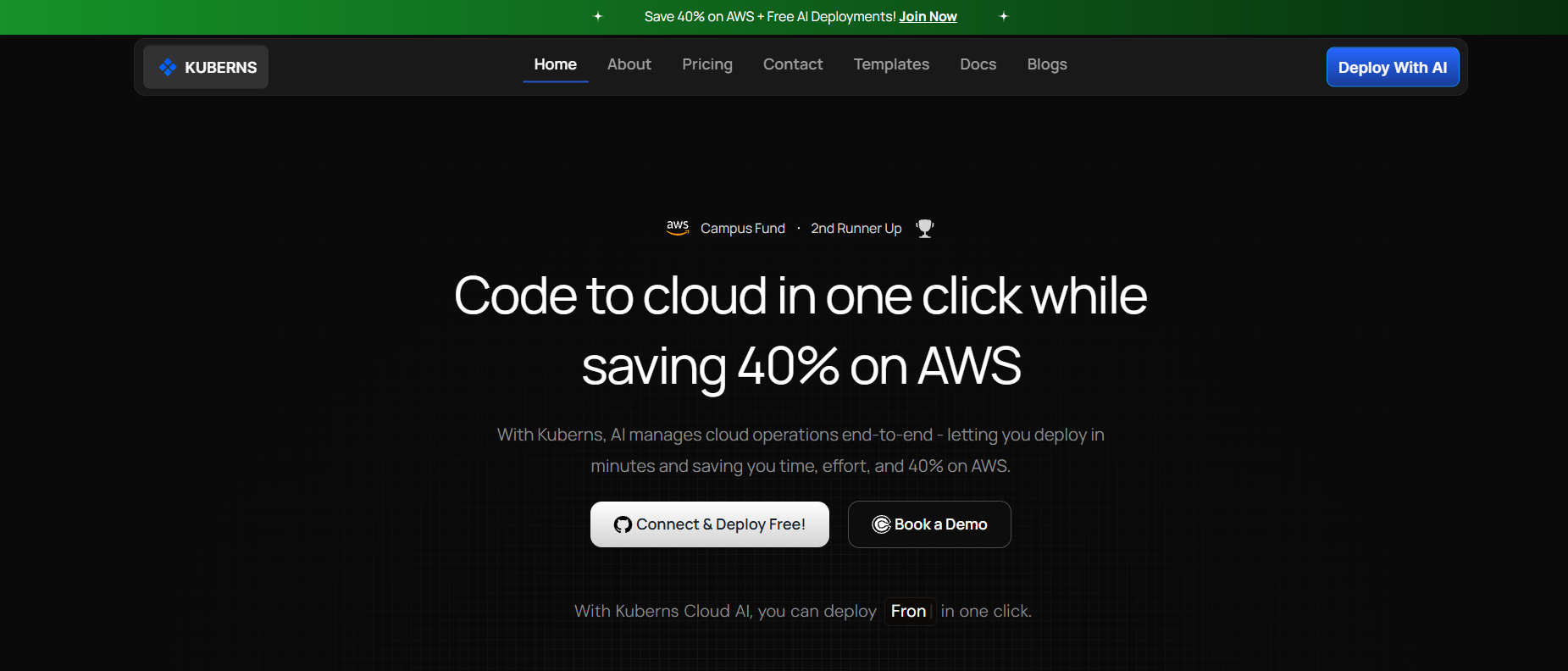 Best for: Startups, agencies, and developer teams that want one-click deployment, built-in CI/CD, and 40% lower cloud costs.
Why developers choose it: Kuberns takes everything developers love about platforms like Koyeb: simple deployment, Git integration, zero DevOps and enhances it with AI automation and enterprise-grade reliability.
It’s built on top of AWS infrastructure, which means you get global scale, security, and performance, without the AWS complexity.
Developers simply connect their GitHub repository, and Kuberns automates the rest: build, deploy, monitor, scale.
What makes it stand out:
- One-click Git-based deployment: No YAMLs, no config files.
- AI-powered scaling that adjusts automatically to traffic, saving up to 40% in cloud costs.
- Unified dashboard with logs, metrics, and health monitoring.
- AWS-grade reliability, delivered through Kuberns’ managed infrastructure.
- Transparent usage-based billing: Pay for what you use, with no hidden fees.
Developers describe Kuberns as “the speed of Vercel with the flexibility of AWS.”
It’s built for teams that want control, simplicity, and cost efficiency, all in one place.
2. Railway
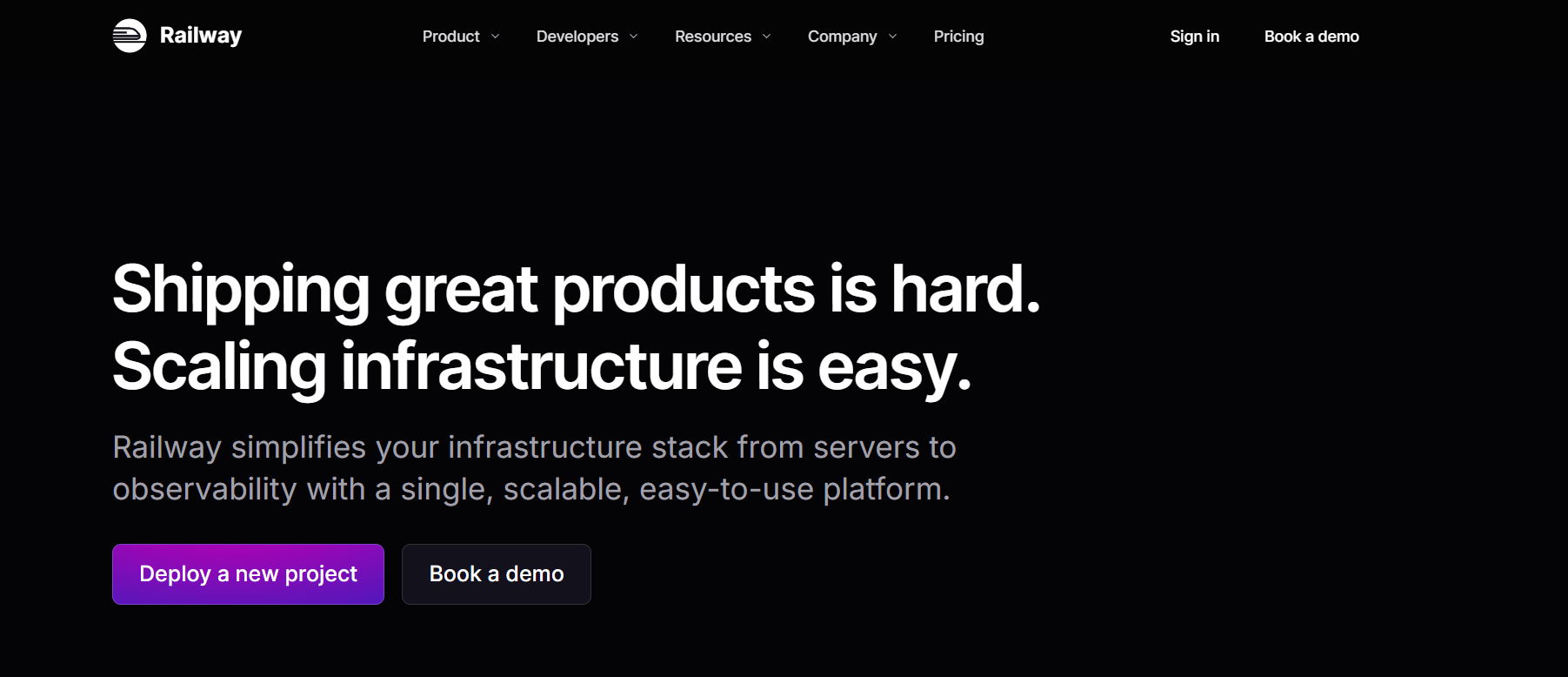 Best for: Developers who want to deploy small projects or prototypes fast.
Railway became popular as a Heroku-style platform that lets developers go from zero to live in minutes. Its clean interface and automatic environment setup make it ideal for side projects, hackathons, or early MVPs.
Pros:
- Instant Git-based deployment
- Built-in database options (PostgreSQL, Redis)
- Great free tier for small apps
- Simple project linking and secret management
Cons:
- Limited scaling for heavier workloads
- Pricing increases quickly after the free plan
- Less suited for long-running production workloads
Railway is great for experimentation, but when teams need to move from prototype to production with more automation and visibility, they often migrate to platforms like Kuberns.
Here are Top railway alternatives to consider
3. Render: The Balanced Full-Stack Alternative
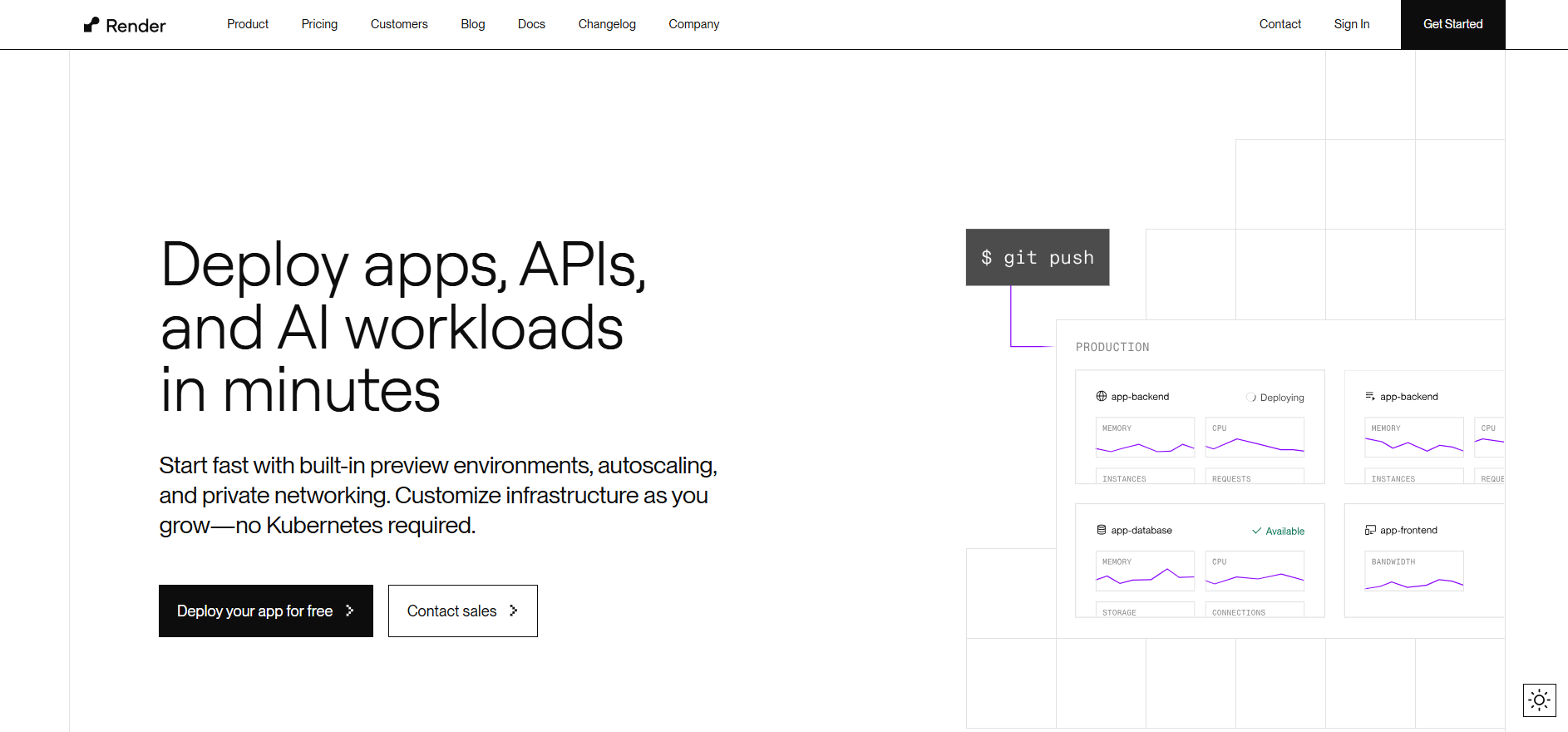 Best for: Startups and developers building production-grade full-stack apps.
Render positions itself as a simple yet powerful hosting platform, combining the flexibility of AWS with the ease of Heroku. It supports static sites, APIs, background workers, and databases.
Pros:
- Supports a wide range of frameworks (Django, Flask, Node.js, Go)
- Global CDN and free TLS certificates
- Automatic builds and deploys from Git
- Built-in databases and cron jobs
Cons:
- Deployments can be slower on free plans
- Scaling costs rise quickly for dynamic apps
- No AI-based scaling or resource optimisation
Render is often compared to Koyeb in simplicity, but its manual scaling and higher cost structure make it less ideal for teams looking for automation-first solutions
Check out the Top render alternatives in 2025
4. Fly.io: The Edge Deployment Alternative
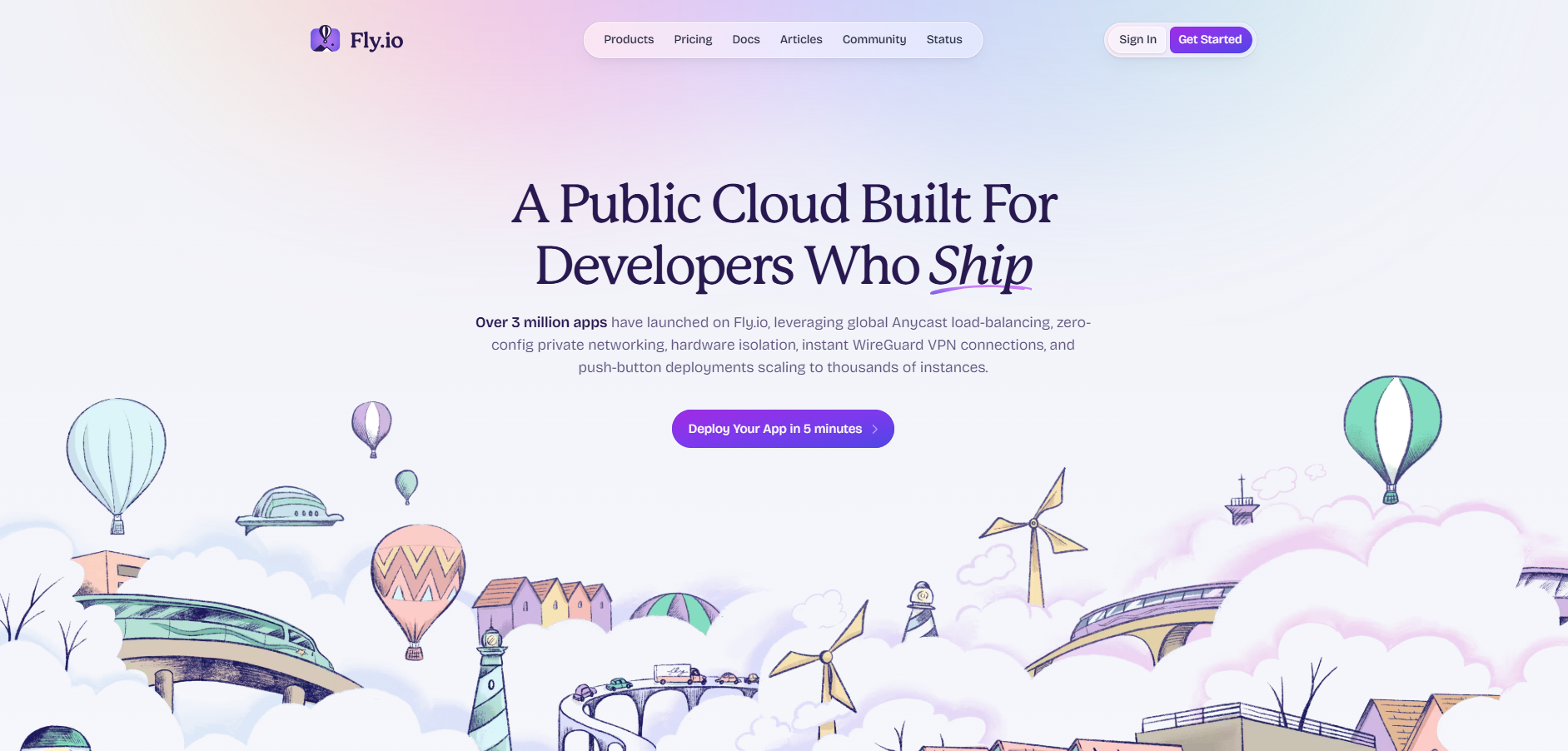 Best for: Developers building globally distributed apps or microservices.
Fly.io’s main value proposition is deploying applications close to users. It lets developers run containers across a network of edge servers worldwide, reducing latency dramatically.
Pros:
- Excellent for low-latency, globally distributed workloads
- Runs full-stack apps in Docker containers
- Developer-friendly CLI for managing deployments
- Great performance for edge computing
Cons:
- Debugging and error handling can be challenging
- Limited observability features
- Complex billing for distributed setups
Fly.io is ideal for advanced teams who want control over where their apps run. But for developers who just want global performance without deep DevOps management, Kuberns offers a simpler path, same AWS backbone, but fully automated.
Looking for the alternatives to fly.io? Check this
5. Vercel: The Frontend Developer’s Favourite
 Best for: Frontend teams using frameworks like Next.js, React, or Svelte.
Vercel set the gold standard for developer experience in frontend deployment. With automatic Git integration, instant preview environments, and global CDN, it’s one of the fastest ways to deploy front-end projects.
Pros:
- Zero-config frontend deployment
- Lightning-fast global CDN
- Built-in preview deployments for every branch
- Great documentation and community
Cons:
- Backend support is limited
- Functions can suffer from cold starts
- Costs can grow with traffic and team usage
Vercel is unbeatable for frontend projects, but not ideal for full-stack or backend workloads. For developers who want both frontend and backend flexibility in one platform, Kuberns bridges that gap.
Read this: The best Vercel Alternatives
6. Netlify
 Best for: Frontend developers, agencies, and content-heavy websites.
Netlify is one of the most popular choices for hosting static sites and JAMStack applications. It offers automated deployments directly from Git and handles build optimisation in the background.
Pros:
- Seamless Git integration and instant deploys
- Automatic builds, previews, and rollbacks
- Free SSL and global CDN built-in
- Great documentation and plugin ecosystem
Cons:
- Limited backend and database options
- Cold starts on serverless functions
- Less suited for dynamic, full-stack apps
Netlify is excellent for websites and frontend apps, but once a project needs backend logic, scaling, or containerised workloads, teams often migrate to platforms like Kuberns or Render for end-to-end deployment control.
Searching for Netlify Alternatives in market?
7. DigitalOcean App Platform
 Best for: Small teams and developers migrating from Heroku or Koyeb.
DigitalOcean’s App Platform builds on its long-standing reputation for developer-friendly infrastructure. It brings managed PaaS capabilities while keeping the familiar DigitalOcean simplicity.
Pros:
- Easy to deploy from GitHub or Docker image
- Built-in scaling and monitoring
- Transparent, predictable pricing
- Great for startups and small agencies
Cons:
- Scaling is not fully automated
- Limited advanced CI/CD and AI-driven optimisation
- Lacks deeper automation seen in newer platforms
DigitalOcean App Platform hits the sweet spot between simplicity and control, but for teams looking for smarter automation and integrated observability, Kuberns provides a stronger long-term fit.
There are Top DigitalOcean Competitors in 2025. Check out those.
8. Northflank
 Best for: Developers who want a clean, modern interface with container support and built-in CI/CD.
Northflank is a newer player in the PaaS ecosystem, and it’s quickly earning attention. It combines container management, pipelines, and cloud deployments in one streamlined dashboard.
Pros:
- Integrated CI/CD and service orchestration
- Good free tier for personal projects
- Clear, intuitive user interface
- Simple secret and variable management
Cons:
- Smaller ecosystem and limited community support
- Still expanding global region coverage
- No AI-powered scaling yet
Northflank gives developers a taste of modern automation without being overwhelming, but it’s still catching up in maturity and performance optimisation, areas where Kuberns already excels.
Check out the top northflank alternatives for developers in 2025
9. Qovery
 Best for: DevOps-oriented teams that want full control over Kubernetes without managing clusters manually.
Qovery is often seen as a middle ground between full-stack DevOps and managed PaaS. It’s built on AWS and Kubernetes, providing deep automation while still offering infrastructure visibility.
Pros:
- Infrastructure as code approach
- Advanced scaling and orchestration options
- Built-in database provisioning
- Enterprise-grade control for technical teams
Cons:
- Steeper learning curve
- More complex setup for small teams
- Higher cost for full features
Qovery appeals to teams that need high customisation, but for developers who want automation without the Kubernetes learning curve, Kuberns delivers the same results with less configuration.
We have listed down some best qovery alternatives for you
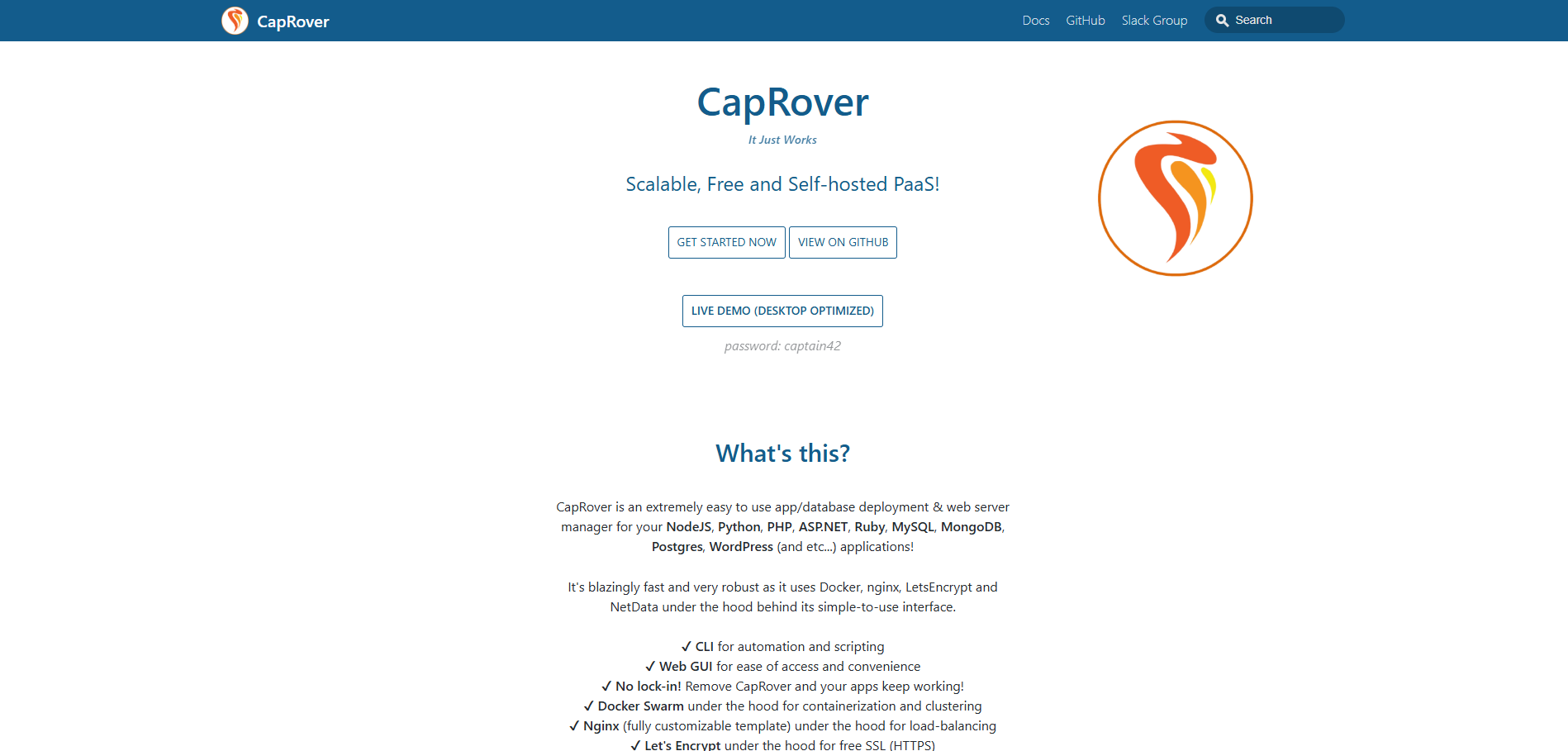
10. CapRover
 Best for: Developers who want to self-host and fully control their environment.
CapRover is an open-source, self-hosted PaaS solution that lets developers deploy apps on their own servers. It’s lightweight, Docker-based, and ideal for those who prefer not to rely on managed platforms.
Pros:
- 100% free and self-hosted
- Full control over infrastructure
- One-click app deployment with Docker support
- No vendor lock-in
Cons compared to Koyeb:
- Requires manual setup and maintenance
- No managed scaling or support
- Limited for non-technical teams
CapRover is perfect for advanced users or hobbyists who want to control everything themselves. For growing teams that prefer to focus on product development instead of infrastructure, Kuberns offers the same freedom, minus the manual overhead.
In summary:
Each of these platforms offers something Koyeb users value, speed, simplicity, or control. But most developers eventually look for a solution that combines all three.
That’s where Kuberns stands apart: it offers the simplicity of Koyeb, the control of Qovery, and the automation power of AI, all in one environment.
Comparison Table: Koyeb vs Top Alternatives
Choosing the right platform comes down to what matters most: automation, cost, control, or simplicity.
Here’s how Koyeb compares against the alternatives developers are actually switching to in 2025:
| Platform | Key Strength | Ideal For | Pricing | Key Differentiator |
|---|---|---|---|---|
| Kuberns | AI-powered deployment, CI/CD, and scaling | Startups, dev teams, and SaaS apps | Up to 40% Lower | Combines AWS reliability with one-click deploy, built-in automation, and transparent billing |
| Railway | Quick Git-based deploys | Hobbyists, solo developers | Free → Moderate | Simple UI, but limited scaling options |
| Render | Full-stack app hosting | Startups & SMBs | Moderate | Heroku-like experience with integrated DBs and jobs |
| Fly.io | Edge-based distributed deployment | Latency-sensitive apps | Moderate | Deploys containers close to users |
| Vercel | Frontend & Next.js deployment | Frontend and JAMStack projects | Moderate | Exceptional frontend workflow & CDN |
| Netlify | Static site and JAMStack hosting | Web developers | Free → Moderate | Automated builds, global CDN |
| DigitalOcean App Platform | Simplicity and managed hosting | Small teams, startups | Moderate | Predictable pricing on familiar infra |
| Northflank | Modern CI/CD with containers | Developer teams | Moderate | Clean UX, integrated pipelines |
| Qovery | Kubernetes-native automation | DevOps & tech-heavy teams | High | Full control and enterprise features |
| CapRover | Self-hosted open-source platform | Advanced users | Free | Total control, but manual setup |
| Koyeb | Serverless app hosting | Developers & startups | Moderate | Fast deploys, limited flexibility and regions |
Why Developers Are Moving to Kuberns (The Smarter Alternative)
 For years, developers have been stuck between two extremes. The simplicity of PaaS platforms like Koyeb and the overwhelming complexity of managing cloud infrastructure on AWS or Kubernetes.
Kuberns was built to close that gap.
It gives developers the same ease-of-use they loved in Koyeb, but pairs it with the scalability, performance, and control usually reserved for enterprise-level systems. No YAML files. No DevOps handoffs.
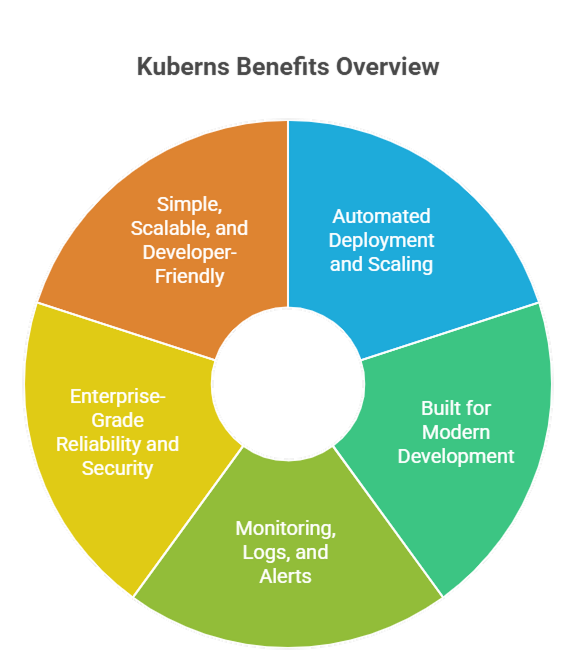
1. AI Handles the Hard Work
Instead of forcing you to manually manage scaling, instances, or resource limits, Kuberns uses AI-powered optimisation to do it automatically. It analyses your app’s usage patterns, scales up when traffic spikes, and scales down when things are quiet without any human intervention.
That’s something no traditional PaaS, not Koyeb, Render, or Railway, does today.
2. All-in-One Platform for the Entire Lifecycle
Most developers still rely on a patchwork of tools for deployment, logging, CI/CD, and monitoring. Kuberns simplifies everything into a single workflow:
- Push your code from GitHub
- Watch it build, deploy, and scale automatically
- Monitor logs, metrics, and uptime from one dashboard
It’s the Heroku experience developers miss, rebuilt for the AI-driven cloud era.
3. Enterprise-Grade Reliability, Startup-Level Speed
Kuberns runs on AWS infrastructure, ensuring reliability and performance across global regions. Unlike niche providers, it inherits AWS-grade uptime and security, but without the DevOps setup that usually comes with it.
Startups love it because they can launch in minutes. Enterprises love it because it scales globally and stays compliant by design.
4. Designed for Developers, Not Cloud Engineers
Kuberns isn’t about managing infrastructure. It’s about removing it from the equation entirely. You don’t write YAML files, configure clusters, or maintain CI pipelines. You just deploy. Every piece of complexity, containers, scaling, networking is abstracted away without limiting what you can do.
That’s what makes it “the smarter alternative.” It’s not just faster than Koyeb, it’s what developers wish Koyeb could evolve into.
5. Real Teams, Real Results
Developers who’ve switched from platforms like Koyeb or Render report:
- 70% faster deployments
- Reduced DevOps dependency
- Up to 40% lower cloud costs
- More reliable scaling during product launches
Whether you’re running side projects, SaaS applications, or production workloads, Kuberns delivers the kind of hands-off automation and stability that developers have been waiting for.
Choose the Right Platform for Your Workflow
In 2025, developers expect more from their cloud, less setup, faster deploys, and pricing that makes sense as they grow.
That’s where Kuberns stands out.
It takes the simplicity developers loved in Koyeb and adds automation, built-in CI/CD, and AI-driven scaling that just works. You don’t need to manage infrastructure or worry about hidden costs, you just connect your repo, click deploy, and let Kuberns handle the rest.
If you’re ready for a platform that lets you build faster, scale smarter, and save more, Kuberns is the clear next step.
Deploy now with Kuberns in One-Click

Frequently Asked Questions (FAQ)
1. What are the best Koyeb alternatives in 2025?
The best Koyeb alternatives in 2025 include Kuberns, Render, Railway, Fly.io, Vercel, and DigitalOcean App Platform. Among these, Kuberns stands out for offering one-click Git-based deployments, AI-powered scaling, and up to 40% lower costs on AWS-grade infrastructure.
2. Why are developers moving away from Koyeb?
Modern teams want a platform that automates deployment, monitoring, and scaling, without losing transparency or control. That’s why they’re switching to platforms like Kuberns, which deliver more power without more complexity.
3. Is Koyeb good for production apps?
For production-ready environments, platforms like Kuberns offer more control, AI-based optimization, and better long-term scalability.
4. Which Koyeb alternative has the best pricing model?
If you’re looking for predictable and cost-efficient pricing, Kuberns is one of the best options.
5. Can I deploy full-stack applications on Kuberns?
Yes. Kuberns supports full-stack deployments, from frontend apps to backend APIs, containers, and background jobs, all from a single Git repository. It’s built for developers who want an end-to-end environment without writing infrastructure code.
6. Why is Kuberns considered the smarter alternative to Koyeb?
Because it brings together AI-driven scaling, transparent pricing, and AWS reliability in one place. Where Koyeb simplifies deployment, Kuberns simplifies everything, from CI/CD to monitoring and cost optimisation, letting developers focus entirely on building.